
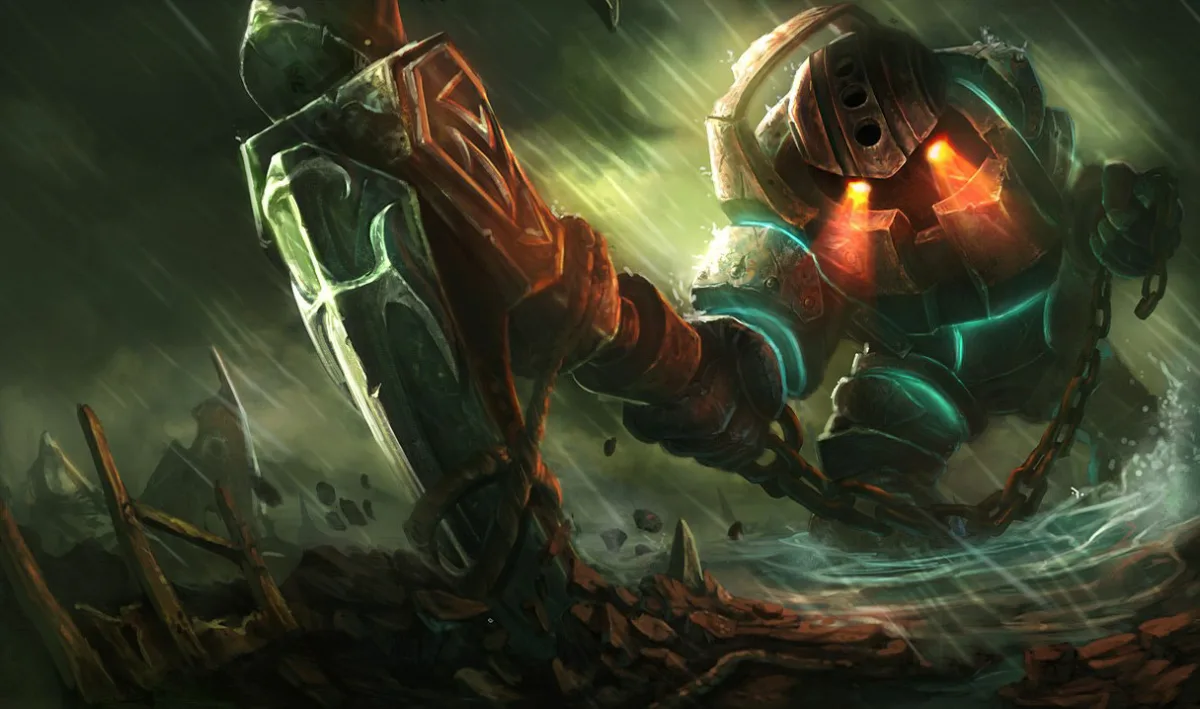
Kai’Sa is our first choice with Nautilus; Samira and Varus are the other two ADCs worth putting on your shortlist. Kai’Sa turns his immobilizing effects into Plasma and gains a marked-target dash at level six. Samira can close on an immobilized enemy before spending her main dash. Varus offers more room to deal damage from behind the tank.
All three recommendations assume you are farming beside support Nautilus. Kai’Sa gets first place for how directly their kits connect. Samira asks more of your close-range execution; Varus lets you play farther back. The order reflects those tradeoffs, not measured duo win rates.
The anchor also moves Nautilus. When he hooks an enemy, they are pulled toward each other, so your tank may leave the spot that was keeping the other opponent away from you. Pick an ADC whose damage can reach the catch, then decide whether following it leaves you somewhere worth standing.
Nautilus contributes less damage in 26.18: base AD falls from 61 to 58, and Q damage falls at ranks two through five. Rank-one Q and his control are unchanged. His ADC must supply the damage that turns the same catch into a worthwhile fight. Riot's 26.18 notes.
1. Kai’Sa: level six changes which catches she can use

Kai’Sa gets the top recommendation because Nautilus contributes to her damage mechanic, not just to her aim. Nearby allies put a Plasma stack on champions they immobilize. A root from Staggering Blow qualifies; the slow on Riptide does not. Her own attacks add stacks, and attacking a target that already has four consumes them for missing-health magic damage. Nautilus can help her work toward that hit, but none of this promises that a full-health opponent dies from one catch. Riot’s current Kai’Sa data and current client passive text describe the interaction.
Before six, Kai’Sa still has to walk up. Her base attack range is 525. Nautilus can get so far ahead while she last-hits that the root is nearly over when she arrives. Move with him when an opponent steps forward for a minion; the passive does little for an exchange you spend running toward. Nautilus’s lower base AD in 26.18 leaves less damage while she is walking. A hook she can join immediately is more valuable than a longer catch that spends its control before her attacks begin.
The wave can take much of the Q you wanted to land on the ADC. Icathian Rain splits its missiles among nearby enemies, so catching a champion beside several minions gives a different volley from catching them alone. Q may still be worth using to collect that wave. Just tell Nautilus you have spent it before he starts the fight that needed it.
Look for the opponent who moves off the wave while Q is ready. If Kai’Sa can follow from that side, fewer nearby enemies compete for her missiles. Check the support’s position before moving: an angle that isolates the ADC from minions can still put Kai’Sa beside the enemy tank.
Choose where R leaves you
Killer Instinct lets Kai’Sa dash near a Plasma-marked champion and grants her a shield. Rank one has a listed cast range of 2,000. Nautilus can help establish the mark when Kai’Sa is close enough for her passive. Check that the target is marked and within her R range before treating a distant catch as one she can join.
In a river fight, that dash can save the walk that would otherwise use up Nautilus’s control. Choose the landing point before pressing R. Staying on your team’s side of the marked enemy often lets you attack without leaving Nautilus behind. There is no prize for landing behind the victim if their support is waiting there.
With R on cooldown, Nautilus has to allow for the walk again. And if the mark is on a healthy frontliner, look at the available landing area around that frontliner. It may offer no sensible route to the ADC behind them; the mark does not give Kai’Sa a dash to whichever enemy she prefers.
Choose Kai’Sa for that level-six entry if you are prepared to work through her shorter lane range first. Caitlyn has 650 base attack range and can punish repeated walk-ups before Nautilus finds his opening. Clear enough of the incoming wave to move and keep enough health to join the catch when it comes. Otherwise, reaching six gives you a dash into a fight you are already too low to take. Caitlyn’s current data confirms the range difference.
2. Samira: use the first approach before spending the second
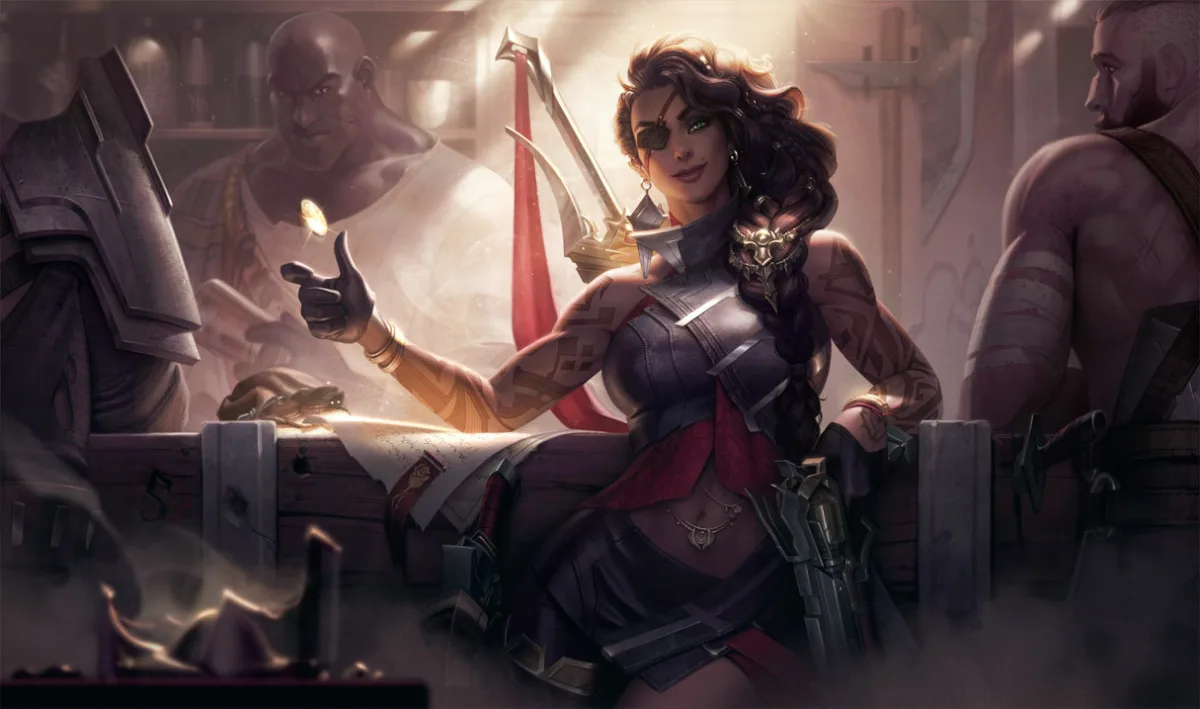
Samira can start following without spending Wild Rush. Her passive attack lets her dash into attack range against an immobilized enemy. E then offers a separate dash through an enemy. When the first movement puts her in range to deal damage, keep the second available until you know where you want to end up.
The airborne interaction is separate again. Samira can keep an already airborne opponent aloft briefly; she does not turn Nautilus’s ordinary passive root into a knockup. His Depth Charge creates an airborne opportunity after six. She still needs to be close enough and attack while the enemy is airborne. The time spent waiting for Nautilus’s R to arrive is not extra control she has already gained. Riot made the root-versus-airborne distinction explicit in patch 10.25, and it remains in her current passive.
Start a short exchange with the passive-assisted attack and a Q that can reach the target. Then look at the other opponent. If they are waiting for Samira to dash past Nautilus, stay on the near side and keep attacking from there. Starting far behind your support makes this harder: by the time you arrive, you may have spent the movement you wanted to save.
Wild Rush is not a guaranteed round trip. Its current reset happens if an enemy champion dies within three seconds after Samira damaged them. Merely hitting someone does not refresh E, and Nautilus is not an allied E target she can dash back through. The ally-dash removal is documented in Riot’s patch 11.4 notes; the current tooltip supplies the precise reset condition. Until that condition happens, judge the entry as a move you may have to walk out of.
Blade Whirl creates another choice. It destroys enemy missiles that enter its area, so using it for damage and Style may spend your answer to the next projectile. Alistar’s Pulverize is a different problem. He knocks up nearby enemies; there is no incoming missile for W to destroy. If Alistar is beside your target with Q ready, spinning the blades will not protect your entry.
Learning Inferno Trigger does not eliminate those decisions. Samira still needs S rank from her own sequence of different attacks and abilities against champions. Nautilus holding someone in place gives her time to build it; he does not hand her S by pressing R. Choose Samira when you can change that sequence after seeing the enemy response. If you are choosing both halves of the lane, compare the other supports for Samira before committing to this close-range plan.
The hook lands on Alistar. End the trade anyway.
Consider a level-three lane against Caitlyn and Alistar. The enemy wave has several more minions than yours, and Caitlyn is healthy and free to attack. Nautilus hooks a healthy Alistar near the wave, follows with his passive root and uses W. Kai’Sa can reach him. The hook landed exactly where Nautilus aimed it.
The extended fight still favors the position Caitlyn and Alistar have. Caitlyn is free to fire, and the minions compete for Kai’Sa’s Q missiles. Once the root ends, Alistar has Headbutt’s knockback and Pulverize’s nearby knockup to answer the approach. Kai’Sa is walking toward both responses while Caitlyn keeps shooting from behind them.
Seeing Q connect makes it tempting to chase. Take only the damage Kai’Sa can deliver without moving farther into that position, then retreat together. Nautilus can use Riptide’s slow to help separate if it is ready; walking past Alistar after Caitlyn leaves Kai’Sa with the enemy tank. If even the short exchange costs her more health than it takes, skip the extra attack and move out with Nautilus.
Watch his shield during this decision. Titan’s Wrath shields Nautilus himself for up to six seconds. While that shield remains, his attacks apply extra magic damage over time to the target and nearby enemies. Breaking the shield removes his protection and the bonus on subsequent attacks; do not budget for another empowered hit after it is gone. Riptide’s slow decays over 1.25 seconds. It can help create distance, but it does not stun Caitlyn or stop her attacks. These limits are in Nautilus’s current spells and client values.
Next time, thin the wave before looking for the hook, or wait until Caitlyn has to give up her free firing position. A low Alistar separated from his ADC is a different target from this healthy one standing in a larger wave. Judge the position that Q creates, not the satisfaction of seeing it connect.
3. Varus: contribute without joining Nautilus in melee
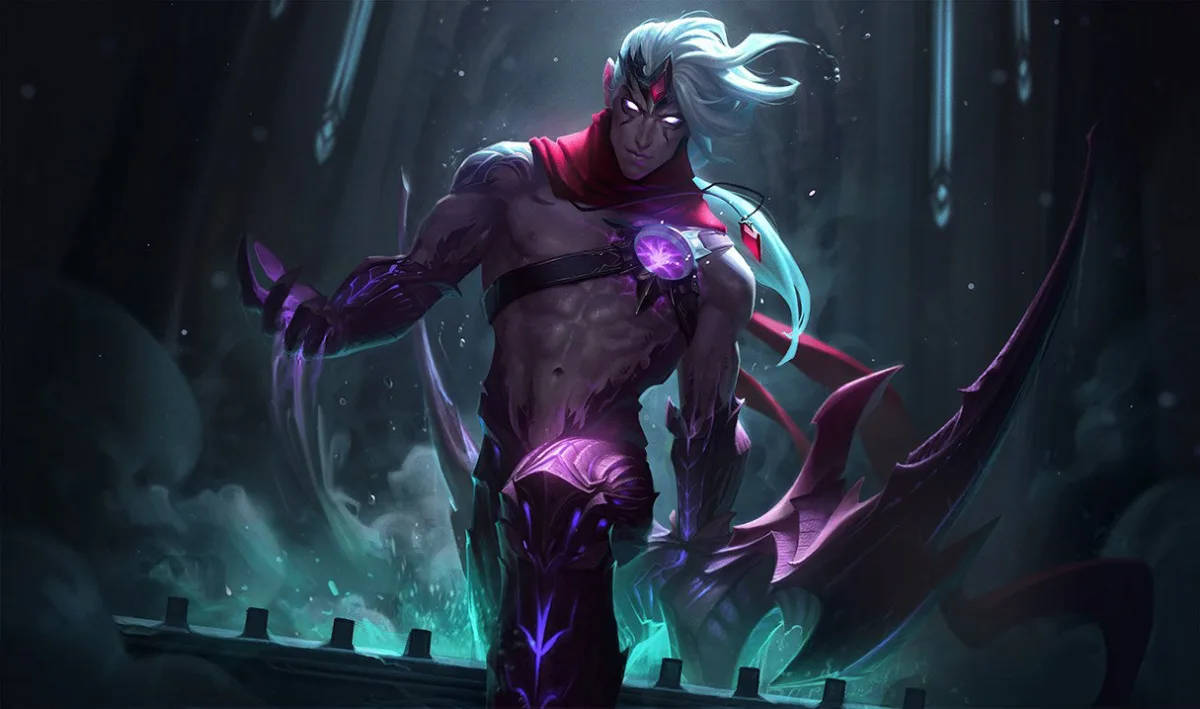
Varus can help from behind Nautilus instead of moving into the same close fight. He has 575 base attack range, with Q and E reaching farther. That makes him the option here for a player who wants more room between the ADC and the catch. Leave that room on the wrong side of the enemy support, though, and Varus has no built-in dash to fix it.
Once Blighted Quiver is learned, attacks build up to three Blight stacks. His other abilities can detonate them, with the detonation dealing magic damage based on the victim’s maximum health. Nautilus’s root can buy time for those attacks, but it does not apply Varus’s stacks for him. If Varus has already put Blight on the target, following the catch with Q or E can cash it in. If he has not, the spell is still damage and may be the right immediate response, but it is not the same exchange. Riot’s Varus data describes both the stacks and their detonation.
One safe attack may be all you get. Chasing the third stack can let the second opponent walk into range, and charging Piercing Arrow slows Varus even as it increases the shot’s range and damage. Release earlier if the support is closing on you. Losing some charge damage is preferable to being caught while you prepare the shot.
Be careful with the mana you spend pushing before the catch. Hail of Arrows costs 90 at every rank; with 80 mana left, Varus cannot provide it. Ping that shortage while Nautilus is still choosing his angle. A support who thinks E is coming may take a fight you meant to decline.
At six, Chain of Corruption gives Varus an opening of his own. It roots the first champion hit and adds Blight over its duration. Nautilus can move up while that root holds and add control later instead of making every engage start with Q. Other opponents must stay close enough for the corruption to reach them. Landing R on one bot laner does not mean you have caught their partner too.
This pairing also makes sense when your team needs the ADC to keep hitting the nearest safe target. Varus can work on a frontliner while Nautilus stops somebody from entering his position. Save Chain of Corruption for the diver if Nautilus has already spent his control forward. You may lose a chance to catch the escaping enemy, but you keep a way to stop the next opponent from walking straight at Varus.
Nautilus’s next target may be the one attacking you
Staggering Blow cannot trigger on the same enemy again for six seconds. That limit is per target. If Nautilus roots the first opponent and a different champion comes at his ADC, moving back to attack the newcomer can provide fresh control. Staying on the original target and expecting every attack to root wastes that opportunity. The restriction is explicit in his current client passive, with the six-second value in the matching Nautilus spell record.
Picture Varus hitting the first target while Leona walks around Nautilus toward him. If she enters Nautilus’s attack reach and has not recently triggered his passive, he can root her instead of chasing the original victim. Move to cover that approach early. Once Leona has reached Varus with Zenith Blade and her attack stun, much of the chance to protect him has passed. Do not rely on a last-moment passive root to cancel an already moving dash.
Depth Charge can serve the same protective purpose. Its cast range is 825, and the shockwave travels to the selected enemy champion. The selected target is knocked up and stunned when it arrives; enemies struck along the route also suffer knockup and stun. Picking a target behind other enemies can catch more of them in the path, but their actual positions determine who is hit. The target selection does not teleport the ADC into attack range or instantly disable everyone between the two teams.
Nautilus’s Q cannot solve both directions at once, either. Hitting an enemy draws him and the victim together and briefly stuns the victim. Terrain pulls Nautilus toward it instead, refunding half the cooldown and mana cost. A wall hook can help him reposition when Q is available, but the refund is not an immediate reset, and a Q already spent on a champion is not available as a second escape button.
After the first catch, notice what makes you stop attacking. If another champion is forcing you back, ping that threat and move toward the side Nautilus can cover. He may still have a root for that new target even though he has used it on the first. Turning back to create your next safe attack can be worth more than chasing the original victim.