

In November 2025, Faker lifted the Summoner’s Cup for the sixth time. The astonishing part was not the trophy by itself. His first came in 2013, when trinkets did not exist at the start of the season and professional League belonged to a different strategic age.
Faker is still the best League of Legends player ever. He owns the greatest peak, the deepest international record, and a second championship life that no rival has matched. Chovy and Canyon have built the strongest modern challenges. Uzi, Rookie, Ruler, Deft, and Mata show why a serious list cannot become a count of Worlds rings.
This is RiftBrain’s editorial ranking, not an official award or a mathematical model. It counts completed competition through August 30, 2026. Hanwha Life Esports’ MSI title and Bilibili Gaming’s First Stand title are in. Worlds 2026, scheduled for October 15 through November 14, is still in the future and is not.
The answer, before the argument
There are debates below first place. No rival has a persuasive case for taking first.
Faker won Worlds in 2013, 2015, and 2016, then won again in 2023, 2024, and 2025. That split matters. Plenty of great players dominated one ruleset, one roster cycle, or one short strategic era. Faker reached the summit before elemental drakes, turret plates, Rift Herald, Mythic items, Fearless Draft, and the current vision economy. He returned after each of those changes, with different teammates and a different job inside T1.
The 2024 Hall of Legends announcement credited him with 10 LCK titles, two MSI titles, and four Worlds. Since that induction, he has added two more Worlds championships. Riot’s January 2026 season preview described the 2025 win as T1’s historic third consecutive World Championship. The record has moved from unreachable to almost difficult to summarize.
The harder question is what comes after him.
How this ranking works
Six lenses determine the order. They are listed because each prevents a familiar bad all-time argument.
- Peak asks how convincingly a player could control elite opposition, and for how long. One brilliant final is evidence, not a career.
- Longevity rewards players who remained world class through roster changes, new metas, and changes to their own role.
- International results give Worlds the most weight, MSI substantial weight, and First Stand less because it is newer and shorter. Final appearances and repeated deep runs matter too.
- Domestic dominance values sustained control of the LCK, LPL, LEC, or their predecessors. A player does not become ordinary because another elite team ended the run at Worlds.
- Role influence asks whether later players copied the candidate’s laning, champion pool, map movement, or approach to a position.
- Strength of era adjusts the context. A modern title comes from a deeper professional field, while an early pioneer had fewer years of accumulated knowledge to copy.
No point total is attached. Giving peak a score of 9.4 and longevity 8.7 would hide judgment behind decimals. The ordering below is the judgment, with the strongest evidence and the largest deduction exposed.
The all-time board
| Rank | Player | Primary role | Strongest case | Main deduction |
|---|---|---|---|---|
| 1 | Faker | Mid | Six Worlds across two championship eras | None large enough to threaten first |
| 2 | Chovy | Mid | Historic domestic control plus back-to-back MSI titles | No Worlds title through the cutoff |
| 3 | Canyon | Jungle | Worlds winner and Finals MVP with elite value across teams | Domestic control has been less continuous than Chovy’s |
| 4 | Uzi | Bot | Transformative laning peak and two Worlds finals | No Worlds title and interrupted longevity |
| 5 | Rookie | Mid | World-class peak in Korea and China across more than a decade | Fewer international appearances than his level deserved |
| 6 | Ruler | Bot | Worlds title, Finals MVP, and MSI wins in two regions | Rarely reshaped bot lane as radically as Uzi |
| 7 | Deft | Bot | Worlds, MSI, LCK, and LPL champion with exceptional endurance | Fewer seasons as the clear best player alive |
| 8 | Mata | Support | Worlds MVP whose map play changed support expectations | Shorter top-level window than the names above |
| 9 | Xiaohu | Mid and top | Three MSI titles, including one after a role swap | No Worlds title despite many attempts |
| 10 | Gumayusi | Bot | Three straight Worlds titles and the 2025 Finals MVP | Shorter elite career than older rivals |
| 11 | Caps | Mid | MSI champion, two Worlds finals, and unmatched European record | Domestic field was weaker than the LCK and LPL |
| 12 | Zeus | Top | Two Worlds titles plus Finals MVP awards at Worlds and MSI | Longevity case is still being written |
The table is a map, not the argument. The disputed placements need more room.
1. Faker and the impossible second career
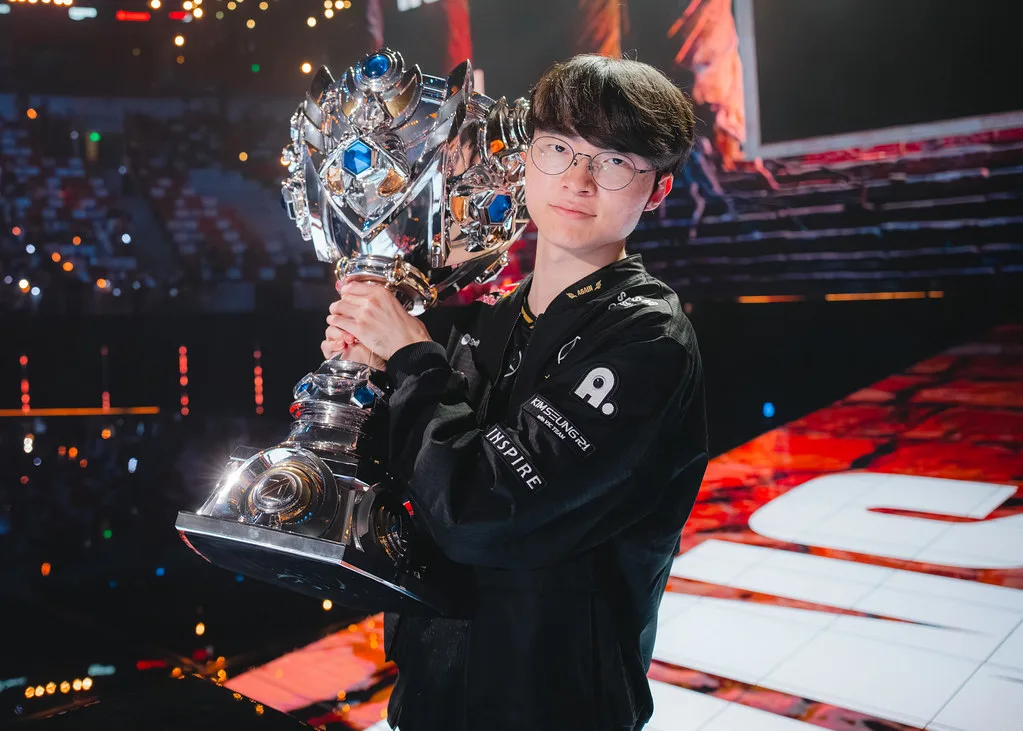
Faker’s first claim to greatness was mechanical force. His 2013 season turned assassination and lane pressure into public spectacle. The Zed mirror against Ryu survives because the hands were extraordinary, but the larger achievement was repeatable: he could generate a lead in mid, conceal his next movement, and make the whole map obey it.
The middle years made the case broader. SK Telecom’s 2015 team lost one game at Worlds. In 2016, Faker won a third world title and the Worlds Finals MVP. By the end of 2017, he had reached four finals in four Worlds appearances. That alone would have produced a credible greatest-ever career.
Then came the second career. Faker was no longer required to be the highest-resource solo carry in every composition. T1 could draft around Gumayusi’s late-game damage, Zeus’s side-lane threat, or Keria’s support inventions. Faker became the hinge: first move on Azir, a punishing Orianna Shockwave, a sacrificial engage, or the calm call that made four younger players arrive together.
That evolution does not mean the mechanics disappeared. His 2024 Worlds final against Bilibili Gaming ended with another Finals MVP. The following year, T1 entered the 2025 knockout stage after a 3-2 Swiss record, survived Anyone’s Legend in five games, swept Top Esports, and beat KT Rolster 3-2 in the final. That was not a season-long claim to being the best individual player in every league. It was a reminder that all-time greatness includes repeatedly finding the exact play a tournament demands.
Six Worlds titles can encourage lazy reasoning. The real separator is how they were won. Faker was the young execution monster, the centerpiece of a dynasty, the veteran rebuilding around failed seasons, and the stabilizer of a roster that completed the first Worlds three-peat. Nobody else has occupied that many versions of greatness.
The modern challengers
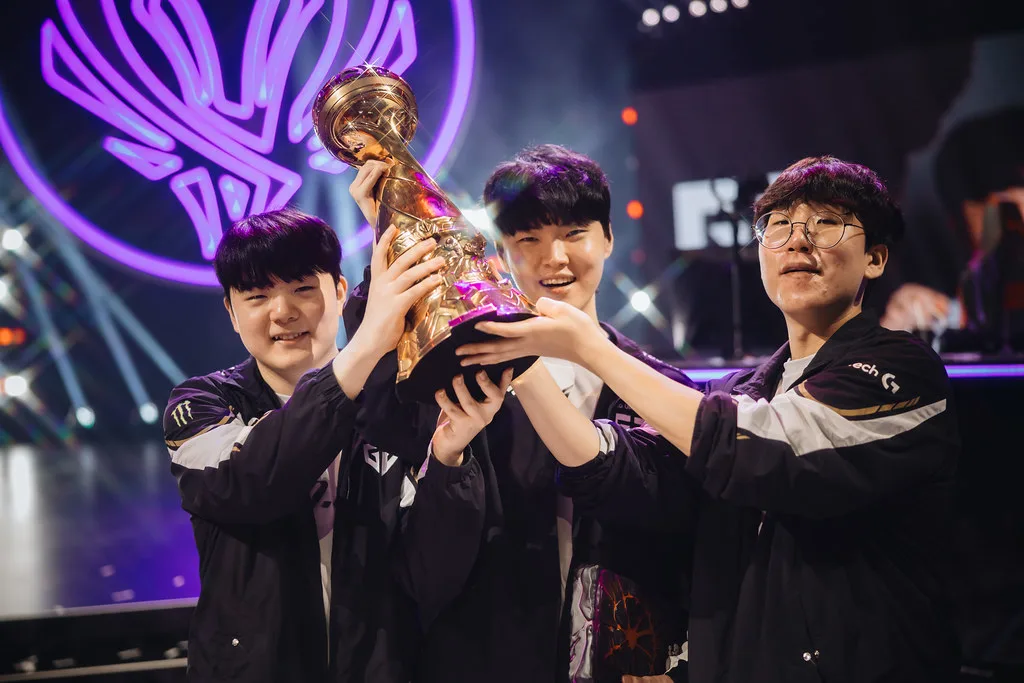
2. Chovy
Chovy is the strongest argument against judging careers by the last series at Worlds.
His lane has been an economic system for years. He protects farm under pressure, creates small experience edges without gambling the wave, and arrives at item breakpoints with unusual regularity. The famous creep-score numbers are a symptom, not the skill itself. His real value is the number of losing map states he refuses to create while still pressuring elite mid laners.
The early criticism was fair in part. Griffin never converted its frightening domestic level into an international title. Later teams sometimes looked less flexible when Chovy’s lane advantage did not turn into side control. A player ranked second all time has to own those failures, not wave them away as team results.
The Gen.G run changed the scale of the case. Chovy won four consecutive LCK titles from Summer 2022 through Spring 2024, then a fifth in the unified 2025 LCK season. Gen.G won MSI in 2024 and defended it in 2025, beating T1 3-2 in the latter final, with Chovy named Finals MVP. The missing result is obvious: Gen.G exited Worlds in the semifinals in both 2024 and 2025.
Why second anyway? Peak and domestic dominance are not consolation categories. For an extended modern stretch, the hardest mid lane in the world began with solving Chovy’s economy and champion pool. Canyon has the Worlds title. Uzi has the larger role legacy. Chovy places above both because his week-to-week control has lasted longer than a tournament hot streak and now includes two completed international wins.
3. Canyon
Canyon’s best games make jungle look less like a position between lanes and more like ownership of the entire map.
At DAMWON Gaming in 2020, he could clear efficiently, contest the next camp on time, and still appear first to a fight. The team won Worlds and Canyon took Finals MVP. The award mattered because it captured a tournament where his Nidalee, Graves, and carry-jungle pressure were not side dishes to strong solo lanes. They were the architecture.
His 2021 season adds useful weight despite the two lost finals. DWG KIA finished runner-up at MSI and Worlds, proving the 2020 peak was not a single-patch accident. When Canyon later joined Gen.G, he entered a roster with different lane priorities and won MSI in 2024 and 2025. That ability to remain elite without the original DAMWON system separates him from players whose reputations belong to one five-man lineup.
Canyon sits below Chovy because his domestic and individual control has been less continuous. He sits above every jungler because the combination is unmatched: a Worlds title, a Worlds Finals MVP, two MSI titles, another Worlds final, and a peak that changed what teams expected from jungle resources.
When one position bends around a player
4. Uzi
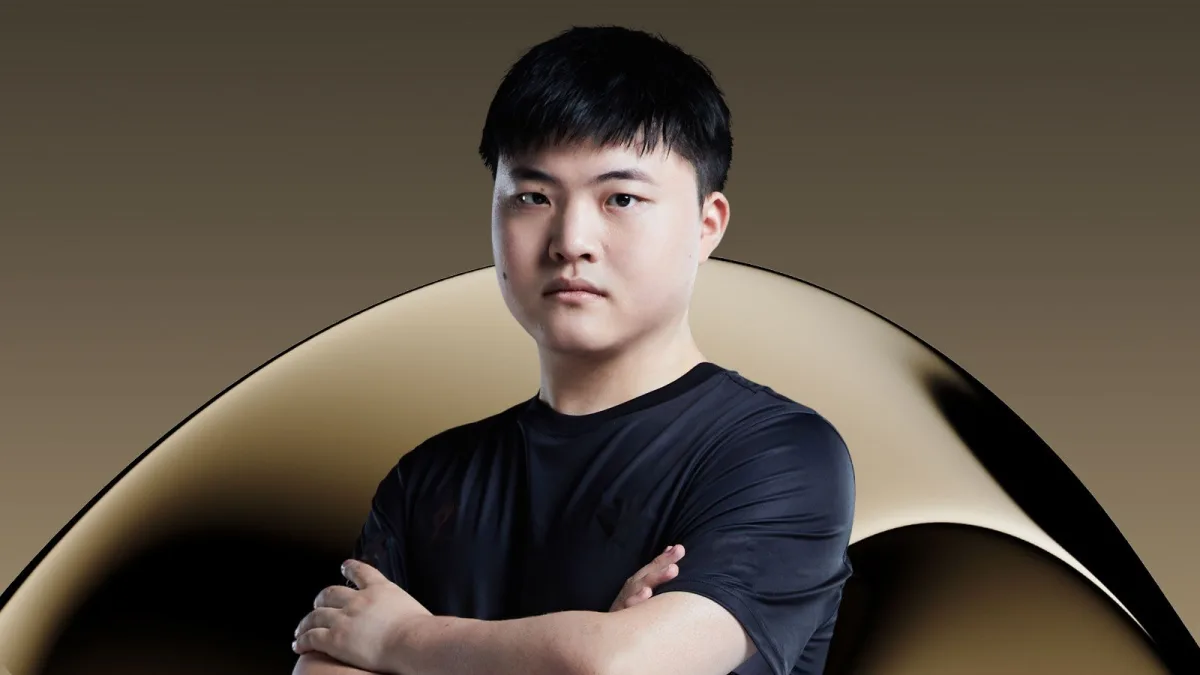
Uzi is the test of whether the ranking actually believes its own criteria.
If championships settle everything, he falls behind several bot laners immediately. He lost the Worlds finals in 2013 and 2014, then never returned to that stage. His only global title in Riot’s main circuit was MSI 2018. Injuries and breaks interrupted the back half of his career.
Yet opposing teams spent years drafting and pathing around the threat of his lane. Supports were asked to preserve his trading space. Junglers were pulled toward dives and stacked waves. In late fights, Uzi’s spacing let Royal teams build a narrow plan without making it a simple one. Everyone in the arena knew where the gold would go. Preventing it was the problem.
The peak also survived multiple versions of bot lane. Uzi reached those early Worlds finals before modern five-role infrastructure had settled, then produced his most complete season in 2018. Royal Never Give Up won the LPL spring and summer titles and MSI. The Worlds quarterfinal loss to G2 ended the Grand Slam attempt and remains the stain on that year, but it does not erase the level required to create the expectation.
Riot made Uzi the second Hall of Legends inductee in 2025 and explicitly cited both his role influence and the 2013, 2014, and 2018 peaks. Fourth is an editorial bet that changing the imagination of bot lane matters. It is not a sympathy ranking for a star without Worlds.
8. Mata
Mata belongs in the same discussion for a different kind of force. Samsung White’s 2014 vision control was a five-player machine, but Mata operated its switches. His ward timing, roams with DanDy, and willingness to abandon the expected lane script made support a source of map tempo rather than a player waiting to protect a carry.
He remains the only support to win Worlds MVP. More important, later teams studied the behaviors behind the trophy. He then won domestically in Korea and China, giving the influence a life beyond one overpowering Worlds roster.
Why eighth instead of fourth? Mata’s absolute peak was shorter, and support makes individual separation harder to prove over many seasons. Why above Keria for now? Mata changed the baseline expectation for his role, crossed regional systems, and supplied the historical template that more mechanically expansive supports inherited.
The careers that crossed eras
5. Rookie
Rookie’s career contains an awkward truth about all-time lists: tournament qualification can hide an elite player almost as easily as it reveals one.
He won OGN Summer 2014 with KT Rolster Arrows, moved from Korea to China, and became the competitive center of Invictus Gaming. At Worlds 2018, IG’s solo lanes broke open the tournament. Rookie could win through lane pressure, absorb attention, or move first while TheShy attacked the opposite side. The result was the LPL’s first Worlds championship.
IG won the 2019 LPL spring title, but later lineups did not convert Rookie’s level into repeated international appearances. That is the deduction. The reason he still ranks fifth is that his individual standard remained recognizable through more than a decade of changing mid-lane demands. Early assassin play, control mages, side-lane management, and lower-resource facilitation all appear in the record. Few players have been excellent for so long in both Korea and China.
6. Ruler
Ruler’s career is built from finishes. He reached the Worlds final as a rookie in 2016, returned in 2017, beat SK Telecom 3-0, and won Finals MVP. He later ended Gen.G’s domestic title wait in 2022, moved to JD Gaming, and won the LPL spring title and MSI 2023. JDG came within one Worlds semifinal of completing the most ambitious season in the game’s history.
The return to Gen.G added another layer. Ruler won the 2025 LCK season and MSI 2025, becoming an international champion with Samsung, JDG, and Gen.G lineups. He has won in slow front-to-back teams, lane-forward teams, and systems where the solo lanes take first priority.
Uzi ranks higher because bot lane before and after Uzi felt different. Ruler’s case is less revolutionary and more complete. He is the safer late fight, the disciplined angle, and the career with almost no missing competitive environment.
7. Deft
Deft’s 2022 Worlds title is often framed as a story about patience. That is true, but the sentiment can blur the player.
Before DRX’s run from the play-in stage to the title, Deft had already won MSI 2015 with EDward Gaming, plus domestic championships in the LPL and LCK. He could carry lane-dominant compositions, scale inside slower teams, and remain useful when a roster did not hand him every resource. By winning Worlds, he completed a set of titles across Worlds, MSI, LCK, and LPL that no earlier player had assembled.
The miracle run adds pressure performance to longevity rather than replacing it. Deft ranks below Ruler because he spent fewer seasons with a credible claim to being the best bot laner in the world. He ranks above most champions with more rings because excellence across regions, teammates, and more than a decade is itself a championship-level achievement.
9. Xiaohu
Xiaohu won MSI three times, and the middle title changes how the other two look. He won in 2018 as RNG’s mid laner, moved to top lane for 2021, won MSI there, then returned to mid and won again in 2022.
Role swaps usually expose which parts of a player’s reputation depended on matchups or habitual lane patterns. Xiaohu carried his map timing with him. From top, he could create side pressure and still arrive as a second playmaker. Back in mid, he resumed the control and roaming work RNG required. His 2023 Worlds final with Weibo Gaming added another deep run, though T1’s 3-0 win preserved the missing Worlds title.
The case loses ground on peak. Xiaohu has had remarkable seasons, but fewer stretches when most observers would choose him as the best individual player in the world. His answer is adaptability: three MSI titles, two roles, multiple rosters, and elite relevance that outlasted several generations of LPL rivals.
The cases still moving
10. Gumayusi
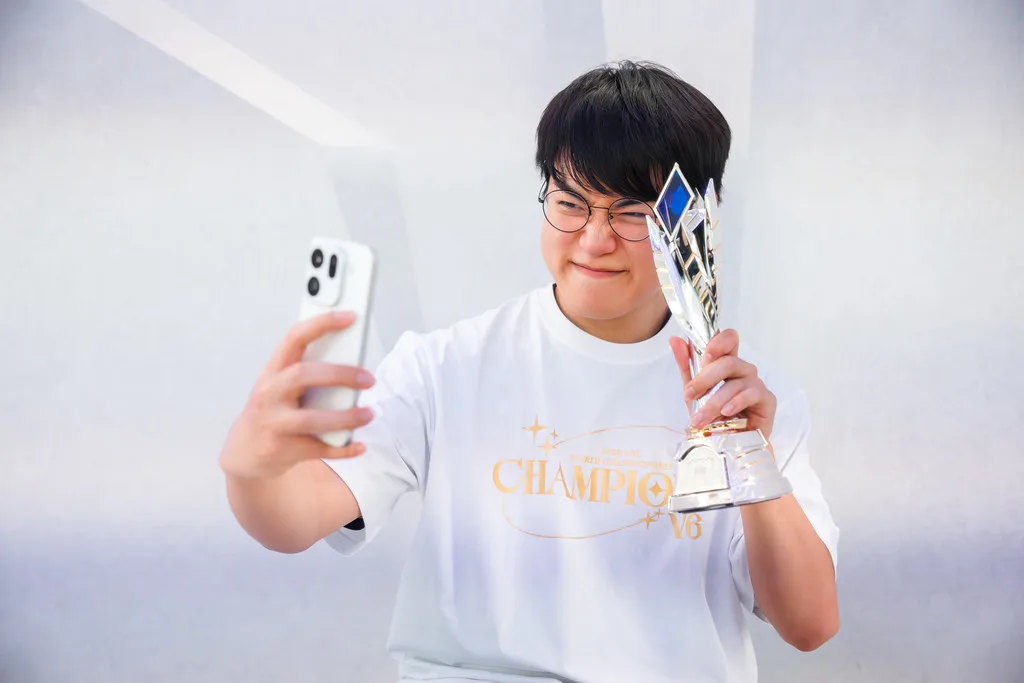
Gumayusi’s placement will look conservative to anyone starting with recent Worlds results. He won three consecutive world titles with T1 from 2023 through 2025 and took the 2025 Finals MVP. No other bot laner owns that sequence.
His value inside those T1 teams was specific. He could survive drafts that spent early picks or map attention elsewhere, then become the reliable damage source once Keria and Faker fixed the shape of a fight. When T1 did play through bot, his laning and long-range execution justified the shift. The role was not passive. It was elastic.
Moving to Hanwha Life Esports in 2026 gave the all-time argument a useful test. Gumayusi won MSI in his first season there with a new support, jungle, and mid structure. Zeus took Finals MVP in the 3-2 victory over Bilibili Gaming, but the title still answers part of the system-player criticism.
Tenth reflects a short runway, not doubt about the peak. Another two or three elite seasons outside the old T1 roster could move him above several celebrated veterans.
11. Caps
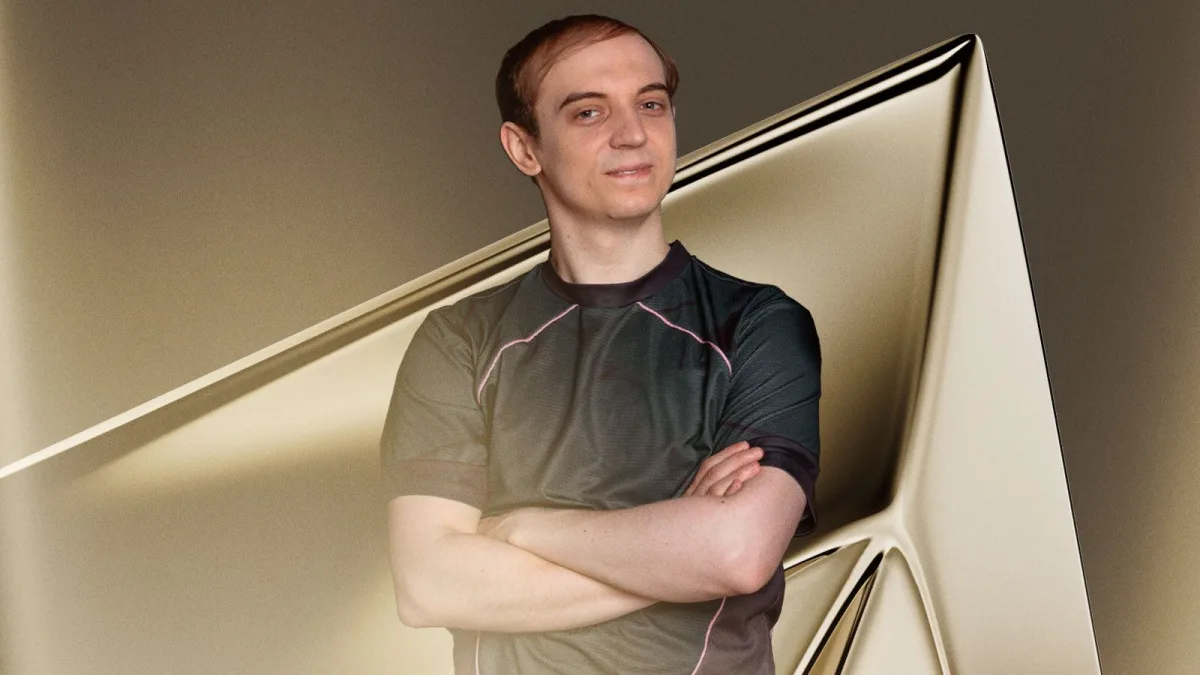
Caps is the clearest Western case and the most difficult strength-of-era adjustment on the board.
He reached the 2018 Worlds final with Fnatic, moved to G2, won MSI 2019, and reached another Worlds final that year. The second run mattered because G2 did not imitate the strongest Korean team. It attacked drafts, flexed champions across lanes, and used Caps as both a carry and a source of strategic disorder. The style changed what European fans could reasonably expect from an international tournament.
His domestic record is unmatched in Europe, and Riot named him the first Western player and third overall inductee to the Hall of Legends in August 2026. Those are not substitutes for a Worlds title. They establish longevity and regional dominance.
The deduction is competition. Winning the LEC repeatedly has not demanded the same weekly depth as winning the LCK or LPL. Caps’ international peaks prove he could beat the best. His list position reflects that he did not do it as consistently as the players above him.
12. Zeus
Zeus has already accumulated the outline of an all-time top-lane career. He won Worlds with T1 in 2023 and 2024, took the 2023 Finals MVP, then left for Hanwha Life Esports. HLE won the inaugural First Stand in 2025 and MSI 2026, where Zeus was Finals MVP after the five-game win over Bilibili Gaming.
That is an unusually clean answer to the roster-context question. Zeus won with Faker and Keria, then won international events with Zeka, Kanavi, Gumayusi, and Delight. His champion pool has supported weak-side tanks, lane pressure, side-lane carries, and unusual final-series answers.
He stays twelfth because the all-time list should resist recency. Smeb and TheShy had higher stretches of consensus lane dominance. Khan sustained elite top-lane play across more rosters. Zeus passes them on completed international leverage, but a few more years are needed before longevity stops being a projection.
The six hardest cuts
ShowMaker has the strongest omission: Worlds champion in 2020, a world finalist in 2021, and the mid-lane voice of DAMWON’s most commanding period. His peak belongs near the top ten. The decline after 2021 and narrower second act leave him behind players whose elite value traveled farther.
Keria may force his way in first. He has three straight Worlds titles from 2023 through 2025 and a champion pool that makes support draft feel larger. For now, Mata owns the more foundational role influence, while Gumayusi and Zeus have stronger proof outside a single support slot or roster structure.
Bengi won three Worlds and was an ideal strategic partner for Faker, especially when SK Telecom needed a stabilizing jungle game. He misses because the individual peak and independent system-building case are weaker than Canyon’s.
TheShy reached a top-lane peak in 2018 that few players have touched. Smeb sustained a broader period of lane and team-fight dominance without winning Worlds. Choosing Zeus over both puts more weight on repeated completed international performance, while acknowledging that his career is shorter.
Knight has the live case most likely to embarrass this cutoff. He owns domestic dominance, MSI 2023, a 2024 Worlds final, and First Stand 2026. He needs either a Worlds title or more years of international control to separate from the crowded mid-lane tier.
What 2026 can and cannot change
The calendar creates an easy factual trap. First Stand finished on March 22, 2026, with Bilibili Gaming beating G2 3-1. MSI finished on July 12, with Hanwha Life Esports beating Bilibili Gaming 3-2. Those results count.
Worlds 2026 does not. Riot has scheduled the event for October 15 through November 14 in Los Angeles, Allen, and Brooklyn. At this article’s August 30 cutoff, the tournament is upcoming. Regional qualification and late-season standings are also incomplete, so they are not treated as titles or final placements.
A Chovy or Canyon Worlds win would close the largest hole in either resume. A fourth consecutive title for Faker would extend a lead that is already secure. Gumayusi or Zeus winning again with HLE would accelerate the move from brilliant young career to historic one. Caps or Knight lifting the cup would reorder the lower half immediately.
Until those matches are played, the verdict holds: Faker first, the Chovy-Canyon pair closest, and no honest route from trophy count alone to the rest of the board.