
There are two versions of every Jinx fight. Before the first takedown, she is an immobile marksman trying to preserve one safe firing lane. After it, Get Excited gives her the speed to chase, reposition, and turn a small advantage into a broken fight. Her support’s most important job is getting her across that line.
Thresh is the best overall support for Jinx on Patch 26.17 because he can start the catch, move her out of danger with Dark Passage, and hold a target near Flame Chompers. Milio is the better answer when Jinx already has initiation elsewhere and only needs range, movement, and protection. Leona ranks third because she can force the first takedown earlier than either enchanter, but she leaves fewer exits when an engage is wrong.

Jinx does not need the same support in every draft. She needs a believable route to the first reset.
Patch check: Jinx was unchanged in Riot’s Patch 26.17 notes. Thresh lost damage and AP scaling on Flay, but the hook, lantern, displacement, and layered crowd control that define the pairing were untouched. This ranking was reviewed on August 30, 2026, four days after the patch reached live servers.
Start with the first-reset decision
Do not begin by asking which support has the highest duo win rate. Begin with the part of the draft that is missing.
- No one can begin a fight: Thresh or Leona gives Jinx a target she can safely hit.
- The enemy can reach Jinx too easily: Milio, Lulu, Braum, or Renata Glasc keeps the first dive from ending the fight.
- The lane will be chipped down before any all-in: Soraka repairs health; Nami makes short trades less one-sided.
- Your team already has setup and a front line: Milio or Lulu can spend more of the power budget on Jinx herself.
- The enemy draft relies on important projectiles: Braum can change which spells are allowed to reach the back line.
That decision explains why the order is not a copy of a statistics table. METAsrc’s Patch 26.17 bot-duo page placed Jinx pairings with Thresh, Lulu, Milio, and Leona in its S+ tier when checked on August 30. Its Jinx synergy page also showed Soraka and Nami among productive partners. Those snapshots confirm that several styles are working, but filters, samples, and scoring systems cannot tell your team whether it lacks engage or peel.
Eight Jinx partners, eight ways to start the fight
| Rank | Support | Route to the first reset | What can break the lane |
|---|---|---|---|
| 1 | Thresh | Catch, displacement, and lantern repositioning | Missed setup and late lanterns |
| 2 | Milio | Extra range, shields, speed, and crowd-control relief | Low early kill pressure |
| 3 | Leona | Repeatable hard engage from level two onward | No clean exit after a bad commit |
| 4 | Lulu | Attack-speed amplification and anti-dive control | A passive lane can concede too much space |
| 5 | Soraka | Sustain until Jinx reaches items and grouped fights | Soraka becomes the engage target |
| 6 | Nami | Flexible short trades and layered slowing | Bubble is unreliable as the only setup |
| 7 | Braum | Projectile denial and front-to-back peel | Limited pressure into ranged sustain lanes |
| 8 | Renata Glasc | Bailout and counter-engage around a committed dive | Short range and awkward early waves |
The list favors partners that help in lane without becoming irrelevant when lane ends. A support who creates three early kills but cannot keep Jinx on screen during a dragon fight has only solved half the problem.
The complete answer: Thresh
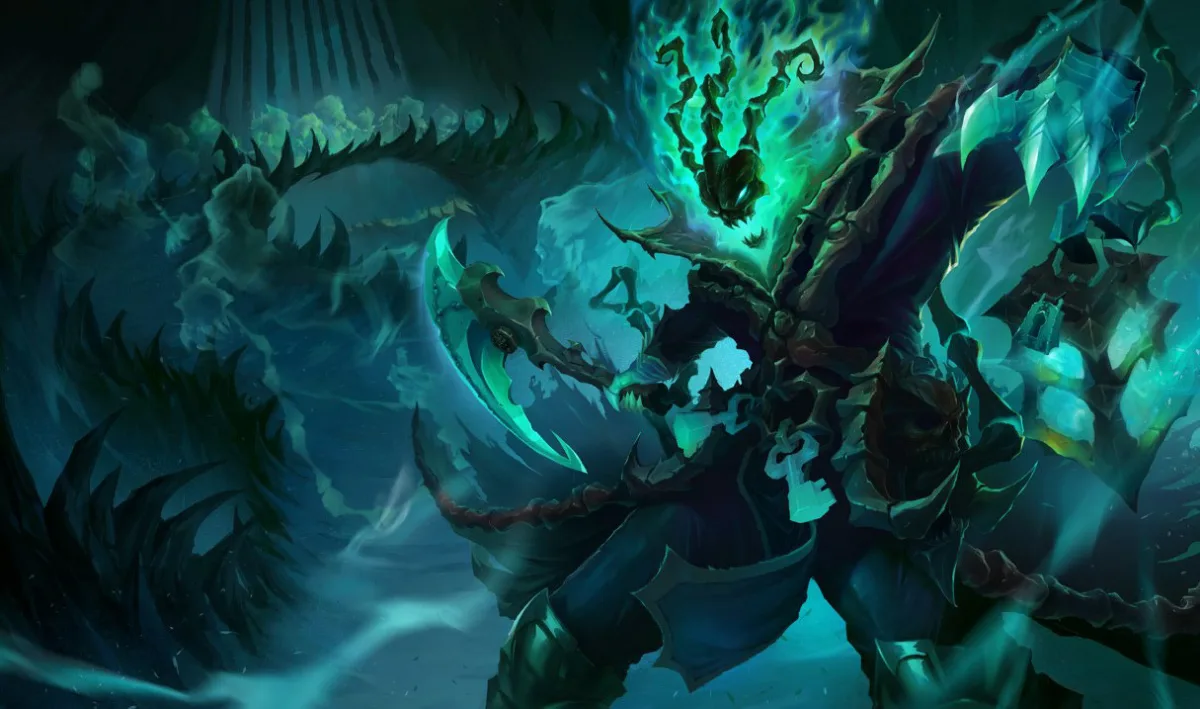
Thresh can create Jinx’s first target and then give her an exit when the enemy answers.
Thresh earns first place because every basic spell changes a decision Jinx normally struggles to make. Death Sentence creates the catch. Flay can pull a target back into Flame Chompers or interrupt a diver. Dark Passage lets Jinx farm or fire from a position that would be greedy for another immobile marksman. The Box makes the space around her expensive to cross.
The clean lane sequence is not hook into every cooldown at once. When Death Sentence lands, place Chompers slightly behind the enemy’s likely escape path. Thresh can then use Flay to keep the target near the armed traps. If Jinx throws E directly on the hooked champion before the traps arm, the target can walk out of both spells and the pair loses its best second layer.
Dark Passage is the less glamorous reason the duo lasts. Jinx often wants one extra rocket on a turret plate, a wave, or a low champion. A lantern placed before the enemy crowd control lands turns that greed into controlled pressure. A lantern thrown after Jinx is already locked down may be unclickable and useless. Thresh has to read the danger one spell earlier than the carry.
Patch 26.17 reduced Flay’s active damage and AP ratio. That trims some lane punishment, especially when Thresh maxes or itemizes around damage, but it does not remove the pairing’s core. Jinx still values the hook, displacement, slow walls, shield, and repositioning more than a small burst number.
Pick Thresh when the team needs a flexible first move, when the enemy bot lane can be displaced, or when Jinx will need a lantern against predictable flanks. Pass on him if the support player is uncomfortable landing hooks and managing lantern angles. An unpracticed Thresh does not become correct because a duo table likes the pairing.
The range solution: Milio
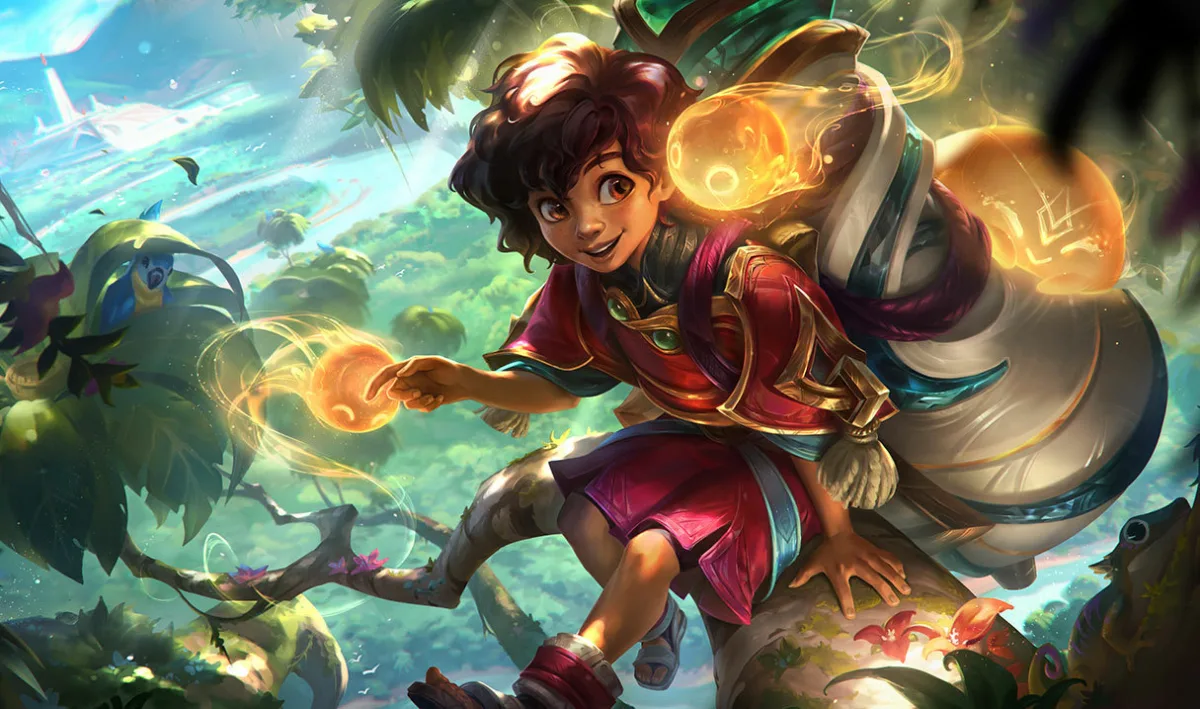
Milio makes Jinx harder to reach without asking her to stop dealing damage.
Milio does not manufacture the first kill as forcefully as Thresh. He makes the target safer to reach. Cozy Campfire heals allies and increases their attack range, which compounds the advantage Jinx already gets when she equips Fishbones. Warm Hugs adds a shield and movement speed, giving her room to step into minigun range or leave before the return engage.
That difference matters in front-to-back fights. Jinx frequently has a legal target, but the distance required to hit it places her inside the enemy’s engage range. Milio can move that boundary. He is especially useful when a top laner or jungler already supplies reliable initiation and the support does not need to spend the lane’s power budget on another hook.
Ultra Mega Fire Kick should usually protect the firing lane, not fish for a highlight. Knocking a diver away buys more attacks, and those attacks are what produce the reset. Breath of Life can heal and remove many crowd-control effects from allies in range, but it is not permission to ignore positioning. The cleanest Milio ultimate prevents a follow-up chain while Jinx is still healthy enough to use the freedom.
The cost is early authority. Jinx and Milio can be pushed or threatened by lanes that control level two and stack a wave for a dive. Keep the first waves simple, preserve health, and do not spend both Warm Hugs charges for chip damage when the opposing engage still has every cooldown.
Choose Milio when Jinx is the main sustained-damage threat, the team already has a front line, and the enemy wants to reach her through one or two readable engage spells.
The level-two gamble: Leona
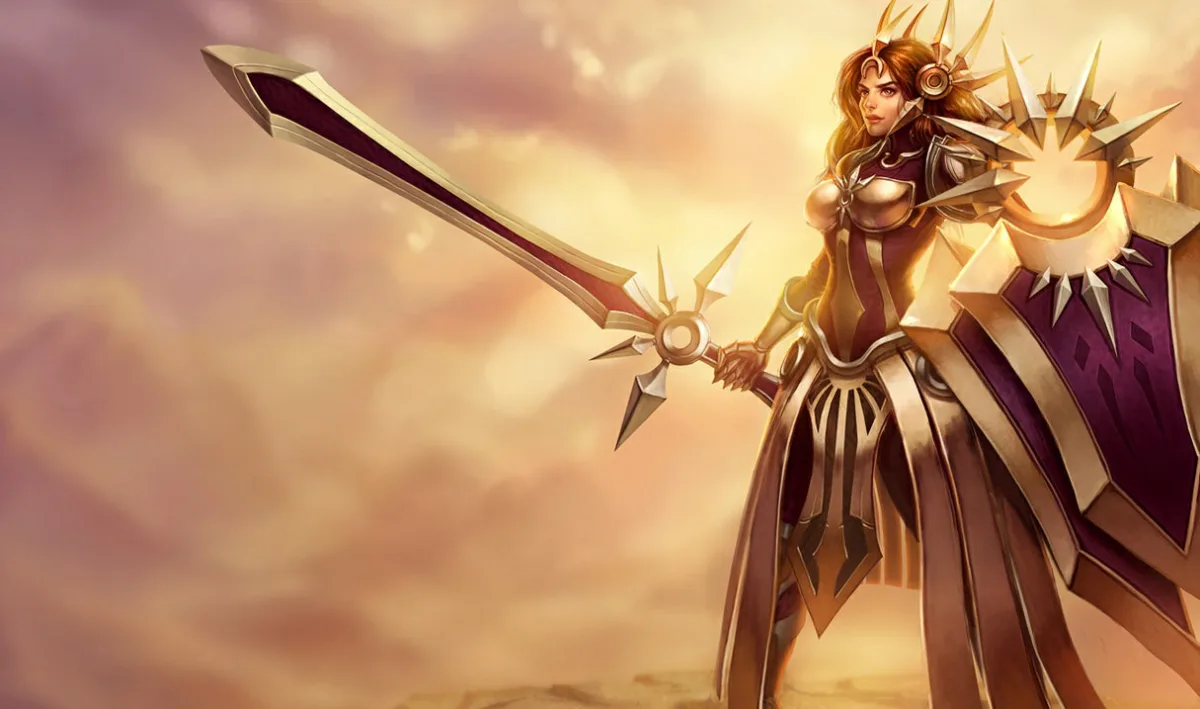
Leona gives Jinx the earliest reliable all-in among the top three.
Leona changes the lane before items matter. Zenith Blade reaches the target, Shield of Daybreak adds the stun, and her passive lets Jinx’s damage add another burst at each marked step. Flame Chompers belongs on the route out, not under a target who is already standing still for a moment.
The pairing has a clear level-two threat, but it is not automatically favored into every lane. Jinx needs useful ammo, enough health to walk forward, and a wave that will not deal more damage than the enemy champions. Engaging through a large hostile minion wave can turn Leona’s durability into a false sense of safety. If Jinx is rebuilding her Pow-Pow attack-speed stacks, standing at maximum rocket range, or last-hitting a cannon, the same Zenith Blade can be brilliant for Leona and impossible for Jinx to follow.
After level six, Solar Flare can start from beyond Jinx’s basic attack range. Use that distance to force a Flash or create the approach, then keep Q for the target who still threatens Jinx. Spending every control spell on the first tank is a poor trade if an assassin is waiting outside vision.
Leona is the right pick when the team lacks engage, the enemy bot lane has no easy disengage, and both players want to contest the lane early. She falls below Thresh because she cannot pull Jinx out after a mistake and below Milio when the draft already has more than enough initiation.
The ceiling raiser: Lulu
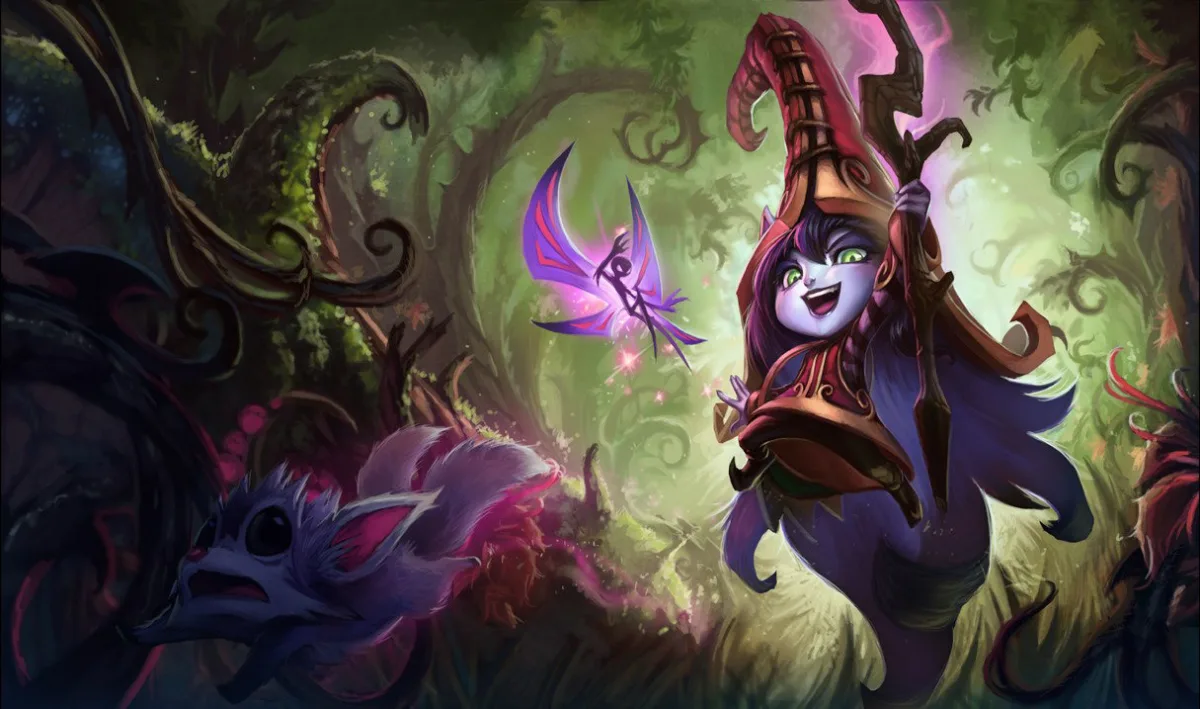
Lulu turns a protected Jinx into a faster carry and a committed diver into a critter.
Lulu supplies the stats Jinx wants and the disruption she cannot provide for herself. Whimsy grants an ally attack speed and movement speed, but the same button can polymorph the diver who would otherwise stop Jinx from attacking. Help, Pix shields Jinx and lets Pix contribute to her basic attacks. Wild Growth adds health, knocks up nearby enemies, and creates a slowing zone around the enlarged carry.
The skill in this pairing is choosing where Whimsy goes. Casting it on Jinx before a safe damage window helps her build minigun speed and reach the reset. Holding it for Rengar, Hecarim, or another committed threat can be worth far more. A support who automatically uses every buff on cooldown gives the enemy a visible window to engage.
Lulu lanes can also become too respectful. Jinx has useful rocket range, Zap slows, and a support who can shield a short trade. They do not need to concede every wave while waiting for three items. Use the range advantage to punish last hits, then back away before the enemy hard engage enters its best distance.
Pick Lulu when Jinx is the clear late-game centerpiece and the enemy must enter her space to win. Milio ranks higher because extra range solves more neutral-ground situations, while Lulu is at her best when the threat actually commits.
The lane repair kit: Soraka
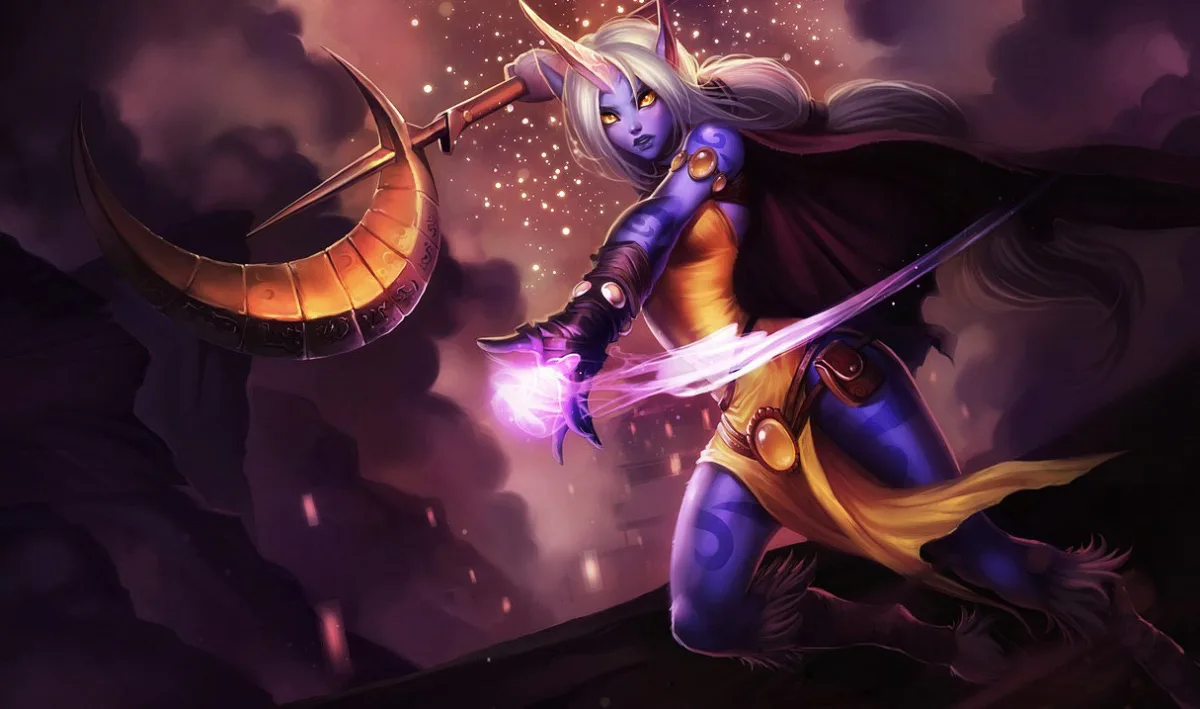
Soraka gives Jinx more attempts to reach the wave, the item breakpoint, and the next objective fight.
Soraka’s value is not simply that she heals a scaling carry. Starcall rewards her for contesting space, Astral Infusion converts her own health into Jinx’s lane stability, and Equinox creates a silence zone that can become a root. A target slowed by Zap or forced around Chompers has a much harder time leaving that zone cleanly.
This pairing works best when the opponent expects to win through repeated poke or short trades. Instead of gambling on one engage, Soraka removes the chip damage that would make the next wave unplayable. Jinx can keep farming, use rockets to manage distance, and arrive at the first grouped objective without already being pushed out by a bad health bar.
Soraka is also an obvious target. If she stands beside Jinx, one engage can threaten both members and turn Wish into emergency damage control. She should use Jinx’s range as permission to occupy a different angle, not as a reason to hide directly behind her.
Choose Soraka when surviving the lane is the real win condition and the enemy cannot reliably reach both back-line champions at once. Do not choose her as the only answer to a composition with several hard, long-range engages.
The balanced blind: Nami
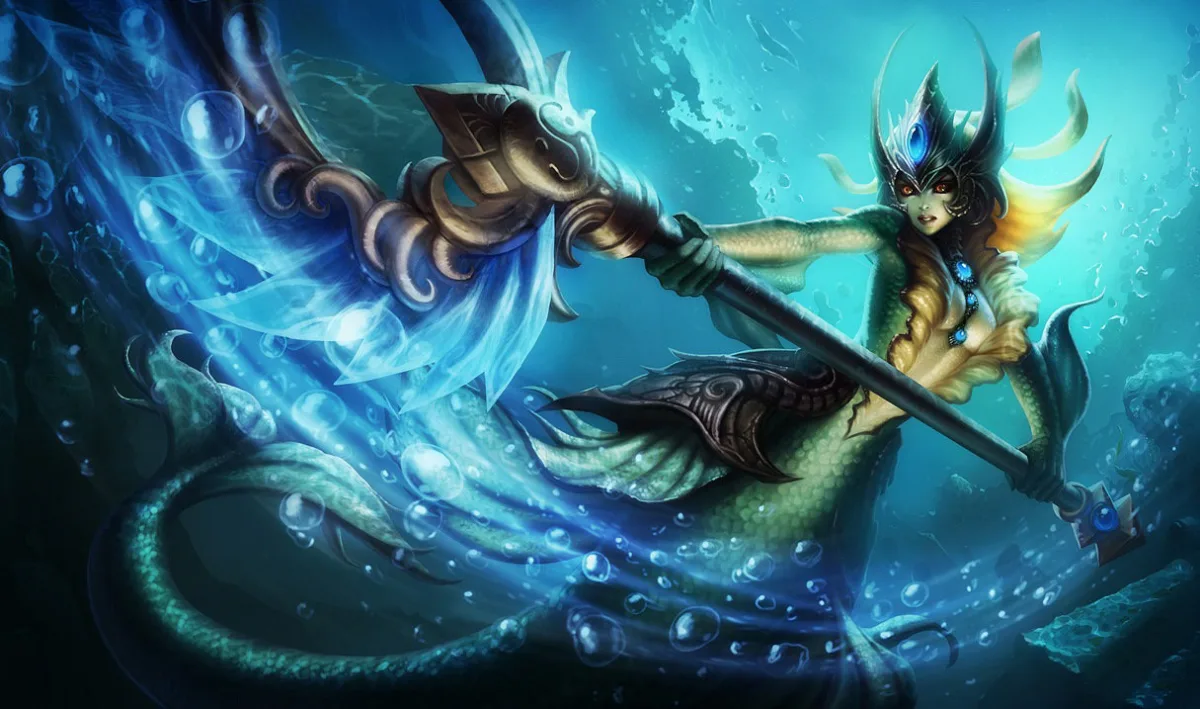
Nami can trade, sustain, speed Jinx up, and start a layered catch without committing the entire lane to one plan.
Nami gives Jinx a little of everything. Ebb and Flow can heal an ally and damage an enemy in the same exchange. Tidecaller’s Blessing empowers an ally’s attacks and spells with bonus damage and a slow, so both rockets and Zap can make the next skill shot easier. Tidal Wave begins a fight or breaks the speed of an incoming engage.
Aqua Prison is more reliable as the second control spell. Ask Jinx to land Zap, use an empowered rocket to slow, or let Tidal Wave shape the movement first. Throwing bubble at a freely moving opponent from maximum range turns the lane into a repeated test with poor odds. Layering it onto a target that already has to dodge Chompers changes the geometry.
Nami ranks sixth because she does many jobs well without owning one as completely as the picks above. She cannot extract Jinx like Thresh, extend range like Milio, or deny a diver as sharply as Lulu. That flexibility is exactly why she remains a comfortable blind pair when the full draft is unknown.
The anti-projectile wall: Braum
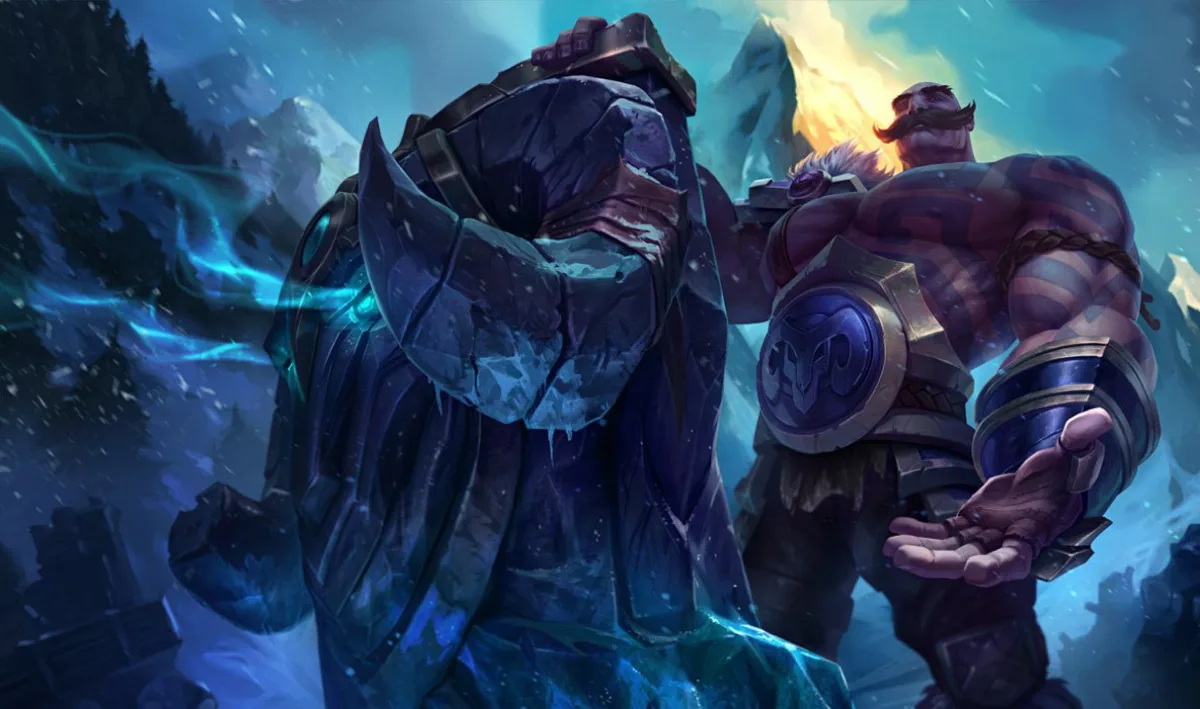
Braum makes one direction of the fight safer and gives Jinx a stun she can stack quickly.
Braum is the specialist choice for games decided by projectiles and front-to-back access. Unbreakable intercepts projectiles and can completely negate the first damaging hit from its direction. Stand Behind Me moves him to an ally and grants defenses. That combination can turn a dangerous sightline into several seconds of legal Jinx attacks.
His offensive setup is quieter but useful. Winter’s Bite applies the first Concussive Blows stack, and allied basic attacks can continue building toward the stun. Jinx’s minigun is excellent once she is close enough to attack safely. After the stun triggers, Chompers can block the next escape rather than overlapping the control that is already guaranteed.
Braum does not solve lanes where two long-range champions slowly own the wave and never walk into his threat. His shield protects a direction, not the entire map, and it cannot create pressure by itself. Pick him into projectile-heavy teams, predictable dive, or an enemy bot lane that must step forward. Leave him for another game when Jinx needs the support to create every offensive opening.
The anti-dive comeback: Renata Glasc
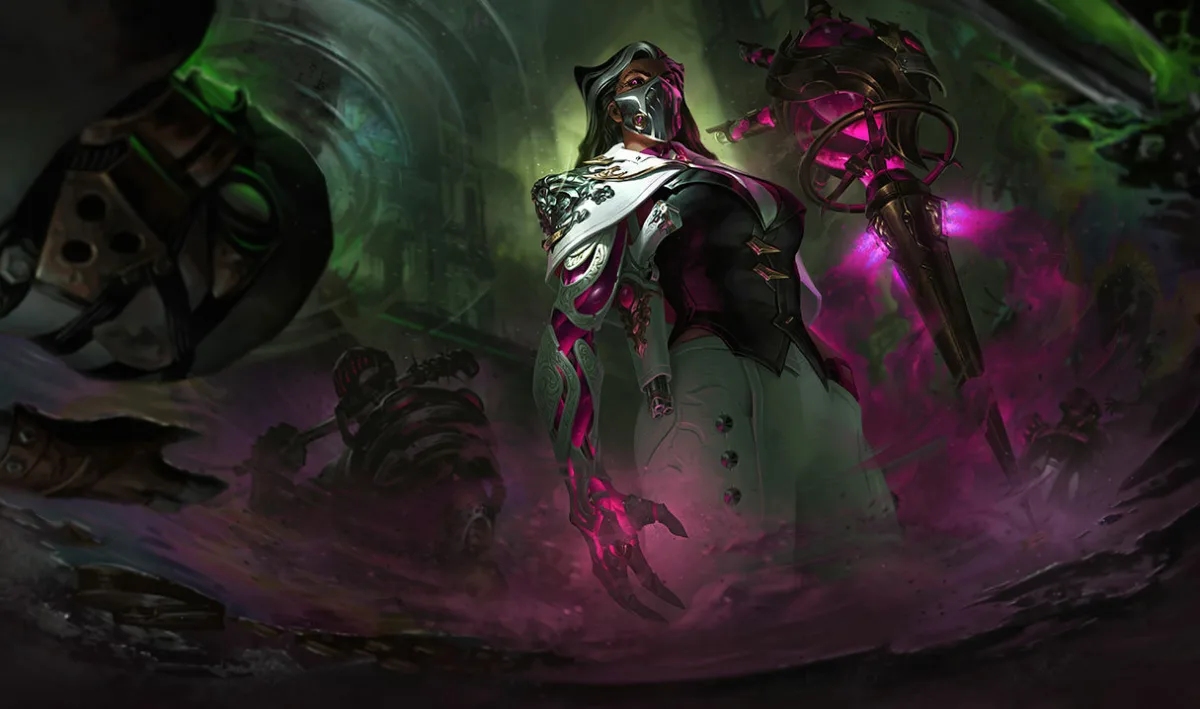
Renata is at her best when the enemy believes reaching Jinx has already won the fight.
Renata’s pairing is built around one reversal. Bailout buffs an ally, delays death, and can save the target if they secure a takedown. A Jinx who earns that takedown can also activate Get Excited. One low-health kill can therefore stop the burn, speed Jinx away from the original threat, and turn the fight before the enemy has reset its cooldowns.
That sequence is powerful, but it requires a realistic target. Casting Bailout after Jinx has lost range on every enemy only postpones the death. Renata should read which champion Jinx can finish, then use Handshake, Loyalty Program, or Hostile Takeover to keep that target available.
The lane can feel short-ranged and awkward. Handshake is a catch tool, not guaranteed access, and Renata cannot repair repeated poke like Soraka. She ranks eighth for general use but can jump much higher into dive compositions or teams that must run through a narrow objective entrance.
Sequence the lane instead of stacking every spell
The best supports for Jinx do not become good by pressing everything on the same target. They become good when one spell changes the odds of the next.
With Thresh or Leona, let the support establish direction before placing Chompers. The traps need time to arm, so place them where the target will escape or where a second enemy must cross. With Nami or Soraka, use the first slow or silence zone to narrow movement before asking a difficult skill shot to land. With Milio or Lulu, protect the damage window that can produce a takedown instead of spending every buff on harmless lane chip.
Around dragon and Baron, remember that Jinx can trigger Get Excited from takedowns on epic monsters and structures as well as champions. The first reset does not always need to come from a hero kill. A support who zones the enemy jungler, blocks a decisive projectile, or keeps Jinx attacking the objective can create the speed burst that wins the fight after the objective falls.
Vision changes every sequence. Jinx should not walk into a dark river because a lantern, shield, or resurrection effect exists. Secure the side entrance first, identify the engage spell that can stop her attacks, and make the first low target reachable. The reset is an outcome of good space, not a replacement for it.
When Thresh is not the right number one
Rankings should lose to the draft when the evidence is obvious.
Take Milio when engage already comes from top and jungle, and the enemy must cross a clear front line to reach Jinx. Take Lulu when one diver has to be polymorphed or Jinx is unquestionably the team’s late-game win condition. Take Soraka when the lane is a war of health bars rather than all-ins. Take Braum when blocking one projectile changes the entire fight. Take Leona when nobody else on your team can force action and the enemy lane can be punished early.
Nautilus and Blitzcrank remain reasonable catch partners, but this list does not need every hook champion. Nautilus offers reliable layered control but fewer rescue options than Thresh. Blitzcrank creates a cleaner single pick and a much thinner plan when Rocket Grab misses. Mage supports can dominate the right lane, yet a second fragile damage dealer often leaves Jinx without protection when teamfights begin. Yuumi can amplify a scaled Jinx, but the lane surrenders too much independent space for a broad top-eight recommendation.
Comfort still matters. A support specialist who understands Nami’s trade windows is more useful than a first-time Thresh trying to imitate a ranking. Use the order to choose among champions the support can actually execute.
What would change this ranking
This article was verified for live Patch 26.17 and Data Dragon 16.17.1 on August 30, 2026. Jinx was not directly changed in the patch. Thresh’s Flay damage nerf was included, and current duo pages were treated as early-patch context rather than settled proof.
The order needs a real review when Riot changes Jinx’s range, reset access, Flame Chompers, or the listed supports’ core protection and engage tools. A major bot-lane item or experience change would also matter. A new patch number alone is not a reason to swap names. The path to Jinx’s first reset has to change first.