
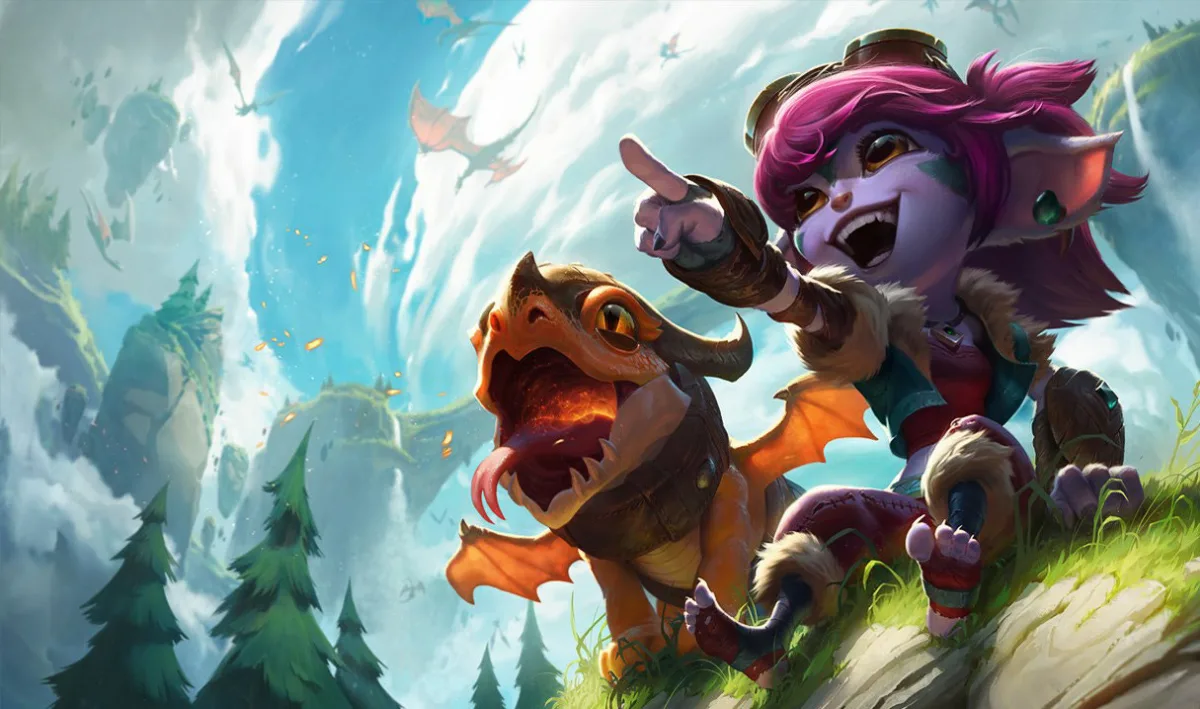
Rocket Jump lands behind the enemy marksman. Explosive Charge is attached, Rapid Fire is running, and the first attack connects. Then the opposing support interrupts the second attack, the target escapes before the fourth stack, and Tristana has no reset. Her support is still outside the fight. What looked like an engage was only a one-way trip.
Nami is the best support for Tristana as a default on Patch 26.17. Tidecaller’s Blessing helps Tristana keep contact after landing, Surging Tides changes the path in and out, and Aqua Prison or Tidal Wave can hold a target long enough to finish the bomb. More importantly, Nami can trade and sustain without pretending every available Rocket Jump is a good one.
That verdict is deliberately narrower than "pick the support with the highest win rate." Current data does not produce one universal order. A broad single-patch table keeps Nami, Braum, and Milio in the same strong cluster, while a three-patch, rank-split model gives its largest lower-rank signal to Yuumi and its largest higher-rank signal to Soraka. Different samples reward different parts of Tristana’s game. This guide uses those results as questions, then answers them with lane states, spell access, and failure cases.
Patch 26.17 did not directly change Tristana, Nami, Braum, Leona, Milio, Lulu, Soraka, or Yuumi in modern Summoner’s Rift. Some of those names appear farther down Riot’s page under a separate Classic heading, but those changes belong to League Classic and are outside this article. Tristana’s most recent direct 2026 balance adjustment came in Patch 26.12, when Riot increased her attack-damage growth and lowered Rapid Fire’s mana cost at every rank. Patch 26.1 had earlier moved Explosive Charge toward higher base damage with less bonus-attack-damage and critical-strike scaling. The launch problem itself remains stable: complete the charge, earn the reset, and have somewhere useful to go.
Tristana has a two-landing problem
Rocket Jump deals damage and slows around the landing point. A champion takedown refreshes its cooldown. So does detonating a maximum-stack Explosive Charge on a champion. That reset is the reason a Tristana all-in can look effortless when it works and stranded when it does not.
The first landing is easy to notice. It is the arc over the minion wave, the damage on arrival, and the moment both enemy players turn. The second landing is the better test of support synergy. After the bomb detonates, should Tristana jump after the fleeing target, sideways out of the support’s control, or back behind her own wave? A support may be excellent at authorizing the first jump and useless at controlling the next space.
Explosive Charge needs four added stacks for an immediate maximum-strength detonation. Tristana’s attacks and damaging abilities add those stacks. Rapid Fire accelerates the attacks, but attack speed is not immunity to a knockup, polymorph, exhaust, dash, or line-of-sight break. The support’s real job is to preserve contact for the small window in which those four inputs must happen.
Buster Shot complicates the picture. It deals magic damage, knocks the target back, and doubles the detonation radius when the target is carrying Explosive Charge. That can finish a stack sequence or throw an armed opponent away from retaliation. It can also remove the target from Leona’s melee range, Soraka’s Equinox, Nami’s bubble follow-up, or Tristana’s next attack. The ultimate is not automatically the last button in the combo. Sometimes it is the abort switch.
The launch checklist
A clean Tristana engage passes four checks in order:
- Name the bomb target. The support and Tristana must be able to reach the same champion. Crowd controlling the enemy support while Tristana bombs the marksman splits the lane into two losing fights.
- Account for the interruption. Rocket Jump can cross terrain, but it does not erase the enemy’s displacement, hard crowd control, Exhaust, or escape spell. The spell that stops attack two matters more than the spell that merely damages Tristana on arrival.
- Reserve enough contact for four stacks. A support slow, stun, knockup, movement buff, or attack-speed buff has value only if it covers the bomb window. Using every control spell before Tristana attaches the charge can leave nothing for the actual stack sequence.
- Choose the reset landing before takeoff. A warded river, a fresh enemy wave, or a missing jungler can make forward re-entry worse than jumping back. If the support cannot influence the reset space, the first kill may still trade Tristana’s shutdown or the next two waves.
This is why the best supports for Tristana are not all hard-engage champions. Some create a stationary target. Some keep Tristana attacking through retaliation. Others make the reset useful after the first target has already fallen.
Nami controls both sides of the jump
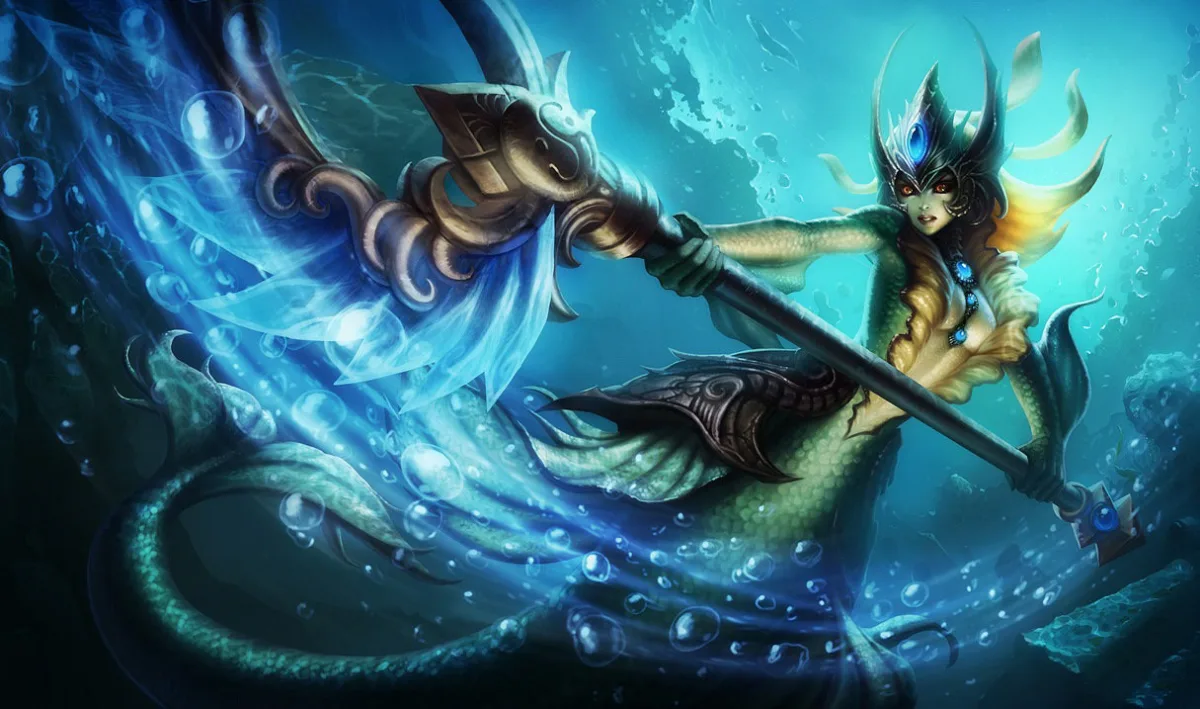
Nami is the complete default because she contributes before, during, and after launch. Ebb and Flow lets the duo take a short trade without spending Rocket Jump. If the bounce leaves the enemy marksman low enough to threaten, Tristana can hold the wave and make the next jump credible instead of forcing it immediately.
Tidecaller’s Blessing is the key connection. It empowers an ally’s basic attacks and spells with bonus magic damage and a slow. Cast before Tristana lands, it can make Rocket Jump’s contact harder to escape and then slow again through the following attacks. Nami does not supply the four bomb stacks herself, but she buys the time and spacing in which Tristana supplies them.
Surging Tides also matters more than it first appears. Nami’s abilities grant movement speed when they touch an ally, and Tidal Wave gives allied champions it hits twice that passive effect. Tristana can use the movement to reach the next attack without spending her reset forward. If the return play begins, the same movement can pull her toward Nami and away from a second enemy.
The level-two pattern should not begin with a blind jump into two healthy champions. Nami can pressure the first wave with attacks and use Ebb and Flow when a bounce has value. Once the duo earns level two and the enemy’s main interruption is unavailable, Tidecaller’s Blessing can precede Rocket Jump. The landing slow and empowered attacks keep the bomb carrier in range. Aqua Prison is often easier after that slow than as a hopeful opening bubble through the minion wave.
At level six, Tidal Wave creates a long lane of control. It can start the attempt, cover Tristana’s first landing, or travel through the fight as the reset becomes available. The last option is underused. A wave sent after Tristana has already committed can knock up the enemy support who tries to cross her firing line and give Tristana movement speed for the exit.
Nami’s failure case is front-loaded burst. She cannot make Tristana durable enough to ignore a full engage, and Aqua Prison has travel time. Against a lane that can instantly lock the landing point, the duo must first draw out that spell with a trade. Nami is launch control, not a license to jump through Leona’s available Zenith Blade or into a ready jungle flank.
Braum keeps one target on the runway

Braum solves a different problem: Tristana can reach the target, but needs that target to stop moving and the enemy lane to stop firing back. His first basic attack or Winter’s Bite applies Concussive Blows. After that first mark, allied basic attacks add stacks. Tristana’s Rapid Fire makes her unusually good at supplying the remaining hits, and the fourth stack stuns.
The order matters. If Tristana jumps before Braum has tagged the intended bomb carrier, her fast attacks do not begin Concussive Blows for him. A reliable lane sequence starts with Winter’s Bite or a Braum attack, then Explosive Charge and Rapid Fire. Rocket Jump can follow once the enemy’s route is visible. The Braum stun and bomb detonation then threaten to arrive in the same short exchange.
Stand Behind Me lets Braum leap to an allied champion or minion and grants defenses to Braum and the allied champion. It gives him a way to follow a moderate Tristana commitment, but it has a target range. A maximum-distance jump behind the enemy can still leave him unable to cross the same space. Tristana should land on a line that keeps an allied minion or her own model available to Braum, not assume the shield will teleport anywhere.
Unbreakable is the reason this pairing survives lanes that answer with projectiles. Braum intercepts projectiles from one direction, completely negates the first attack that reaches him, and reduces later damage from that direction. He can shield the route between Tristana and the bomb carrier while she finishes the stack sequence. He cannot block melee control, attacks coming from behind, or a spell already placed at the landing point.
Braum is the better choice when the opposing bot lane wants to trade through a clear projectile line or when the allied team already has initiation elsewhere. He is worse when Tristana needs her support to manufacture access against two long-range champions. Winter’s Bite into a minion wall is not launch clearance, and waiting for the enemy to walk into Braum can leave the lane permanently shoved without a way to punish the turret line.
Leona authorizes the hard launch
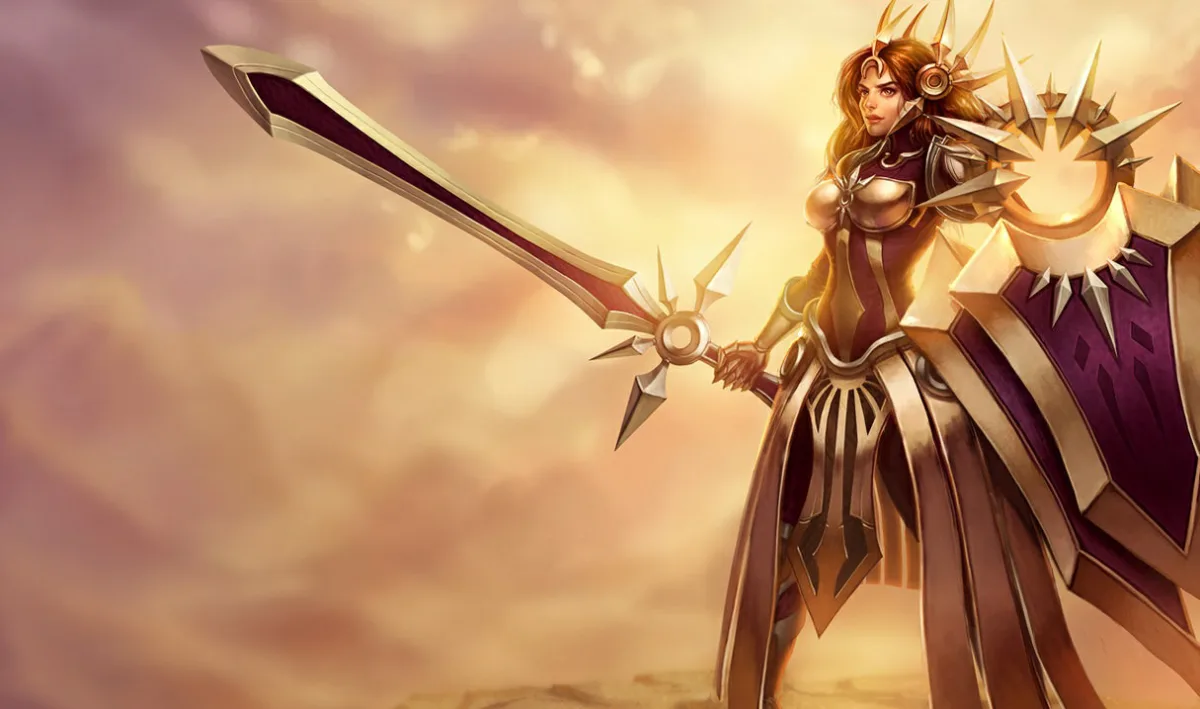
Leona is the direct answer when the lane can kill one target during a single control chain. Zenith Blade can cross the minion wave, but it locks onto the final enemy champion along its path and pulls Leona to that target. Shield of Daybreak then stuns with her next attack. Each damaging spell also applies Sunlight, which allied champion damage consumes for extra magic damage. Tristana supplies those triggers naturally while stacking the bomb.
The best version does not ask Tristana to jump at the first frame of Zenith Blade. Leona reaches the target, confirms which champion she caught, and absorbs the first response with Eclipse. Tristana attaches Explosive Charge and uses the jump to close the remaining distance or follow an escape. Shield of Daybreak can be held for the moment the target would otherwise break attack range.
That restraint protects the wave too. If Leona misses Zenith Blade through a large enemy wave, Tristana can keep farming instead of turning one missed spell into two misplaced champions. When Leona connects under the enemy turret, Rocket Jump is not automatically correct. The bomb may detonate, but the reset does not remove turret shots already in flight or create a safe second landing.
Solar Flare gives the duo a ranged start after level six. The center stuns and the outer area slows, which is enough to create access without asking Leona to cross every peel spell first. It is also valuable after Tristana resets. Placing Solar Flare across the enemy’s retreat can separate the bomb carrier from the support while Tristana decides whether the second jump goes forward.
Choose Leona into a lane with one reachable, fragile target and limited disengage. Avoid treating her as the universal aggressive answer. Janna, Milio, Braum, or any champion who can interrupt the path may leave Leona beside the target and Tristana on the wrong side of the wave. This pairing has the clearest launch command and the smallest margin when that command is wrong.
Milio makes the abort route real
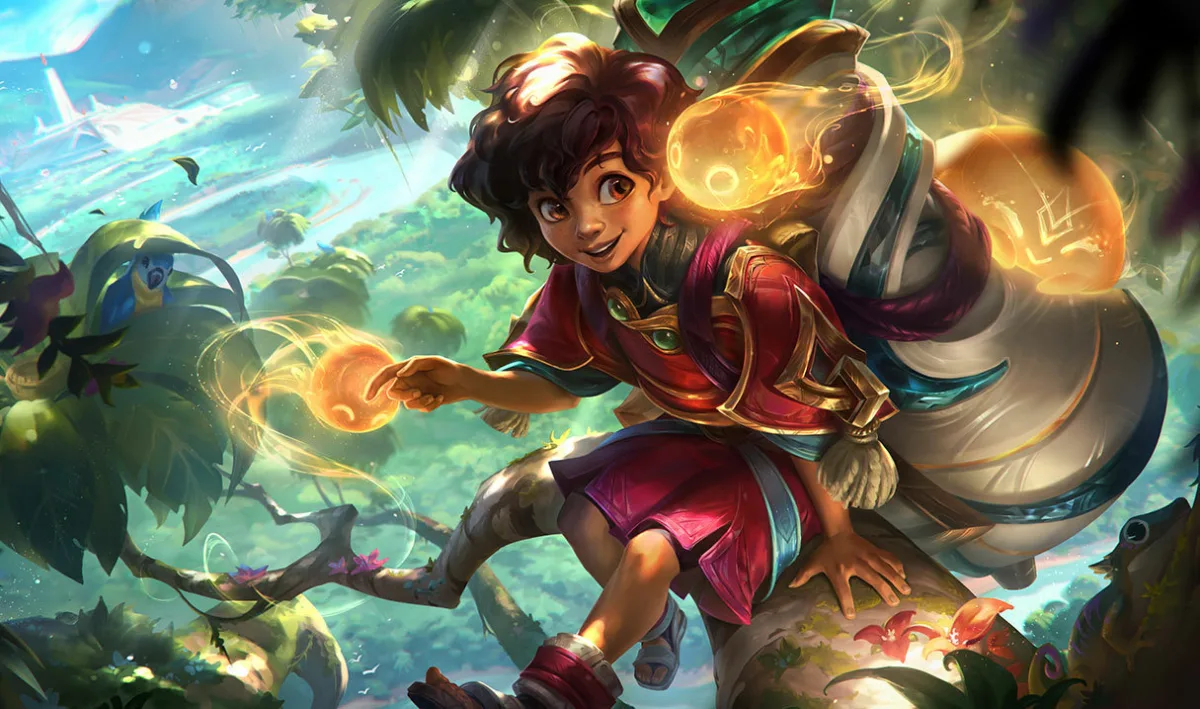
Milio does not pin the bomb carrier in place. He changes how long Tristana can threaten without crossing the danger line. Cozy Campfire heals allies inside and increases their attack range, following the ally nearest the cast point. Combined with the range Tristana already gains from Draw a Bead as she levels, the campfire can let her finish Explosive Charge from a position that would otherwise require a forward reset.
Warm Hugs has two charges, shields the target, and temporarily increases movement speed. That makes the spell a genuine two-landing resource. Spending both charges before Rocket Jump produces a larger-looking first entry but leaves nothing for the chase or retreat. One shield can cover the landing, while the second follows the bomb detonation and helps Tristana choose the safer line.
Ultra Mega Fire Kick is defensive control with a positional cost. It knocks the first enemy back, then falls and slows in an area. Used on a champion sitting beside Tristana, it opens room for another attack. Used on the nearly complete bomb target, it can kick that target out of range before the fourth stack. Milio and Tristana need to distinguish the diver who should be removed from the bomb carrier who should remain close.
Breath of Life heals allies in range and removes crowd control effects. It can restore control after many hostile catches, but it is not a rewind button for every displacement. If Tristana has already been knocked away from the target, cleansing the remaining control does not restore the lost attacks or put her back on the runway.
Milio belongs in drafts where Tristana can reach targets through normal attacks and needs protection from the response. He is less convincing when the team has no one else to start. Range and shields improve a valid firing position; they do not create a target who has already walked away.
Lulu protects the second entry
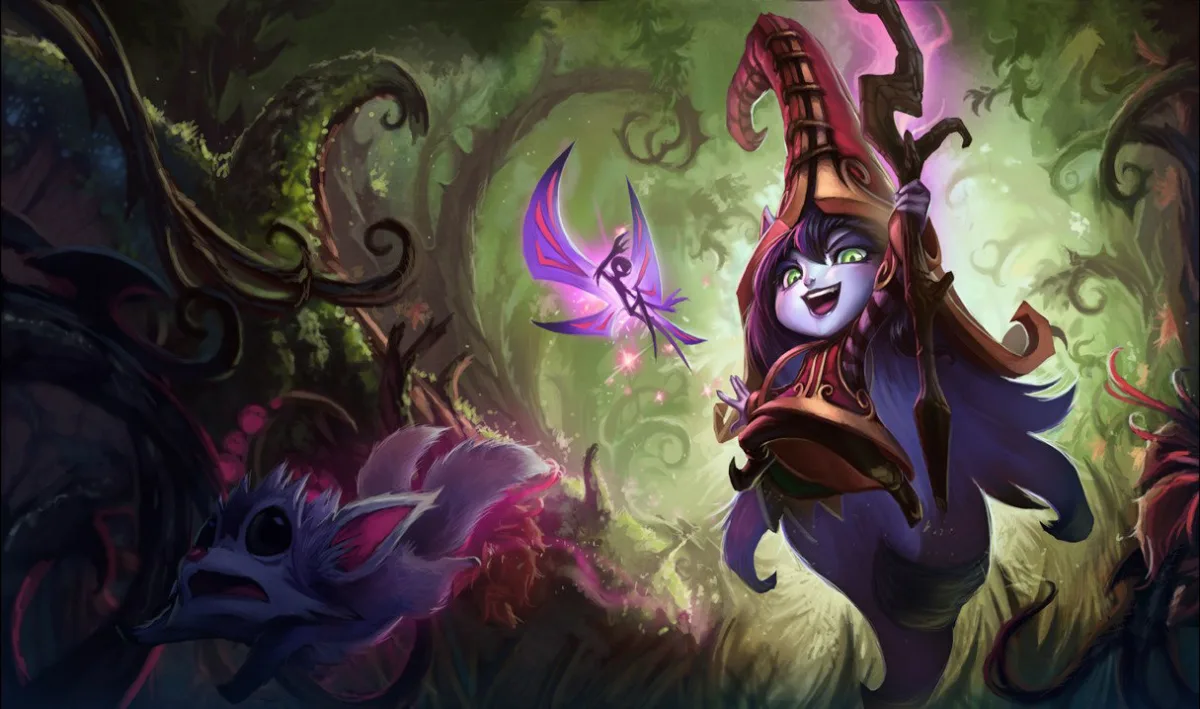
Lulu is the re-entry specialist. Whimsy cast on Tristana grants attack speed and movement speed, exactly the two resources needed to finish Explosive Charge without spending Rocket Jump only for contact. Cast on an enemy, the same spell polymorphs them so they cannot attack or cast. The choice should follow the interruption threat. Buff Tristana when the target can only run; polymorph the champion whose spell would stop attack two.
Help, Pix! shields an ally and moves Pix to that ally, where Pix aids their attacks. Tristana’s Rapid Fire gives that attachment a busy window, but Pix’s bolts can be intercepted by other units. The pairing still wants a clean firing lane rather than assuming every extra projectile reaches the bomb carrier.
Wild Growth is most valuable after commitment. It grants bonus health to the ally, knocks nearby enemies into the air, and leaves a slowing aura around the enlarged champion. Casting it as Tristana lands can interrupt the enemy support and keep the bomb target inside attack range. Casting it before any threat reaches her may spend the duo’s best answer while the enemy simply walks away.
Lulu does not offer the lane sustain of Nami or Soraka, and her direct engage range is limited. She is the right support when the enemy must enter Tristana’s space or when the allied draft wants Tristana to use the reset aggressively in a skirmish. She is a weaker answer to a lane that wins by standing beyond both champions and clearing waves.
Soraka turns one trade into the next launch
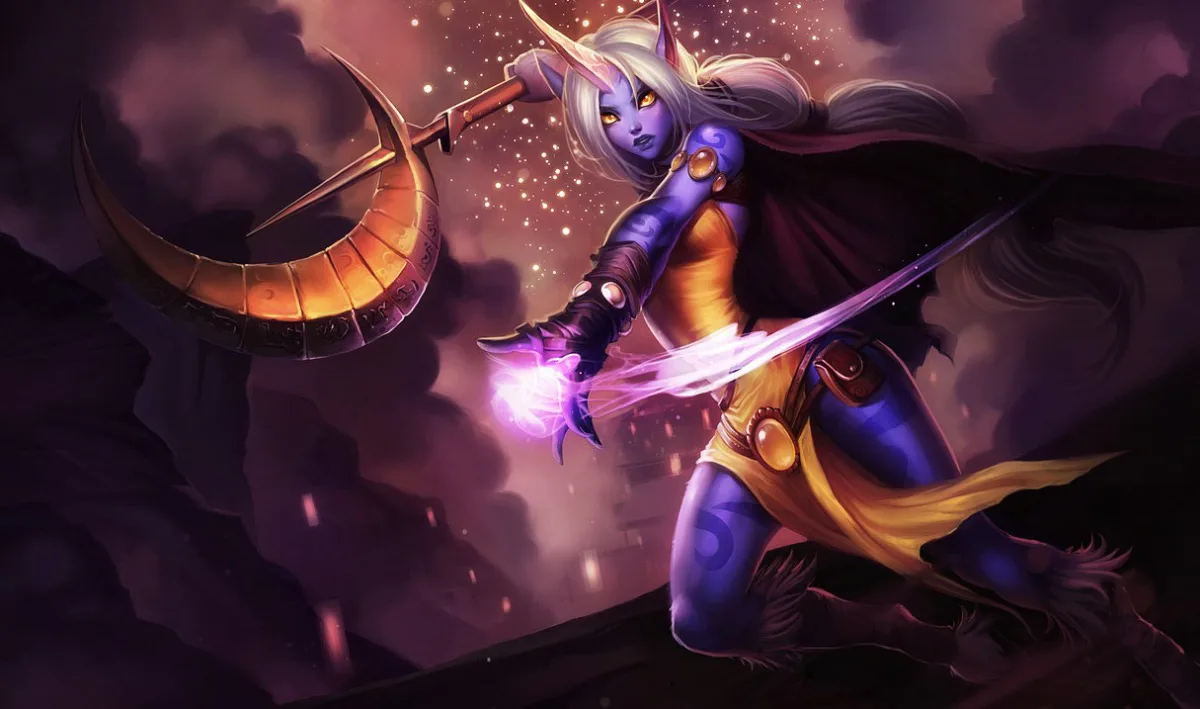
Soraka’s current higher-rank data signal makes sense when the lane is viewed over several waves instead of one combo. Starcall damages and slows in an area, and hitting an enemy champion restores Soraka’s health. Astral Infusion converts Soraka’s health into health for Tristana. The duo can take a partial bomb trade, recover, and threaten again before the opponent has repaired the same damage.
Equinox is the launch-control spell. Enemies inside are silenced, and those still inside when the zone expires are rooted. Place it under a target already slowed by Rocket Jump or Starcall, and the silence can deny an escape cast during the bomb window. If Tristana uses Buster Shot too early, she can knock that target out of Equinox and remove the delayed root herself.
Soraka is also excellent at refusing the enemy’s chosen launch. A diving support who enters Equinox may be unable to complete the next spell, while Tristana attacks the nearest legal target instead of chasing the marksman. Wish restores health to allies across the map, but in this lane it is still part of the health budget that can keep Tristana alive long enough to earn a takedown reset.
The failure case is access. Soraka cannot force two long-range opponents to stand in the same place, and her own positioning becomes fragile when Tristana jumps far beyond the wave. Salvation gives Soraka movement speed toward nearby low-health allies, but running toward a stranded Tristana can bring both champions into the collapse. Pick Soraka when repeated trades and anti-dive control create the opening, not when the draft needs an instant starter.
Yuumi’s data needs a draft attached to it

Yuumi deserves more than a footnote. RiftMind’s current rank-split view places the pairing well above its role-adjusted expectation in both displayed groups, with the larger signal in its lower-rank band. The sample is substantial enough to investigate. It is not proof that Yuumi should replace every other support.
The mechanical case is clear. You and Me! lets Yuumi attach to Tristana, so Rocket Jump cannot leave the support walking behind. On Yuumi’s Best Friend, the attachment gains additional value through heal and shield power for Yuumi and on-hit healing for the ally. Zoomies shields and grants movement speed and attack speed, while Prowling Projectile can slow the first target hit. Final Chapter can continue while Yuumi moves, attaches, and casts Zoomies.
That package follows both landings better than any support who must path around a wall. It also concentrates decisions on Tristana. Yuumi does not independently occupy a brush, hold the space between Tristana and a hook, or walk into river alone to establish vision. Her slowing projectile is not the same as Leona’s confirmed control or Braum’s projectile wall. If the allied jungle and solo lanes provide initiation and vision access, Yuumi can make a confident Tristana very hard to separate from her buffs. If the draft expects bot lane to create all of its own access, the attachment can leave Tristana with every launch decision and no flight controller.
The right reading of the data is not "Yuumi is secretly always best." It is that proximity after Rocket Jump has measurable value, and that Tristana can convert attack-speed, movement, shielding, and on-hit sustain efficiently. Select Yuumi when the rest of the draft supplies the ground crew.
The wave is traffic control
Tristana cannot freely freeze every lane. Explosive Charge’s passive makes her attacks that kill units damage surrounding enemies. A clean last hit can therefore soften other minions and move the wave even when Tristana would prefer to hold it. The support who attacks the wave without reading those explosions can turn mild pressure into a permanent push.
The first useful launch window is often level two. If the duo kills the first wave and enough of the second wave before the opponents, Tristana and her support gain a temporary extra ability. Leona can turn that timing into direct control. Nami can threaten an empowered jump while still having a trade spell. Braum needs a path for Winter’s Bite or an attack before Tristana begins firing. The level advantage lasts seconds, not the whole lane, so pushing beyond the timing without acting only exposes the long retreat.
Near the enemy turret, the support’s task changes from starting to screening. Tristana’s passive splash and bomb pressure can damage the wave quickly, but Rocket Jump behind a turret creates a poor reset map. The enemy jungler can arrive through river or tri-brush while the allied support remains in front of the structure. Nami should hold Aqua Prison for the entry route, Braum should face Unbreakable toward the incoming damage, and Milio should keep a Warm Hugs charge for the exit. Turret pressure is not downtime between all-ins. It is where the abort system earns its place.
On a wave returning toward Tristana, the lane finally has length. Leona can approach from brush without landing under a turret. Nami can layer slows across a longer chase. Soraka can place Equinox on the route rather than under a stationary wave. This is the launch state worth waiting for: the target must cross open lane, the support can remain connected, and the second landing does not have to enter unknown river space.
Draft for where the reset lands
Champion select should begin with the enemy spell that can cancel Tristana’s bomb sequence. If it is a projectile lane with a predictable direction, Braum can turn that line into protected firing space. If it is one mobile but fragile target and the team lacks initiation, Leona provides the cleanest hard launch. If the enemy plan is to dive Tristana, Lulu’s polymorph and Wild Growth or Soraka’s Equinox can make the diver the first bomb carrier.
Nami remains the default when the lane and teamfight both need options. She can start through Tidal Wave, follow through Tidecaller’s Blessing and Aqua Prison, or cancel through healing and movement. Milio is better when ordinary attack range already reaches the fight and hostile crowd control is the main problem. Yuumi is the specialist when allied initiation and vision are already covered and the support must stay attached through terrain.
Then inspect the allied front line. A team with a top-lane tank and an initiating jungler does not need bot lane to launch first. Braum, Lulu, Milio, Soraka, or Yuumi can invest more of their kit in the reset. A team with three backline champions may need Leona even if another support has a prettier duo statistic. The best support for Tristana is the one who makes her second landing part of the allied formation, not merely the one who makes the first jump look possible.