

Your jungler and support both want to play damage champions. An unusual top pick might win its lane, but someone still has to walk into the river first. That missing job should influence your choice before you start looking for a clever counterpick.
Zac is our first off-meta top recommendation when the draft needs a frontline. Cassiopeia is the alternative for sustained magic damage if you already know her spacing and mana limits. Lillia suits slower, health-heavy opponents who cannot easily keep her close, while AP Neeko offers ranged lane pressure that turns into area crowd control. These are four different plans, not four interchangeable blind picks.
Reviewed for modern PC Summoner’s Rift Patch 26.18 on September 10, 2026. Cassiopeia’s mana bill and damage distribution changed. Her repeated-E plan now budgets 45 mana per cast; the other three lane plans retain their documented conditions.
What makes these off-meta top laners worth considering?
Here, off-meta means an uncommon role assignment with a defensible purpose. Zac and Cassiopeia are established niche flex picks, not secret discoveries. Lillia and Neeko require a narrower lane plan. We are not calling Quinn or Kennen off-meta because they happen to attack from range.
These picks need a specific role plan, not a popularity threshold. Zac and Cassiopeia offer recognizable flex roles; Lillia and AP Neeko need more deliberate lane preparation. None is recommended as an easy climb simply because a historical role page recorded games.
The table describes favorable conditions, not guaranteed champion counters. A slow-looking tank can still have reliable crowd control. A melee champion with repeated dashes can make a ranged lane miserable. Check how the enemy actually reaches you, including the jungler, before deciding that your attack range wins the matchup.
You still have a top-lane job in 2026
Selecting a jungle champion does not make you the jungler. Your assigned position determines your role quest, with position changes handled in champion select. These plans assume you are assigned top, farm the lane, and buy lane items. They are not Smite or support-item strategies.
Leaving top still costs any farm you miss, but the quest allows brief trips. After level three, time in your assigned lane banks a period of increased passive quest progress that continues while roaming. That allowance does not replace lost minion gold or experience. The completed top quest raises your level cap to 20; its experience reward is 80 extra XP per champion takedown and 11% extra XP from other sources, following Patch 26.9. Keeping access to farm remains valuable even when solo kills are no longer realistic.
The top quest also grants Unleashed Teleport if you did not select Teleport. That reward arrives after completion; it does not rescue your first bad recall. Taking Teleport yourself provides the earlier lane-return option and, after the quest, an arrival shield. Its current shield is 35% of maximum health for 10 seconds, following Patch 26.12.
For an unfamiliar top matchup, Flash and Teleport are a sensible starting point. Trading Teleport for another combat spell needs a specific lane reason, plus a plan for getting back to a bad wave before the quest is finished.
Zac: can you collect the health you are spending?

Zac is the most natural fit here when your teammates need a tank. He can start a fight from an unexpected angle, displace enemies, and remain useful without expensive damage items. In lane, you need to recover the health his spells cost while an opponent contests the same wave.
His basic spells spend a percentage of current health. Ability hits shed pieces of goo that restore health when collected, and collecting goo also reduces Unstable Matter’s cooldown. Riot’s current spell tooltips make those exchanges explicit. Being manaless is not the same as casting for free.
Against a melee opponent, look for a short Q-and-W exchange when you can reach the resulting blobs without walking through their strongest attack. If collecting one puts you in range of a fresh stun or a long chase, leave it. Spending more health than the pickup returns defeats the purpose of the trade.
The wave can help your Q and hurt your escape
Stretching Strikes needs two different enemies for its displacement. You can attach Q to the champion, then attack a nearby enemy minion to pull the two toward each other. Trying to hit the champion twice does not produce that same result. Check that the second target will still be alive and reachable before committing.
This makes enemy minions more than obstacles. It does not make a large enemy wave safe to fight inside. Use the interaction to finish a trade or set up your jungler, not to justify standing among six minions while the opponent attacks you.
Fiora shows why the setup needs more thought than finding two targets. If Riposte blocks your Q knockup, its return stab can stun you instead of slowing you. Watch for her parry before completing the displacement, and move out of the return stab’s path. A successful Q attachment alone has not won the exchange.
Keep Elastic Slingshot available when the enemy jungler could be nearby. Using E to begin every minor lane trade spends the tool you might need to leave. Even with E ready, start retreating before the enemy reaches you; charging a jump while already surrounded is a poor escape plan.
For purchases, Doran’s Shield gives a defensive lane start. Bami’s Cinder can help with clearing, and Sunfire Aegis adds armor if physical damage is the immediate problem. That burn also hits nearby minions, so buying waveclear makes a delicate freeze harder to maintain. Spirit Visage supplies magic resistance and amplifies healing, but its heal bonus alone is not a reason to delay armor against a physical threat. These are functional options from the current item catalog, not a fixed optimal shopping order.
Zac is less appealing into opponents who can repeatedly punish his approach or recover through his modest trades while threatening a sustained duel. If the lane goes badly, stop measuring success by solo-kill pressure. Catch the next safe wave, buy defenses against the damage killing you, and arrive at a grouped fight with E and R available. Your team still needs someone who can create that opening.
Cassiopeia: the poison hit must justify the mana bill

Cassiopeia belongs in this shortlist for players who already like repeated spell casts and careful movement between them. She can give an otherwise physical-damage-heavy team a sustained magic threat. Top’s long lane lets her punish a retreating melee champion, but the same distance becomes a problem when she is the one retreating.
The basic exchange starts with Noxious Blast. A champion hit poisons the target and grants movement speed. Twin Fang then deals extra damage against that poisoned target and heals Cassiopeia. Move between casts instead of standing still to empty your mana bar. If Q misses, your justification for the extended trade is usually gone. In 26.18, E costs 45 mana rather than 40. Q has lower base damage and a higher 75% AP ratio, while Serpentine Grace amplifies movement-speed bonuses less. Budget the repeated E casts before using the long lane as a reason to chase.
Twin Fang can also last-hit. Its current tooltip refunds the spell’s mana when it kills the target. That makes a finishing E different from repeatedly throwing E at healthy minions. Use attacks to prepare a last-hit when safe, then E to secure it if necessary. Poisoning the whole wave simply to make every E stronger can spend more mana and push farther than your lane plan allows.
Grounding is a zone you must keep the enemy inside
Miasma slows, poisons, and grounds enemies in its clouds. Grounding prevents movement abilities while it applies. It is useful against a champion who needs a dash to continue a fight or escape, but it is not a blanket cancellation of everything they can do.
Place W where the enemy needs to move next. Dropping it well behind a champion who has already reached you does little to protect your current position. They can still attack and use non-movement spells, and walking out ends the restriction. Keep enough separation that the ground effect creates time for you to move.
Renekton makes that distinction concrete. Slice and Dice gains its second dash when the first hits an enemy, including a minion. Miasma can prevent him casting that second dash while he remains grounded, but it does not disable Ruthless Predator’s attack-based stun if he is already beside you. Protect the approach; do not mistake W under your feet for safety.
Petrifying Gaze also has a condition: it stuns enemies facing Cassiopeia and slows those facing away. A target turning their back can spoil an expected stun. Casting as someone commits toward you is often more useful than opening a chase with R from maximum distance. Riot’s current Cassiopeia tooltips support these mechanics; whether you can exploit them depends on spacing and the enemy’s remaining tools.
Plan your early purchases around repeated casting. Doran’s Ring supplies health, AP, and mana recovery. Tear of the Goddess puts gold into mana capacity and later stacking rather than health or AP, so a Tear start requires a lane where you can afford that tradeoff. An early Tear can feed an Archangel’s Staff route, eventually providing Seraph’s defensive shield after transformation. None of that means an unfinished Tear makes you ready for a long all-in.
Cassiopeia can buy boots now. Riot replaced the old no-boots passive in Patch 26.1; Serpentine Grace now increases the effectiveness of movement-speed bonuses. Do not copy an old six-item, no-boots shopping plan into this lane.
Avoid choosing her just because the enemy team has dashes. Repeated gap closers, ranged harassment that outranges your trading pattern, or a jungler who can approach from another direction can overwhelm one W. From behind, protect your mana for safe farm and the next real fight. Playing behind your own front line with W available can contribute more than insisting on a side-lane duel you can no longer survive.
Lillia: test the space around the target, not just its health bar
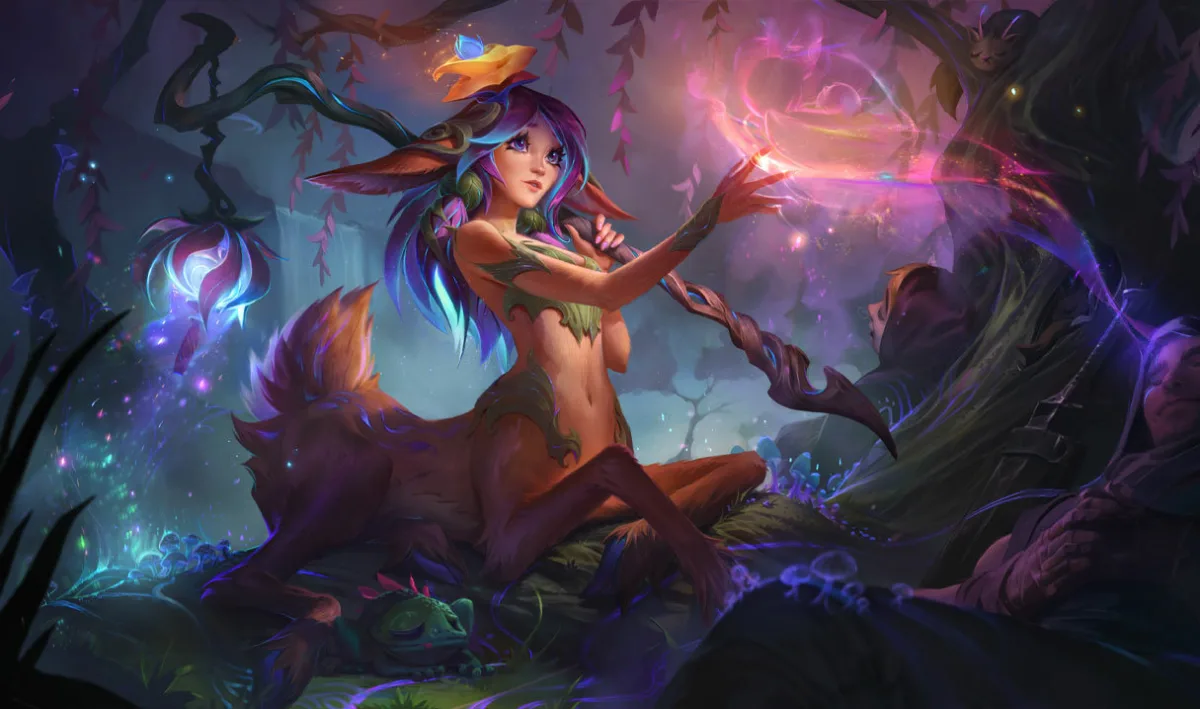
Lillia’s argument for top is clear against slow, health-heavy opponents. Her passive adds maximum-health damage over time, and the outer edge of Blooming Blows adds true damage on top of its magic damage. Landing spells also builds movement speed. You want repeated passes at the edge of their reach, not a stationary damage contest beside them.
Approach when you have a route back toward safety. Clip the opponent with Q’s outer edge, move away from their answer, and return when your next cast and their cooldowns permit it. Hitting only the inner area gives up the extra true damage. A point-and-click lockdown or a dash that keeps an opponent beside you can erase the spacing advantage, even if they have a huge health bar.
Nasus is a useful warning against judging the lane by his lack of a dash. Wither applies a targeted movement slow that grows stronger over its duration. Winning one outer-edge Q trade does not mean you can safely repeat it while Wither is available. Respect that cooldown before running close again; extra movement stacks do not remove the slow.
Farming does not reproduce jungle sustain
Lillia’s passive healing comes from affected champions and large monsters, not lane minions. Riot introduced that healing distinction in Patch 11.14. The current kit still ties Dream Dust to champions and monsters. Do not plan to heal back a failed trade merely by spinning through the next wave.
Mana is another difference from the jungle. Q costs 65 mana at every rank in the current data. Casting it repeatedly only to keep moving fast can spend the resources needed to contest your next last-hits. Hitting the wave for stacks also pushes it. If the opponent can hold that wave near their turret, your next safe Q may be much harder to find.
Doran’s Ring supports a normal farming start. Lost Chapter offers mana and a level-up mana refund; Blackfire Torch combines mana, AP, haste, and an ability burn. Liandry’s Torment instead brings health and a maximum-health burn without supplying mana. Choose which problem needs solving first. Copying a jungle damage purchase while repeatedly running dry in lane leaves the actual weakness untouched.
After level six, Lilting Lullaby works on champions already affected by Dream Dust. They become drowsy before sleeping, so pressing R does not instantly stop an opponent’s response. A landed Swirlseed can create a safer sleep opportunity than walking into several champions to spread Q. Once the sleep lands, the center of W is a useful damage target; do not rush an easy attack that wakes the target before you or your teammate can use the setup.
Lillia is the specialist option here, and repeated lockdown is a reason to choose someone else. If you lose control of the lane, preserve health for safe wave access instead of attempting to heal through increasingly expensive trades. Group when you can follow another champion’s engage or land E from safety. You remain a damage dealer with a sleep setup, not the tank who should absorb the enemy’s opening spells.
AP Neeko: harass without throwing away the root
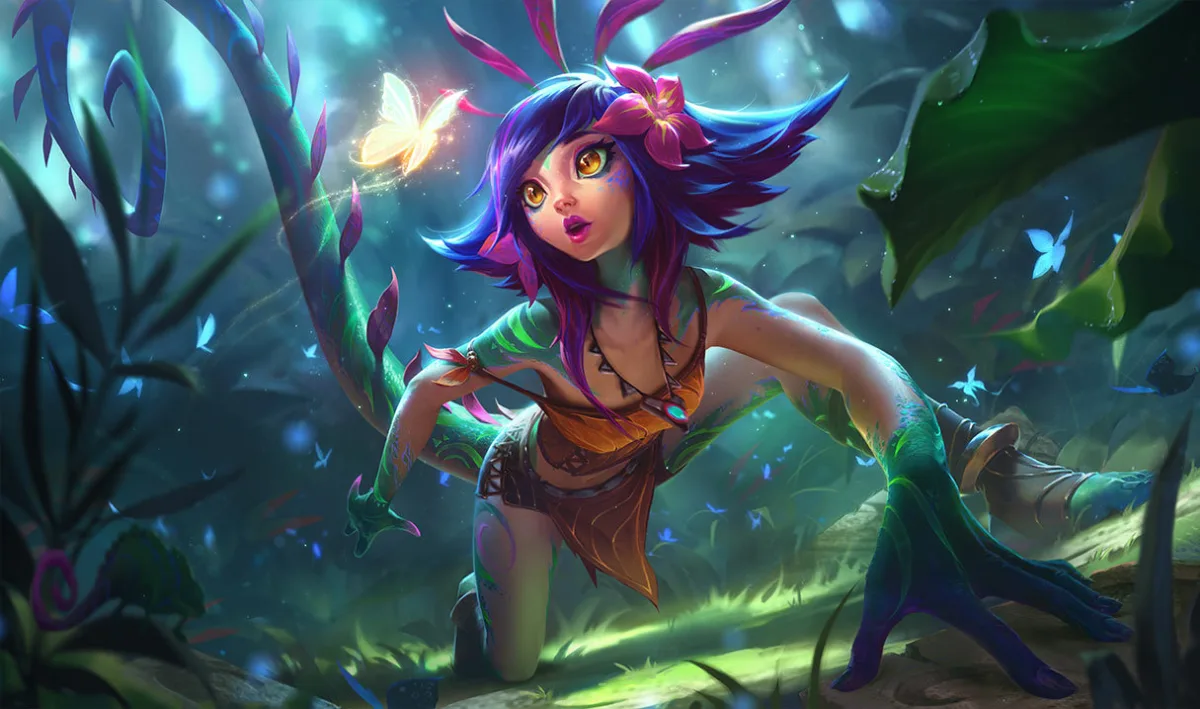
Neeko can make a melee opponent work for last-hits through her ranged attacks, Shapesplitter’s empowered third attack, and the threat of Tangle-Barbs into Blooming Burst. The useful result is a lane where the enemy must choose between farm and taking a controlled trade. An enemy with repeated access to you can overturn that arrangement quickly.
Prepare the empowered attack on minions when it does not ruin your wave, then use it as the opponent steps forward. Its movement-speed burst can help you leave the exchange. Spending Q and E every time someone approaches burns mana and removes the threat that made approaching dangerous.
E becomes empowered after hitting an enemy, so sending it through a minion can give the champion behind it a longer root. You do not need to kill that minion. An opponent hiding behind their wave can give you a better angle rather than block the spell. This follows the current tooltip and Riot’s archived root change.
Against Irelia, inspect your own dying minions too. Bladesurge resets when it kills its target, so she can cross the gap through them before reaching you. Step away from the next low-health minion she can use, and preserve E for her approach instead of spending it on speculative poke. Her route through your wave matters more than the distance between the two champions a moment earlier.
If E misses, step back before deciding whether to throw Q too. Keeping Shapesplitter’s active available gives you a brief invisibility window, movement speed, and a controllable clone. It does not teleport you out of danger. Against a gank, separate your movement from the clone and use the space you already preserved; do not expect the opponent to chase the fake every time.
This recommendation is AP Neeko, with spell damage and a useful grouped fight in mind. Doran’s Ring helps fund the lane. Hextech Rocketbelt can supply a short dash for reaching an engage, but it does not solve mana problems. Zhonya’s Hourglass supplies armor and stasis when surviving your commitment is the issue. Those choices serve a different job from an attack-speed or on-hit side-lane build. An empowered third attack does not, by itself, make the latter the correct purchase plan.
Pop Blossom knocks nearby enemies up before its damage and stun. Disguise can hide its preparation, making an approach from unobserved space valuable. You still need to get close enough. A visible walk through the enemy front line can leave you dead before the setup works, and disguise is not protection from area damage or immobilizing crowd control.
Neeko’s team-comp cost appears when nobody can stand in front of her, or when the enemy can absorb her initial spells and keep fighting. AP burst does not replace Cassiopeia’s repeated damage into a durable target. If lane pressure disappears, stop trying to win through autos alone. Clear what you safely can, retain E for the opponent’s approach, and look for a grouped fight where another ally can help you get R into range.
When the lane stops working, change the next task
A wave held outside the enemy turret is especially awkward for these picks. Lillia cannot safely circle an opponent there, Cassiopeia can spend her entire mana bar trying to break the freeze, and Neeko loses room to retreat after harassing. Zac may have no safe blobs to collect.
Ask your jungler to help finish the push into the turret if they are nearby and the two of you can do so safely. Explain that you need the wave reset, not a forced kill. If that help is unavailable, stay in experience range where possible and surrender the last-hits that would get you killed. A death followed by another lost wave makes the repair harder.
Once your outer turret falls, a wave arriving deeper on your side can offer safer farm, provided you watch for a dive. Do not automatically chase the enemy laner into the river. Catching that wave before a planned group can fund the defensive item or level you need to participate.
Before taking any of these into ranked, rehearse the interaction the lane depends on with a friend or in an unranked game. Have the opponent refuse it: step away from Zac’s second Q target, dodge Cassiopeia’s Q, stay inside Lillia’s outer edge, or wait for Neeko to miss E. Practice ending the trade and preserving the wave when that happens. If the pick only works when the opponent cooperates, keep practicing before asking your team to build a draft around it.