
Your damage reaches the enemy carry, a shield catches the finishing hit, and the target escapes. Consider Serpent’s Fang when shields it can reduce are stopping your team from finishing a target. You need to reach that enemy with damage, and the AD/lethality stats need to fit your build. Seeing a shield somewhere on the enemy team is not enough reason to buy it.
On Summoner’s Rift, its Shield Reaver passive reduces eligible shields by 50% for melee users or 35% for ranged users. A qualifying damaging hit applies a three-second debuff. On first application, existing eligible shields are reduced before that hit deals its damage. New eligible shields gained during the debuff are reduced too. Magic-only shields are excluded, including Morgana’s Black Shield. The community-run League Wiki’s Serpent’s Fang entry documents those rules and the current application exceptions.
This buying decision concerns Serpent’s Fang in standard PC Summoner’s Rift. Arena and Wild Rift item rules are outside its scope.
Riot’s 26.18 bugfix stops Shield Reaver damage from applying Omnivamp. The fix does not change the melee or ranged shield-reduction percentages above. Buy the item for eligible shields, not for healing from removing them.
Identify the shield that stopped your damage
Start with the actual shield, not the champion’s reputation for being hard to kill. League distinguishes normal shields, physical shields, and magic shields. Serpent’s Fang reduces the first two categories. Check this before spending gold after a lost fight.
| Shield on the target | Does Shield Reaver reduce it? |
|---|---|
| Normal shield, which absorbs physical, magic, and true damage | Yes. The holder’s melee or ranged reduction applies. |
| Physical shield, which absorbs physical damage | Yes. Physical shields are eligible. |
| Magic shield, which absorbs magic damage | No. Magic-only shields are excluded. |
These categories are documented in the shield mechanics reference. A large magic-only shield is still excluded, so its size alone cannot justify the purchase.
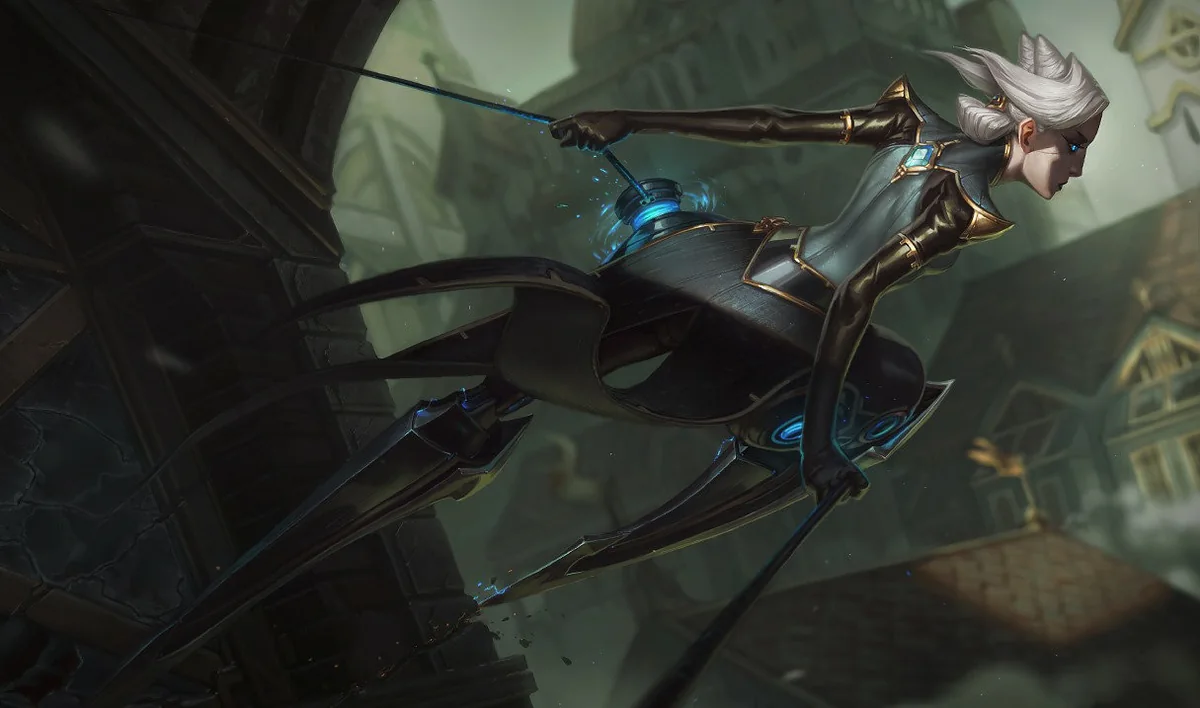
Camille makes the distinction concrete. Adaptive Defenses can grant her a physical or magic shield. A physical Adaptive Defenses shield is a valid Fang target; the magic version is not. Check which shield she has before buying Fang for the matchup.
Suppose a melee AD champion is repeatedly fighting Camille while her physical shield is active. Fang can reduce the protection stopping the finish, provided the buyer lands damage while that shield matters. If she escapes before you can hit her, Fang cannot apply the reduction that you bought it for.
Morgana’s Black Shield is the wrong shield type

Morgana’s Black Shield absorbs magic damage and grants crowd-control immunity while it holds. Fang does not reduce this magic-only shield. Buying it specifically to remove Black Shield and enable a teammate’s crowd control is the wrong interaction.
A spell shield works differently from Black Shield. A spell shield blocks a hostile ability rather than supplying the same kind of damage buffer. Fang does not shrink that ability-blocking protection, and damage blocked by a spell shield does not trigger Shield Reaver. You still need to land qualifying damage after the blocked attempt. A champion can have more than one kind of protection; identify which one stopped the hit.
Healing and bonus maximum health are different problems too. A health-pool increase is not a shield for Fang to reduce, and neither is restored health. Fang also does not bypass invulnerability. Keep the purchase tied to a defense it can actually affect.
Your first damaging hit can cut an existing shield

You do not have to break the whole shield before Fang becomes useful. If the enemy does not already have the Shield Reaver debuff, your first qualifying hit reduces their active eligible shields before dealing damage. A hit can trigger the reduction even when the remaining shield absorbs all the damage and the target loses no health.
This timing is part of the current item interaction notes. Riot also fixed an immediate-application problem involving attacks with on-hit effects in patch 14.4. Current Fang is a shield-reduction passive; the shield you remove is not a separate burst of guaranteed bonus damage.
Consider a hypothetical enemy with a 100-point normal shield that can absorb the triggering hit. Ignore other shield modifiers. A melee holder reduces that shield to 50 points; a ranged holder reduces it to 65. The removed capacity is 50 or 35 points respectively.
Now suppose the melee holder’s triggering hit deals 40 damage after the target’s resistances and any damage reductions. Fang first reduces the shield from 100 to 50, then the 40 damage leaves 10 shield. Without Fang’s reduction, that same hit would leave 60 shield.
You removed 50 points of protection, but the target lost no health in either version of the example. Whether that turns into a kill depends on follow-up damage before the shield expires and on whether the target remains reachable. Do not read the removed shield amount as damage already dealt to the health bar.
The three-second mark does not restart on every hit
Once Shield Reaver is active, eligible shields gained during its three-second duration are reduced. If the enemy’s support shields them a moment after your first hit, the new shield arrives smaller. You can therefore apply Fang shortly before the shield, rather than waiting for it to appear.
Subsequent damage during the active debuff does not refresh its timer. It also does not keep halving the same remaining shield. That initial cut happens when you mark an enemy who does not already have the debuff. Each attack is not another cut to all their remaining shields.
For a hypothetical sequence:
- At zero seconds, your qualifying hit applies Shield Reaver to an unmarked champion. Their active eligible shields are reduced before the hit deals damage.
- One second later, the enemy gains another eligible shield. That new shield is reduced because the original mark is still active.
- Two seconds after the first hit, you damage the enemy again. The original mark still expires at three seconds; this hit does not extend it to five.
Early poke only reduces a later shield if the mark is still active when that shield arrives. One hit long before your team can follow up does not permanently weaken the target’s shields. Pay attention to the three-second window rather than assuming continuous damage keeps restarting it.
What do you give up to finish Fang?
The current Serpent’s Fang item entry lists 2,500 gold, 55 attack damage, and 15 lethality. Its build path is Serrated Dirk plus Pickaxe and 625 gold to combine them. You are spending a full item slot on AD, lethality, and Shield Reaver.
For a champion that already wants those stats, the shield reduction can justify choosing Fang instead of the damage item you had planned to finish. For a champion whose build depends on ability power, attack speed, or a defensive completion, the same purchase can be a much larger detour. Reducing those shields needs to help the next fight more than the stats or effect you delay.
There is no universal second- or third-item rule. A second-item Fang might address the exact defense stopping an AD champion’s next fight; the same timing can leave another champion short of a required damage spike. Compare it with the item your champion would otherwise complete.
The lethality guide explains the armor-penetration part of those stats. Fang’s shield reduction does not remove the target’s armor. If the shield disappears and you still cannot damage the target effectively, the shield may not be the main reason the fight fails.
Picture the next fight with each purchase. If you die before you can hit the protected enemy, a defensive completion may matter more. If you already reach them and survive, compare how much damage their eligible shield absorbs with what your alternative item would add.
Choose a holder who can apply it to the right enemy
The 50% melee value is larger than the 35% ranged value, but access can matter more than the percentage on the tooltip. A melee holder who cannot reach the protected carry contributes no Shield Reaver to that carry. A ranged AD champion that can safely damage the same target may provide useful reduction from its normal position.
That does not make every ranged champion a good buyer. They still have to evaluate the lost item slot and whether AD/lethality fits the rest of their build. Likewise, a support is not automatically responsible for buying Fang just because the effect can help the team.
Coordinate around the intended target. Reducing a shield on a frontline champion does not mark the enemy carry standing behind them. A buyer whose damage consistently reaches the important shielded enemy is a better candidate than someone who can only apply Fang to a target your team cannot finish.
Because the effect reduces the enemy’s shields, your teammates can get through that protection sooner when they attack the same enemy. Decide who can land the hit while the rest of your team is in position to follow up.
A final shop decision: complete it or change course?
Suppose you already own Serrated Dirk and Pickaxe, have 625 gold, and expect a fight before your next recall. That is enough to complete Fang. The components alone do not grant Shield Reaver.
If the next target’s eligible shield absorbed your last finishing hit, and you expect to reach them again, completing Fang lets your first hit cut that protection. The short recipe makes the purchase available for that fight; it is the shield you can reach that makes it useful.
If the target is surviving behind Black Shield or escaping before you can land damage, being close to completion does not fix the mismatch. Being one combine payment away is not a reason to finish an item that cannot solve this fight. Reconsider what you buy or which target your team can attack.
Before spending the combine gold, name the enemy, the eligible shield, and the hit that will apply Shield Reaver. That gives the purchase a job in the coming fight.