
The first bad recall is where most off-meta support ideas die. The level-two trick did not produce a kill, the enemy froze the returning wave, and the champion that looked clever in select still wants the expensive component it normally buys in top, mid, or jungle. Your ADC now has to recover the lane beside a partner whose useful spell was supposed to be damage.
Start with Poppy when the enemy’s engage depends on a dash you can stop. Steadfast Presence can protect the carry, Heroic Charge turns a wall into a stun, and Keeper’s Verdict can remove a second threat. Choose Neeko for ranged control when your lane can contest the minion line. Fiddlesticks, Zac, Shaco and Anivia need the more specific setups described below.
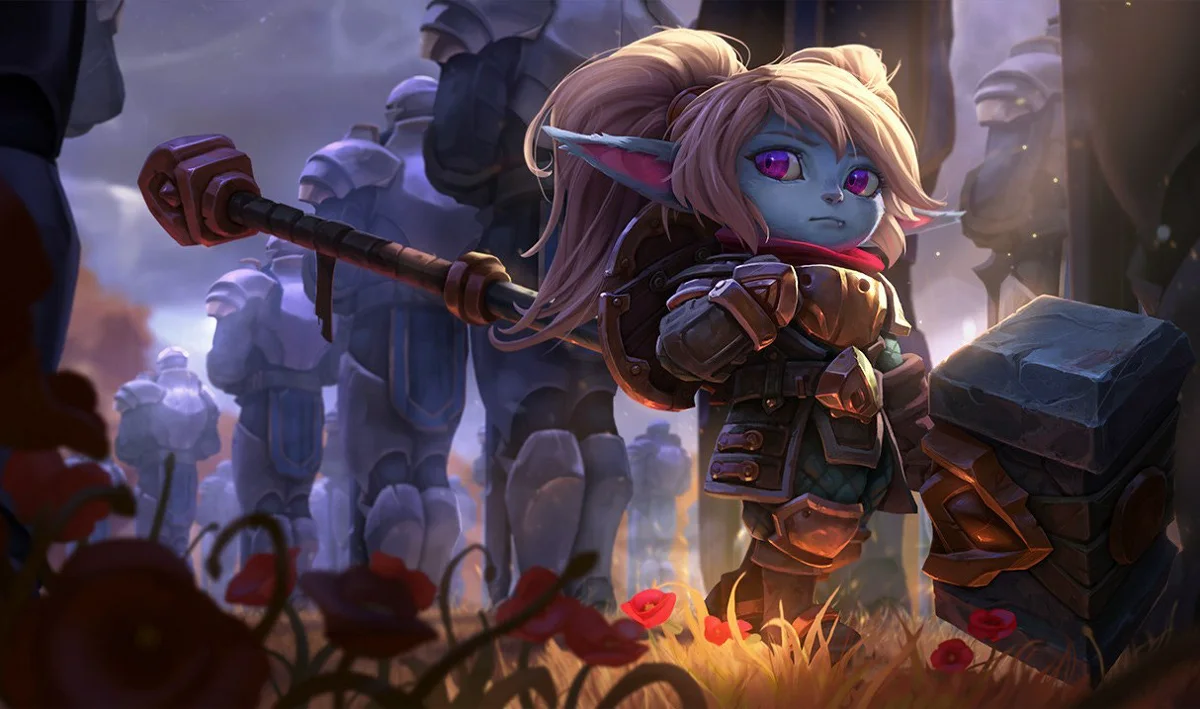
Poppy’s dash denial, wall stun and fight-splitting ultimate work on support income. Choose her when the enemy’s entry gives those tools a target.
That answer is deliberately stricter than a list of surprising champions. An off-meta support still has to function without farm, share control of the wave instead of taking it, offer something after falling behind, and solve a problem visible in the draft. If the only argument is that opponents will not know what the champion does, the lock has already failed.
Reviewed for modern PC Summoner’s Rift Patch 26.18 on September 10, 2026. The six support plans still depend on low-income control and a shown draft need. The order is editorial; previous-patch rates have been removed from the recommendation.
What counts as an off-meta support here
Off-meta here means moving a familiar solo-lane or jungle plan into the support economy. Poppy and Neeko have recognizable support tools, so an experienced opponent may already know the lane. The label does not establish a current pick-rate cutoff. The useful question is what the champion contributes without taking bot farm.
A real support spell keeps value when gold is late. Poppy’s dash denial does not need an item completion. Neeko’s root still controls a target after a losing recall. Fiddlesticks can fear or silence an enemy even when Crowstorm will not delete the back line. Zac’s knockups still exist on a tank budget. By contrast, a solo-lane carry whose only contribution is a ratio has brought the wrong economy into bot lane.
The wave test is just as important. A support can help secure level two, thin a dangerous stack, or finish a crash with the ADC. It cannot repeatedly take the next wave because its normal role clears faster. Neeko, Fiddlesticks, Shaco, and Anivia all have area spells that can change a freeze by accident. Their player needs a reason for every cast through minions. "Poke" is not a reason when the spell leaves the enemy carry healthy and the wave stranded in front of the wrong turret.
Then comes the recovery test. Ask what the champion does at 0/2 with one completed support item and no private side lane. If the answer still includes peel, terrain control, vision pressure, or reliable crowd control, the pick may survive. If the answer is "wait for two damage items," it is not a support recommendation. It is a bet that the lane will fund a second carry.
The final test belongs to champion select. An off-meta lock should exploit a shown dash, a short-range enemy composition, an immobile bot lane, a choke-heavy objective plan, or an allied carry that can immediately follow the first crowd-control spell. Blind novelty is not flexibility. It transfers the cost of uncertainty to the other four players.
Choose the control your draft needs
The selection below weighs useful spells on support income, control of the wave, recovery after a losing lane, and a draft condition that makes the unusual pick worth taking. These are practical criteria; no verified 26.18 support sample is used to assign the order.
| Pick | Editorial reading |
|---|---|
| Poppy | Dash denial when the enemy must enter your space |
| Neeko | Functional kit, but the lane must earn her pressure |
| Fiddlesticks | Plausible specialist with a real fog and anti-melee job |
| Zac | Terrain entry that requires practice and reachable follow-up |
| Shaco | Control pick only, not a generic damage support |
| Anivia | Narrow terrain specialist, not a broad recommendation |
| Camille | Requires a prepared duo and immediate follow-up |
An off-meta support needs a narrower reason than a conventional tank or enchanter. Pick the champion whose control solves the shown lane, then check whether your ADC can use that control without conceding the wave. A highlight combo does not answer those two questions.
Practice is part of the entry requirement. Before taking Zac into ranked, rehearse the wall angle, the follow-up Q and the route out when the landing fails. Familiarity with his jungle clear does not establish that you can manage the same engage on support income.
Poppy passes before the draft becomes exotic
Poppy belongs first for her low-budget control: she can deny a dash, threaten a wall stun and remove a second threat. That makes her the flexible choice here when the opposing entry actually depends on mobility.
Steadfast Presence supplies the part that survives every economy. When activated, it stops enemy dashes around Poppy. A stopped enemy is then slowed and grounded. That changes champion select immediately against Rakan, Leona, Pyke, Zac, Camille, or another engager whose entry has to pass through Poppy’s space. She does not need to predict the whole fight. She needs to stand where the important dash must end.
Heroic Charge needs a more honest setup. The push becomes a stun only when Poppy drives the target into a wall. In lane, the clean angle often appears after the wave has moved toward a side brush or when the enemy support walks between the minions and the outer wall. Charging through open lane because E is available produces displacement without the promised control, and it can place Poppy behind the target while her ADC is still walking around the wave.
Her best early state is a wave held near the middle or slightly on her side. The opponents have enough lane behind them for a wall angle to matter, while Poppy remains close enough to interrupt an engage on her carry. Under the enemy turret, she loses room and risks charging into a return crowd-control chain. Under her own turret, she can deny a dive but may struggle to reach a ranged lane that simply takes plates and leaves.
Keeper’s Verdict gives Poppy a late support job even when the lane went badly. She can knock enemies far away, separating a front line from the damage that was meant to follow. The ultimate can also ruin an allied burst window if it removes the target everyone already reached. Use it to change the numbers of the fight, not to prove that the button was available.
Do not blind Poppy into every bot lane. Two ranged champions can take health before she ever sees a wall stun, and an enemy composition with few dashes leaves much of Steadfast Presence unused. She passes because her control is cheap and exact. The draft still has to present something worth controlling.
Neeko needs the wave to cooperate

Neeko earns the ranged slot when her lane can shape the minion line for an empowered root instead of throwing spells through it at random.
Neeko offers a ranged alternative built around roots, disguise and area control. Choose her when you can contest the minion line; do not assume a disguise compensates for a lane that cannot safely approach the wave.
Tangle-Barbs explains both the appeal and the lane requirement. E passes through units, so a minion does not block the root aimed at the carry behind it. The line still has to reach that champion. Casting through the wave can change its position and spend the spell protecting your ADC’s next last hit; agree on the intended target and wave state before using it.
Her disguise creates a different kind of pressure. Inherent Glamour lets Neeko look like an allied champion or another unit. Pop Blossom hides the first part of its preparation while she is disguised, then reveals her before the cast finishes. The practical support use is not endless costume play. It is making one approach hard to count. A disguised Neeko moving with the wave can force the opponents to identify the real threat before deciding whether to step up. Shapesplitter can send a clone forward and alter that read again.
Neeko works best with an ADC who can help trim the wave and act on one root. Caitlyn, Jhin, Varus, or another marksman with ranged follow-up can turn the empowered E into damage without Neeko crossing the whole lane. She also fits a team that already has a front line. Pop Blossom is much easier to deliver when another champion occupies the space that would otherwise stop her.
The failure case arrives when Neeko becomes the only body willing to enter. A low-income mage walking into vision for an ultimate is not reliable initiation. Long-range opponents can also clear the wave and stay outside the root line, while a hard engage lane can punish the moment E misses. Pick Neeko because the wave and draft can carry her setup. Do not pick her because a disguise might embarrass someone once.
Fiddlesticks wants a doorway, not a fair lane

Fiddlesticks needs brush, fog, or a narrow entrance. A visible, fair approach removes the reason to take it out of the jungle.
Fiddlesticks has unusually support-shaped control: Terrify can fear a target directly, damaging spells can fear while Fiddlesticks is unseen and out of combat, and the center of Reap silences enemies it catches. Those effects still matter when the damage budget is late.
The lane is not a contest to see whether Bountiful Harvest can out-drain two champions. The channel hits nearby enemies and places Fiddlesticks in a predictable spot. If it catches the minion wave, it can also take control of a freeze the ADC wanted to keep. Against a melee support, hold the spell until that champion enters or until the wave genuinely needs thinning. Against double range, channeling in front of the minions is often an invitation to lose half a health bar before the final drain tick.
Terrify gives the lane a stable defensive answer. A direct cast can make the first engager flee even when Fiddlesticks was visible. Reap can then silence the space where the enemy wanted to use a second spell. That sequence is especially valuable against short-range lanes that must walk through one doorway between the wave and brush. It is less convincing against sustain and long-range poke, where the enemy never has to enter the small area Fiddlesticks controls.
After level six, the support job moves away from fair vision. A Harmless Scarecrow replaces the normal trinket with effigies, and Crowstorm rewards a channel from outside enemy sight. The useful play begins before the ultimate: clear the approach, stand behind terrain, and let the team show a target worth collapsing on. Starting Crowstorm from a warded river brush turns the champion into a slow mage with no lane farm.
Fiddlesticks is a good answer to a melee-heavy composition that must face-check or funnel through narrow terrain. It is poor when the team needs a visible front line, when the enemy can siege from range, or when the player treats every effigy as decoration instead of part of the ambush.
Zac needs a wall the enemy forgot to price in
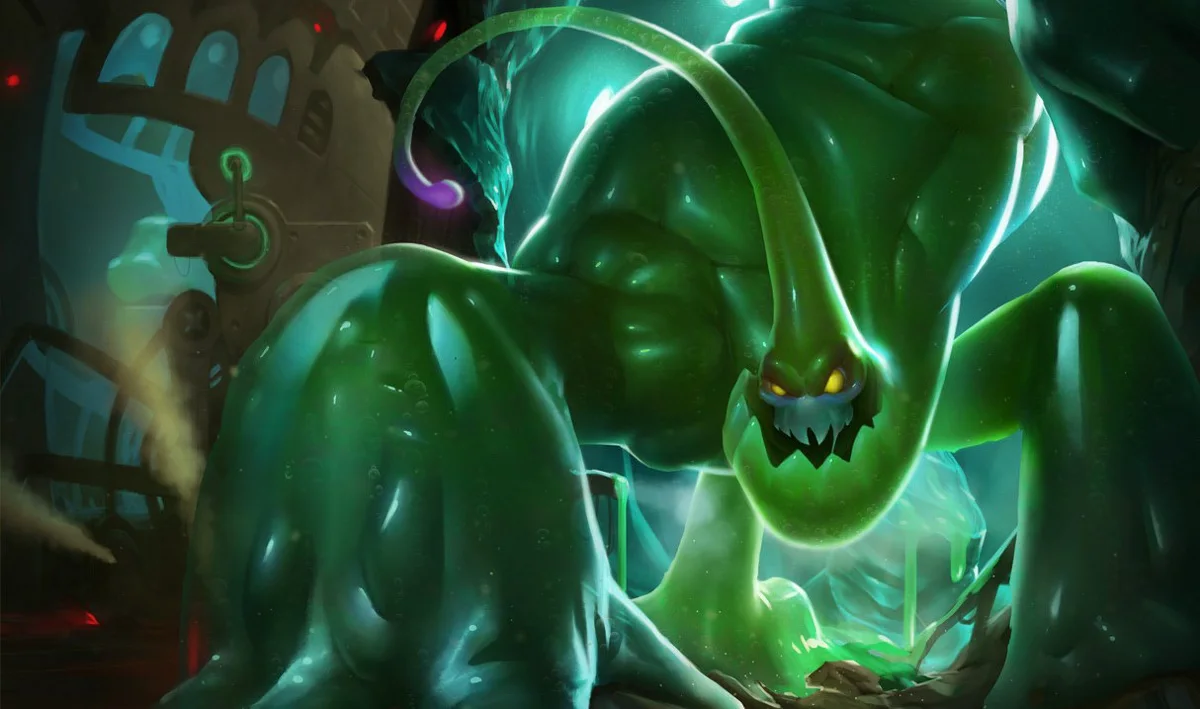
Zac changes which walls threaten bot lane, but the launch only pays when the wave and allied follow-up are already in range.
Support Zac belongs to a practiced player after the enemy shows an immobile lane and your team shows immediate follow-up. His unusual entry angle is useful only if the landing area remains playable when he arrives.
Elastic Slingshot changes which walls count as an engage route. A standard tank approaches through lane or river. Zac can launch from terrain that the enemy bot lane stopped watching because no conventional support could cross it. Once he arrives, Stretching Strikes can grab one enemy; attacking a different enemy throws the two targets together. An enemy minion, the enemy support, or the enemy carry can become the second handle.
The setup is strongest after your bot lane has allowed the wave to come back. An enemy marksman standing past the river line has farther to retreat and more terrain behind the support for Zac to use. A permanently shoved wave does the opposite. It forces Zac to charge E from obvious river or lane positions, while the opposing jungler gets the longer path behind him.
Zac also asks more from his ADC than the splashy entry suggests. The launch announces a target, but the damage still has to arrive before the enemy resets the space. Samira, Kai’Sa, Yasuo bot, or another carry with fast access can use the first knockup. A marksman holding a large wave under turret may watch the engage happen outside attack range and then pay for the abandoned minions.
Cell Division does not make bad entries free. Zac sheds chunks when abilities hit, and surviving bloblets can revive him after fatal damage, but the enemy bot lane has two champions available to destroy those bloblets. An isolated passive is often extra time spent confirming the death. Treat the passive as recovery in a contested fight, not permission to launch without follow-up.
Zac can be the correct counterpick when the wall, target and follow-up are all visible. Avoid him when the ADC cannot reach the landing, the enemy can interrupt the charge, or you have not practiced recovering after a missed E. A terrain-crossing engage is useful only if the lane can survive its commitment.
Shaco supports space only when the enemy must enter it

Shaco’s support value lives in prepared space. A box that protects the carry’s route matters more than one placed for private damage.
Support Shaco is often sold as annoyance. Annoyance is not a team job. Jack In The Box becomes support utility when its hidden fear protects a route the enemy must use: the side of a held wave, the entrance to dragon, the retreat behind a split fight, or the path a melee engager needs to reach your carry.
A box behind the allied minion line can punish Leona, Rell, or another champion who commits forward. The fear interrupts the next part of the engage and gives the ADC a route through familiar space. A box dropped deep in the enemy half of lane may never trigger on a champion. If the wave reaches it, the box can start attacking minions and disturb the freeze for damage that did not create pressure.
Deceive gives Shaco an invisible reposition and short teleport. The support use is to change which side of the fight is threatened or escape after placing control. It is not a standing invitation to leave the ADC. If Shaco disappears while a large hostile wave is forming, the enemy duo can walk at the carry, deny experience, and ignore the possibility of a low-damage flank.
Hallucinate creates a clone that can attack, then explodes and spawns three small boxes when it dies. That gives Shaco a way to make a choke expensive and force target identification. It does not give the team a dependable front line. Opponents who can clear boxes from range or refuse to enter the trapped area can wait until the setup expires and start somewhere else.
Choose Shaco when the enemy draft has to run into prepared space and your own composition already has engage or a durable front edge. If your team needs the support to walk into fog first, a conventional tank does that job with fewer conditions.
Anivia gets one specialist exception

Anivia’s wall earns a specialist place; her mana needs and support-income constraints keep the recommendation narrow.
Anivia is a narrow off-meta support because her normal mage pattern wants mana and items that arrive slowly on support income. She remains in this guide because Crystallize can solve a terrain problem no ordinary support spell copies.
The wall creates temporary impassable terrain. At a jungle entrance, beside a turret route, or across a narrow river exit, that can split a target from its peel without asking Anivia to buy damage first. Flash Frost gives a separate stun when the sphere explodes, while Glacial Storm slows the space behind the wall. Those spells can turn one choke into a controlled fight.
Lane is the cost. Flash Frost travels through the wave, and Glacial Storm covers an area. Anivia can break a freeze or steal minions while trying to threaten champions. Frostbite deals its better damage only after Flash Frost or a fully formed Glacial Storm has prepared the target, which pulls the champion back toward a multi-spell mage budget. If the control does not create an immediate allied hit, the lane has paid mana and wave position for modest pressure.
Rebirth is also less forgiving in bot lane than the tooltip sounds. Anivia can return from the egg only if the opponents fail to finish it. Two enemies beside a pushed wave are often very good at finishing it. The passive becomes useful when allies already control the area, not when Anivia is the first champion caught.
Only take this exception with a self-sufficient ADC, a short-range enemy draft, and a clear wall location that will matter after lane. Anivia support is a prepared terrain pick, not a recommendation to improvise in solo queue.
Camille demands a prepared duo
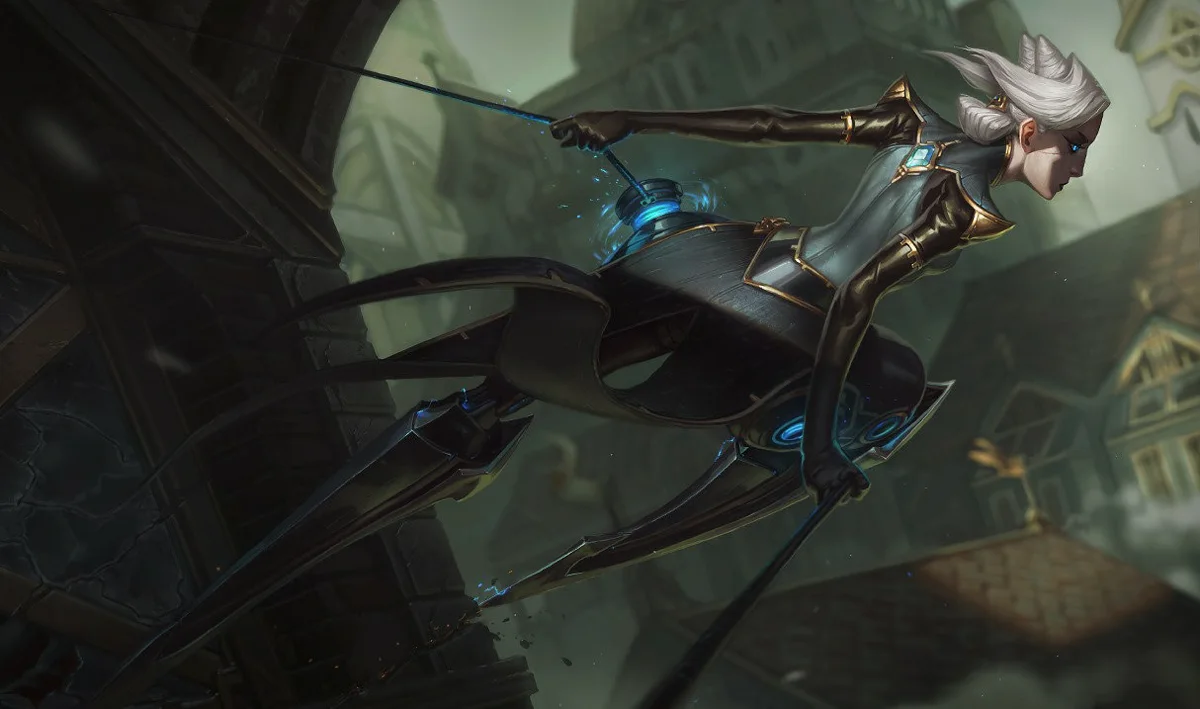
Camille can force contact, but an expensive damage plan leaves little room for a failed support lane.
Camille creates a seductive support clip. Hookshot reaches a wall, the second movement stuns an enemy champion, Adaptive Defenses supplies a brief shield against that target’s damage type, and The Hextech Ultimatum keeps one champion anchored in its zone. With a coordinated burst carry, the target may not get to play the first seconds.
Camille can reach and isolate a vulnerable carry, but reaching them is only the start. The ADC must be close enough to add damage, and a support budget leaves less room to recover if the first entries fail. Those conditions make her a prepared duo option rather than a general lock.
The lane explains why. Hookshot is a committed entry, and Camille’s strongest follow-up leans on repeated attacks and item-fed damage. If the first target survives, she has little ranged control for the retreat and may have crossed the minion wave alone. A tank support can miss an engage and still stand between the enemy and the ADC. Camille often has to win the exchange she started.
She also runs into the article’s safest recommendation. Poppy can position Steadfast Presence around the expected Hookshot landing and stop the dash. Ranged lanes can hold away from usable walls, while durable engage supports can absorb the first burst and keep fighting after Camille’s shield window ends.
A practiced duo can draft Camille into a vulnerable lane with immediate damage and a plan to snowball. Keep the slot for a conventional support when the lane cannot supply those conditions.
The 20-second lock check
Run four checks before selecting the unusual champion:
- Name the enemy mechanic you are punishing. A dash points toward Poppy. Short range and fog-dependent routes can justify Fiddlesticks or Shaco. An immobile lane with fast allied follow-up can justify Zac.
- Name the support job that remains at 0/2. If the answer is still fear, silence, terrain, peel, or reliable crowd control, continue. If it is damage after two items, stop.
- Name who owns the next wave. Neeko, Fiddlesticks, Shaco, and Anivia can all damage minions by accident. The ADC’s freeze or crash must remain part of the plan.
- Name the team’s missing conventional function. If the draft still lacks a front line, disengage, or dependable initiation after your off-meta lock, the surprise has created a second problem.
If any answer is vague, choose a standard support. Off-meta works when the lobby has already written the job description. The champion only has to meet it.