

Start with Fiora or Jax if you want to learn a champion for repeated side-lane duels. Choose Fiora for vital angles and a well-timed parry; choose Jax for extended attacking and denying an opponent’s attacks. Trundle is a more direct option against enemies willing to stand and fight, Olaf punishes defenses built around disabling him, and Mordekaiser can pull an opponent into an isolated fight.
These are kit-based recommendations for normal Summoner’s Rift, mainly top lane and later side lanes, not a measured ranking. The opponent, purchases, and room to move can reverse a duel. A champion who wins a short lane trade may still lose the all-in that follows it.
Reviewed for modern PC Summoner’s Rift Patch 26.18 on September 10, 2026. The selected dueling tools retain their conditions. Trundle’s earlier W buff remains historical context rather than a new 26.18 change.
Pick the fight before the champion
| Champion | Fight to look for | What can spoil it |
|---|---|---|
| Fiora | Repeated vital hits with room to move | A protected vital or a wasted Riposte |
| Jax | Sustained attacks with Counter Strike available | An opponent who disengages after his leap |
| Trundle | A melee trade inside Frozen Domain | Losing contact after spending Pillar |
| Olaf | A chase where crowd control is the main defense | Distance that prevents attacks or Reckless Swing |
| Mordekaiser | An isolated target he can keep near his damage aura | Missed spells and a target that survives the realm |
Start with the opponent’s way out. If they can leave whenever your strongest spell begins, damage alone will not settle the lane. Sometimes the useful result is making them surrender a last hit, not chasing them to their turret.
Fiora: take the available vital, not the imaginary kill

Fiora is the pick for players who want movement and defensive timing to decide the duel. Her passive rewards attacks from a marked side with maximum-health true damage, healing, and movement speed. The true damage is attached to the vital; it does not turn her entire kit into true damage. Lunge and her ordinary attacks still deal physical damage, while Riposte’s return stab deals magic damage.
In lane, a reachable front vital is often a complete trade by itself. Step into range, strike it, and use the movement speed to leave before the opponent returns a full sequence. Do not automatically follow that success into the enemy minion wave. You have already gained damage and healing; the next vital may require a much worse position.
Lunge helps that rhythm, but a missed dash is costly. The current Q refunds half its cooldown when it strikes an enemy. If the dash hits nothing, it loses that refund; missing the champion but striking a minion is different. An attempted poke can therefore leave you without the next movement tool. Keep enough mana for the defensive spell you expect to need, too.
Save Riposte for something you can name. It parries for 0.75 seconds. The return stab normally reduces the movement and attack speed of the first champion hit. Parrying an immobilizing effect lets that return stun instead. Blocking ordinary damage does not earn a stun, and blocking the right spell does not aim the stab for you. Against Jax, for example, predicting Counter Strike’s release and hitting him with the return are separate jobs.
Her ultimate increases the demand on positioning. Grand Challenge exposes four vitals for eight seconds. Triggering all four creates the healing area; the area can also appear if the target dies after Fiora has hit at least one. Pressing R alone does not begin that healing. An opponent who puts one marked side against a wall makes the full sequence harder, so look at the space around them before committing. Grand Challenge’s current conditions
Fiora rewards learning one matchup deeply. Which spell deserves W? Which vital can you reach without crossing the wave? Start there before chasing a four-vital ultimate every time R is available. Her ceiling is appealing; the routine single-vital trades are how you arrive at a fight healthy enough to use it.
Jax: save the leap until you need it

Jax becomes more threatening when a fight lasts long enough for repeated attacks. Relentless Assault builds attack speed as he attacks. That creates a practical difference between walking up with stacks from a minion wave and starting a fight cold. It also creates a wave-control cost: attacking minions to prepare yourself may push a wave you wanted to keep close to safety. If those extra attacks deliver the wave to the enemy turret, you have shortened the very chase you were preparing for.
Counter Strike lets him contest an enemy’s attack window. For up to two seconds, he dodges incoming attacks and reduces damage from area-of-effect abilities, then stuns nearby enemies. This is not immunity to every spell. An opponent can spend that time moving away, and an ability-based damage source may still hurt him. Treat E as a way to deny a particular exchange, not a license to ignore the enemy kit.
Walking into attacking range lets you hold Leap Strike for the opponent’s escape. Leaping first spends that answer before you know whether they will stay. Q can also target a friendly unit or ward, so decide whether you need it to follow or leave. A ward behind you is no escape plan while Q is on cooldown. Leap Strike’s current targeting
After learning R at level six, aim the active swing before relying on its defenses. Grandmaster-at-Arms must hit a champion to grant its armor and magic resistance. During that successful buff, its bonus magic-damage attack occurs every second attack instead of every third. Casting R before the opponent is in reach does not provide the same result. Jax’s damage is mixed: Q is physical, while W, E, and his ultimate supply magic damage.
If the enemy spends a movement spell escaping your E, consider what the next exchange looks like before following. You may have learned how they will disengage without spending Q. If you used both spells and they escaped anyway, back off; your attack-speed passive does not replace either cooldown.
Trundle needs an opponent who stays

Trundle asks a simple question: will the enemy keep trading attacks after Chomp changes both players’ attack damage? At rank one, Q gives him 20 AD while the target loses 10 AD. Against an attack-heavy melee opponent, the ability improves his return hits while weakening part of their response. It does much less to shut down a spell that does not depend on AD. Chomp’s separate gain and reduction
Frozen Domain rewards staying in his chosen area with attack speed, movement speed, and increased healing. Riot increased its attack-speed benefit in the modern 26.17 balance changes. That helps the stationary fight; it does not give him a dash to force one. Place the area across where the fight is likely to move, rather than entirely behind you after the enemy has started retreating.
Pillar is his way to interfere with that retreat. It creates impassable terrain, displaces enemies directly under it, and slows nearby enemies. Placing it on the escape route can force a detour or spend a movement spell. If you have already used Pillar for a little lane harassment, your later all-in must work without it. Avoid boxing yourself away from the target with an overly ambitious placement. Pillar and Frozen Domain
Subjugate is the reason a heavily defended target can still be attractive. It deals maximum-health magic damage and steals armor and magic resistance, with half of the damage and resistance reduction arriving immediately and the rest over time. The full resistance theft is 40%, not 40% all at once. That gives Trundle a reason to commit while the spell works, rather than waiting until the duel is nearly over to press it. It also means a large health pool is not an automatic defense against him. Current Subjugate values and its extended explanation
The opponent’s sensible reply is often to leave. If they get out of Frozen Domain and wait out Subjugate, do not chase through an unwarded lane to prove the matchup. Trundle is worth learning for straightforward melee pressure, but he needs Pillar placement and enough lane behind the target to turn that pressure into a kill.
Olaf: crowd-control immunity still needs attack range

Olaf is particularly appealing when the opponent’s survival plan is to disable him and then walk away. Ragnarok cleanses disabling effects and gives immunity to them for an initial three seconds. Hitting a champion with a basic attack or Reckless Swing extends its duration. Throwing Undertow alone is not one of those extension triggers. Ragnarok’s normal binding and duration
That last detail changes how you chase. Land an axe to slow the target and reduce their armor, but plan how you will reach them afterward. Picking up an axe reduces Q’s cooldown; it does not move Olaf to the axe. A pickup that sends you sideways while the enemy creates more distance may lose the fight even though you recovered the spell. His ultimate prevents crowd control from doing its usual job, not the enemy from using their own movement.
He also fights differently at low health. Berserker Rage grants more attack speed and life steal as health falls, while Tough It Out supplies attack speed and a shield that benefits from missing health. Neither effect makes him unkillable. Use the shield to survive the next burst rather than waiting for a dramatic sliver of health and dying before it matters. Life steal is only helping while you can land attacks.
Reckless Swing supplies true damage, but it costs health unless the target dies. Normal attacks reduce its cooldown. Those interactions encourage continued contact, yet they do not justify pressing E blindly when the opponent can survive it and immediately finish you. His axe and normal attacks remain physical damage; the entire champion is not an armor-ignoring damage source. Reckless Swing’s cost and refund
Choose Olaf for committed pursuits you can sustain. An enemy dash can still create distance while he ignores their crowd control. A missed axe and an expiring ultimate are reasons to reassess, not to keep running because the health bars look close.
Mordekaiser can choose a duel, not its winner
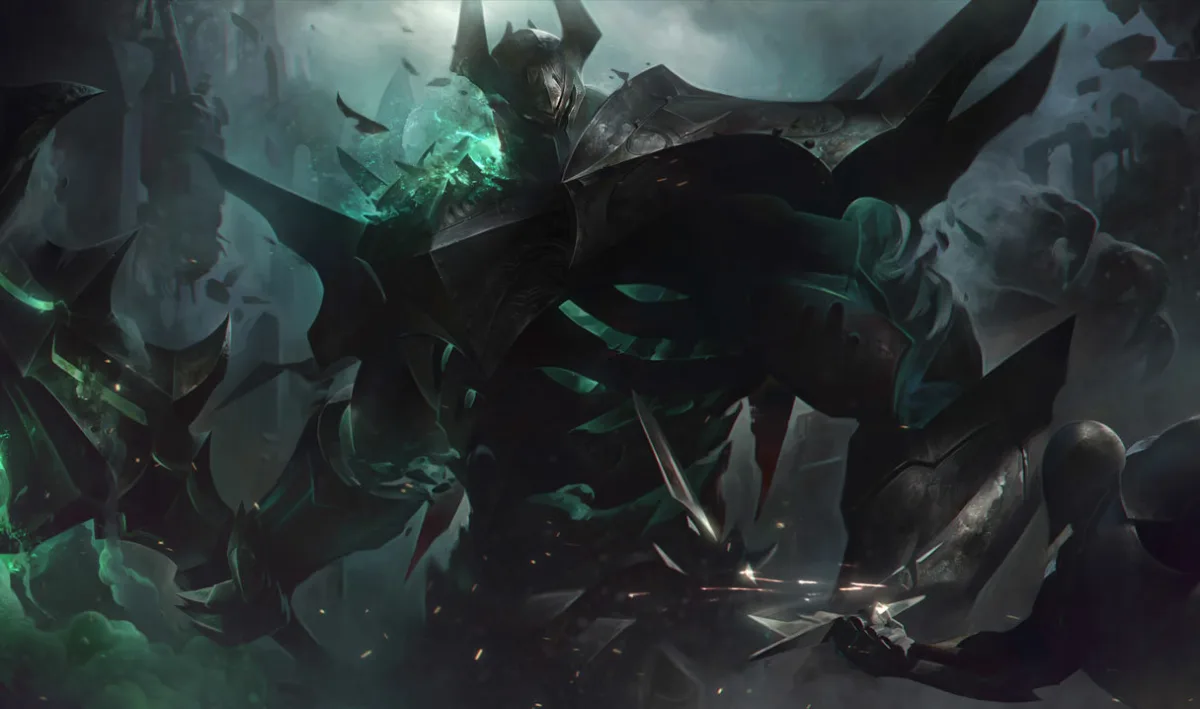
Realm of Death is the most direct way these five champions can separate a target from outside help. Once the banishment lands, it lasts up to seven seconds and steals 10% of the target’s core stats. Those stats include AD, AP, attack speed, armor, magic resistance, and maximum health; it is not a theft of every possible stat or the enemy’s items. If Mordekaiser kills the target inside, he keeps the stolen stats until they respawn. Realm of Death’s normal values and full tooltip
Inside or outside that realm, he still needs to land his damage. Q deals more damage when it hits only one enemy. In lane, clipping a minion alongside the champion loses that single-target bonus. Connecting E, Q, and a normal attack in sequence supplies the three hits needed to activate his damage aura against the opponent. Casting the ultimate is not a substitute for those hits. His Q, E, aura, and bonus damage on attacks supply magic damage, while the underlying normal attack is still physical.
His shield is another resource to inspect before the fight. Indestructible stores damage dealt and taken, then turns that reserve into a shield. Recasting consumes the remaining shield to heal for only a fraction of it. While the opponent is still hitting you, immediately converting a large shield into a smaller heal may discard protection you need. If the exchange is over, converting what remains can help you stay in lane.
Do not choose the target just because R is available. A healthy duelist with stronger cooldowns can welcome the isolation. A mobile target can spend much of it dodging you, especially if E is already unavailable. Check your shield reserve and the opponent’s movement spell before casting. Plan for the realm to end with both of you alive, too.
Mordekaiser offers sustained magic damage if your other champion choices lean heavily on physical attacks. The cost is mobility: none of his basic spells is a dash out of a failed engage. If repositioning during a trade matters more to you, Fiora’s directional dash and Jax’s leap to a valid unit or ward offer options he lacks.
Check the duel you actually have
A champion comparison is useful only after you check the resources in this particular lane. Before extending a trade, answer three questions.
What already changed? Compare levels, completed purchases, current health, mana where relevant, and available summoner spells. A CS lead can still leave you weaker in purchased combat stats if the opponent recalled and you have not. Fiora without W, Jax without E, and Trundle without R are not the versions of those champions you imagined during champion select.
Where will the fight end? A large hostile wave can turn a favorable champion exchange into a losing health trade. An opponent retreating toward a turret changes the distance you can safely pursue. Check where the last vital, axe pickup, leap target, or edge of Frozen Domain would put you before treating that action as free.
What do you get if they refuse? If the opponent yields the wave, you may already have enough room to farm, deny their approach, or prepare a recall. You do not have to convert every advantage into a solo kill. Later in a side lane, forcing the defender away can create tower pressure. Check the other enemies before following: seeing one defender is not proof that you will get a 1v1.
When reviewing a lost duel, stop at the first choice you could change. It might be Fiora chasing a wall-side vital, Jax spending Q before the escape, or Olaf running away from the target to retrieve an axe. That gives you something specific to practice. "I picked a duelist, so I should win" does not.