
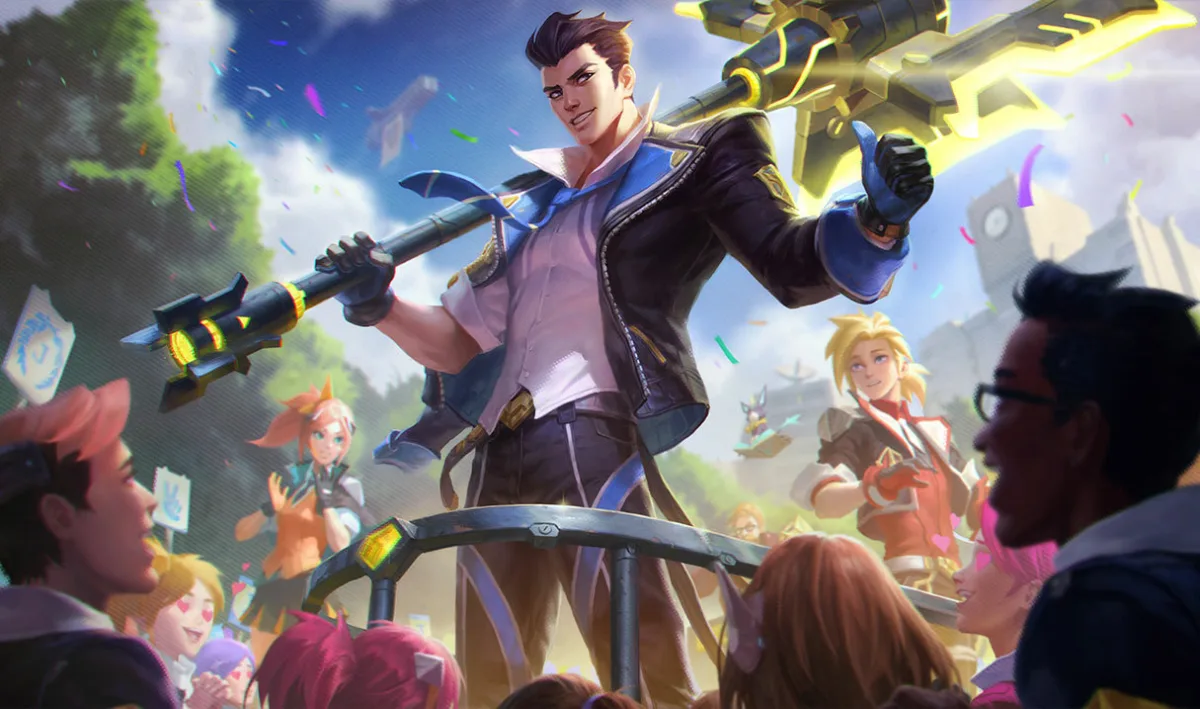
Gwen top, Lillia jungle, Seraphine farming bot. You hover another mage, then notice how much of the team’s damage is already magical. Jayce, Tristana, Zed and Yasuo are our picks for the best AD mid laners to cover different draft needs: ranged poke, sustained ranged damage, assassination and melee follow-up.
Jayce is the first option we would consider when you want physical pressure without committing to a melee lane. Tristana makes more sense when the team needs a ranged attacker who can keep hitting. Zed and Yasuo need different reasons to be chosen: an accessible priority target for Zed, or a fight Yasuo can enter with useful airborne setup. None is the automatic answer to someone typing "we need AD."
Reviewed for modern PC Summoner’s Rift Patch 26.18 on September 10, 2026. The featured AD-mid tools are unchanged. Seraphine and Viego’s balance changes do not alter the damage-profile comparison in the example team compositions.
Match the AD mid to the missing job
An enemy buying armor can make life harder for either a physical assassin or a ranged attacker. That does not make those champions interchangeable. One may reach the carry behind the tank; the other may be the person your team needs to keep attacking the tank.
| AD mid choice | What the pick adds | The draft or lane problem to respect |
|---|---|---|
| Jayce | Ranged physical poke, with a melee form for close exchanges | Minion collision and opponents who force fights before poke matters |
| Tristana | Repeated ranged attacks and pressure on a reachable turret | Unwanted wave push and jumps that never earn a reset |
| Zed | Access to a priority champion away from the main front line | A protected target, or a team that already has enough divers |
| Yasuo | Sustained melee damage and follow-up on airborne targets | No safe entry, few dash targets or allies too far away |
AD means attack damage, a stat. It does not mean that every ability deals physical damage. Jayce’s hammer E deals magic damage, as do Yasuo’s dash and Zed’s low-health passive attack bonus. Those parts do not turn their ordinary AD builds into substitutes for a dedicated magic-damage carry.
The same care applies to your allies. Gwen and Lillia have true-damage components as well as magic damage, so the opening draft is not helpless against every magic-resist purchase. It can still benefit from a substantial physical threat. Look at the damage your farming champions can repeatedly deliver, not just whether your support has an AP ratio.
Jayce: keep the ranged lane, choose the close fight
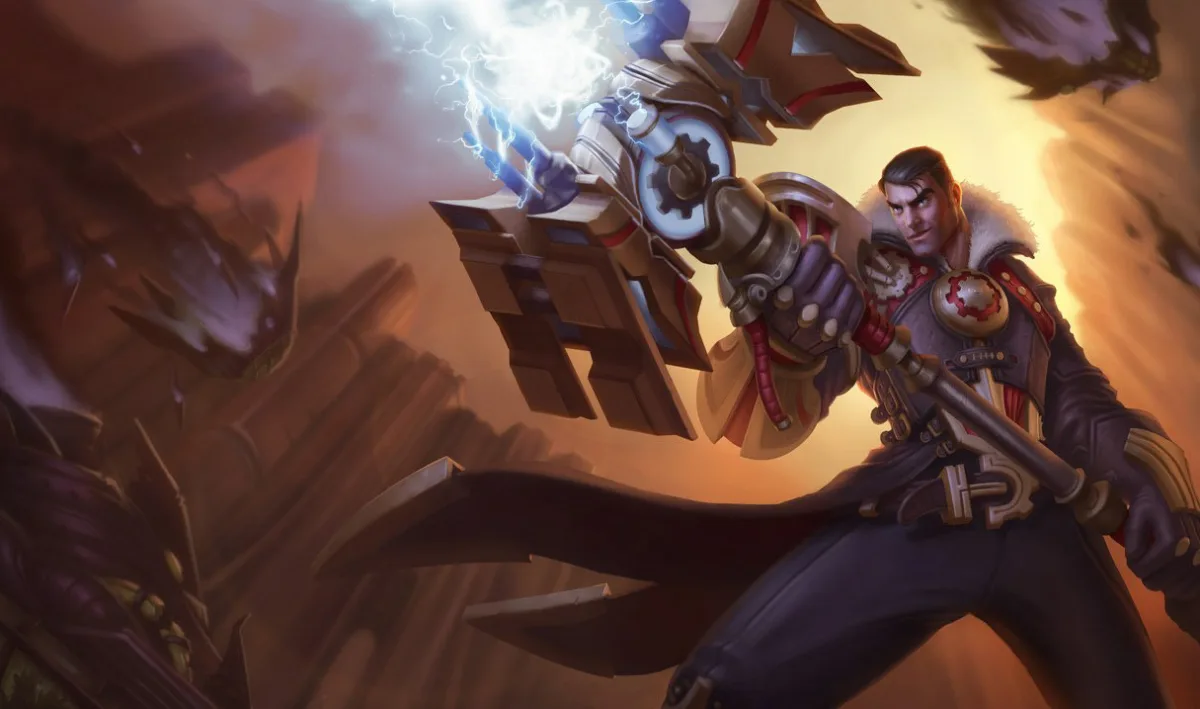
Jayce is the ranged option for a team that wants to hurt opponents before everyone commits. His cannon Shock Blast deals physical damage and explodes on the first enemy hit. Passing it through Acceleration Gate increases its damage, speed and range. His hammer form instead gives him a targeted leap and a short-range knockback.
Landing the poke does not oblige you to jump after it. The opponent may be backing toward their jungler, or trying to draw you out from behind your wave. Keep the advantage of being able to hit from range until there is a reason to give it up.
Consider a wave near the middle of the lane. The enemy mage stands behind two healthy melee minions. A straight gated Q will hit the front minion and explode there. It may still catch a champion standing close enough to the impact, but it does not pass through the wave as an uninterrupted beam. If the mage is well behind those minions, use a side angle only when you can safely occupy it. Otherwise, use the shot to work on the wave or keep the mana. Firing harder does not fix the collision.
After a good hit, the next decision is whether you should change forms at all. Hammer Q takes you toward an enemy, while hammer E knocks its target away. If the enemy jungler has just appeared on your side of the lane, the knockback may be more useful for making room than finishing a trade. Spending it offensively removes that option until it returns. It is not an answer to every engage, especially an unstoppable approach.
Cannon W, Hyper Charge, gives a burst of fast attacks. It rewards a window in which you can stand and hit, but does not require you to spend hammer Q just to use the rest of the kit. You can take a few ranged attacks, move away, and keep the dangerous part of the exchange optional.
Jayce’s physical-damage cannon Q and fast cannon attacks explain why he belongs on this list. Hyper Charge is a limited burst of attacks, though. If the team mainly needs someone to stand behind its front line and keep firing through a long fight, compare him with Tristana before committing to the poke plan.
Choose Jayce when your team can make time for poke and you want to contest mid from range. He is less attractive when everyone else wants to sprint into a close fight immediately, or when nobody can stand between a diver and your back line. His hammer knockback is a way to make space, not a reason to send him in first to absorb the engage.
Tristana: a ranged carry with a wave-control bill

Tristana is the alternative when you need a physical attacker who can keep contributing after one spell rotation. Rapid Fire increases her attack speed, and Draw a Bead increases her attack range as she levels. Explosive Charge can be placed on an enemy or turret, with attacks and damaging abilities building the bomb toward its full detonation.
The turret clause matters when the opponent recalls. With a wave at their tower, Tristana can put the charge on the structure instead of leaving to hunt for a kill. That gives her a direct way to turn lane pressure into tower damage even when no enemy champion is available to attack. Check the jungler’s last known position before spending that window. Your lane opponent’s retreat tells you where one enemy has gone, not whether the approach to their tower is safe.
Explosive Charge also has a passive cost. Attacks that kill enemies splash magic damage onto nearby enemies. Once E is learned, last-hitting a low-health minion can damage the minions beside it and push the wave farther than you intended. This makes "I will freeze forever and stay safe" an unreliable default plan.
Suppose the wave is just outside your tower and the enemy is waiting for you to push it out. Before taking a last hit, look at the surrounding minions’ health. The splash may kill another one or accelerate its death. Be ready for the wave to move, and avoid following it far down the lane just because the first few minions were safe to collect. A controlled retreat from the next wave can be better than trying to preserve every last hit with no river information.
Her jump creates the more expensive mistake. Rocket Jump resets on champion takedowns or maximum-stack Explosive Charge detonations on champions. The bomb reaches four stacks; merely applying it, letting a partly stacked bomb expire, or detonating one on a turret is not that reset condition.
If you jump onto the mid laner and they leave your attack range before you finish the charge, the second jump you planned may never become available. In the current normal kit, rank-one W has a 22-second base cooldown. Plan the landing as a place you could survive without an immediate reset. Once the reset is actually earned, reassess whether another aggressive jump is better than leaving.
Tristana is most convincing when the team needs someone to keep attacking after the first exchange. You accept the extra wave damage and the temptation to jump forward in return. That is a reason to practice her mid-lane decisions, not a claim that she is a safe blind pick or a current statistical standout.
Zed: choose the target before the assassin
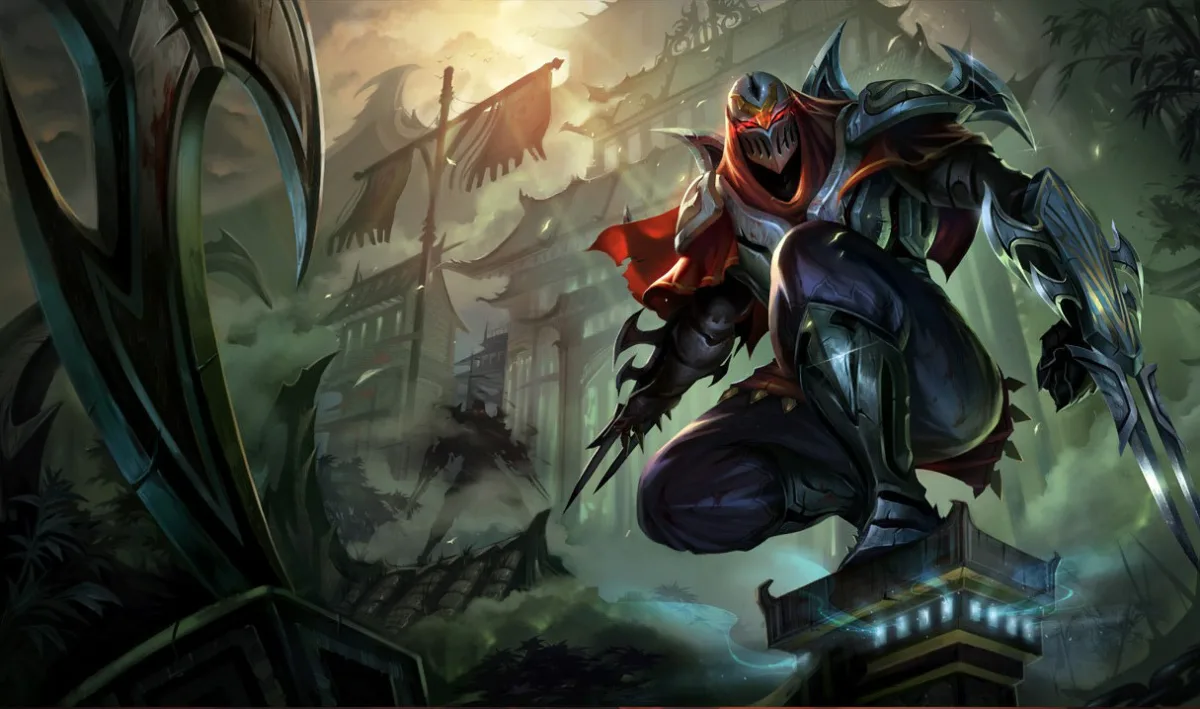
Zed is the choice when a specific enemy champion is the problem and you have a credible route to them. His shadows let him threaten from angles his body does not occupy, and Death Mark gets him onto an enemy champion. That is a different contribution from standing behind your own front line and repeatedly attacking whoever is closest.
Spend an early Q on a minion you cannot safely walk up to. Razor Shuriken passes through enemies, but the current damage calculation reduces subsequent hits to 60% of the first hit’s damage. A shuriken that collects farm and then reaches the champion is useful; do not mistake it for the damage of a direct hit.
Living Shadow creates another choice between pressure and safety. A shadow’s E slows the opponent, while Zed’s own E reduces W’s cooldown when it hits a champion. That slow can help line up Q. Sending W forward to harass also puts the swap destination forward. After the shadow expires, it offers no escape from a gank approaching behind you.
Death Mark gives you three seconds to add damage before it triggers, and Zed can return to the shadow left by the cast. Look at that return point as well as the target. If it leaves you beside the enemy support, pressing R again may exchange one bad position for another. The carry being low does not make that return safe.
Reject Zed when the draft already has several champions trying to dive the same back line and nobody dealing comfortably with the front. Adding another physical assassin may repeat the existing access problem. Pick him because his route to a priority target improves the composition, not merely because a mage appeared on the enemy team.
Yasuo: draft the entry before the damage
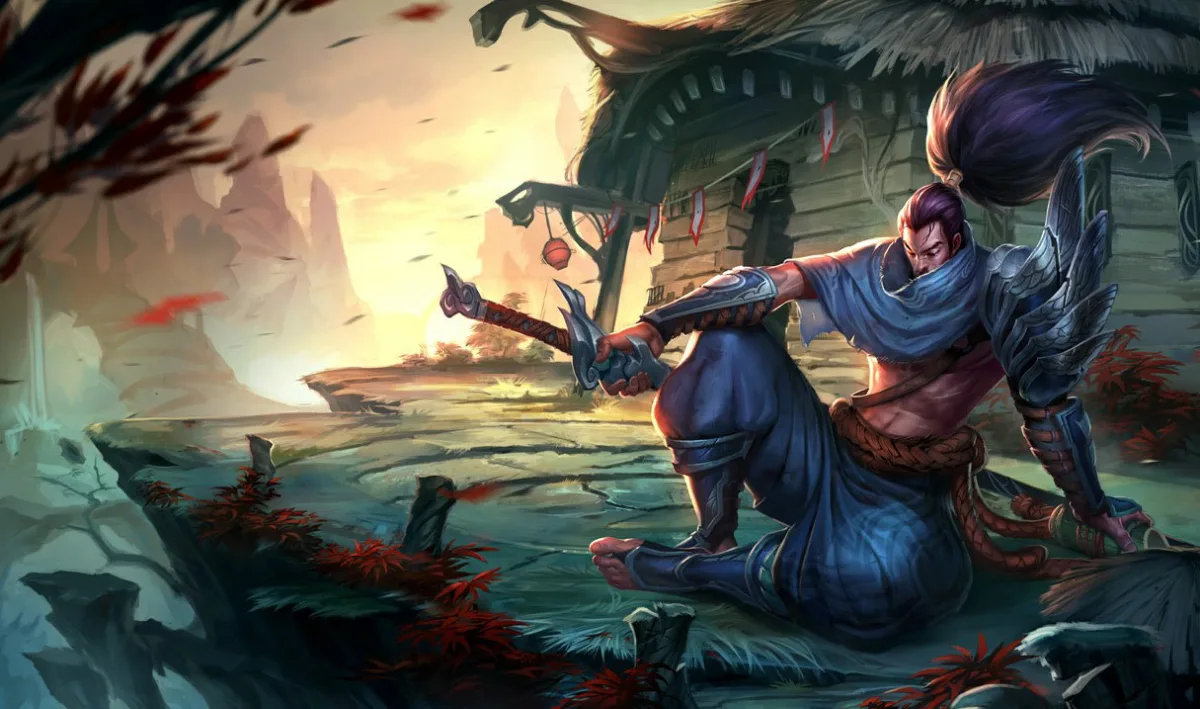
Yasuo gives a team sustained melee damage, with a way to join an airborne target from a distance. Last Breath requires an airborne enemy champion. An ally’s successful knockup can provide that opening; a stun by itself does not.
An allied Malphite ultimate knocks enemies up, which makes the partnership easy to understand. It does not make every cast an instruction to follow. If Malphite catches one tank beyond the rest of your team’s reach, Yasuo can arrive in a fight the other three allies cannot help him finish. Check the targets and where you will stand afterward, not only whether the R button is available.
In lane, Steel Tempest hits build toward his own whirlwind knockup. Sweeping Blade can move him through enemies, but has a per-target cooldown. The minion you used to dash toward the opponent may not be available to dash through again on the way out. A wave full of possible routes can become a poor escape route after you have used the relevant targets.
Wind Wall can help against enemy projectiles. It is not protection against every spell: the current full tooltip explicitly excludes tower shots and beams. Do not plan an aggressive lane position around blocking something the wall does not stop.
Yasuo’s 26.17 change remains relevant to this carry pattern. Patch 26.17 reduced Yasuo’s critical-strike damage penalty from 10% to 5%. That supports his later critical-strike damage; it does not remove the need to reach a target and survive there.
His current ultimate also lets his critical strikes ignore 60% of bonus armor for 15 seconds afterward. The distinction is specific: it affects Yasuo’s critical strikes against the bonus portion of armor after he uses R. It does not reduce all the target’s armor for Jinx or another physical carry on your team.
We prefer him here when allies can help start a fight and stay close enough to continue it. If the plan requires Yasuo to find every knockup, absorb every defensive spell and then deal all the damage, choose a less demanding job for your mid slot.
Two drafts where the same AD pick changes value
Return to Gwen, Lillia and farming Seraphine. Gwen’s passive and several spells deal magic damage; Lillia combines magic damage with true damage on Q’s outer edge; Seraphine’s damaging spells are magical. Gwen’s Q center also has a true-damage component. A physical mid adds a substantial different damage source without pretending the first three deal only magic damage.
If that team needs ranged attacks through a longer fight, consider Tristana. If it can make time for ranged poke before committing, consider Jayce. Adding Zed can be reasonable when one accessible back-line champion needs removing, but "we lack AD" does not tell you that assassination is the missing job. The same magic-heavy trio can need a different fourth damage pattern against a different enemy team.
Now change your allies to Garen top, Viego jungle, Jinx bot and Lulu support. The enemy shows Malphite. Garen’s ultimate deals true damage, but his spin deals physical damage. Viego’s Q attacks and thrust and Jinx’s rockets add substantial physical threats. These kits have other damage types too, and Lulu contributes magic damage; this is not an exclusively physical team. Its farming carries still give an armor purchase plenty of work to do. Armor reduces physical damage, and Malphite’s W increases his armor.
A fourth physical threat can make that defensive choice more efficient against your team. Garen can reduce a champion’s armor with enough spin hits, so the lineup has a way to fight back; it is not automatically shut out by armor. But that still leaves several carries relying on physical damage against the same defense. Yasuo’s personal post-R bonus-armor penetration does not become another teamwide reduction. Zed does not solve the problem merely by promising to ignore Malphite and kill somebody behind him. Your team still needs to deal with the champions controlling the space between the two back lines.
In that second draft, keep a magic-damage mid you can play in consideration. Your comfort on an AD champion still matters, but it now needs to outweigh a specific composition cost. Before locking in, name what the pick adds that Garen, Viego and Jinx do not already provide. If the answer is only "more damage," prefer the familiar mage rather than learning a new AD champion in this draft.