
Nilah is the first Taric partner to consider for a committed close-range fight. Lucian suits shorter exchanges, while Kalista gives a coordinated duo another way to engage or escape. Vayne wants time to attack through the fight. Ezreal is the alternative when surviving lane at a distance matters more than forcing an early brawl.
The best ADCs for Taric need a plan for his delayed spells. This guide assumes you farm bot lane and he supports. Your movement can carry his second stun beam out of a target’s path, and an ultimate glowing above your head has not necessarily started protecting you yet.
Taric’s partners need to stay within useful spell reach before his protection pays off. These normal PC recommendations compare that requirement with stun setup and the delay before Cosmic Radiance grants invulnerability. Riot's 26.18 notes.
Taric casts; you help position the spell
Taric presses the button and chooses the aim. His linked ADC can move the second casting position. An agreed direction makes the delayed stun much easier to use than two players moving toward different targets.
Bastion, Taric’s W, binds one ally at a time. While the link is active, Taric’s abilities also originate from that ally. His Q can heal around both champions, his E creates a second beam, and his R can protect allies around both locations. This lets Taric cover two positions without having to stand on top of his carry. The linked ally also gains armor, helping them withstand physical attacks while Taric occupies the other position.
The shield lasts 2.5 seconds, but the active tether can remain after it expires. Bastion’s current spell record sets its leash range at 1,300 units. Check how far away Taric is before dashing again: a visible link now does not mean the next landing point will stay in range. The armor benefit also does not reduce magic damage, so stay cautious against repeated spell poke.
Duplicated effects do not stack on the same recipient. Standing where both Q areas overlap does not turn one cast into two full heals. Likewise, two Dazzle beams hitting the same opponent do not provide two separate stun durations. Spread the coverage when the fight allows it; do not clump purely to double-dip.
Move the beam during its one-second preparation
Dazzle prepares for one second, then damages and stuns enemies it hits for 1.5 seconds. Taric chooses the aim, including the beam projected from his Bastion ally. You can move that second origin with your champion, but clicking on a target yourself does not tell Taric where to cast.
As the ADC, watch the visible line before committing a dash. Moving sideways can carry it across an opponent who is avoiding Taric’s own beam. Dashing straight through the target can put the beam on the wrong side. If the enemy moves away, a missed stun is cheaper than following it into their support with your escape already spent.
Riot’s original Taric discussion, preserved by Surrender at20, explains why Taric controls the aim even from his ally. The current spell data supplies both casting positions and the one-second preparation. A mobile ADC can improve the angle; the enemy can still dodge it.
Taric needs his own two attacks
After Taric casts an ability, Bravado empowers his next two basic attacks. Those hits deal bonus damage and shorten his basic ability cooldowns. They also grant charges of Starlight’s Touch, his Q. Your ADC’s attacks do not trigger Taric’s Bravado, and your spells are not extra Taric casts.
Give him a target he can reasonably hit. When an enemy melee support commits into your lane, Taric can hit that support while you attack whichever opponent is safe to reach. You do not have to chase the enemy ADC together just to keep the heal sequence working.
With a second skill point in Q, Taric can hold two healing charges. Landing both Bravado attacks can refill them, provided he has space to finish the hits. His next Q still needs to be ready, and it costs 60 mana even with only one charge. Taric should use an urgent shield or stun immediately when needed, but take the two attacks between casts when the fight allows it.
An accessible minion can provide a Bravado hit too, but attacking the wave changes its health and can disrupt your last hits or a freeze. Agree which minions Taric can hit instead of treating the wave as free healing fuel. If reaching even a minion costs him a full enemy trade, back off and accept that the lane cannot sustain forever.
His ultimate gives a countdown, then protection
Cosmic Radiance has a 2.5-second delay, followed by 2.5 seconds of invulnerability. Both Taric and the Bastion ally can reposition during the delay. Nearby allies must be in one of the relevant areas when the protection arrives; merely passing through the warning circle earlier is not enough.
Start R when the enemy commits and the threatened players still have enough health to survive the wait. Dazzle or a defensive ability can buy time; so can taking a few steps back. Once protection arrives, you can keep attacking without taking damage for that window. You can still be stunned, though, and the enemy is free to retreat until it expires.
When the ADC is already one hit from dying, use the defense that can help immediately: a ready shield, a heal or a movement ability that avoids the next hit. R may protect the survivors a moment later. It cannot rescue someone who dies during its preparation.
Which ADC should take the Bastion link?
These are recommendations by lane plan, not a measured duo-win-rate order. The historical 26.17 Taric Support and explicit Bottom-role samples for the five ADCs corroborated the roles at that check. Those separate role samples do not establish which pair wins your matchup.
| ADC | What the duo wants to do | What makes the pick awkward |
|---|---|---|
| Nilah | Fight close enough for both players to contribute and share defensive benefits | Repeated ranged pressure before either player can make contact |
| Lucian | Take a shielded spell-and-attack trade, then reassess | Using the dash to force every delayed stun |
| Kalista | Coordinate hops, shared attacks and an Oathsworn launch or rescue | An unannounced Fate’s Call that removes Taric from his current job |
| Vayne | Survive the approach, then keep attacking a reachable target | Losing the wave while waiting for a late-game fight that may never happen |
| Ezreal | Farm at range and use the link for a defensive or lateral stun | Leaving Taric alone while expecting an aggressive lane |
Keep your own champion familiarity in the decision. Our ADC selection guide is useful if you are still choosing a main; Taric’s presence does not make Kalista’s movement or Nilah’s short reach disappear.
Nilah: put both champions inside the same fight
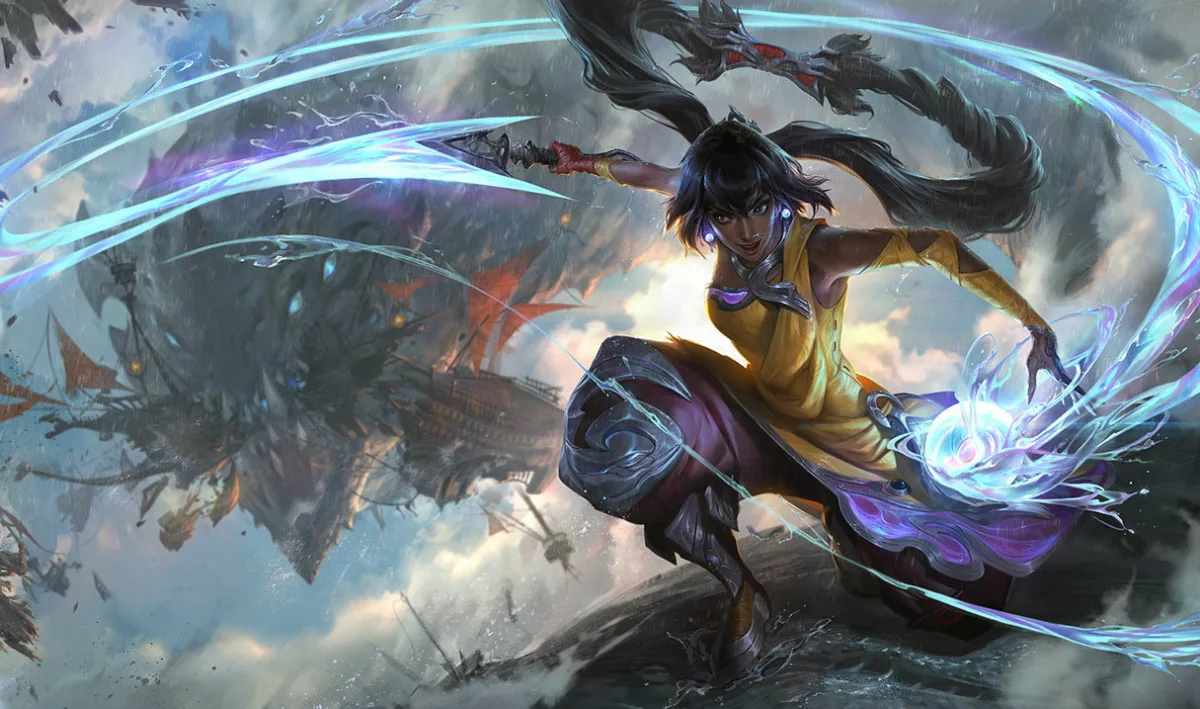
Nilah’s short attacking reach brings her into fights where Taric can often hit the same opponent. If an enemy has already walked into them, neither partner needs to cross the lane to begin contributing. That gives Taric a chance to use Bravado while Nilah deals damage beside him.
Her passive also increases the healing and shielding she receives from allied champion abilities and shares the additional benefit with the ally providing it. Taric’s Q and W give the duo actual healing and shielding to work with. His armor bonus and ultimate invulnerability are different effects; do not describe them as extra healing from Nilah’s passive.
Suppose the enemy support walks past their own caster minions to threaten you. Taric can prepare Dazzle while Nilah keeps the beam projected from her on that support’s approach. If it connects, she can land Q for temporary attack range and attack speed, then attack beside Taric. Watch the enemy ADC before following farther: the support may be inviting you into their partner’s damage.
Jubilant Veil can help the duo survive return fire: Nilah dodges attacks, takes reduced magic damage and can share the mist’s benefits by touching Taric. It is not general immunity to spells or crowd control. Taric receives those benefits for 1.5 seconds, shorter than his R’s full delay. Time the touch for the incoming attacks rather than assuming it will cover the whole countdown.
After level six, Nilah’s ultimate damages around her and finishes by pulling nearby enemies toward her. That can give Taric another close target, but both players still need to survive getting there. Into a lane that keeps poking and backing away, conserve health for farm rather than trying to prove the synergy on every wave. The Nilah support guide compares alternatives when the support pick is still open.
Lucian gets value before either ultimate is ready

Lucian can use Bastion’s active shield to take a short exchange even when Taric has no clean walk forward. Current Vigilance empowers Lucian’s next two basic attacks after a direct allied heal or shield, or a nearby enemy champion being immobilized. A landed Dazzle qualifies; the mere appearance of its windup does not.
Lucian still prepares Lightslinger’s double shot by casting one of his own abilities. Taric can supply Vigilance with a heal or shield; Lucian supplies the cast and attacks that use his own kit. Meanwhile, Taric needs to land his Bravado hits himself. Lucian firing faster cannot refill Taric’s Q.
Try the trade while the enemy ADC is stepping up to last-hit and their support cannot immediately reach your exit. With Lucian already in attack range, Taric shields him; Lucian casts Piercing Light on the target and follows with the prepared double shot. If Taric starts E, Lucian can adjust sideways to threaten the second line. He does not have to spend Relentless Pursuit toward the enemy before knowing whether the stun connects.
If the opponent retreats during Dazzle’s preparation, let the short trade end. Chasing for one extra attack can leave Lucian standing alone when the shield expires. Taric may still be in tether range but too far away to land a single Bravado hit.
Choose this duo for repeatable short trades that can become an all-in once the opponent has spent an important response. If the lane keeps you too far away to use attacks, Lucian loses much of the reason to pick him here. At six, do not spend Taric’s protection chasing a target your current position could already damage safely.
Kalista: agree on the launch before pressing R

Kalista can reposition between attacks through Martial Poise. With Bastion on her, that makes her a moving Dazzle origin, but continuous hopping also makes Taric’s aim harder to coordinate. Watch the line and choose a useful landing point instead of assuming any forward hop improves the cast.
Bind Taric as the Oathsworn if you want the full partnership. Once Sentinel is learned, Kalista and Taric both attacking the same target can trigger its extra damage. A Dazzle hit alone does not replace Taric’s attack. Rend then offers a slow when keeping the target close matters more than holding every spear for a bigger finishing hit.
With Fate’s Call, Kalista draws her Oathsworn into stasis and the ally chooses the launch. Taric’s launch stops at the first champion hit and knocks back nearby enemies. Tell him what you want before pressing R. He is the one choosing the exit, even though you started the cast.
If the lane is ready to fight, Taric can launch into a reachable opponent and use Dazzle as follow-up. Watch the other support before aiming for their ADC: the first-champion collision means a support in the way can take the landing instead. Kalista should be ready to attack the target Taric can reach, not the one both players wished were exposed.
Keep a separate rescue plan. When Taric is caught too far forward and Kalista is safe, Fate’s Call can extract him. Once you have chosen that rescue, do not automatically send him back into the same danger. Also avoid surprise pulls while Taric is standing beside teammates who need his immediate attacks and spells. Taking him into stasis stops those actions, potentially leaving the other teammate without the next heal or stun.
This is a coordination pick. If both players cannot agree whether the next ultimate is an engage or an exit, Lucian offers a simpler trade pattern without giving the ADC control over Taric’s position.
Vayne: make the attacker come to Taric

Vayne benefits when Taric buys time against a target she can keep attacking. Silver Bolts rewards consecutive hits on the same enemy with maximum-health true damage. That does not require her to pass the frontline and chase a fragile carry. A durable opponent walking into both champions may be the better target.
Taric can stand where that opponent has to approach him to reach Vayne. She keeps attacking and uses Tumble to adjust her angle, while his own hits help bring basic spells back. If he begins Cosmic Radiance, her first job is to survive the delay, not squeeze out an extra attack while ignoring the second enemy.
Condemn is worth discussing before the fight. Knocking an opponent into terrain adds a stun; knocking them away without a wall can still buy valuable space. But firing it during Dazzle’s preparation can push the target out of the beam. If Vayne needs the immediate separation, take it. Taric should not assume the target will stay at the original point after Condemn.
Getting through lane is the harder part. Vayne’s 26.17 changes increased low-rank Tumble’s mana cost and reduced early Silver Bolts damage. A third hit is worth less if reaching it lets both opponents hit back. Repeatedly spending Tumble to secure a minion, then Taric’s Q to repair the damage, can drain both mana bars before you get a useful fight.
Use the pair when you expect enemies to enter your space and your team can afford a lane focused on surviving rather than constant priority. If the opponent keeps shoving and attacking from outside your reach, collect what you can and avoid turning a missed minion into a forced fight. Taric’s armor and eventual ultimate do not clear the wave for Vayne.
Ezreal can keep the lane playable without forcing contact
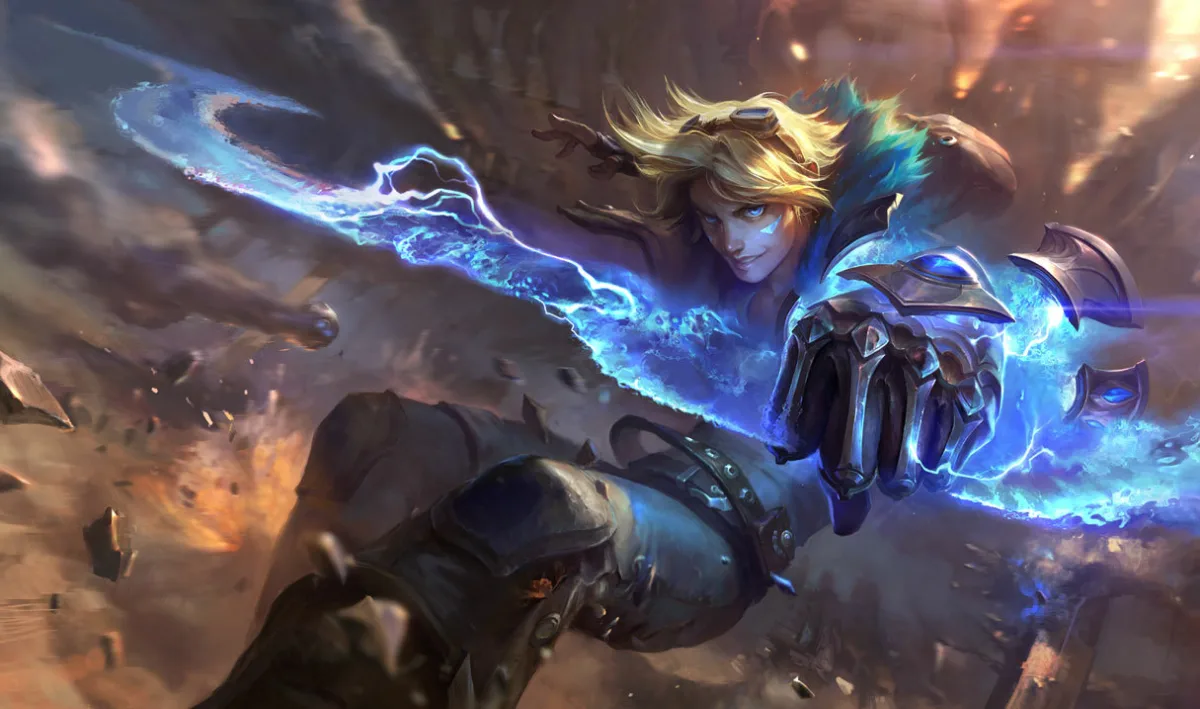
Ezreal is the recommendation for a lane where Taric cannot safely walk into attack range. Mystic Shot can collect a distant minion or contribute damage, while Arcane Shift gives Ezreal another way to reposition. A Q hit reduces Ezreal’s cooldowns, not Taric’s; the ranged plan preserves the ADC without solving Bravado for the support.
Use the linked Dazzle defensively when an enemy advances on Ezreal. Taric starts the beam; Ezreal moves across the approach or shifts to a safer side if necessary. A sideways blink can move the beam while keeping him near Taric. Blinking away from both opponents and his support may be the right escape, but he should not expect the link to cover that distance indefinitely.
Minions still block Mystic Shot. If the only line to the enemy ADC runs through the wave, move for a clear angle or take the minion rather than promising follow-up damage you cannot deliver. Once a fight becomes safe to enter, use attacks as well: Ezreal gains attack speed from landing abilities, so staying at maximum Q distance throughout wastes damage his kit could contribute.
Later, keep enough awareness of Taric’s position to receive the protection you are expecting. If Taric has linked a diver instead, Ezreal may need to stay near Taric’s own ultimate area. The support can cover the diver and the backline, but only if someone is actually standing in those areas when the effect arrives.
Choose another partner if early lane aggression is the priority. Ezreal can follow a good catch, but farming from Q range often leaves Taric without anyone close enough to attack. Both players need to accept that quieter lane rather than taking turns starting fights the other cannot join.
When the opponent refuses the fight
At six, the enemy may see Cosmic Radiance start and retreat before your duo has made contact. Let them. Running through an unwarded river entrance to make use of the ultimate can turn a harmless disengage into a fight you reach only after protection expires.
Use the space to finish the wave if that is safe, then reassess the lane without R. A pushed wave may buy a recall or a chance to move together, but it does not guarantee a free objective. Check the missing opponents before leaving the lane.
Before trying again, check Taric’s mana and point out the target he can actually hit. Agree whether the next Dazzle is for walking forward or stopping an approach. If your dash is down and Taric cannot reach the wave, keep farming; the next shield may simply be what gets you through the next last hit.