
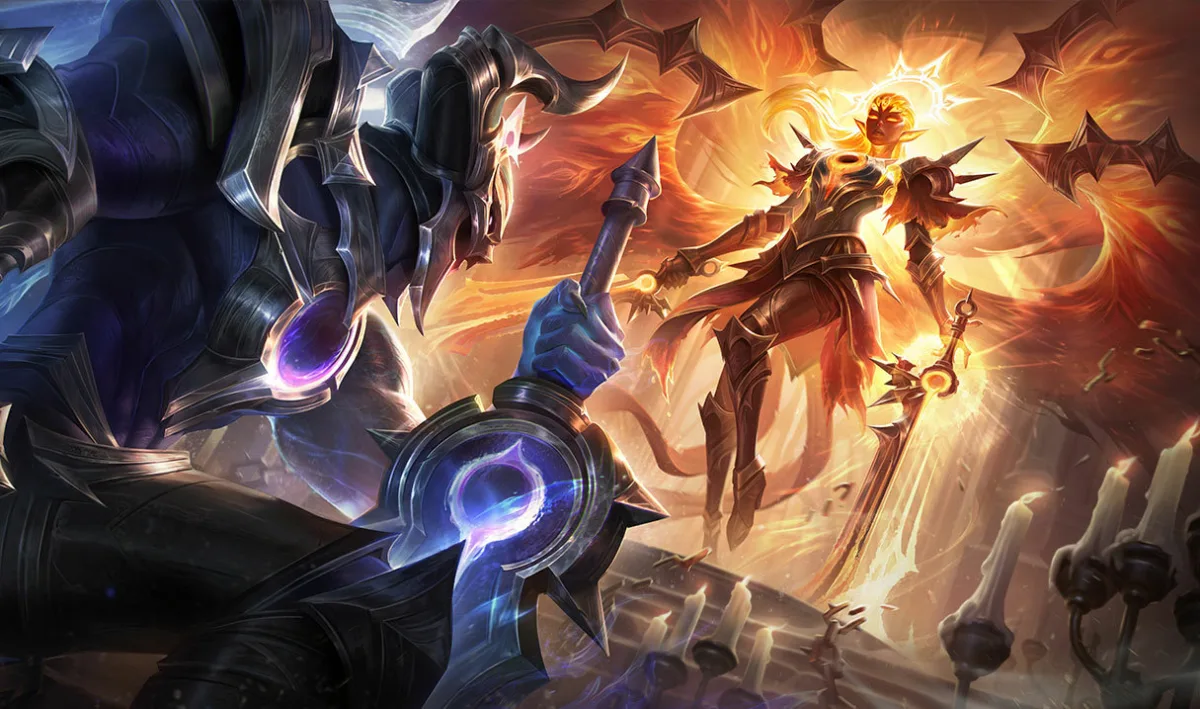
A full-build carry stuck clearing minions at an exposed inhibitor cannot help the team fighting in the river. The enemy may be weaker in a straight fight and still get the objective. Picking for late game means choosing a champion whose strength you can bring to the play.
Kayle, Aurelion Sol, Jinx, Vayne, Kindred, Ornn and Sona are our seven best late-game champion picks for different jobs. Kayle and Vayne supply sustained damage, Aurelion Sol controls growing areas, Jinx accelerates after a takedown, Kindred earns range, Ornn improves teammates’ equipment, and Sona keeps a group functioning through repeated exchanges.
These are kit-based recommendations across all five roles, not a measured strongest-to-weakest ranking. We chose champions whose developed levels, items or stacks give the team a way to win that it lacked earlier. They do not all reach that point at the same minute, and they do not all need a carry’s full inventory.
Reviewed for modern PC Summoner’s Rift Patch 26.18 on September 10, 2026. The featured late-game tools and thresholds are unchanged by the 26.18 delta. Vayne’s earlier W changes remain relevant to the difference between early ranks and rank five.
Pick the late game your team can actually play
| Champion | Late-game payoff | What can stop it |
|---|---|---|
| Kayle (top) | Permanent Exalted attacks and increased range at level 16 | Arriving late or losing access to repeated attacks |
| Aurelion Sol (mid) | Stardust improves damage, space and execute pressure | An unsafe channel or an enemy who reaches his position |
| Jinx (bot) | Long-range splash and takedown acceleration | Losing the fight before the first trigger |
| Vayne (bot) | Repeated same-target maximum-health true damage | Range, interrupted attacks and forced target switches |
| Kindred (jungle) | Earned attack range and a shared survival zone | Missing marks or an enemy who uses the zone better |
| Ornn (top) | Masterwork upgrades and frontline control | Allies unable to reach the opponent he catches |
| Sona (support) | Stacking basic-ability haste and repeated group protection | Dying before she can cast again |
Look at what your damage dealers need. Ornn can start a fight that a second carry would struggle to enter. Sona can help several wounded survivors stay for another exchange. Vayne can concentrate on a durable defender who is already in reach. Those are different reasons to want a long game.
Kayle’s level 16 must arrive at the fight

Kayle is the clearest choice here when you want a late-game payoff attached to levels. Divine Ascent makes her ranged at level 6, adds waves to Exalted attacks at 11, and makes her permanently Exalted with 625 attack range at 16. Those upgrades require reaching the level and spending the skill point. The exact milestones come from her current Riot client record, mirrored by CommunityDragon, with their effects described in Riot’s English ability text.
The level-16 change removes a preparation step. From levels 11 through 15, she needs attacks to build the passive’s stacks before those waves are available. Once permanently Exalted, she can begin attacking a fresh target with the waves already active. That is useful when the enemy appears at an objective entrance and there is no safe minion to hit first.
Kayle still deals a mix of damage. The waves and Starfire Spellblade’s added damage are magic; ordinary attack damage remains part of the threat. Radiant Blast reduces both armor and magic resistance on enemies hit. The level-16 waves do not become true damage, so the opponent’s defenses still matter. Those damage types are in Riot’s current Kayle kit.
Divine Judgment makes Kayle or a chosen allied champion invulnerable for 2.5 seconds and deals area magic damage. Saving the teammate who keeps a diver away can preserve Kayle’s attacks as well as that ally’s life. If the diver can bypass the teammate and reach Kayle anyway, holding R for herself may be the better choice. Decide which person the enemy has actually committed to killing before spending it.
One wave short of 16 is an awkward place to be. If you can collect it safely and arrive before the teams meet, the upgrade is worth getting. If taking it means abandoning the only entrance your team can contest, ping the delay before teammates commit. Forcing them to discover that Kayle is absent halfway through the fight wastes the level you stayed to earn.
Aurelion Sol makes the objective entrance harder to use

Aurelion Sol’s growth changes where enemies can comfortably stand. Stardust improves Breath of Light’s maximum-health burst, Astral Flight’s distance, Singularity’s area and execute threshold, and the area of his ultimate. An opponent who could skirt a small zone earlier may have to take a different path later. See his current Stardust and ability values alongside Riot’s kit description.
Singularity can make a narrow entrance uncomfortable while the team attacks an objective. The damage and pull punish enemies who remain inside, and a sufficiently low-health enemy in the center can be executed. The location matters: the entire outer circle is not an automatic execute zone. Epic monsters also cannot be executed by Singularity, so do not treat it as a guaranteed Baron finisher. That exception is explicit in the full E tooltip.
His basic damage pattern still needs time. Breath of Light’s additional burst requires a full second against the same enemy. Its maximum-health portion is magic damage, not true damage. Constantly changing targets can lose that payoff, even if the visible beam is hitting something throughout the fight.
Astral Flight allows him to keep using the breath while moving, but it does not remove the need to select a safe route. Firing Q during the flight slows that movement. Flying toward a group through the only unwarded angle can put the growing spell zone on the wrong side of the enemy frontline. He wants a line that preserves time on target, not merely the longest possible flight.
Check which ultimate you have before asking teammates to contest. Gaining 75 Stardust toward the upgrade turns the next Falling Star into The Skies Descend. The empowered version brings a larger impact, a knockup and a shockwave; ordinary Falling Star is not the same opening. Being a high-stack Aurelion Sol does not mean every R is empowered. His next-ultimate progress and his total scaling are related but different questions.
He is particularly appealing when your team can reach the objective first and protect his casting position. Entering a dark river single file is a worse use of the same kit: he may have to spend his spells on whoever appears first instead of covering the route the enemy needs.
Jinx: get the first takedown without donating yourself

Jinx is our pick for a team that can protect her while she attacks the first enemy in reach. Fishbones adds attack range and physical splash damage, letting her contribute before she could safely use the minigun. With Q fully ranked, its bonus range takes her from 525 to 725. That is a delivery advantage, not just a bigger hit: she can damage a nearby frontline target without immediately stepping as close as Vayne would. The base range and Switcheroo! values are current for this review.
Get Excited! activates when a champion, epic monster or structure she damaged within the last three seconds dies or is destroyed. The resulting movement speed and attack speed can change which target is reachable next. Champion takedowns can stack the attack-speed benefit. She does not need the killing blow, but an unrelated death on the other side of the fight is not enough. These conditions are in the normal passive’s full tooltip.
Before the first trigger, take the safe attacks your team gives you. If an enemy tank is the only reachable target, damaging it together can be the route to the rest of the fight. Walking past it to reach a low-health carry may instead remove Jinx before the movement bonus ever starts.
Her weapons also serve different jobs. Minigun attacks build attack speed, while rockets cost mana and have their own attack-speed scaling penalty. Only the first attack after switching to rockets benefits from the minigun stacks. Do not assume a fully spun-up minigun turns every subsequent rocket into the same rapid shot. When the team has a safe stationary target and no enemy is approaching, the minigun is worth considering instead of paying for splash that hits nothing else.
If the first casualty leaves a tower exposed, check the wave before chasing someone across the jungle. A tower Jinx recently damaged can trigger the passive when it falls, helping her move on with the team. The movement bonus is useful for leaving the play, too; it need not become another chase.
Vayne keeps one durable target under pressure

Vayne belongs on the shortlist because she asks a different question from Jinx: can she keep attacking the same enemy? Silver Bolts adds maximum-health true damage on the third consecutive hit against that target. At rank 5, the current percentage is 10%, as reflected in the modern 26.17 Vayne update. Armor does not reduce that true-damage portion. It still reduces physical damage elsewhere in her kit.
If Ornn is the enemy in reach, Vayne can build toward another Silver Bolts trigger while staying behind her own teammate. Attacking him may be more productive than crossing the fight toward the opposing marksman. A retreating target can still break the sequence, and switching to a different enemy gives up progress on the first.
The cost is access. Vayne’s base attack range is 550, and Silver Bolts does not increase it. Final Hour improves her offense and gives Tumble invisibility, but she still has to approach closely enough to attack. Condemn can knock a diver back; its stun needs a terrain collision. These are useful defenses with conditions, not a way to stand anywhere she likes. The current Vayne kit and normal spell text distinguish the displacement from the conditional stun.
Choose Vayne over a splash-focused carry when a reachable high-health opponent is the main obstacle. She needs allies who can keep other enemies from closing in on her at the same time. Against a group that stays at range and gives ground together, getting those three hits can be harder than the damage number suggests.
Kindred’s marks are earned; the ultimate belongs to everyone
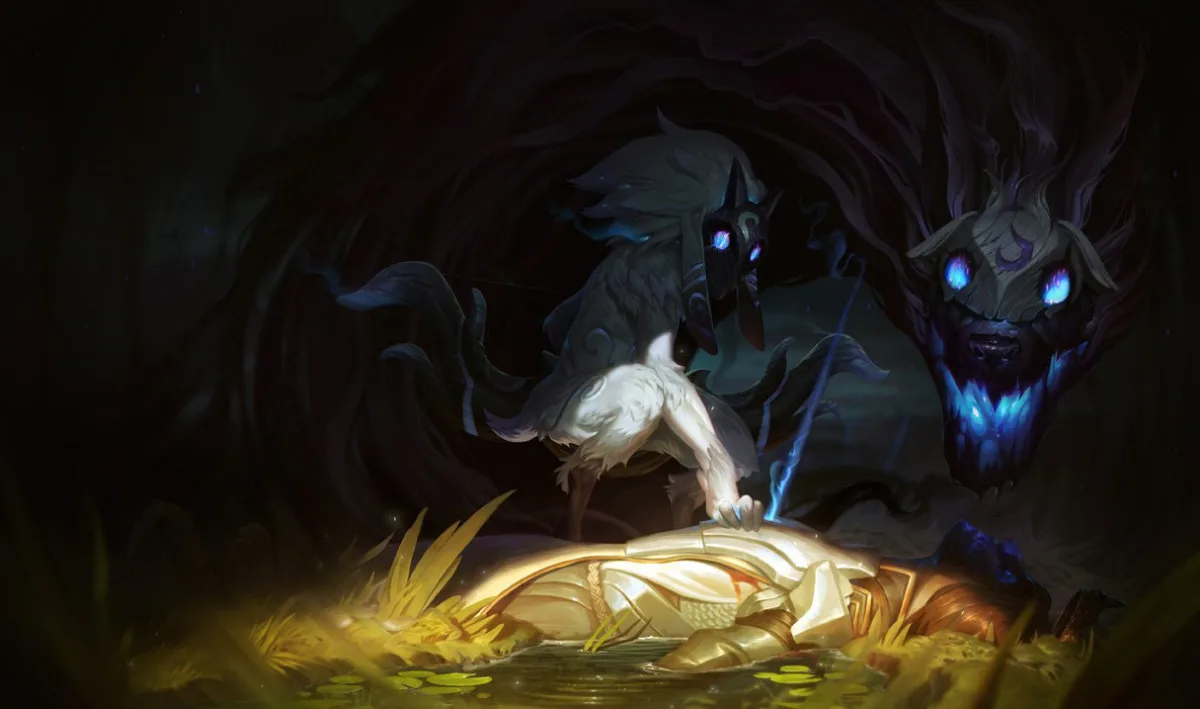
Kindred offers a ranged jungle carry whose progress changes both reach and basic abilities. Four successful hunts add 75 attack range; reaching seven and then ten marks adds another 25 at each milestone. Those early range gains depend on completed hunts, rather than a fixed level or minute. The sequence follows the current passive values and full English tooltip.
A Kindred approaching the next range milestone has a reason to want a marked camp. The team may have a better reason to leave it alone. If the enemy controls the route and nobody can move with you, a death there can cost access to the next objective. Judge the marks you have when choosing the fight; do not play as if the next one is already earned.
The damage is mixed. Dance of Arrows and Mounting Dread deal physical damage; Wolf’s Frenzy bites deal magic damage with a current-health component. Marks improve the basic abilities, including Q’s attack speed. That gives continued combat a payoff, but it does not make every part of Kindred’s kit armor-proof.
Lamb’s Respite is the more difficult reason to choose them. For four seconds, champions and monsters inside cannot die, including enemies and neutral monsters. At 10% of their maximum health, they cannot be damaged or healed while still in the zone; when it ends, those inside receive a heal. This is temporary shared protection, not a resurrection and not an ally-only save. The timing comes from Kindred’s normal R record, with the restrictions in its full English tooltip.
Consider the enemy carry who reaches the zone’s health floor. Spending damage spells into that protected target can leave those spells on cooldown when protection ends. Use the remaining time to position for the next attack and track the enemy’s control tools. Near the edge, an enemy Vayne can use Condemn to push Kindred outside if the angle carries them beyond the boundary. The circle stays where it was cast; Vayne may remain protected after Kindred loses that protection.
At Baron, this shared protection also means an ultimate covering the monster can prevent it dying during the window. It can disrupt the enemy’s attempt, but it can also delay your own finish. Choose the cast for a specific survival or contest problem, with a plan for the end of the zone. A panic R is not automatically favorable just because Kindred’s team was losing health.
Ornn adds strength to inventories other than his own

Ornn is the late-game choice when another damage dealer would leave the team without someone to hold the approach. His scaling also reaches beyond his own purchases. At level 13 he upgrades one of his Legendary items into a Masterwork. Each level after that allows an ally upgrade, performed while nearby, and each champion can have only one Masterwork. These are the Summoner’s Rift rules in Living Forge’s current record and full description.
Meet the teammate who needs an upgrade before objective setup scatters everyone. If the carry has recalled and Ornn is still collecting a side wave, arrange where to meet on the way back. The passive adds strength to the next fight only after the teammate receives the upgrade.
Ornn gains extra bonus health, armor and magic resistance, with further amplification from his upgrades. Bellows Breath deals maximum-health magic damage and makes enemies hit by its final flame Brittle. Immobilizing a Brittle target triggers additional maximum-health magic damage and extends the control effect. A teammate’s follow-up can therefore do more than hold the target still for Ornn to attack.
Call of the Forge God initially slows and applies Brittle. Ornn must connect his recast headbutt with the elemental to redirect it into the knockup pass. If his teammates are still dealing with another enemy, even a good return hit can leave the target uncontrolled again before allied damage arrives. Use the long approach to check who can follow instead of counting only how many enemies are lined up.
He can also stay near the carry and use his control against an arriving opponent. That is a real late-game choice: a tank who makes existing damage easier to deliver may add more than a second champion who also needs protection. Pick Ornn for that team job, not because he is supposed to beat every completed damage build alone.
Sona keeps a wounded team in the contest

Sona earns her place without needing a carry’s income. Accelerando permanently grants her basic-ability haste from qualifying spell use, up to 60. After the cap, qualifying uses reduce Crescendo’s current cooldown instead. She can get more casts into an extended fight, while allies still use their own cooldowns. Her current passive record and English tooltips explain how that growth works.
The stacks also require more than pressing buttons. Q earns them by hitting enemy champions. W earns them by healing another injured ally or having its shield protect another ally from enough damage. Repeatedly casting into an empty lane is not equivalent to getting useful spell casts in a fight.
Aria of Perseverance heals Sona and a nearby allied champion, prioritizing the most wounded. Its aura can shield allies it tags; it does not directly heal every teammate standing inside. That combination is valuable when several teammates survive a poke exchange and can remain together for the next cast. It is much less useful if the opening attack removes Sona herself.
Her next attack matters, too. After three basic abilities, Power Chord adds an effect based on the last song used. The W version reduces the target’s physical and magic damage for three seconds. The E version slows. If a diver is already on the carry, the W chord can be more relevant than choosing the Q version for extra damage. It requires an attack on that enemy, though. If doing so puts Sona in reach of another opponent, staying back for the next W cast may preserve more protection.
Sona suits a team that can share an area without stacking directly on top of her. Stand close enough to tag allies, but leave room between the enemy’s first contact and Sona’s position. Crescendo can help stop an approach; it does not make her a tank. A late-game support can have enormous influence while still being the wrong champion to enter dark ground first.
Turn the won fight into something permanent
Once your late-game champion has done its job, check the map before spending the advantage on another chase. A surviving enemy on the far side of the jungle can be less important than the wave already reaching a tower. Equally, beginning a major objective with an enemy still able to approach and your own damage dealer recalling can turn an advantage into a fresh contest.
Start with who is alive and who can reach the play. Then look at the waves and the path your team controls. If an enemy jungler is still alive and your own team is scattered, the visible tower beside your wave may be a better target than a contested Baron. If the wave is nowhere near a structure, chasing down that lane can consume the advantage before anyone hits the tower. Choose a play the available teammates can finish, not the most valuable icon on the map.
Before recalling after a win, decide who handles the next wave and where the team meets afterward. Otherwise, the carry can return with a completed item only to find everyone walking toward a different play. Bringing the developed champion and its protection to the same place is often the remaining work.