

Braum gets our pick for encouragement; Kled gets the laugh; Jhin supplies the threat you probably should not put in an inspirational message. Our best League quotes include lines that announce a personality immediately and others that improve once you know who said them. Taliyah, Illaoi, Aurelion Sol, Yorick and Kindred complete the eight selections below.
These eight selections come from official Riot Universe biographies, where they appear as epigraphs: short quotations accompanying the character’s story. That is the source verified here, not a claim about when you can trigger the line in a match. The list is unranked. We chose wording that repays a second look, then checked the surrounding lore rather than treating every confident sentence as good advice.
Sources and champion artwork checked September 6, 2026. Kindred’s selection is an explicitly identified excerpt; the other seven reproduce their full biography epigraphs.
Braum leaves room for a different tomorrow

"Today, we fight as enemies. Tomorrow, we may fight as brothers."
Braum, in Riot’s Universe biography.
The small qualification in the second sentence does most of the work. Braum leaves reconciliation possible without promising it. He also admits that the fight is happening now. That makes the optimism easier to take seriously than a slogan that pretends people have already settled their differences.
His biography gives the sentiment a specific foundation. As a boy, he watches his mother help a rival tribe after an attack by ice giants. Her aid changes that relationship. Braum learns generosity from someone who has an actual reason to withhold it, not from an abstract speech about being kind.
Choose this one when you want encouragement without bragging. Its strength is the possibility of treating somebody differently later. Using it as a victory taunt would lose the generous part that makes it worth keeping.
Taliyah’s metaphor belongs to her family
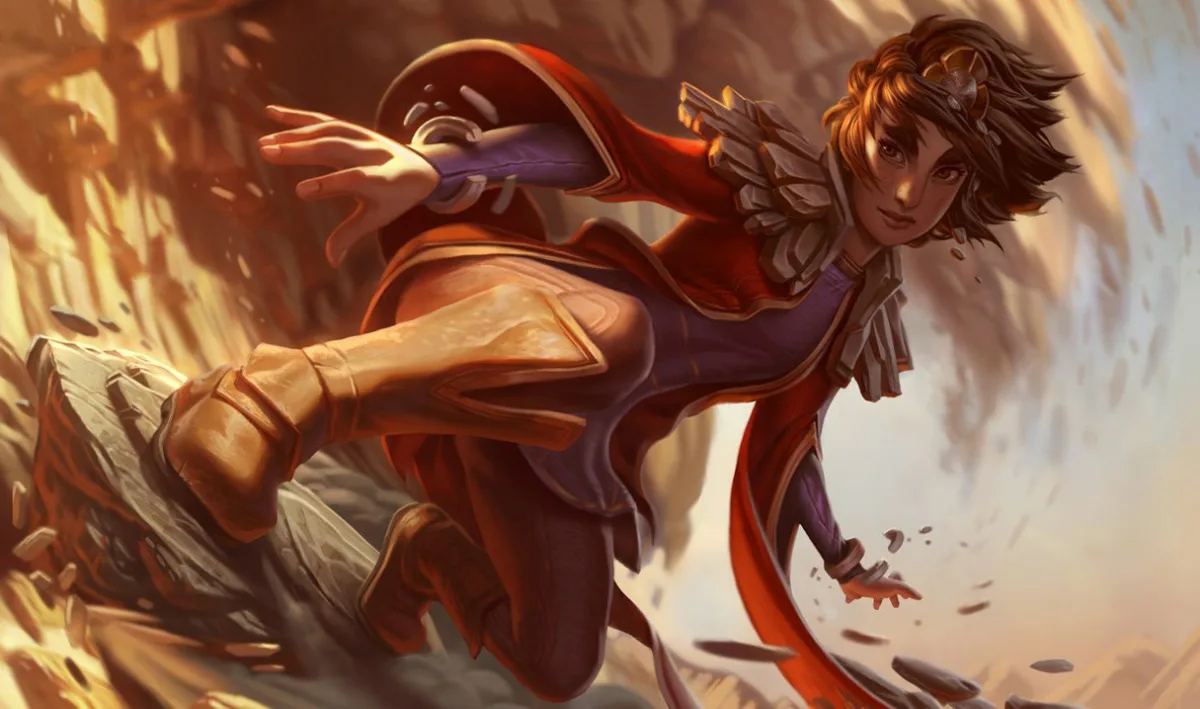
"This world is a tapestry of our own making."
Taliyah, in her official biography.
This could be a vague inspirational line in another character’s mouth. Taliyah earns the image. Her people are nomadic weavers, and the biography places the work of spinning, dyeing and making patterns beside her discovery that she can shape stone. The comparison comes from the skills and materials she grew up around.
Her language includes other people in the work. That fits a young mage worried about how her power might hurt her tribe. She is not promising that one exceptional person can control everything; the shared responsibility is what makes the sentiment fit her.
Keep Taliyah’s name attached and the familiar image becomes a piece of her upbringing. It suits a message about creating something together. Without that connection, it could pass for a broad motivational sentence from almost anyone.
Illaoi skips the comforting version of the lesson
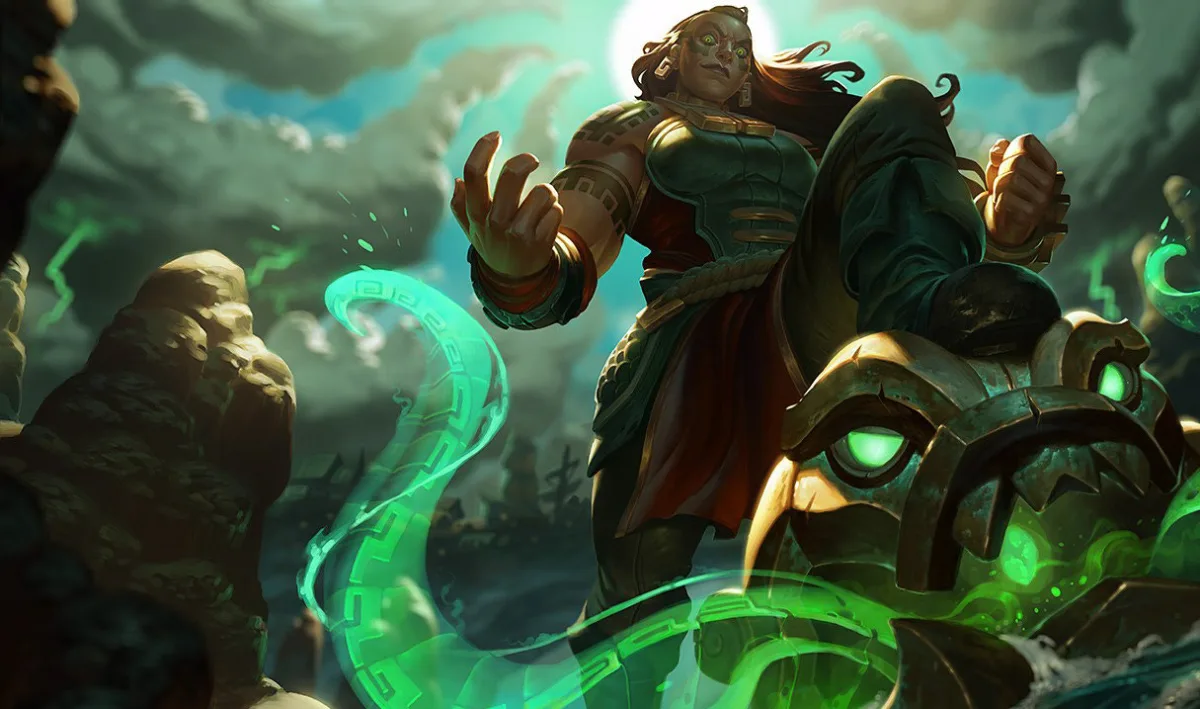
"Wisdom is frequently a kick in the head."
Illaoi, in Riot’s biography.
The first few words sound like the start of a solemn proverb. The ending makes it physical and undignified. That change is the joke, and Illaoi’s matter-of-fact phrasing makes it sharper than a long explanation would.
Her faith gives the violence context. The biography describes a priestess who confronts people with a dangerous test intended to force change. Survivors may find the resolve to pursue what they want; the ordeal is not gentle, and survival is not automatic. Her idea of helping somebody can be frightening to the person receiving it.
The joke works when you are looking back on a lesson learned painfully. Sent as earnest advice to someone who is already hurting, it could sound cruel. Illaoi’s approach is vivid on the page; the person receiving your message may prefer a little sympathy.
Kled knows what a sensible person would do

"A sane man would run… but I ain’t the runnin’ kind!"
Kled, in his Universe biography.
Kled identifies the sensible option and rejects it without embarrassment. He does not need to prove that retreat is foolish. He has already admitted that his own choice fails that test, which is what gives the boast its comic confidence.
The rough grammar helps distinguish him from the more polished speakers on this list. So does the pause: there is a moment to recognize the danger before he insists on going toward it anyway. The humor survives on the page without needing a claim about a particular vocal delivery.
His biography also complicates the joke. In its account of the fighting at Drugne, his charge inspires other soldiers, but the casualties are severe. The line makes an entertaining rallying cry. Anyone using it as a serious argument against retreat should remember how many of those soldiers failed to return.
Jhin makes an ugly idea sound tasteful

"Art requires a certain… cruelty."
Jhin, in his official Riot biography.
The hesitation is the unsettling part. Jhin approaches the final word as though he is choosing the correct term for a delicate aesthetic judgment. The phrase before it softens something he should not be softening. Cruelty becomes an ingredient, measured out by a person who assumes he has excellent taste.
Riot’s biography makes the stakes unambiguous: Jhin is a murderer whose elaborate violence harms real people within the story. This is not merely an artist saying that revision can be painful. His performance language lets him avoid speaking plainly about what he does to others.
This is our pick for menace because Jhin condemns himself with vocabulary he finds flattering. As character writing, it gets a disturbing idea across in very little space. As a statement of creative principles, it would be awful.
Aurelion Sol accepts several kinds of admiration

"Cower. Worship. Marvel. They are all appropriate responses."
Aurelion Sol, in Riot’s Universe biography.
Three abrupt commands lead into a surprisingly polite assessment. He offers the listener a choice, but every available response puts him above them. Then he approves all three, as though the listener needed his judgment on the matter. The change from commands to a calm assessment makes his arrogance funny.
His biography supplies the scale behind that arrogance. He creates stars and regards mortals as far beneath him. Yet the account also has him deceived and bound by a crown. His power does not make him incapable of being manipulated, and his appetite for admiration is part of that story.
His history makes the smugness entertaining: someone this certain of his superiority has already been outsmarted. The line still works as a grand entrance, but the biography gives a reader permission to be less impressed than its speaker expects.
Yorick makes the whole place sound wounded
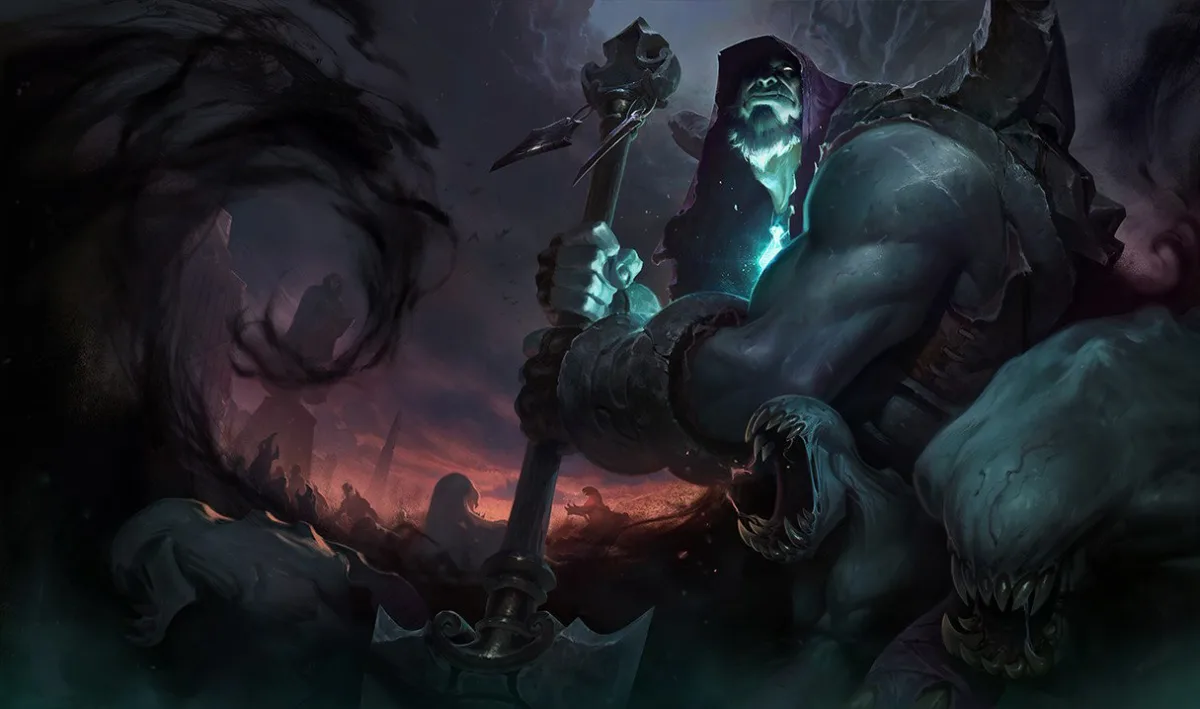
"These isles… How they scream."
Yorick, in his official biography.
Most of the speakers above are explaining themselves or telling someone else how to behave. Yorick directs attention away from himself. He names a place, pauses, then describes what he hears there. The small amount of text leaves room for the reader to imagine how difficult it is to keep listening.
Yorick could perceive spirits as a child, long before the curse of the Shadow Isles surrounded him with the dead. His biography gives him the purpose of freeing his home, even though the power he uses can make him appear monstrous. Hearing the spirits is a burden he has carried for a long time.
The result is mournful as well as eerie. Choose it for atmosphere, especially when you want the sadness of a haunted setting rather than another villain announcing how dangerous he is. Yorick is attending to suffering, not celebrating his ability to cause it.
Kindred needs the other half of the conversation

"All things, dear Wolf."
Lamb’s reply, excerpted from the dialogue introducing Kindred’s Riot biography.
Wolf has asked Lamb to remind him what the two of them are entitled to take. Her answer is short, affectionate and absolute. Without that preceding question, the excerpt could sound like a harmless exchange between companions. With it, the tenderness sits beside a claim that excludes nothing.
Kindred’s biography presents Lamb and Wolf as different ways of meeting death: one for those who accept their end, the other for those who flee it. Their intimacy does not soften what they represent. That combination gives the reply its particular unease.
This is the selection most likely to lose its force when separated from its source. Credit Lamb as the speaker within Kindred’s dialogue, and keep a sentence of context with it. Calling it a complete standalone speech would turn a precise little exchange into something it is not.
Keep the source attached
For a post or discussion, the champion’s name and a link to the Riot biography preserve more than attribution. They let another reader check the wording and decide whether your interpretation holds up. The short excerpts here retain their original wording; quotation marks and apostrophes use this site’s straight punctuation.
If your discussion depends on when a character says something in-game, link a recording of that event as well. A biography cannot establish a champion-select trigger or a skin-specific interaction. Keep the written source and the recording separate so readers know what each actually proves.