
Sona is the best starting choice when your team wants repeated group protection in long fights. Choose Senna if you want the support slot to develop its own ranged damage. If your team already has damage but struggles to use it, look at Milio for attack access, Taric for surviving a committed fight, or Thresh for catches and rescue.
These five recommendations compare what you gain as a support and what the team must provide in return. They are kit-based choices, not a win-rate ranking or a reason to concede lane. Sona cannot repeat her spells if she dies to the opening catch; Senna’s extra range will not put a frontline into your draft.
Reviewed for modern PC Summoner’s Rift Patch 26.18 on September 10, 2026. The five support-scaling tools retain the conditions described here. The order weighs what the kit gains and the protection needed to use it.
Linked client records are Riot’s game data hosted by the CommunityDragon mirror.
Choose the kind of growth your team needs
| Support | What improves | What can still ruin the plan |
|---|---|---|
| Sona | Earned basic haste and repeated group buffs | Getting caught before she can cycle spells |
| Senna | Permanent AD, attack range, and crit chance | Two fragile ranged champions with nobody screening |
| Milio | A farmed ally’s damage and access to targets | Carry isolation or crowd control on Milio himself |
| Taric | Armor value and protection for committed fights | Ranged pressure that denies attacks and wastes R |
| Thresh | Soul-derived stats and lantern shielding | Bad positioning, magic damage, or an unused lantern |
Permanent stats are only one reason a support can improve. Taric’s invulnerability lasts a fixed time, but protecting several farmed teammates during that time can be worth more than another small stat increase. Milio can benefit from his carry’s purchases without buying those items himself. Ask who will have room to attack before choosing whose numbers you want to grow.
Sona: repeated casts are the payoff

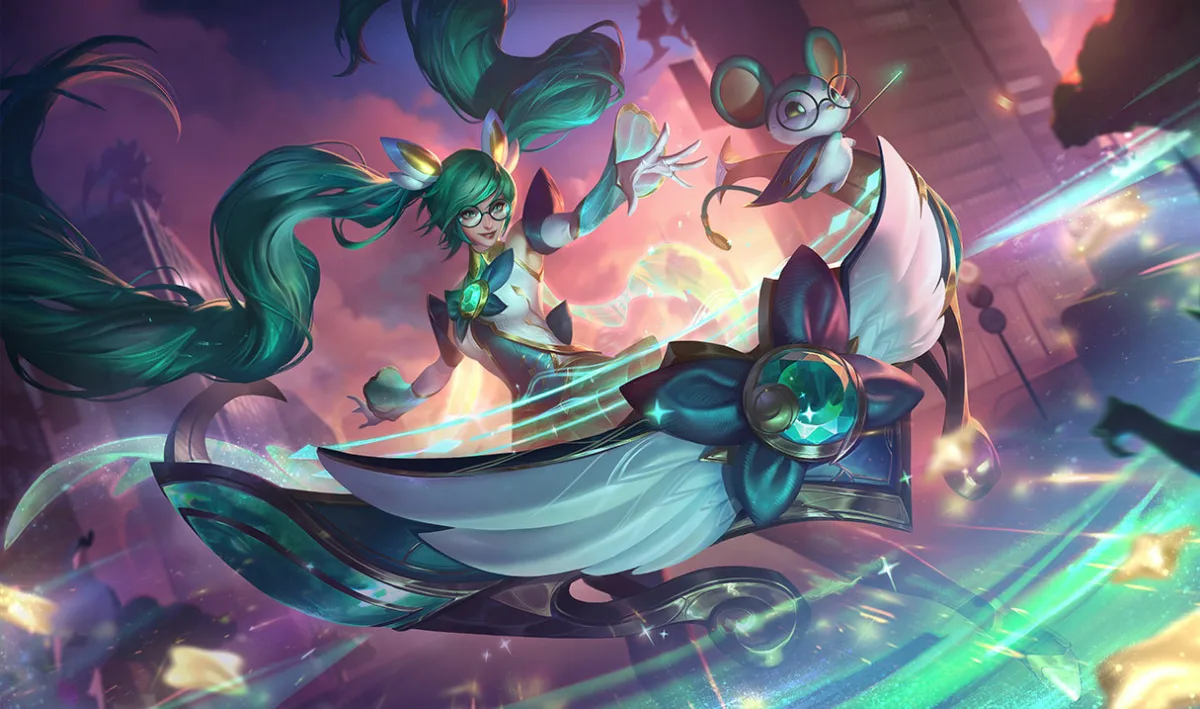
Sona plays her instrument beneath a canopy of pale branches.
Sona’s late-game appeal is the number of useful casts she can fit into a fight. Accelerando grants 0.5 basic ability haste per stack, shortening Q, W, and E cooldowns. It supplies up to 60 haste. Once she has earned that much from the passive, a qualifying trigger instead removes 1.5 seconds from her ultimate’s current cooldown. It does not permanently shorten every future ultimate cooldown. Those rules come from Sona’s ordinary spell record, paired with the current English tooltips.
Earning that haste asks for useful spell use. Q gives stacks for champions damaged. W can give stacks when Sona heals another injured ally or when its shield absorbs enough damage on another ally. Casting W on healthy teammates while nothing hits them is not a way to farm the passive for free.
In lane, look for a Q hit you can take without crossing the enemy support’s engage line. Answering a manageable trade with W can also earn progress. Hiding out of range all lane gives up those opportunities; stepping into a hook for one more stack costs far more than it earns.
Once teams group, W separates the immediate heal from the wider protection: it heals Sona and one nearby allied champion, while the aura can shield several allies she tags. More teammates inside the aura mean more potential shield value, not a direct heal on every teammate. Her Q aura also adds magic damage to allied attacks, and E helps nearby allies move. You get more from this kit when several teammates can keep fighting near her than when one ally dives far ahead and demands all the protection.
Power Chord gives another decision besides choosing the next cooldown to press. After three basic spells, Sona’s next attack gains an effect from her latest song. Preparing that attack with W makes it weaken an enemy for three seconds, cutting their physical and magic damage output. Against an attacker already hitting your carry, that can be a better use of the empowered attack than Q’s extra damage. You still have to attack the right enemy. Holding the W chord while running out of reach does not weaken that attacker.
Even a full Accelerando passive does not make it safe for Sona to check occupied brush with her body. Around Baron, let a sturdier teammate enter uncertain ground first, then work from a position where allies can pass through your auras. Arriving alive with enough mana for several casts matters more than squeezing an extra Q into the approach.
Senna: more reach, but still a support slot
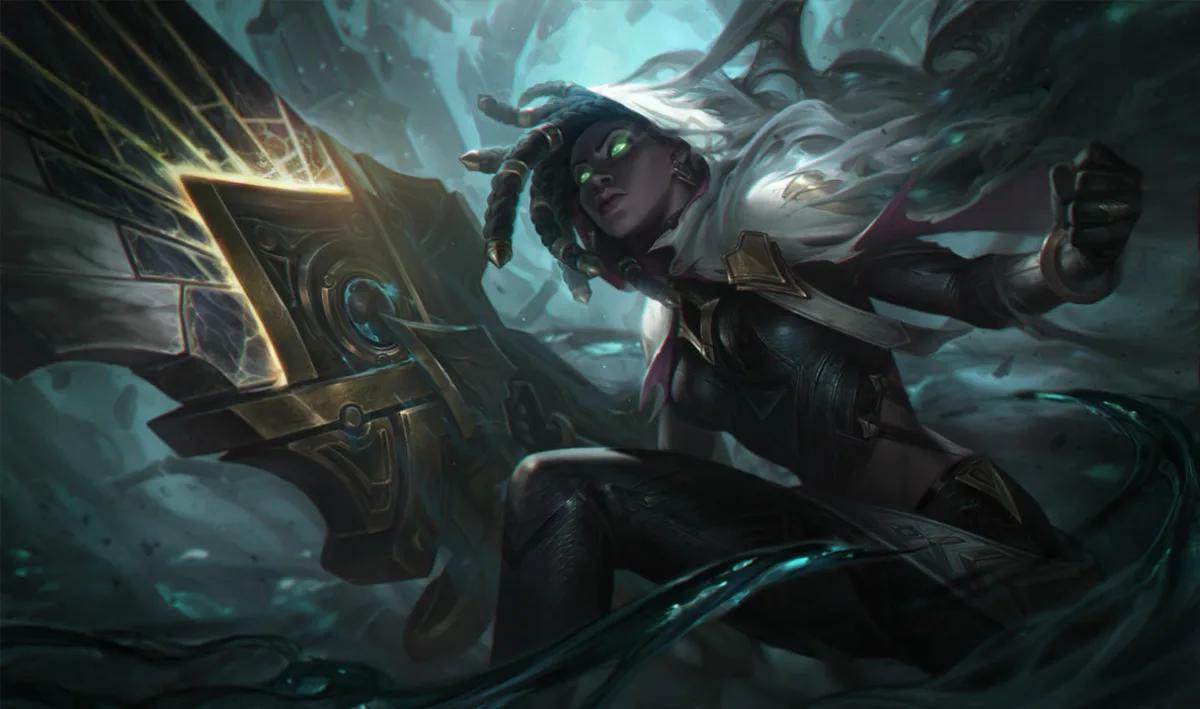
Senna carries her relic cannon through the Black Mist.
Senna grows her own AD and attack range through Mist. Each stack grants 0.75 AD; each group of 20 stacks adds 20 attack range and 10% critical strike chance. Excess crit chance converts into lifesteal rather than giving her an unlimited chance to crit. She does not receive ordinary AD growth on level-up. The current Absolution text and Senna’s normal passive values support those rules. How quickly she earns stacks depends on the opportunities the game gives her.
That range can make an enemy frontliner easier to attack without exposing Senna to everyone behind them. It also extends her Q targeting reach, which follows her attack range. She still has to stop and fire. Keep moving between shots instead of treating a larger attack circle as protection from a diver approaching sideways.
Support Senna should still leave the farming role to her lane partner. Minions she kills are less likely to drop souls than ones her ally kills, a distinction retained in the ordinary passive. Riot’s Patch 26.13 changes reinforced that difference and moved her Q cooldown refund from on-hit to on-attack. Q itself still applies on-hit effects to enemy champions; that is separate from how its cooldown is refunded. Neither interaction is a reason to take the ADC’s wave simply because Senna also wants damage items.
Some souls are not worth collecting. A drop beyond the enemy support can cost Senna the health she needs to approach the next wave. She can also siphon Mist with two attack or ability hits on a champion, subject to a per-target cooldown. Once that stack is earned, extending the trade needs a reason beyond wanting another one immediately.
Her contribution is not all personal damage. Q heals allies along its path while dealing physical damage to enemies. Dawning Shadow shields allies across a wider area than its central physical-damage beam, and its shield grows with collected Mist. Aim the ultimate for the endangered teammate even when the enemy carry is elsewhere; a perfectly centered damage line can be the wrong use of the spell.
Check who protects the farming carry before locking her in. Last Embrace takes a second to root after hitting its target, and nearby enemies can reveal Senna’s camouflage. Neither is an immediate answer to every attacker who reaches your ADC. Two ranged damage dealers can work when the rest of the team covers the approach. Without that help, both may spend the fight retreating while their damage goes unused.
Milio: let another player’s farm do more
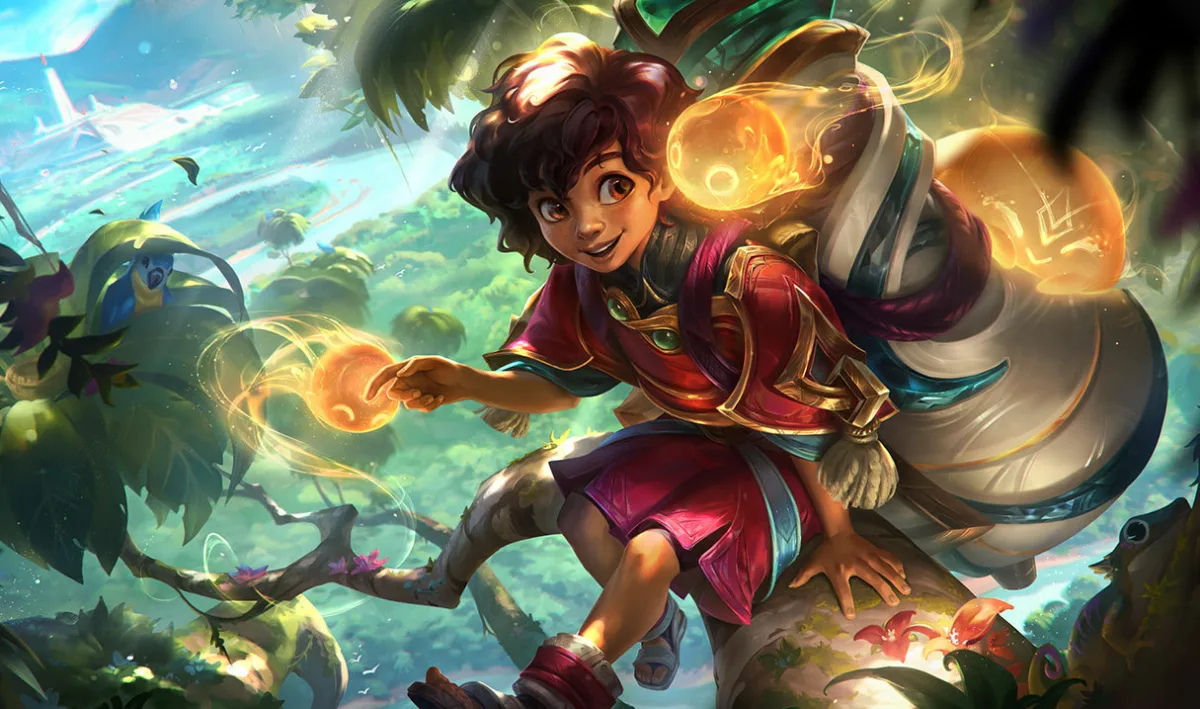
Milio and his glowing companions rest among tropical branches.
Milio offers a different answer to the support’s limited income. Fired Up! enchants allies touched by his abilities, adding magic damage to their next attack or ability. The burst uses the affected ally’s attack damage; the burn scales with Milio’s own level and AP and does not stack from repeated hits. Buying AD on Milio is not how you increase that ally-based part. His bound passive tooltip and damage calculations separate those sources.
An AD purchase on the farming teammate can therefore improve part of Milio’s contribution too. Your job is to help that teammate land attacks. The ADC selection guide is useful if you are choosing both champions: favor a damage plan that works from the positions your team can protect.
Cozy Campfire creates a zone that follows an ally for six seconds, healing nearby teammates over that duration and increasing their attack range. The range bonus increases as W gains ranks. Milio can recast it to change which ally the zone follows. These are the current W values and targeting rules, not a permanent range increase for everyone who briefly touched the spell.
Use that duration when the carry has something worth hitting. Casting the zone before the enemy has entered any useful attack range can spend much of it on walking. Casting it as your front line meets theirs lets the attacker threaten the first reachable target without having to step as far forward. If that attacker has to retreat, move the zone to an ally who can still contribute. The best recipient can change during the same cast.
Breath of Life can release teammates from crowd control, with an important exception: its current extended tooltip excludes airborne effects. Milio must also be able to cast: Riot’s design explanation identifies stun and silence on Milio himself as counterplay. Stay close enough to help without sharing the carry’s exact position. If the same spell catches both of you, the cleanse may be unavailable when you need it.
Several attackers approaching separately can overwhelm him. Q’s knockback can stop one enemy’s approach, but holding it for that enemy leaves another angle uncovered. Milio is a stronger choice when a frontline already narrows those approaches and the farming carry needs help attacking past it.
Taric: armor and protection for committed fights
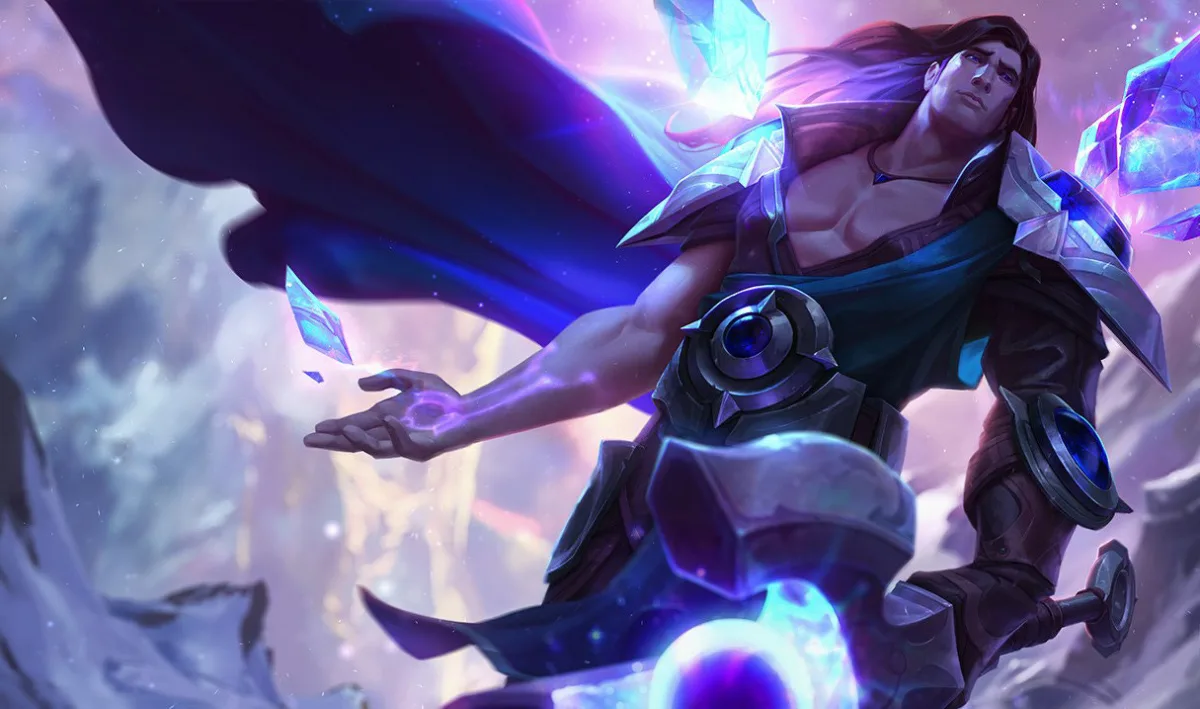
Floating crystals frame Taric in his default splash art.
Taric is the choice when both teams are likely to commit into close range. Bastion gives him armor and shares that armor benefit with his nearby bound ally. His bonus armor also contributes to the extra damage on Bravado attacks, which remains magic damage. The normal W and passive calculations explain why armor can improve more than his own ability to take physical hits.
Armor does not reduce magic or true damage, and it cannot put a retreating opponent within attack range. Taric needs to land Bravado attacks to shorten basic cooldowns and earn healing charges. An enemy who can hurt him while backing away can deny that cycle even after he has bought substantial defenses.
Cosmic Radiance takes 2.5 seconds to activate, then grants 2.5 seconds of invulnerability to nearby allied champions. More ranks reduce its cooldown, not its delay or protected duration. Its late-game importance comes from what your team can do during the same protected window, rather than the window quietly getting longer. Those timings are in Taric’s current ordinary R.
An opponent walking up to an objective can still turn around. Casting R then may only make them wait. An enemy who has spent a dash to reach your carry has a harder decision: stay close through the protection or give up the engage. Cast early enough to cover that commitment. Waiting for an almost-dead health bar risks a teammate dying during the delay.
Bastion also makes Taric’s spells originate from his linked ally. That creates another place from which he can protect teammates, provided the bound ally stays near him. Standing in both areas does not grant someone double effects or a longer invulnerability window. Arrange the link to reach the teammates who need it. His current English spell rules explicitly rule out stacking the mimicked effects.
In lane, keep enough health and mana to fight when an opponent finally comes close. Healing away every small poke can empty Taric’s mana before that opportunity arrives. Even if he can land attacks to earn more healing charges, he still has to pay for the cast.
Thresh: the soul count is only half the story
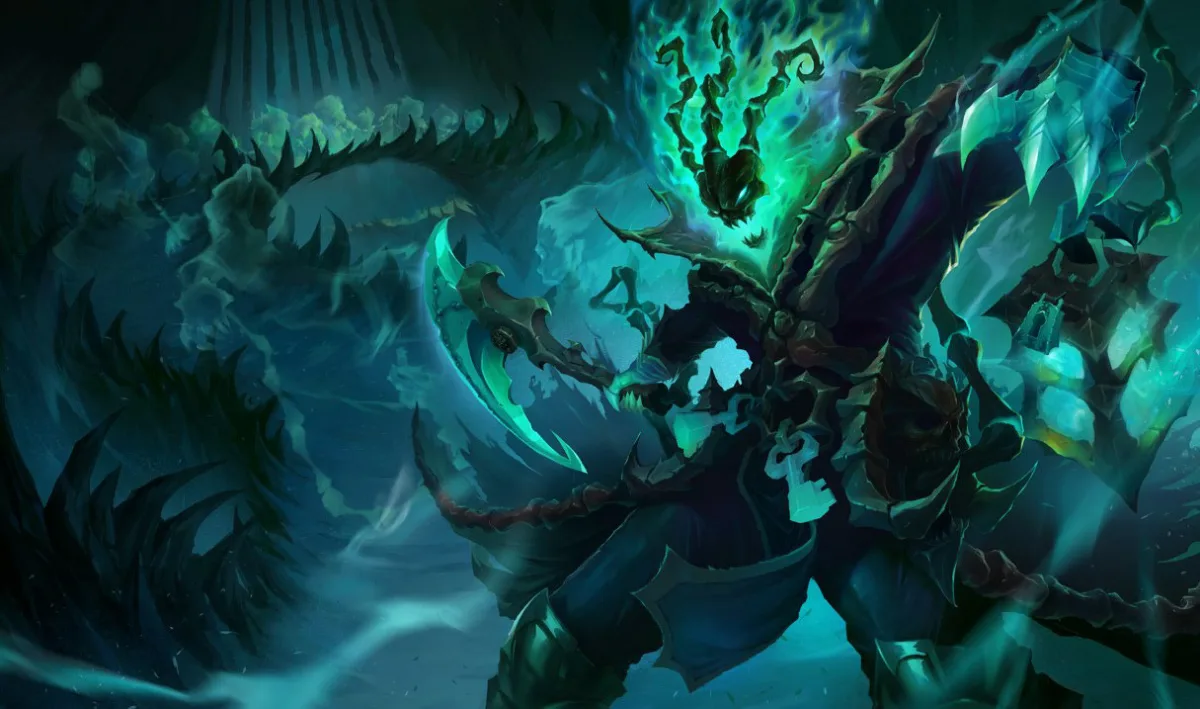
Thresh carries his hook and lantern through spectral mist.
Each soul gives Thresh one armor and one AP, and each also adds two shield strength to Dark Passage. Those values are in his normal passive and W calculations. The armor and AP can keep growing, but souls supply no magic resistance. A large total is not a reason to walk into every damage source as though he had become equally resistant to all of them.
Dark Passage does not shield everyone around it. Thresh receives the shield, as does the first allied champion to touch the lantern. Escaping with it requires the ally to click, which brings them to Thresh’s position. The full current tooltip is specific about both rules.
Your position therefore has more influence than another handful of souls. Standing behind your threatened carry can offer an exit away from the enemy; following a hook into that enemy can move the destination in the wrong direction. Death Sentence’s second cast is optional. Keeping a caught enemy controlled while remaining beside your team may be the useful late-game play.
Thresh can collect souls with his lantern, which is worth remembering when the drop itself would be dangerous to approach. Check whether your teammate might need the spell first, though. Spending an escape resource on two safe-looking souls is poor scaling if it leaves your carry stranded in the next few seconds.
Thresh can threaten a catch before a fight, then save Flay and lantern for a teammate when the enemy turns. Choose him over a group buffer when you need to reposition or protect one person at a time. Souls improve the numbers, but those decisions keep him useful even when the teams refuse a tidy front-to-back fight.
Turn the scaling pick into an objective plan
After lane, choose which teammate you need beside you at the next objective. That may be the farmed attacker Milio can enable, the ally carrying Taric’s Bastion, or someone durable enough to enter the river ahead of Sona. A support champion with excellent late-game spells still needs that person to arrive on time.
Use the recall before the contest to agree on the approach. If the only safe route goes through your own jungle, take it together instead of splitting into an unwarded river entrance. Senna and Thresh can collect souls along the way; neither should detour for them while the teammate who needed protection walks into the fight alone.
Once you are in position, identify what would make the enemy commit. Taric can wait for that movement before R. Milio can hold W until the carry is able to attack. Thresh can keep lantern ready while someone checks the next patch of ground. Those choices turn late-game strength into a fight your team can actually take.