
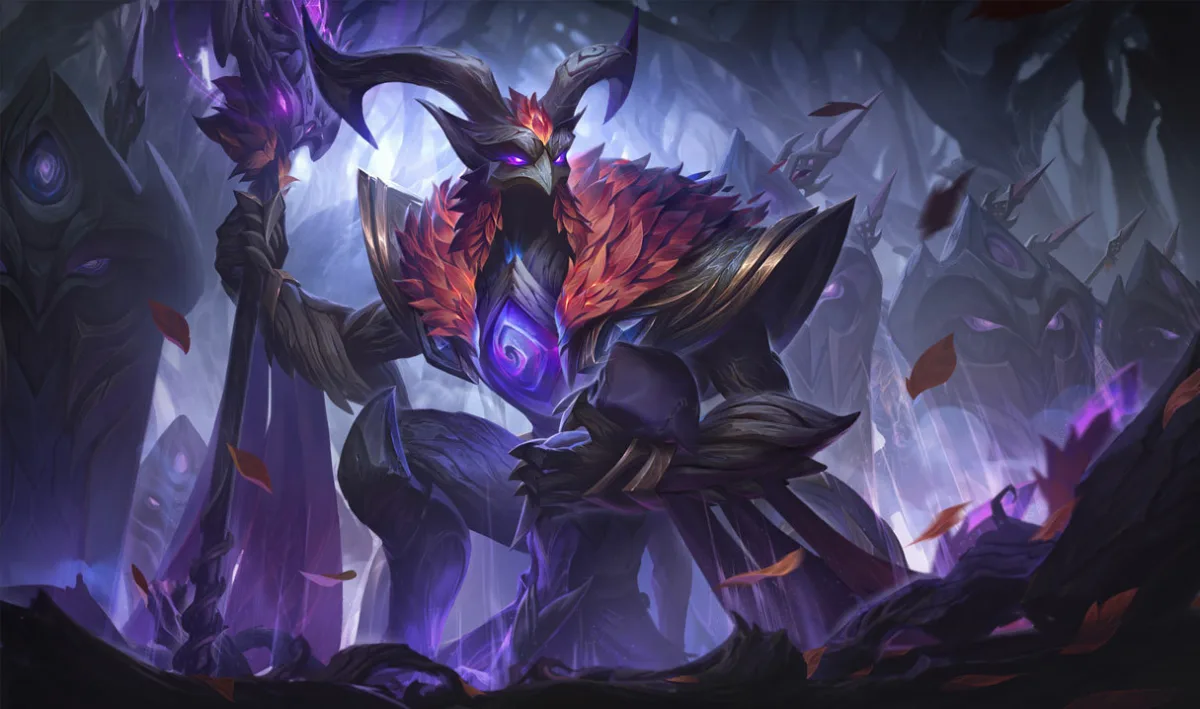
Azir can reach the enemy backline, push a carry toward his team and still finish in a terrible position. The inputs worked. His next attack may require standing somewhere he cannot survive. That second problem is why he leads our ranking of the hardest mid laners, ahead of Qiyana, Hwei, Akali and LeBlanc.
We ranked these five by how much they ask you to track at once and what happens when you commit badly. This is not a measured learning curve or a current strength tier list. Azir splits your attention between his attack zone and his own body. Hwei makes you choose which tools to give up. The assassins punish different mistakes in approach, spacing and retreat.
Reviewed for modern PC Summoner’s Rift Patch 26.18 on September 10, 2026. The five mid kits retain their execution demands. The comparison does not measure mastery time or infer difficulty from a current result table.
Five kinds of trouble to learn around
| Champion | Main difficulty | First useful practice goal |
|---|---|---|
| 1. Azir | Maintaining soldier damage without exposing his own body | Keep attacking through a change in the target’s position |
| 2. Qiyana | Choosing the next element and a fight location | Identify what the second element must accomplish before entering |
| 3. Hwei | Spending the right spell family at the right time | Keep one needed defensive family available while clearing |
| 4. Akali | Combining passive spacing, energy and conditional recasts | End a short trade without following every marked target |
| 5. LeBlanc | Delivering delayed damage while keeping an exit usable | Check the return location before taking it |
We put Hwei below the first two because learning his inputs solves a larger part of his initial problem. It does not solve the decisions that follow. If choosing quickly is harder for you than executing quickly, he could be your toughest champion here.
1. Azir: a successful engage can ruin the rest of the fight
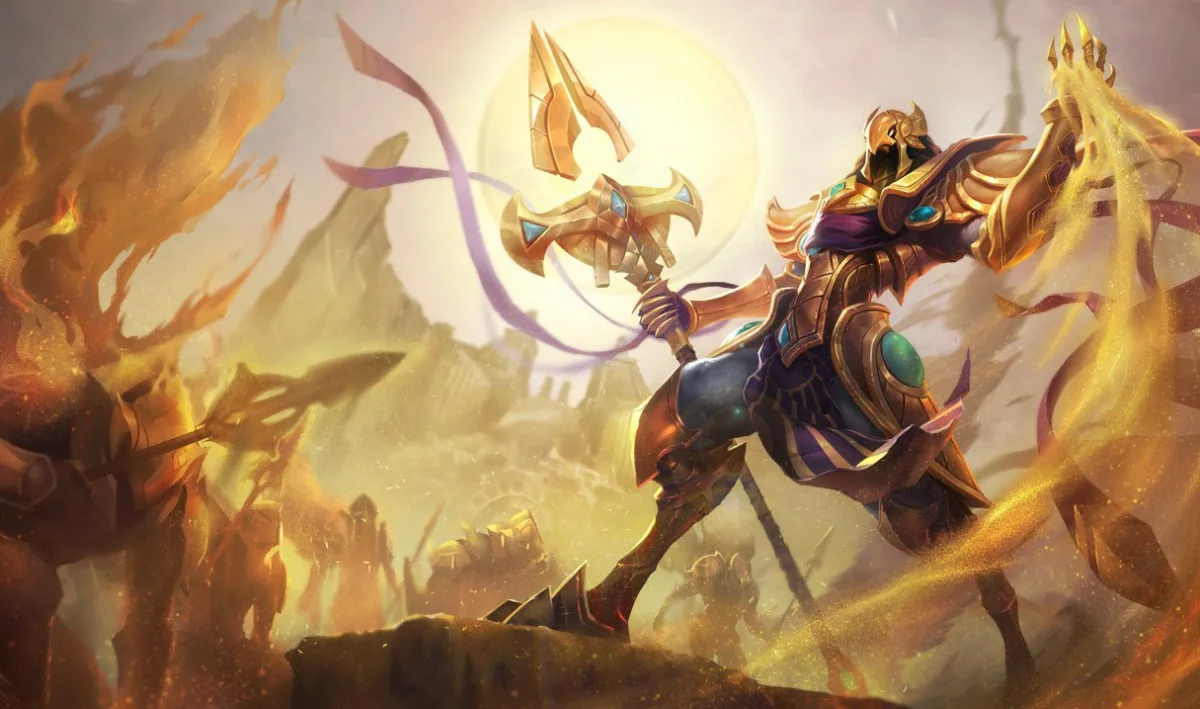
Arise! (W) places a soldier; an attack against an enemy near it orders a stab instead of Azir’s ordinary attack. Conquering Sands (Q) moves all his soldiers toward a location. You can reach someone who has moved, but you commit the existing soldiers together. Riot’s current Azir description explains both commands.
Picture the opposing front line walking toward your carry while its ranged damage dealer stays behind. You have a soldier beside the frontmost enemy. Moving every soldier past that enemy might create access to the backline, but it can also abandon a target you could already attack while remaining beside your team. The tempting play changes both your damage location and the job you are doing.
A useful soldier placement can become useless after the target sidesteps. You have to notice while watching for anyone who can reach Azir himself. The soldier can afford to stand beside the enemy carry. Azir may not be able to follow it there.
Shifting Sands (E) makes that risk immediate. Azir dashes toward one of his soldiers, gains a shield and stops if he collides with an enemy champion. That collision also grants a soldier charge. An enemy between Azir and the chosen soldier can change where the dash ends, leaving him short of the position you planned. See E’s current client tooltip.
Now return to that advancing front line. Emperor’s Divide (R) can knock enemies away and leave a wall blocking movement. Pushing a diver off your carry preserves a fight in which your soldiers still have reachable targets. Going forward for a multi-person displacement leaves your carry behind. If the diver is the immediate threat and your team cannot follow, we’d use the defensive cast. Moving one enemy away may do more for that fight than delivering three enemies nobody can attack.
For an early practice goal, remove the initiation from the exercise. Place a soldier, attack a target, then respond when that target moves. Decide whether another soldier or Q is needed without automatically moving Azir toward danger. Before adding an aggressive E, account for its champion-collision stop and explain where Azir should stand afterward.
2. Qiyana needs a plan for the second element
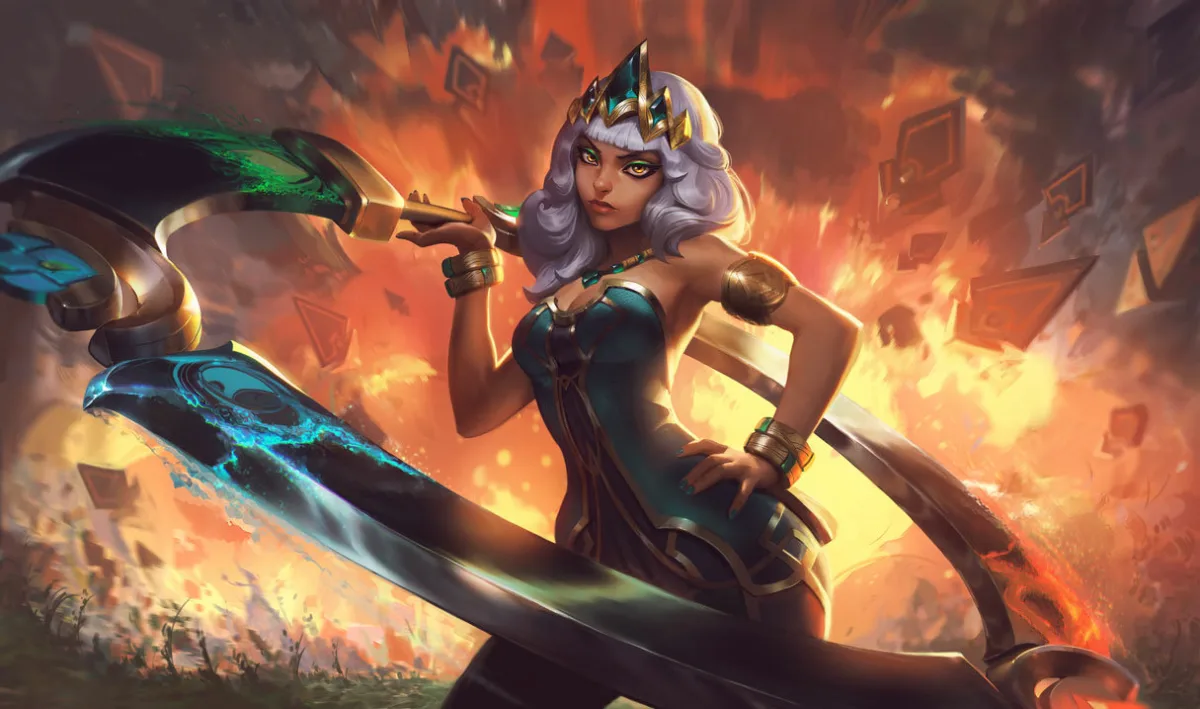
Qiyana’s visible complexity is speed. The less visible part is choosing what that speed delivers. Her W takes an enchantment from nearby brush, terrain or river and refreshes Q. Separately, taking a different enchantment resets Royal Privilege’s per-target cooldown, allowing its extra damage against that opponent again. Refreshing Q and refreshing the passive are related opportunities, not the same rule.
River gives Q a root followed by a slow. Brush gives it an invisibility trail. Terrain gives it additional damage against a target below 50% health. Choosing the damage version against a healthy opponent who is walking toward help can leave you with the wrong answer to the problem. The opponent surviving is not necessarily evidence that the buttons were too slow; you may have needed control or concealment instead.
Consider a short lane trade that does less damage than expected. You have used your first Q, and the opponent has moved away from the position you wanted. Before refreshing Q, ask whether you can still finish the fight. Taking another offensive angle merely because W is available can turn one unsuccessful trade into a long chase. Brush Q’s concealment may help you disengage, but only if you can obtain that enchantment from the terrain around you.
Her ultimate makes the map part of the calculation. Its shockwave knocks enemies back, then creates a stunning explosion when it reaches terrain; river and brush it passes through can also explode. An empty-lane cast is not interchangeable with a cast toward a wall or across river. Nor does the ultimate’s terrain interaction require that Qiyana currently hold the rock enchantment. These are separate systems in the current normal Qiyana spell records.
Name the next element before entering, including the place you will get it. If the trade fails, separate three possible causes: you couldn’t reach that terrain, you chose the wrong effect, or you missed the input. Practicing a longer sequence helps with the last problem. It won’t fix the first two.
3. Hwei’s hardest button is the one you no longer have
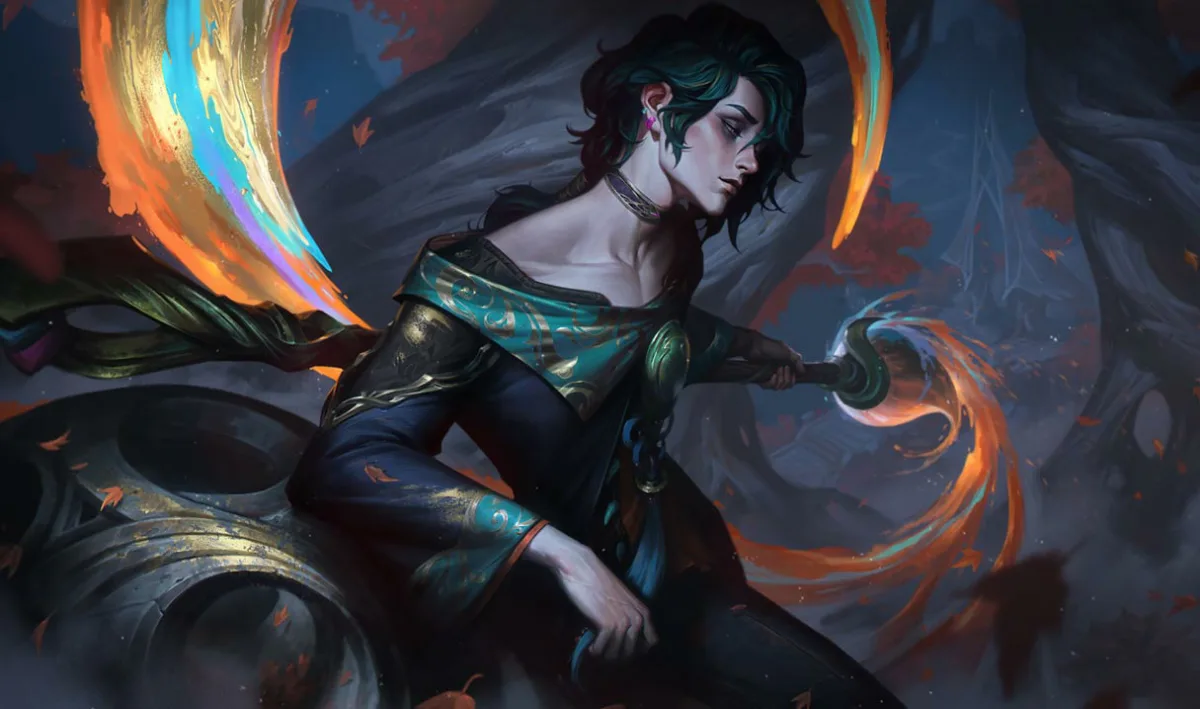
Hwei has three basic spell families, each offering three choices, plus his ultimate. The second input selects a spell within the family: QE means opening Q’s damage palette and choosing E from it. Learning those nine selections is work. Treating them as nine independently available basic spells is the bigger mistake.
Casting a Q option spends the damage family’s cooldown. Using an E control spell means the other E options are unavailable for that cooldown. Hwei’s lead designer explains the tradeoff in Riot’s official ability rundown. We checked its release-era explanation against his current spell records, without carrying over its old item advice.
Take a lane with an enemy threatening to move through the river entrance. Molten Fissure, QE, can damage the minion line and leave slowing lava. Stirring Lights, WE, empowers three subsequent attacks or abilities and restores mana on hit. Those are useful farming tools. If you also spend Crushing Maw, EE, on the wave, however, you have committed damage, utility and control together. You cannot respond immediately with the W movement path, the W shield and an E fear as though they were separate unused buttons.
That is the losing window to learn first. When the enemy’s approach is plausible, a slower clear with E available may be worth more than the fastest possible wave removal. If the threat never arrives, saving E may have left minions alive longer than necessary. That is a reasonable cost to evaluate, not a reason to hold everything indefinitely.
Devastating Fire, QQ, explodes on the first enemy hit. Severing Bolt, QW, lands after a delay and deals increased damage to an isolated or immobilized target, with that increase depending on missing health. The first question is what stands in the fireball’s path. The second is whether the target will still be where the lightning lands. Reaching farther doesn’t answer either one for you. Both spells are described in the current bound tooltips.
While a spell family is open, R selects Wash Brush, cancelling that selection without spending mana or a cooldown. It does not cast his ultimate. Learn that cancel alongside the offensive inputs: if you opened the wrong family, you don’t have to complete the wrong spell just to stop hesitating.
Choose Hwei if you want a demanding mage without making close-range assassination your usual task. Start with one damage choice, one escape-or-protection choice and one control choice. Add an alternative when you can name a situation where your familiar spell is inadequate. You’ll have a reason to remember it.
4. Akali can arrive with no good next action
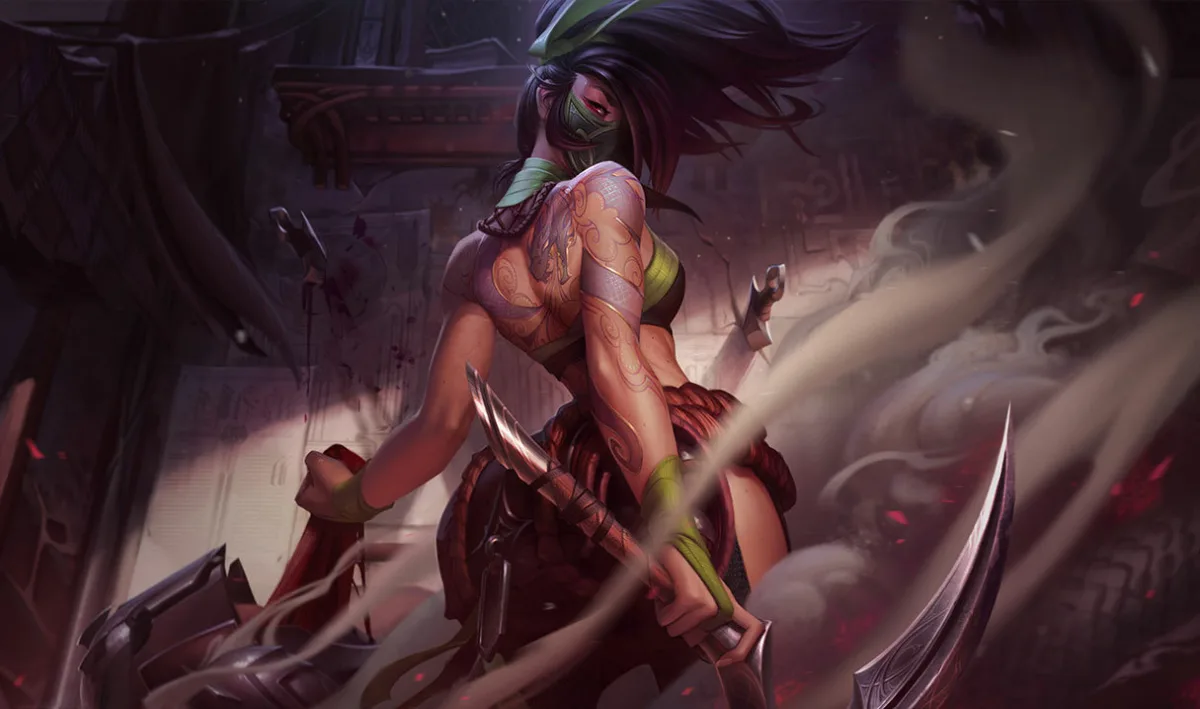
Hitting an enemy champion with an ability creates Akali’s passive ring. Crossing its edge empowers her next attack and extends its range. That asks for movement away from the immediate target before returning to use the attack. You are managing the distance needed to earn damage while the opponent is also moving. Riot’s Akali description explains this sequence.
Energy adds a second question: what can you cast after you get there? Spending Q repeatedly, then taking a dash into melee range, can leave you beside the target without the energy for another Q. Twilight Shroud restores energy and temporarily increases the maximum, but it is also an important positioning resource. Spending it only to continue pressing Q may leave no smoke for the dangerous part of the trade.
The shroud grants invisibility inside it, with attacks and abilities briefly revealing Akali. Turrets and True Sight can reveal her too. It is not invulnerability. Those qualifications appear in the current normal W tooltip and extended rules. Do not plan a dive around the assumption that entering smoke makes the turret unable to see you.
An accurate Shuriken Flip can be hard to leave alone. Its first cast can mark an enemy or her smoke; the recast dashes to that marked target. But hitting a retreating champion doesn’t tell you who is waiting beside them. If they have reached allied help, declining the recast may be the correct end to your trade, even though you landed E.
Perfect Execution has a different restriction: its first cast goes over an enemy champion, followed by a delayed second cast with damage that increases against missing health. It is not two unrestricted opening dashes. Both casts, the E mark and the resource rules are documented in the ordinary Akali spell bindings.
Choose Akali if the appeal is moving through a close fight while continuously reconsidering whether to stay. Your first successful exercise can be modest: land an ability, earn and use the passive attack if safe, then leave without spending every available recast. A short trade that preserves an exit is a better starting point than a memorized all-in whose final position you cannot explain.
5. LeBlanc’s return marker can become a trap
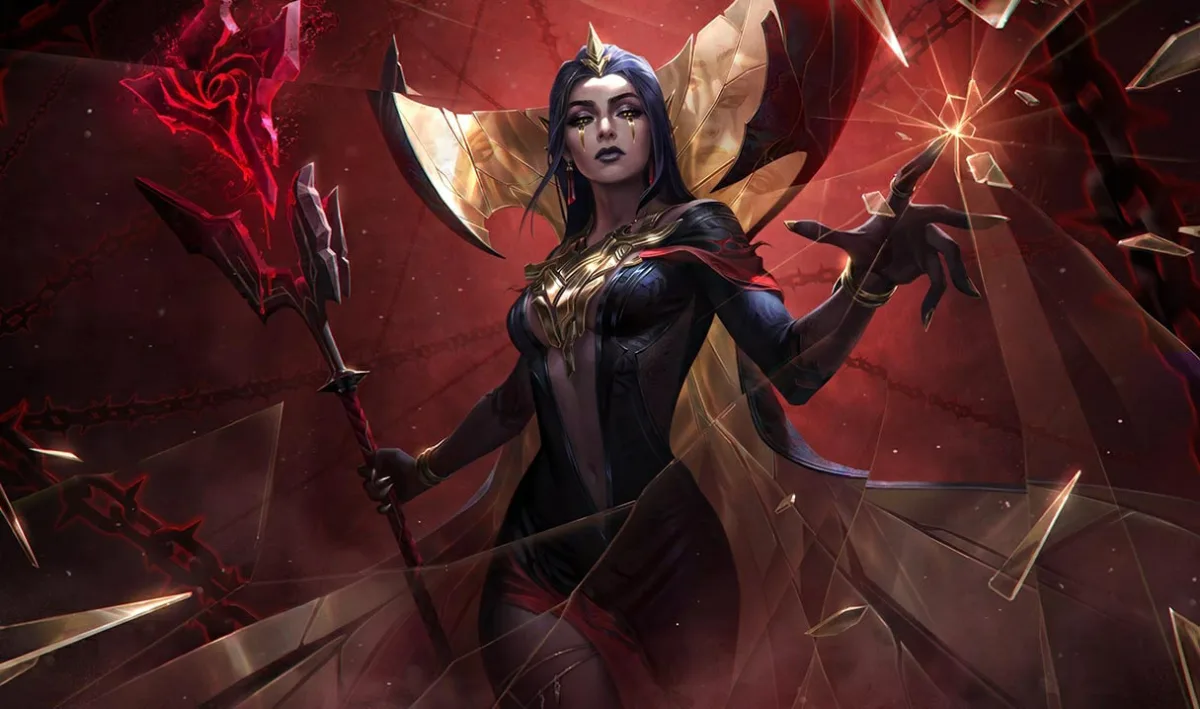
LeBlanc has four seconds after Distortion’s dash to recast W and return. The marker invites a comfortable assumption: the dangerous part ends when you press W again. It ends only if that location is still usable. An opponent can move toward the marker while you attack elsewhere, turning an automatic retreat into a predictable arrival. Waiting indefinitely for them to leave is not an option either.
Her damage creates reasons to stay away from the marker longer. Sigil of Malice (Q) places a mark that further ability damage detonates. Ethereal Chains (E) shackles the first enemy struck. Its second damage and root require the tether to last 1.5 seconds. Landing E begins that sequence; it does not immediately finish it. An ordinary attack does not substitute for the ability damage needed to pop Q’s mark. These are the distinctions in her current champion description and bound client strings.
Suppose you dash past a minion to find an unobstructed chain angle. The opponent retreats, and their jungler appears near your original position. Following far enough to finish the tether may now cost your clean return. Breaking the chain and moving toward another safe route can be preferable to securing its delayed damage. Missing that second part is visible; the danger you avoided is easier to overlook.
Mimic repeats her most recent basic ability. Mimicked Distortion has its own return marker, separate from ordinary Distortion’s marker. The current return tooltips identify the mimicked marker as red and the ordinary marker as yellow. More possible destinations increase the number of locations to check; they do not make either location safe. The normal LeBlanc record contains both return spells.
We place her fifth because approach-and-return is a simpler starting idea than Azir’s persistent soldier management or Hwei’s palette. Opponents who watch the return point make applying it much harder. Check that point while waiting for a chain to finish. The other player has time to make a decision too.
Keep the lane in the exercise
If your goal is to learn one of these champions, do not make the practice task so elaborate that it stops resembling mid lane. A sequence performed with unlimited room and no minions leaves out Azir’s changing targets, Qiyana’s available terrain, Hwei’s wave-clear decisions and LeBlanc’s chain collision. Akali still needs to decide whether the space beyond the ring is safe to enter.
You don’t need to work through all five champions. Pick one and start with a short trade that leaves you able to farm the next wave. Before adding another cast, look at where you ended the previous trade. Could you approach the minions again, or did the attempt leave you waiting behind your turret with no useful spells? That answer tells you more about what to practice next than how many buttons you managed to press.
The five are evaluated as farming mid laners. Qiyana and LeBlanc’s modern 26.17 changes remain earlier context; Classic balance changes describe a separate ruleset.