
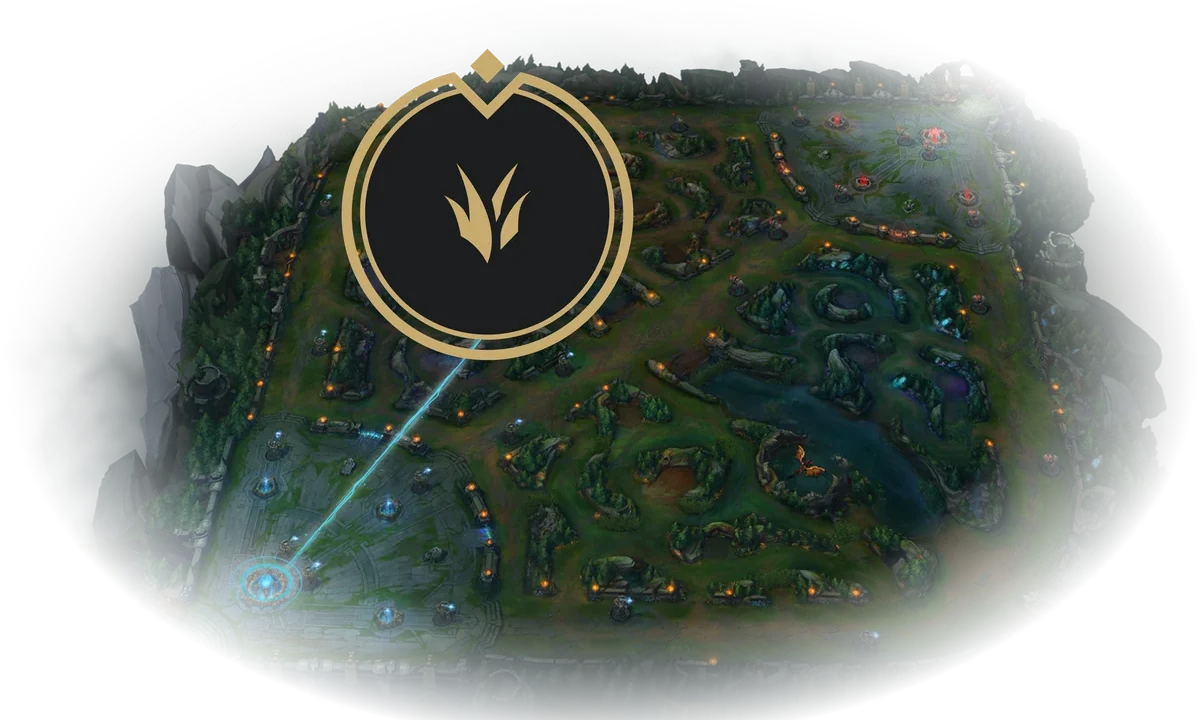
Your jungler pings for help in the river. You just won a trade in mid, but an enemy wave is coming toward your turret and your mana bar is almost empty. The lane looks ahead, but leaving would cost you minions and send you into another fight almost out of spells. Winning the trade has not made you available.
Lane priority, usually shortened to "prio," means the lane state gives you a usable chance to move before your opponent. They may need to collect a wave while you leave, or they may be unable to answer because they recalled or died. Your position and threat can also keep them from following safely. Your first move still needs a route you can take and something worth arriving for. Priority describes an opportunity, not a game buff or a promise that the next fight goes your way.
This guide covers lane priority in PC Summoner’s Rift. The situations below are hypothetical examples; the movement decisions are editorial recommendations.
What lane priority looks like on the wave
A common way to create priority is to push your minions all the way into the opposing turret. That is a crash. Your opponent has to decide between collecting the minions before the turret kills them and following your movement. You can leave while they are occupied, and following you immediately costs them lane resources. They can still choose to lose those minions and follow, so watch their response as you move.
That choice matters more than which side of the lane your champion is standing on. A wave on the enemy half can still be held outside turret range. If you leave during an unfinished shove, the opponent may keep the minions on their side, forcing you to walk forward to farm later. Walking past the middle of the lane does not itself create a good exit.
A crash is not a requirement in every situation. Suppose both players have cleared the wave, but your opponent has recalled and you have enough resources to help nearby. You may have time to help before the next wave arrives. Or your opponent may be so low that following would expose them to a lethal threat. Their ability to answer has changed even without a turret collecting minions.
Ask what your opponent would have to give up to respond, and what you would give up by leaving. A reasonable move may still cost a few minions. Decide whether the help you can provide is worth that loss.
Winning a trade can help create priority if it forces the enemy away from the wave. A kill can give you time while the opponent is dead. But if the trade spent the mana and cooldowns you need for the river fight, you may have created pressure without a usable way to act on it.
Holding a freeze near your turret creates a different kind of pressure. It can make farming dangerous for the enemy while tying you to the lane to maintain it. You can be controlling the matchup and still have the slower response to a fight elsewhere.
The same river ping, two different decisions
Return to that mid lane example. Your jungler wants to approach the lower river entrance, where the enemy jungler was last seen. You have damaged the opposing mid, but the enemy wave is pushing toward you. Clearing it would consume most of your remaining mana, and the opposing mid still has enough health to follow.
You still cannot give your jungler the help they are asking for. If you leave now, you abandon a wave and arrive without the spells that make your champion useful. If you finish the wave first, the fight may already be over. Signal that you cannot move yet so the jungler can back away or choose another route.
Now change the lane state. You have finished a crash, kept enough mana for the fight, and can see the route into river. The enemy mid is collecting under turret. Your jungler is still at the entrance, and you can reach them while the opposing laner is occupied. This is a usable first move.
Even here, decide what you are helping with. You may only need to stand beside your jungler with your crowd control ready, so the enemy cannot walk into them unchallenged. Chasing through their jungle commits you to a longer play, during which the opposing mid can finish collecting and catch up.
"I have prio" leaves your teammate with some guesswork. A jungler needs to know whether the laner can move now, needs to finish the wave, or has already left for base. Check their remaining health and mana as well as the wave.
First arrival helps only at a reachable destination
Before you leave, name the action you expect to take. You might cover your jungler’s retreat, help secure an entrance, or place a ward with your teammate close enough to protect you. Those are smaller commitments than pursuing a kill in a side lane.
Keep enough health, mana, and spells for the job you chose. A champion with enough mana to clear may not have enough left for both an engage and an escape. A key crowd-control spell used on the wave may still be unavailable when you meet the enemy. If you only need to stand behind a healthy teammate and discourage pursuit, the requirements can be different from starting a fight yourself.
If the enemy jungler is unaccounted for, they may already be on your route. Leaving ahead of the opposing laner does not tell you who else can intercept you. If a teammate can walk with you, meet them before entering the unwarded area. Otherwise, stop at the entrance you can see instead of extending the trip into enemy jungle.

For a dragon attempt, the jungler should read both mid and bot. Your mid laner may be able to arrive first while your bot duo is stuck collecting under turret. If the enemy bot duo can move, your mid’s first arrival may soon become a fight against more opponents. That is not a reliable numbers advantage. Look at who can reach the pit and its entrances ready to fight before you start the dragon.
Riot connected lane priority with jungler cover when explaining its 26.1 objective changes. In a game, that cover can mean keeping an opponent away from the entrance while the jungler works on the objective. Everyone hitting the monster is not automatically the best use of the first move.
When a teammate asks you to "play for prio," they are usually asking you to prepare the lane so you can move for an upcoming play. That preparation happens before the river fight starts. It may mean clearing the next wave with enough resources left to help. If you cannot force the opponent back safely, communicate that before your jungler commits. They may be able to help you finish the push or choose a play near a lane that can leave.
When there is nothing useful to do outside lane, you can stay. You can threaten the opponent while they farm or handle the next wave instead of wandering until a fight appears.
A support’s window includes the ADC
Bot lane has another person to account for. After your duo crashes a wave, you may have time as support to help your jungler nearby while the ADC leaves for base. That can be a reasonable use of the window if the route is safe and the job can be finished before you are needed back.
The picture changes if the wave stops outside the enemy turret and your low-health ADC stays. The enemy duo may hold the wave, deny access to farm, or threaten the ADC when they approach. Your absence can leave the ADC choosing between giving up farm and approaching two enemies alone.
Current support rules add a separate cost to early trips. Patch 26.16 sets a 33% penalty on experience and gold from minion CS outside bot lane until level 5. The rule applies to those minion rewards, not every reward you might earn while roaming. Use the rule when weighing an early detour that involves collecting another lane’s minions, while still checking whether the ADC can be left.
Top, mid, and bot lane quests have a separate provision for roaming. Under patch 26.9’s quest progression rules, banking starts after level 3: two minutes in the assigned lane can bank up to one minute of increased passive lane-quest progression away from it. The bank is capped at one minute and applies only to that passive progression. It does not recover minions you missed, waive every quest rule, or describe support-item charges.
Even with banked passive progress, leaving a trapped wave or walking into an ambush remains costly.
When the other laner moves first
Ping an enemy laner’s disappearance and likely destination as soon as you recognize the movement. Your teammates can respond earlier than they could if you first tried to finish the wave and only then warned them.
Following can be correct when you can reach the play in time, contribute with the resources you have, and travel without handing the enemy an easy ambush. You may accept losing minions to save a teammate or support an important contest. You do not need a perfect crash before responding to every emergency.
But taking the same unwarded path behind an enemy with a threatening engage is a different decision from following through a visible route with allies nearby. The enemy may be waiting for you rather than continuing to river. Warn your team and take a safer route if one still gets you there in time.
If the play will end before you arrive, following may only add another death. You can collect the wave, protect your turret, or push to make the enemy’s absence cost something. A turret attack or opposite-side play is useful only when it is available and safe; "trade the map" is not an instruction to walk into a second losing fight.
This is also how a jungler should interpret "no prio." The laner is saying their opponent can act sooner or at lower lane cost. The jungler can delay, move toward a lane that can help, or give up the contested area. Keeping the escape route open matters more than waiting deep in enemy territory for a teammate who is still clearing. Continuing the invade does not make the unavailable teammate arrive faster.
Know when the window has closed
Once the enemy finishes collecting, the timing advantage may be gone. A new wave can pull you back to lane. A longer route, a missed spell, or a teammate changing direction can also turn an affordable move into an expensive one.
Watch the actual waves rather than assuming every crash buys the same number of seconds. The live minion schedule changes during the match: waves spawn every 25 seconds starting at 14 minutes, then every 20 seconds starting at 30 minutes, following Riot’s 26.1 minion changes. Those are spawn intervals, not guaranteed travel or roaming budgets.
Choose a stopping point while you still have options. If you leave to cover a river entrance, head back once your jungler is through. If the enemy mid finishes clearing first, reassess whether you still have enough help to stay. If your intended target backs away, check what you would miss before following them farther from the wave you planned to collect.
For your next few games, pair the words "I can move" with a destination and an endpoint: "I can cover this entrance until their mid clears." If the team keeps going after that point, ping your return and judge the new play from the current wave and numbers. The earlier call does not commit you to the whole chase.