
The support sees one champion portrait. In practice, Aphelios keeps arriving in lane as a different marksman. Calibrum wants room to use its reach. Crescendum wants time near the fight. Infernum wants enemies standing together. Gravitum brings its own catch. Severum can sustain and move through a skirmish. A partner who looks perfect beside one pair can feel strangely unemployed beside the next.
Thresh is the best overall support for Aphelios on Patch 26.17 because Dark Passage solves the one weakness every weapon state shares: Aphelios has no built-in dash. Death Sentence and Flay can create targets when the current guns need setup, while the lantern lets Aphelios occupy an aggressive Calibrum angle or close Crescendum distance without accepting a one-way trip. Milio is the better pure protector when the draft already has initiation. Nami gives the lane more ways to trade before Aphelios reaches his preferred weapon pair.
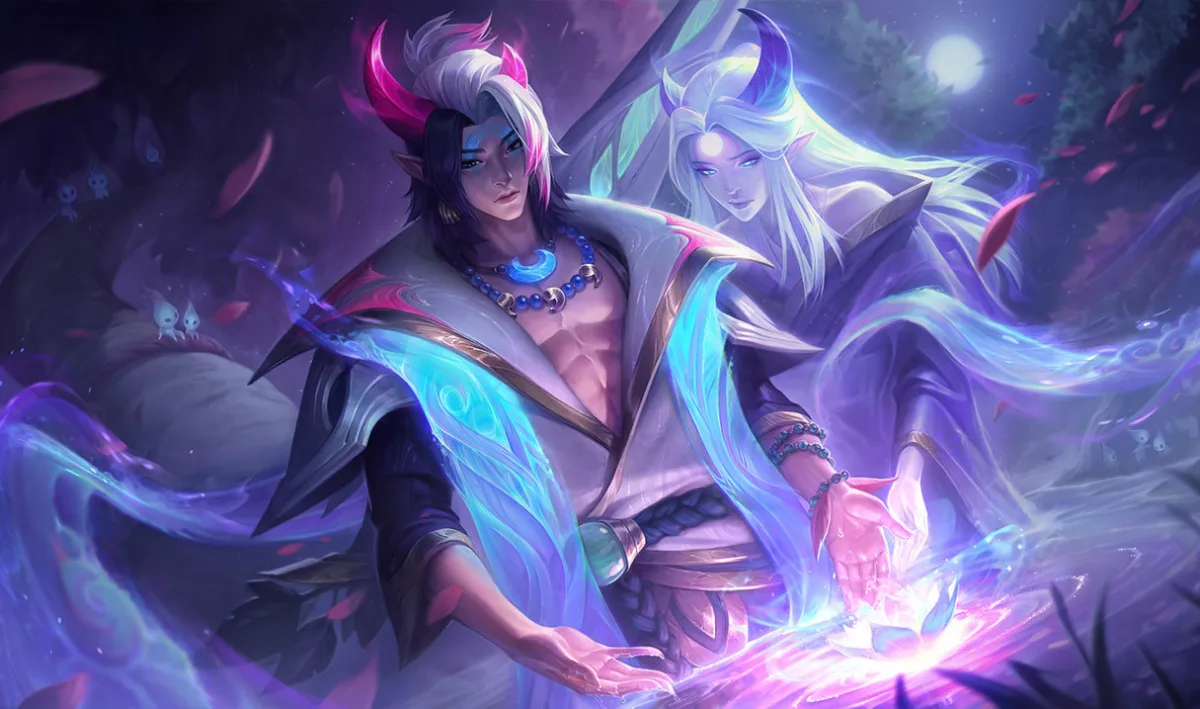
A good support does not need to memorize every Aphelios combo. They need to recognize what the two visible guns are asking for.
Current patch: Aphelios was unchanged in Riot’s Patch 26.17 notes. Thresh lost 10 base damage and 10 percentage points of AP scaling on Flay’s active, which slightly reduces his lane punishment but leaves the hook, displacement, lantern, and control that define this pairing intact. This guide was reviewed on August 30, 2026 with Data Dragon 16.17.1.
Read the handoff, not the whole weapon textbook
Aphelios starts with a fixed queue of five weapons. He holds one in his main hand and one off hand, swaps them with Phase, and consumes ammo through attacks and abilities. When a weapon empties, it moves to the back of the queue and Alune supplies the next one. His Q changes with the main-hand weapon, and that ability often uses or applies the off-hand weapon as part of its effect.
That sounds like homework for the support. It is not. The duo can make most correct decisions by reading or calling three pieces of information. The support can identify the equipped weapons from Aphelios’s model and effects, but does not share his custom HUD with both ammo counts and the next weapon. Aphelios must call low ammo and the incoming handoff.
- Main hand: What can Aphelios do immediately?
- Off hand: What follow-up does his current Q or weapon swap offer?
- Low ammo: Is the lane about to change jobs during the next trade?
If Gravitum is almost empty, do not build an entire engage around a root that may disappear while you posture. If Infernum is entering the pair, preserving an area-control cooldown for the next wave or objective can be smarter than forcing a mediocre trade now. If Crescendum is available, creating protected close-range time matters more than adding another small poke spell.
The weapon names are less important than the support assignment:
| Weapon state | What Aphelios offers | What the support should supply | Best fits from this list |
|---|---|---|---|
| Calibrum | Range and marked follow-up attacks | Space, protection, or catch at matching range | Thresh, Milio, Nami |
| Severum | Sustain, movement, and rapid close skirmishing | A durable front or time to keep attacking | Soraka, Braum, Renata |
| Gravitum | Slows and a root through its weapon ability | Patience, then layered control after the root | Thresh, Nami, Rell |
| Infernum | Cone damage and clustered teamfight threat | Enemy compression or a stable firing line | Rell, Braum, Renata |
| Crescendum | Sentry pressure and high close-range output | Safe proximity and an exit from the danger zone | Thresh, Milio, Braum |
This is why the best supports for Aphelios are not simply the seven champions with the longest crowd-control chains. They either remain useful across a bad handoff or turn one favorable weapon window into a fight the enemy cannot reasonably contest.
The ranking, with the job each support actually owns
METAsrc’s Patch 26.17 Ranked snapshot contained 161,650 Aphelios games across all ranks and regions when checked. Thresh led the commonly played support pairings at 52.64% over 17,360 games. Milio, Nami, Soraka, and Braum also sat above Aphelios’s baseline in samples between 3,005 and 4,940 games. Rell and Renata Glasc showed stronger raw lifts in smaller samples, which is useful context but not permission to pretend sample size and draft frequency do not matter.
The order below weighs current results, lane function, weapon-state coverage, teamfight usefulness, and how badly the pairing fails when execution is imperfect.
1. Thresh is the universal adapter
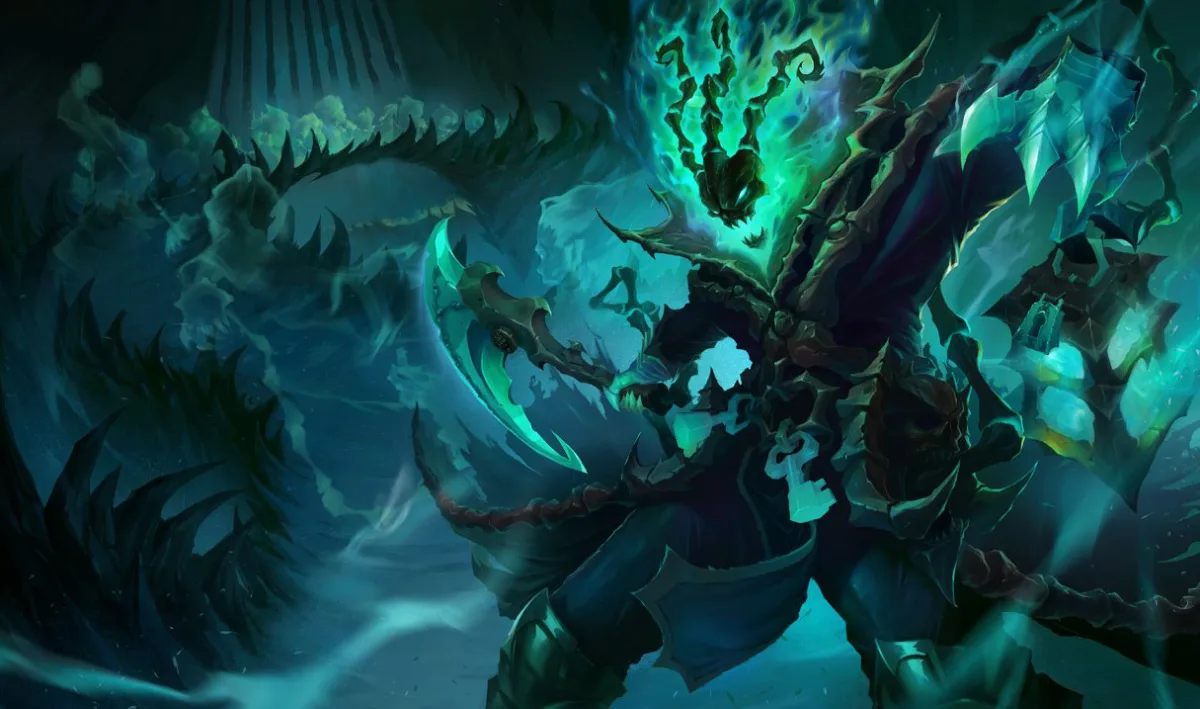
Thresh can change Aphelios’s position even when Aphelios cannot change it himself.
Thresh wins this ranking before either player lands a hook. Dark Passage allows Aphelios to take positions his kit normally cannot leave: one extra Calibrum attack near a turret, a Crescendum sentry angle beside a choke, or an Infernum ultimate line from the edge of a collapsing fight. The lantern has to be placed before the enemy control lands. Once Aphelios is stunned inside a wave of champions and minions, the clickable exit may already be covered.
The offensive fit changes with the guns. Gravitum can slow and root a target, making Death Sentence easier to confirm instead of forcing Thresh to begin every play. Flay can hold enemies near Infernum’s area or Crescendum’s preferred range. The Box turns the ground around an immobile carry into a bad route for divers. With Calibrum, Thresh can threaten from a parallel angle rather than standing on top of Aphelios and advertising the same line.
Patch 26.17 trims Flay’s active damage, so a barely winning early trade may no longer be identical. The pairing is not first because of that damage. It is first because every Thresh ability can either create space, close space, or redraw the route out.
The failure state is player dependence. A late lantern, missed Flay, or hook taken into an enemy front line can create more danger than protection. Pick Thresh when the support understands lantern timing and when the team needs a flexible first move. A comfort-pick Milio or Nami is more valuable than a Thresh selected only because the duo table says so.
2. Milio protects the weapon state worth keeping
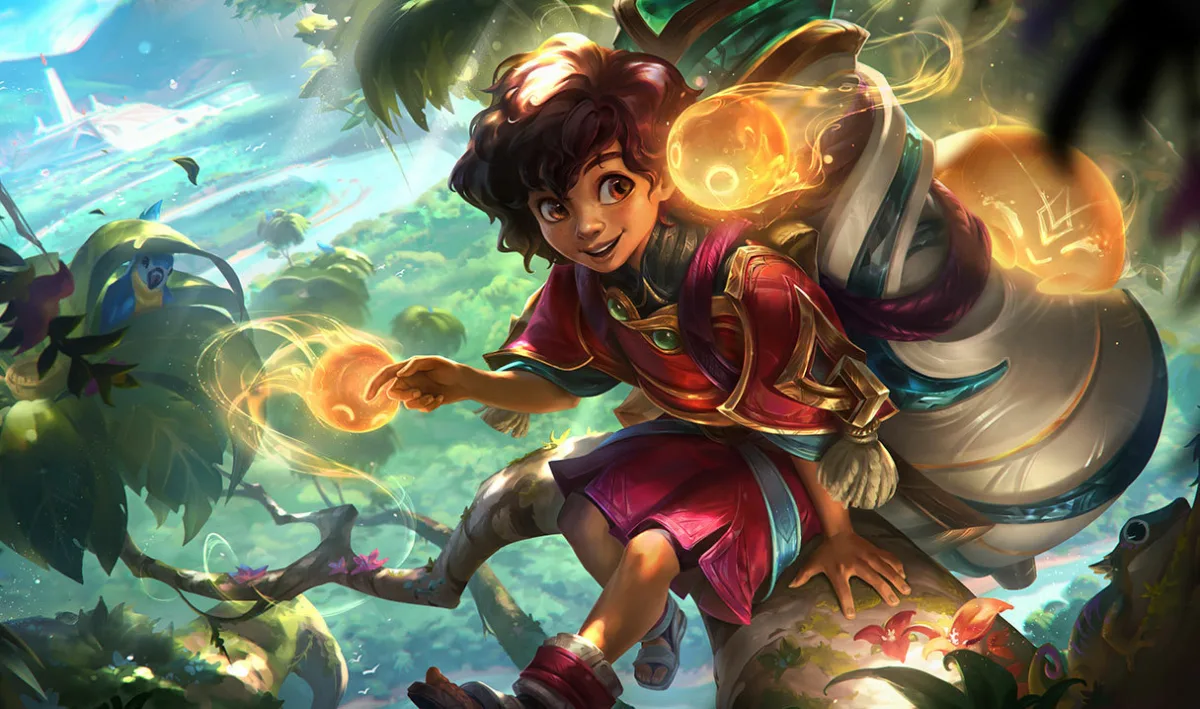
Milio turns an already useful gun pair into a longer and safer damage window.
Milio does not repair Aphelios’s lack of initiation. He makes the current firing line harder to break. Cozy Campfire increases allied attack range inside its zone, which is particularly oppressive when Calibrum is already asking the enemy to respect distance. Warm Hugs shields and grants movement speed. Breath of Life heals nearby allies and removes disabling effects, though it cannot be treated as an answer to every displacement or suppression without checking the exact effect.
The pairing is best when top, jungle, or mid has already promised to start the fight. Aphelios can stand behind that first contact, swap weapons according to the target in front of him, and keep attacking through pressure that would otherwise force him away. Milio also buys time for a weapon transition. A shield and speed boost can turn the awkward final ammo of one gun into a safe handoff rather than a lost trade.
Lane can be quiet. Neither champion wants to face-check a hook support, and Milio’s protection does not make a poor wave state disappear. If the enemy duo can freeze beyond your safe reach, extra range later is not compensation for every missed wave now. The support still has to contest brushes, track the jungler, and use pressure windows rather than stand permanently behind Aphelios.
Choose Milio when the draft has engage and Aphelios is the clear damage plan. Do not choose him to solve a composition in which nobody can make the opponent walk into range.
3. Nami makes the lane less dependent on a perfect queue
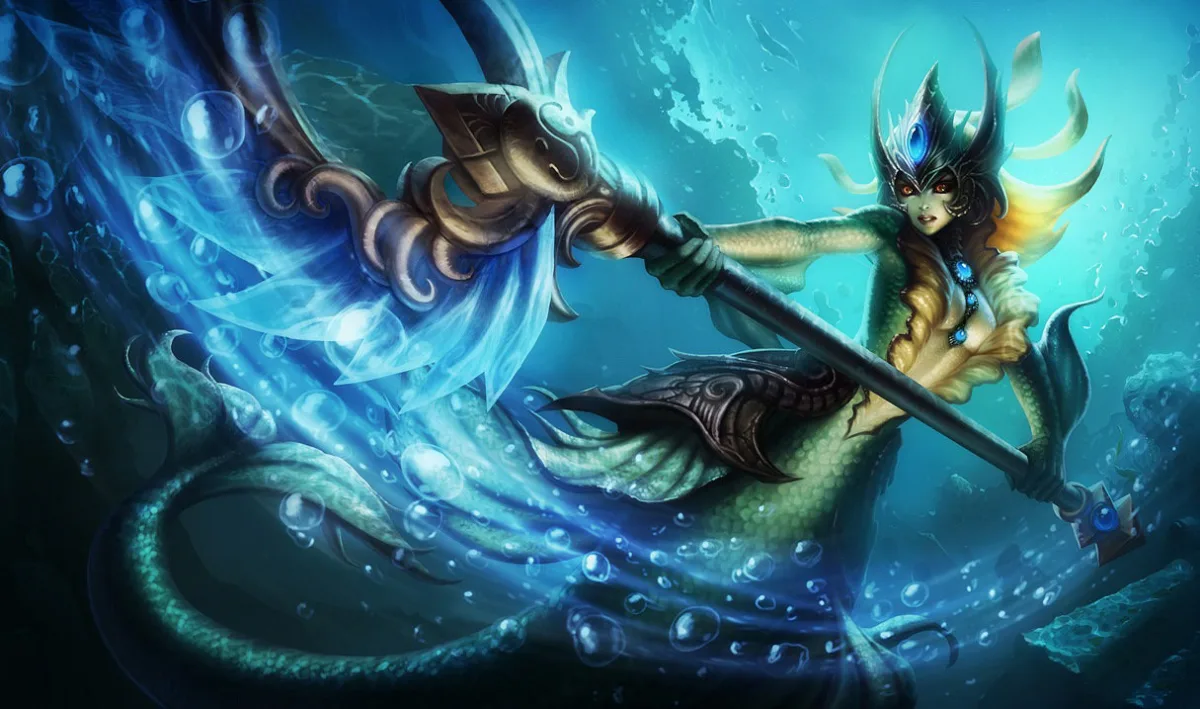
Nami gives Aphelios a workable trade even when the dream weapon pair is still two rotations away.
Nami ranks third because she fills the empty seconds between Aphelios’s obvious power windows. Ebb and Flow can trade and heal within the same sequence. Tidecaller’s Blessing adds damage and slowing effects to an ally’s attacks and abilities. Aqua Prison supplies a high-value catch when it lands, while Tidal Wave can start from range or interrupt a team running into the back line.
This produces a lane with more small decisions and fewer all-or-nothing ones. Calibrum can participate in a ranged trade without Nami abandoning safety. Severum sustain plus Ebb and Flow can undo chip damage. Gravitum’s own slow and root can make Aqua Prison easier to layer, but the players should avoid stacking every control effect at once. Let one spell force movement and use the next on the exit.
Nami’s weakness is reliability under hard pressure. Bubble is not a point-and-click rescue, and she is vulnerable if she steps too far forward to create the trade herself. Aphelios cannot dash to cover her error. Against a lane that can engage through the wave, positioning and cooldown tracking matter more than the theoretical number of buffs she can apply.
Pick Nami when you want agency in lane without giving up a real teamfight ultimate. She is especially useful for duos that communicate weapon changes but do not want every wave to wait for Gravitum.
4. Soraka buys another rotation
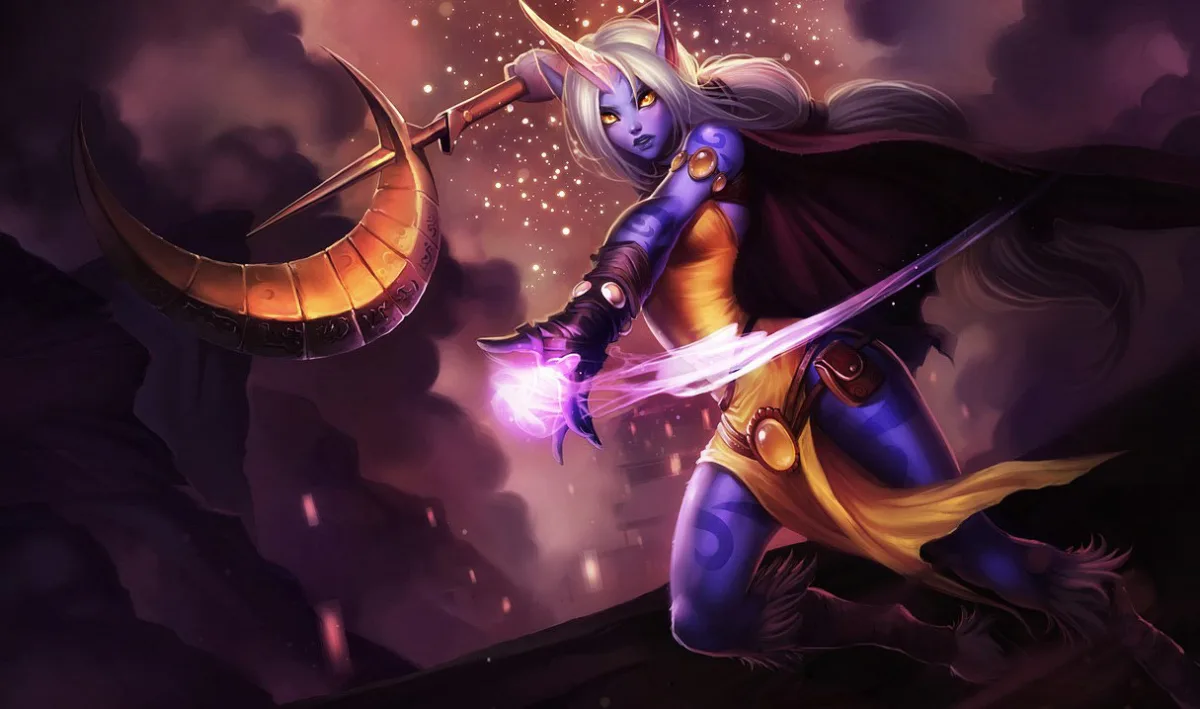
Soraka’s value is not one spectacular combo. It is refusing to let an awkward weapon state end the lane.
Aphelios sometimes reaches a wave with the wrong pair for the job in front of him. The enemy has range while he holds close-range tools, or he has damage but lacks the health to use it. Soraka turns that temporary mismatch into a recoverable phase. Starcall helps her trade and fuels safer healing. Astral Infusion keeps Aphelios available for the next wave. Equinox creates a silence zone that can obstruct the diver trying to cross his firing line. Wish protects the wider map as well as the lane.
Sustain has strategic value here. Aphelios does not choose any two weapons on demand. Health gives him time to spend the remaining ammo, reach the next handoff, and contest when the pair becomes more useful. That can matter more than forcing a kill with a support whose engage does not match the current guns.
Soraka is also a target. If she uses health and position carelessly, the enemy can attack the engine of the lane instead of Aphelios. Her silence does not replace a front line, and Wish does not give an immobile carry permission to stand inside every threat.
Draft Soraka into lanes where chip damage is the main route to defeat and the rest of the team can provide structure. Avoid asking her and Aphelios to walk first into fog or manufacture a catch on a distant carry.
5. Braum makes front-to-back Aphelios much simpler
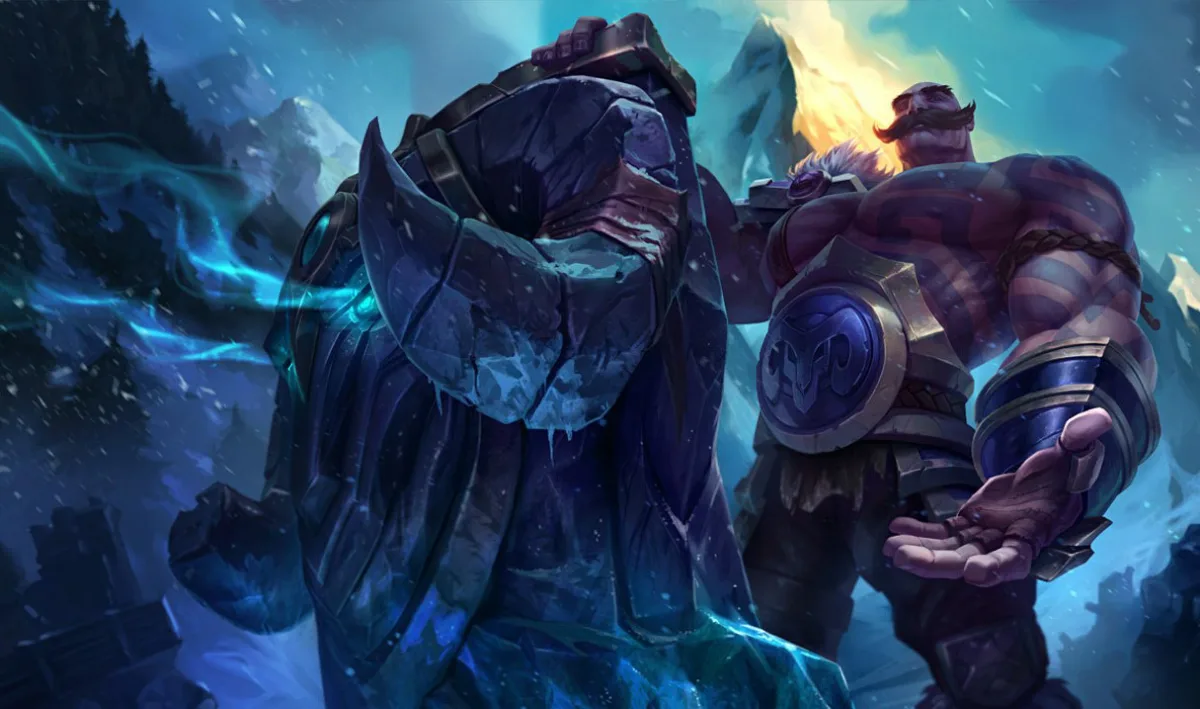
Braum gives Aphelios one protected direction and a clear nearest target.
Braum is the support for a fight that does not need to be clever. Stand Behind Me moves him to an ally and adds defensive stats. Unbreakable intercepts and reduces incoming projectiles from one direction. Concussive Blows lets allied attacks help build toward a stun after Braum marks a target. Glacial Fissure can begin a fight or split the path of an incoming dive.
Aphelios benefits because most of his weapon decisions become easier when the nearest safe target is also the correct one. Infernum can damage a grouped front line. Severum can keep him active in a close skirmish. Crescendum gets the protected proximity it needs. Calibrum can continue contributing from behind Braum instead of searching for a side angle with no escape.
The shield is directional, not a bubble around the carry. It does not solve flanks from both sides, non-projectile control, or an assassin already standing behind it. Braum also offers less lane pressure into ranged sustain opponents who never enter his passive-marking range.
Use him when the enemy’s important threat arrives through projectiles or a predictable corridor and your composition is comfortable hitting front to back. If the team must catch a mobile back-line champion before it escapes, Thresh or Rell supplies more initiative.
6. Rell cashes in the Infernum and Gravitum windows
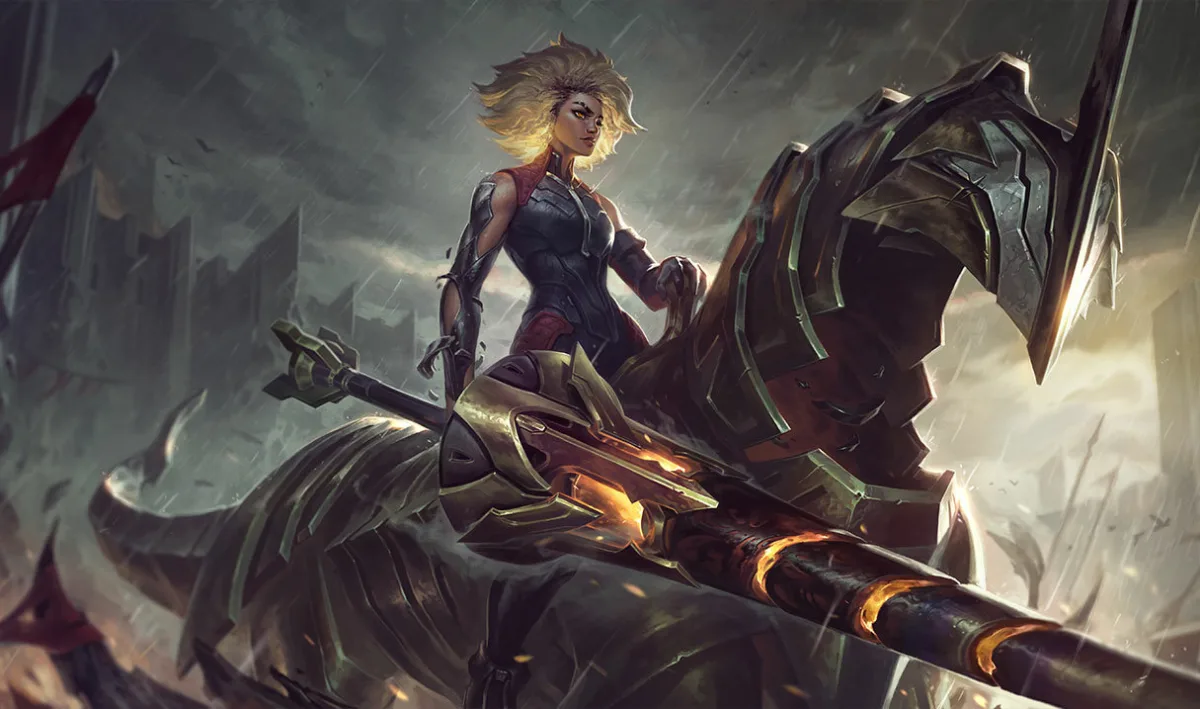
Rell is narrower than the protectors, but the weapon states she amplifies can decide the whole objective fight.
Rell does not cover every part of the weapon cycle equally. She is here because her best moments overlap with Aphelios’s most explosive ones. Ferromancy: Crash Down can knock up several enemies. Magnet Storm pulls nearby champions around her. Shattering Strike adds a line stun and breaks shields. That compression gives Infernum more shared space to punish, while Gravitum can slow or root targets after the first control begins.
The duo should plan around the queue before an objective. Arriving with Infernum nearly empty may still be useful if the next weapon completes a strong off-hand interaction, but Rell should know whether Aphelios has the area damage or control that justified the grouped engage. The support does not need a lecture on all ten combinations. A simple "red next" or "purple low" call can change whether she starts now or holds the choke.
A missed Crash Down creates the familiar Rell problem: she is dismounted, slowed, and far ahead of an ADC who cannot dash to join her. Aphelios must not turn every attempted engage into a rescue mission. Sometimes the correct response is to keep the wave, preserve summoner spells, and let Rell retreat through a different route.
Pick Rell when the allied team wants clustered objective fights and has enough follow-up to make her first contact count. Her Patch 26.17 results were excellent in a smaller sample, which fits the idea of a potent but less universal draft.
7. Renata Glasc insures the high-value firing line
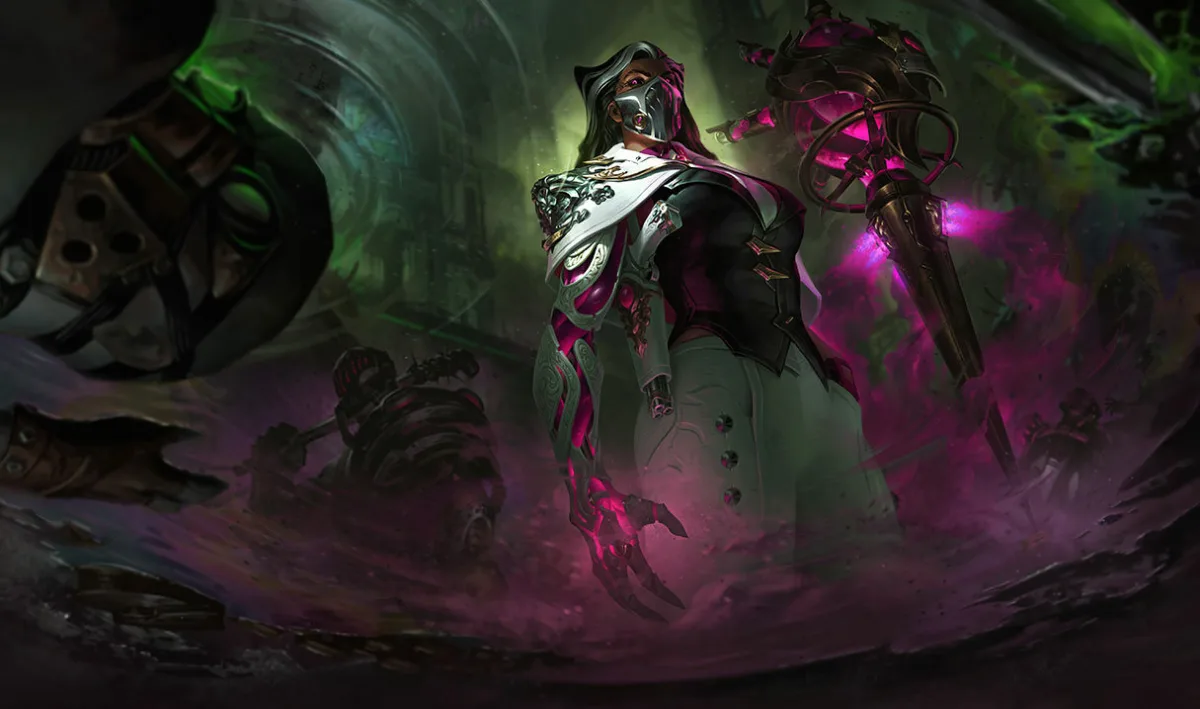
Renata is strongest when the enemy has to commit hard to stop Aphelios from using a good pair.
Renata Glasc closes the list with a different proposition: if Aphelios reaches the correct weapon state and position, make removing him expensive. Bailout increases his ability to fight, delays death, and can save him if the team secures the required takedown. Loyalty Program shields allies and pressures enemies along its paths. Handshake roots and can reposition the first target hit. Hostile Takeover punishes an enemy team that groups and runs forward.
This is valuable around Crescendum proximity, Infernum teamfights, or any late-game state where Aphelios has the damage but lacks time. Bailout does not excuse bad target selection. If the only reachable champion cannot die during the delayed-death window, the spell extends the animation rather than the life. Renata and Aphelios need to agree on the killable target before the dive lands.
Her low range and less dependable first move keep her seventh. The current raw duo result was impressive but came from only 960 games, far below Thresh’s sample. That is a reason to investigate the pairing, not to crown it from a percentage alone.
Choose Renata into enemy teams that must enter Aphelios’s space and keep attacking once there. If your composition has no way to start or hold ground, she may be protecting a firing line that never forms.
Common picks that do not automatically make the cut
Lulu is the obvious name missing from this ranking. Her shields, movement tools, attack-speed buff, and polymorph can all help Aphelios. On the checked Patch 26.17 all-rank snapshot, however, the heavily played pairing sat below his baseline across 10,061 games. That does not prove Lulu is inherently bad. It does mean "hypercarry plus Lulu" is not enough analysis. Choose her when anti-dive and direct carry amplification solve the draft, not from habit.
Nautilus has an equally clear theoretical case: hook, passive root, area slow, and a targeted ultimate. His current broad result also sat a little below Aphelios’s baseline. The pairing can still be right when the team lacks engage, but Nautilus cannot pull Aphelios out after a failed angle and may force fights during a poor weapon handoff.
Blitzcrank works for the opposite reason. Instead of helping Aphelios enter danger, Rocket Grab can bring one opponent into his current range. The Patch 26.17 snapshot liked the pairing, but its lane is volatile. Miss the hook cycle and Aphelios receives little protection while waiting for the next one. Treat Blitzcrank as a matchup weapon into vulnerable lanes, not the default co-pilot.
The support call that matters most is only two words
Aphelios players often explain too much. Naming every planned rotation during champion select is less useful than communicating the next immediate state. "Purple low" tells Thresh the Gravitum catch is about to disappear. "Blue next" tells Rell that Infernum is entering the handoff. "White ready" tells Braum or Milio that protected close-range time is valuable.
The support’s answer can be just as short: "lantern early," "hold wave," "R in ten," or "play front." That shared sentence turns five weapons into one plan.
Thresh remains the best default because he can support whichever plan appears and can cancel the position when it goes wrong. The other six move ahead when champion select gives them a more specific job. Aphelios does not need a partner who understands every line of his kit. He needs one who recognizes the current hand and supplies what is missing.
For wider bot-lane context, compare RiftBrain’s Patch 26.17 ADC ranking and current support field.
Weapon-cycle review: Checked August 30, 2026 for Patch 26.17. Revisit this ranking after changes to Aphelios’s queue, ammo, weapon abilities, Moonlight Vigil, Thresh’s utility, or the featured protectors’ core tools.