
Rammus is our tank-jungle specialist into attack-heavy physical teams. Zac is the safer starting point when the enemy composition is still hidden.
Reviewed for modern PC Summoner’s Rift Patch 26.18 on September 10, 2026. The order compares control and draft fit. Rammus remains the anti-attack specialist and Zac the broader engage choice; neither placement claims a current statistical lead.
The split follows their tools. Rammus wants a valuable attacker to taunt into his defenses. Zac can create engage angles from terrain and contribute repeatable control against a wider range of compositions. Neither choice is presented as the leader of a verified 26.18 win-rate table.
The eight tank junglers fill these draft jobs:
- Rammus
- Zac
- Sejuani
- Amumu
- Cho’Gath
- Skarner
- Nunu & Willump
- Maokai
This is a tank ranking, not a list of every jungler who can buy health. Udyr, Dr. Mundo, and Volibear can become extremely durable, but they usually need sustained proximity and personal damage to make enemies respect them. The champions above can still create or deny a fight through control after their gold income falls behind.
The quick ranking and draft jobs
| Rank | Tank jungler | Best reason to lock it |
|---|---|---|
| 1 | Rammus | Punish attack-heavy physical teams |
| 2 | Zac | Blindable engage from unusual terrain |
| 3 | Sejuani | Reliable setup for melee-heavy allies |
| 4 | Amumu | Direct area engage with a simple signal |
| 5 | Cho’Gath | Objective security and scaling frontline |
| 6 | Skarner | Terrain entry and forced target movement |
| 7 | Nunu & Willump | Early gank tempo and monster control |
| 8 | Maokai | Brush information, peel, and long-range setup |
This is an editorial comparison of engage, peel, recovery and neutral-objective tools. Read the last column as the condition for each recommendation. The order does not reuse a previous-patch statistical lead as evidence of current power.
Cho’Gath and Maokai deserve extra preparation as jungle choices: rehearse the route and first enemy contact before ranked. A useful control spell does not guarantee a safe clear, and a niche role needs a plan for the camps it may lose while ganking.
What counts as a tank jungler here
A tank jungler has to do more than survive. The champion needs a way to start or stop contact, a clear that reaches the map in time to matter, and a second useful action after the first spell lands.
That second-action test separates a tank from a bruiser more reliably than the shop. Rammus hits with Powerball, then taunts or stays between a carry and the threat. Zac lands Elastic Slingshot, then connects two targets with Stretching Strikes or disrupts the retreat with Let’s Bounce!. Sejuani can spend Glacial Prison to catch one target and still keep Arctic Assault, Winter’s Wrath, or Permafrost for the next part of the fight.
A juggernaut usually creates space by threatening damage at close range. Dr. Mundo can absorb an enormous amount of punishment, but an enemy who can ignore or kite him may still walk toward his carry. Udyr and Volibear can build defensively, yet much of their influence depends on reaching a target and staying in combat. Their durability is real. Their primary bargain is different.
The eight ranked champions were judged across seven jobs.
Frontline is the ability to occupy an approach without disappearing to the first rotation. Engage is the ability to force contact on a target that did not volunteer. Peel is the ability to interrupt the enemy after a fight begins. Clear determines whether the jungler can perform those jobs without surrendering every camp and level. Ganks measure how reliably a lane can convert the approach. Objective control covers setup, vision, monster damage, and space around the pit. Usefulness from behind asks what remains when defensive items arrive late.
No champion leads every test. Rammus has a clear target button but loses much of his reason into magic-heavy teams. Nunu can control the first objective sequence and still struggle to enter a late fight. Maokai can remain useful through roots, knockback, saplings and Nature’s Grasp after losing camps, but that utility does not replace a clear plan.
The order follows draft fit, control reliability, clear tools and the useful action after first contact. Start with the job your team is missing, then read the failure condition before locking the champion.
1. Rammus punishes the right attackers
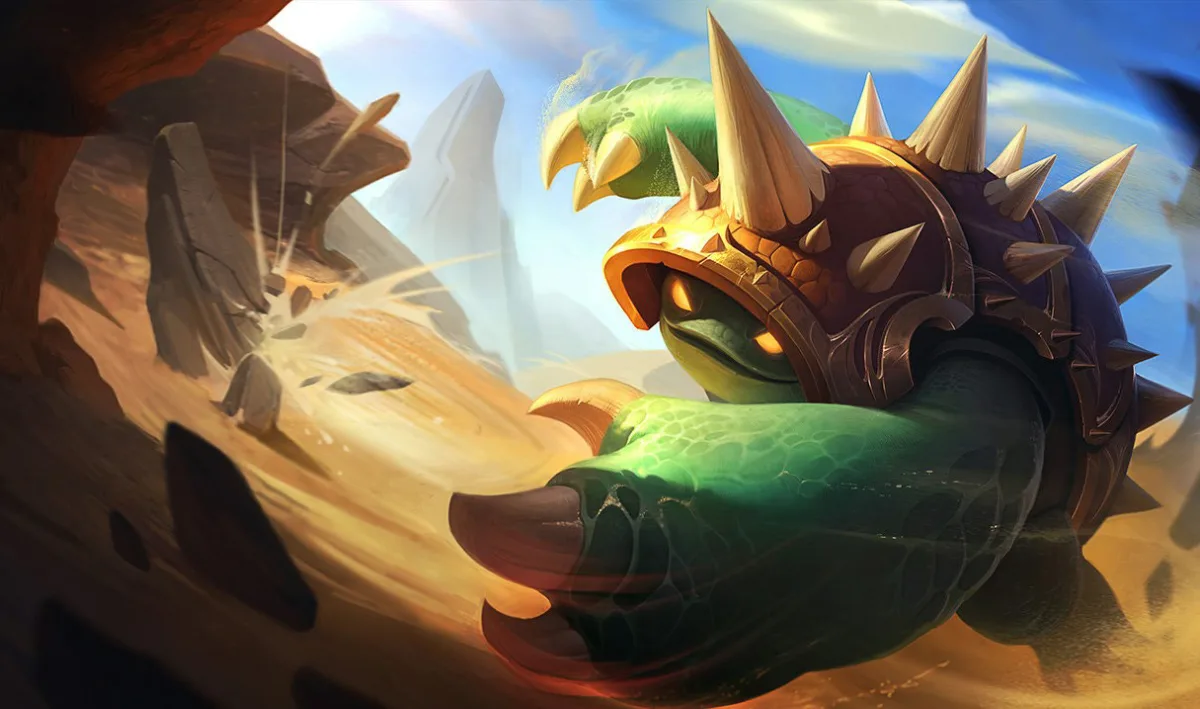
Rammus has the sharpest anti-attack purpose. Powerball gets him toward a fight, taunt forces a selected enemy to attack, and Defensive Ball Curl rewards the resistance purchases suited to that target. Start with the enemy damage profile before treating that combination as the answer.
Powerball supplies the first contact. It accelerates, collides, knocks back, and slows nearby enemies. Frenzying Taunt forces one champion or monster to attack Rammus. Defensive Ball Curl raises both armor and magic resistance and returns magic damage to attackers. Soaring Slam adds an area slow, and casting it during Powerball knocks up enemies near the center.
That sequence is unusually readable for solo queue. When the rolling armadillo enters a lane, the ally knows which target is about to be controlled. When Rammus taunts the enemy carry, his team does not need a voice call to understand the next hit. A clean signal matters almost as much as the crowd control itself.
Draft for the attacks, not the damage chart
Rammus earns first place when the enemy’s important champions rely on basic attacks and physical damage. Defensive Ball Curl grows much more punishing, the taunted target is forced to feed that return damage, and armor purchases solve several problems at once. He is especially attractive when the opposing composition wants to walk forward rather than disengage and reset.
Do not reduce that rule to "four AD champions." Some physical-damage teams use spells, range, or short bursts that do not spend long attacking Rammus. Some mixed teams still have one attack-speed carry whose removal decides every fight. Read how the damage is delivered, then identify the champion that must be taunted.
His clear is functional rather than a reason to pick him. Defensive Ball Curl and returned attacks help him work through monsters, while Frenzying Taunt controls a camp. Powerball makes the transition from camp to lane fast. The cost appears when an early collision is blocked by a minion, a warded river entrance forces a long route, or an invade catches him before defensive cooldowns can be used well.
At objectives, Rammus is better at controlling the enemy jungler than burning the monster. Hold Powerball or Taunt when a contest is possible. Spending both on the pit can leave no way to stop the opposing Smite. The tank’s health bar should absorb the monster only if enough remains to occupy the entrance when the fight starts.
From behind, the point-and-click taunt remains valuable. Rammus can peel a fed diver instead of forcing a hopeless backline entry. That flexibility keeps him ahead of damage-based counterpicks. Still, if the enemy carries are spellcasters with range and reliable disengage, select Zac or Sejuani for an engage that depends less on forcing basic attacks.
This tank-only recommendation is narrower than RiftBrain’s best low-ELO junglers guide. Rammus takes first here for his specific anti-attack control job. He remains a composition-sensitive pick rather than the default answer to every jungle draft.
2. Zac is the safest blind tank

Zac is the default recommendation here when the enemy draft is hidden. Terrain entry, repeated knock-ups and healing from reachable blobs give him several ways to start or survive a fight. Those broader conditions matter more to the recommendation than an old percentage.
Elastic Slingshot charges into a long terrain-crossing leap and knocks up enemies at the landing point. That opens ganks from behind walls and from angles that ordinary river wards do not cover. A Zac player who always enters through the river gives away the main reason to choose him.
The first landing is only half the kit. Stretching Strikes attaches to one enemy, then an attack on a different enemy throws the two together. A minion, monster, or second champion can become the other handle. Unstable Matter deals nearby maximum-health magic damage. Let’s Bounce! disrupts the area across several bounces and allows Unstable Matter during the ultimate.
Cell Division turns ability hits into Goo that restores health when reabsorbed. Fatal damage splits Zac into four bloblets on a long cooldown, and surviving bloblets can recombine. The passive is not permission to launch alone. It is strongest when allies can protect the pieces or when the enemy must spend time finishing them during an objective fight.
The gank starts before E begins charging
Zac needs the lane to preserve his landing zone. If an ally shoves the wave under tower before he arrives, the long leap may produce only a burned escape. If the lane lets the opponent walk toward the center, a side-wall angle can remove the retreat path. One early "on my way" ping is useful because it tells the laner to stop spending the setup Zac needs.
His clear rewards correct Goo collection. Walking carelessly for every blob can waste time, but ignoring them costs health and Unstable Matter cooldown reduction. The goal is to plan movement so the next attack, camp position, and Goo pickup share the same step.
In a teamfight, do not grade Zac only by how many champions E hits. A one-target landing on the enemy carry can be correct if Stretching Strikes then pulls away the peel. A three-target landing can be terrible if Zac has crossed too far for his team to follow. The second-action test matters: after the knock-up, which two units can Q connect, and where will the ultimate push the fight?
Zac can engage, counter-engage, or peel. He deals enough percentage-health damage to remain annoying without needing carry gold. He has obvious weaknesses, including telegraphed charge time, interruptible entry, and healing reduction, but few tank junglers keep this many jobs across this many drafts. That breadth earns second place and the blind-pick recommendation.
3. Sejuani is best when melee allies help build Frost

Sejuani fits melee-heavy allies who can help apply Permafrost stacks. She can supply the first control or follow another ally’s contact. Her value depends on the team around her as well as whether the ultimate lands.
Permafrost explains the specificity. Nearby melee allies apply Frost stacks to enemy champions and jungle monsters with their attacks. Sejuani can activate the spell at four stacks to stun the target. Winter’s Wrath applies stacks with both swings, while Arctic Assault knocks up the first champion in her charge. A melee top, mid, or support can shorten the path from arrival to stun.
Glacial Prison gives her a separate long-range catch. It stuns the first champion hit. After enough travel, the stun lasts longer and creates an ice storm that slows nearby enemies. That is a strong opening tool, but throwing it at maximum range because a target appeared on screen can waste the fight. Sejuani still needs allied damage and a route for the team to cross the space behind the bola.
Fury of the North grants Frost Armor after she has been out of combat, adding armor, magic resistance, and slow immunity for the start of contact. It persists briefly after taking damage. The passive makes the first entry sturdy. It does not make a long, unsupported chase safe.
Peel often beats the highlight engage
Sejuani can spend Arctic Assault to enter, but the same knock-up can stop a diver. Permafrost stacks continue to build around melee allies. Winter’s Wrath slows and controls space. If the allied carry is already fed, holding these tools for the enemy entry may be better than searching for a distant ultimate.
Her clear uses the two Winter’s Wrath swings, with the first knocking back minions and jungle monsters. Permafrost also works on large monsters with nearby melee help, though a jungler cannot assume a teammate will walk into every camp. Route planning should get Sejuani to lanes where the extra Frost application changes the gank rather than asking a ranged lane to produce a melee lane’s setup.
At objectives, she excels in narrow entrances. Glacial Prison can catch the first champion walking through, and her basic spells give another layer of control after the ultimate. She does not bring Cho’Gath or Nunu’s dedicated monster execute. Her objective security comes from denying access and giving her own Smite a clean window.
Pick Sejuani when the allied draft has at least two useful melee partners or when the team needs reliable peel plus an emergency engage. Move her below Zac when the lanes are mostly ranged and require the jungler to create every Frost stack alone.
4. Amumu gives solo queue the clearest go button

Amumu is the most straightforward full-team engager on the list. Bandage Toss gives the approach a visible start and Curse of the Sad Mummy tells allies where the fight is happening. The clear signal does not remove the need for teammates to be close enough to act.
Bandage Toss has two charges. Each hit stuns the target and pulls Amumu to it. One charge can reach the fight and the second can follow a Flash, change target, or interrupt the next threat. Using both simply to travel onto the same doomed frontline removes his second action.
Curse of the Sad Mummy stuns all nearby enemies, deals magic damage, and applies Curse. Cursed Touch causes targets hit by Amumu’s basic attacks to take bonus true damage from incoming magic damage. That interaction makes magic-heavy allies particularly welcome. Despair deals nearby maximum-health magic damage and refreshes Curse. Tantrum reduces incoming physical damage by a flat amount, damages nearby enemies, and refreshes faster when attacks hit Amumu.
Easy to understand does not mean impossible to punish
Amumu’s entry is readable to allies, but it is also readable to opponents. Missing Q leaves him outside the fight. Landing Q on the enemy tank can carry him into control before he reaches the backline. Flashing for an ultimate can win a game, yet Flash is not available for every objective.
His clear is forgiving against camps that attack frequently because those hits reduce Tantrum’s cooldown. Despair and Tantrum cover the area around him. The route can still be invaded by a stronger duelist, and Amumu has fewer elegant exits than Zac or Skarner if the enemy finds him first.
From behind, the ultimate remains a real threat. Shift the job from "catch five" to "stop the two champions killing our carry." A defensive Curse of the Sad Mummy can buy more damage time than a desperate max-range Bandage Toss into four fed opponents.
Amumu ranks fourth for his readable teamfight entry and follow-up stun. Zac can approach from terrain, while Sejuani benefits from nearby melee allies helping stack Frost. Amumu is a useful choice when the learner needs a direct engage signal and teammates can supply the damage; opponents who stay outside that entry still demand patience.
5. Cho’Gath owns the cleanest monster finish

Cho’Gath earns his place through sustain, area control and Feast as a separate monster-secure tool. He asks more of the approach than Zac or Sejuani: Rupture is delayed and he has no ordinary dash that makes a distant target stay in range.
Cho’Gath can lead RiftBrain’s best off-meta junglers and place fifth here because the questions differ. The off-meta page weighs unusual picks with a complete map job. This comparison gives more weight to reliable access beside conventional tank options. Feast helps the first case; limited entry constrains the second.
He is also the one ranked champion with a direct modern Summoner’s Rift change in Patch 26.17. Riot increased the listed base damage on each of Vorpal Spikes’ three empowered attacks by 10 at every rank. That helps early trading and monster clear, but it does not give Cho’Gath a dash or make Rupture instant.
Rupture knocks up and slows in a target area after a delay. Feral Scream damages and silences in a cone. Vorpal Spikes adds maximum-health magic damage and a decaying slow to the next three attacks. Feast deals a separate, high amount of true damage to minions and jungle monsters. If Feast kills a valid target, Cho’Gath gains maximum health and grows.
Secure is only useful if the setup reaches secure range
Feast plus Smite makes Cho’Gath difficult to beat in a controlled monster finish. That strength can tempt teams into starting an objective without river control. Cho still has to walk into the pit. If he is zoned by poke or forced to spend health before the monster reaches execute range, the extra button may never become available.
The better sequence begins outside. Use Rupture to deny a choke, Feral Scream to stop a mobility or defensive spell, then keep enough health to stand beside the monster. Feast can also remove an enemy frontline champion when the objective is not the immediate target. Do not save it for a theoretical stack while a killable carry escapes.
His ganks depend on prediction. Rupture becomes much more reliable after a laner applies slow or crowd control. Walking from river and placing Q at the enemy’s current feet gives too much time to leave. Place it on the route the target must take after seeing Cho’Gath.
From behind, Cho’Gath keeps knock-up, silence and Feast’s objective threat. His large model can block narrow routes, though it also catches more skillshots. He ranks fifth because the objective niche is useful while his limited entry makes a general engage job harder.
6. Skarner turns walls into capture tools

Skarner earns sixth through terrain entry and forced movement. Impale can turn one approach into a positional problem for several enemies, but the route and timing still have to leave allies close enough to use the displacement.
Ixtal’s Impact ignores terrain during the charge. Colliding with a champion or large monster lets Skarner drag that target, and hitting the next wall deals damage and stuns. The first wall is not always the best wall. A short pin can keep Skarner near his team, while a long drag may isolate both the victim and the tank from allied damage.
Impale can suppress the first three champions hit and drag them while Skarner moves. Hitting several targets sounds ideal, but one priority carry pulled into a prepared team is usually worth more than three frontliners shifted a few steps. The cast also interacts with Shattered Earth by releasing Upheaval first if the boulder is active, so a careless Q state can telegraph or alter the entry.
Shattered Earth empowers three attacks with area damage, adding maximum-health physical damage and a slow on the final attack. It can be recast to throw the boulder and slow an area around the first target hit. Seismic Bastion supplies a shield and nearby slow. Those spells give Skarner a second action after E or R instead of leaving him as an empty health bar.
Path through the wall, not away from the damage
The best Skarner ganks begin with a landing point. Identify which wall produces a stun and where the allied champion can deal damage. Charging through a dramatic stretch of terrain is pointless if the victim ends outside the lane’s range. When the enemy is already overextended, walking into Q range may preserve E for the escape.
Objective fights suit him because pits and river entrances supply walls. E can intercept the opposing jungler, R can drag contesting champions away, and Q keeps relevant monster damage. His own Smite still matters. Control makes the secure easier; it does not replace the execute.
From behind, Skarner can protect a carry with W slows, Q slows, an E pin, or suppression. He is less tied to personal damage than a bruiser build, but he still needs enough durability to finish the drag. Pick him when the map’s walls and the enemy’s short range create a capture route. Leave him below the top five when the opposing composition can interrupt his charge from range and never has to enter his corridors.
7. Nunu & Willump control the first half of the map

Nunu & Willump reward planned paths and quick conversion from gank to neutral. Consume gives a distinct monster-damage tool and the snowball makes the approach itself a skill to practice. Missing the first timing can cost more than the apparent simplicity of those buttons suggests.
Biggest Snowball Ever! grows in speed, size, damage, and knock-up duration as it rolls. It creates ganks from a long approach, but steering gets harder and predictable turns can be warded. A max-size snowball that misses is not better than a shorter one released on the route the enemy cannot avoid.
Snowball Barrage slows through repeated volleys, then roots nearby targets that were hit. Absolute Zero slows an area, gives Nunu & Willump a shield while channeling, and deals more damage with channel time. The full channel is rare against teams with interruption. The zone still forces a decision and can protect an objective entrance even when it is released early.
Consume deals true damage to minions and monsters and heals Nunu & Willump. Combined with Smite, it gives the champion one of the strongest controlled monster finishes in the role. The word "controlled" matters. If the opposing jungler enters the pit with four teammates while Nunu’s lanes are under tower, two secure buttons do not fix the setup.
Every early gank needs a receipt
Nunu can cross the map so quickly that activity feels like progress. A burned Flash matters only if the lane or jungle returns before it recovers. A kill matters more when it becomes a plate, camp, deep ward, recall, or objective. Rolling from lane to lane without collecting those gains can leave Nunu behind in camps and levels while the enemy jungler quietly farms.
The passive increases Willump’s attack speed and movement speed and shares attack speed with a nearby ally. That favors fighting near a teammate, not solo invading without information. The kit is built to connect people and objectives.
When behind, Nunu still has a knock-up, root, large slow field, and monster execute. The difficult part is entering safely enough to use them. Shift from long, obvious snowball ganks toward fog-of-war counter-engage and objective denial. Seventh place reflects the cost of a failed early game and a more conditional late entry.
8. Maokai remains useful after losing camps

Maokai closes the ranking as a peel and approach-control specialist. Saplings can help check prepared space, and his roots and knockback can protect a carry. Choose him when those jobs matter enough to justify a more demanding resource plan in the jungle.
Twisted Advance makes Maokai untargetable during a targeted dash, then roots the enemy. Bramble Smash knocks back nearby targets and slows. Nature’s Grasp sends a wide wave of roots forward, with root duration increasing as it travels. That sequence can engage, but it is often better at dividing the enemy team and protecting the space around a carry.
Sapling Toss is the reason Maokai offers something no other tank here matches. Saplings stand watch, chase nearby enemies, detonate, and slow. Brush makes them last longer and produce a larger damage pattern. Hitting a champion or epic monster also reduces Sap Magic’s cooldown by an additional amount, helping Maokai reach another healing attack.
Information is part of objective control
A sapling in the correct entrance can reveal the enemy approach before a ward would be cleared or before Maokai has to face-check. It can slow the first champion and buy time for Nature’s Grasp to cross the corridor. Filling random brush on the other side of the map is not control. Place the spell where the next fight must travel.
His clear is the largest concern. Bramble Smash brings maximum-health magic damage, passive healing helps sustain, and saplings contribute, but those tools do not establish a fastest-clear claim. An enemy farming jungler can build a level and camp advantage if Maokai’s early ganks produce only summoner spells with no return visit.
That is also why he remains useful from behind. The targeted root does not miss. The knockback can remove a diver. The ultimate can split a choke without requiring Maokai to stand at its far end. Saplings still provide information. None of those actions asks him to win a damage check.
Pick Maokai when the team needs peel, magic damage and objective approach control more than fast farming. Practice the route first and do not spend the whole first clear paying for low-value ganks. His place rests on the toolkit, not an inferred current popularity trend.
Why Udyr, Mundo, and Volibear are not on the tank list
Riot’s broad class tags are useful, but they do not settle the gameplay question. Udyr carries Fighter and Tank tags. Dr. Mundo carries Fighter and Tank. Players can build both champions with several defensive items. Neither fact guarantees the engage and peel pattern this article ranks.
Udyr creates pressure through stance timing, movement, repeated close-range contact, shields and damage. He can stand in front, but enemies often respect what happens if he reaches them rather than a reliable long-range control button. That distinction keeps this list focused on control-first tanks.
Dr. Mundo scales into a health and regeneration problem. His passive can help him pass through an immobilizing effect, and cleavers slow. He still tends to reach a target through durability and damage rather than create the repeated control chain prioritized here.
Volibear mixes durability, healing, shielding, a stun and tower pressure with sustained brawling. His preferred fight asks him to stay on top of a target and keep dealing damage. That is a different bargain from the control-first tanks ranked above.
Poppy is a useful alternative when a shown dash is the problem. Steadfast Presence can stop it, Heroic Charge can stun beside a wall, and Keeper’s Verdict can remove opponents from an objective. Treat her as an anti-dash pocket pick with a practiced route rather than assuming this eight covers every good tank choice.
Malphite also fits the control-first definition once Unstoppable Force is available, but the earlier gank is less direct. Ornn and Nautilus need their own jungle route and income justification. Their tank abilities alone do not establish that they are better jungle choices than the featured eight.
Match the tank to the draft
Start with the enemy threat, then check who on the allied team will deal damage while the tank buys time.
Choose Rammus when one or two attack-based carries decide the game and can be reached. Choose Zac when the draft is incomplete or the lanes offer wall angles. Choose Sejuani beside melee champions who can help stack Frost. Choose Amumu when the team needs an unmistakable area engage and has enough follow-up damage.
Cho’Gath fits a team that can help his delayed knock-up connect and wants a second monster secure. Skarner wants walls, short enemy ranges, and one target worth moving. Nunu wants lanes that can convert early arrivals into objectives or invades. Maokai wants a slower fight around brush, approach information, and protection for a carry.
Then decide whether the team needs engage or peel. A composition with Jinx, Kog’Maw, or another protected carry may already have enough damage. Spending every tank cooldown to reach the enemy backline can leave the actual win condition alone. A composition with poke but no way to start may need Zac or Amumu to force contact after the poke lands. The same champion can change jobs between drafts.
Damage profile matters too. A team with four physical-damage champions may value Amumu’s magic damage and Cursed Touch. A team with several melee champions unlocks Sejuani faster. A team that already has a top-lane tank may prefer Nunu’s tempo or Cho’Gath’s secure over another champion whose only plan is to stand in front.
How to get tank value without jungle gold
Tank jungle does not excuse lost camps. Levels, defensive components, and Smite progression still matter. The role simply gives the player more ways to recover when the clean farming plan fails.
During the first clear, path toward a lane that supplies damage or setup. Ganking a low-damage lane because it pinged first can produce a long chase and no kill. A tank usually brings control. The laner has to finish the transaction.
Before the first contested objective, choose the entrance to own. Arriving after the enemy has placed vision forces the tank to face-check with the same health bar needed for the fight. Arriving on the previous wave gives time to clear vision, position saplings or bodies, and make the enemy walk through control.
When the fight begins, identify the second action before pressing the first. Rammus should know whether Taunt follows Powerball or remains for the diver. Zac should see the two units available for Stretching Strikes. Amumu should know whether the second Q follows the carry or returns to protect his backline. Skarner should know which wall ends the charge.
Do not chase damage numbers. A tank who forces two enemies away from an objective, interrupts one channel, and survives with cooldowns returning may have won the fight without receiving the kill. The useful replay question is whether allied damage had more uninterrupted time because of the tank’s position.
Build defenses against the actions that can actually kill the frontline. Armor is weaker when the enemy’s decisive threat is magic burst. Magic resistance does not solve a fed attack-based carry. Health can bridge mixed damage but may struggle against repeated percentage-health effects. Read the scoreboard and spell delivery instead of copying the same purchase order into every game.
If the team falls behind, shorten the engage. Long flanks cost vision and time. Protect the fed or least-behind damage dealer, force enemies through a narrow route, and use control on the champion who must cross first. A losing tank rarely needs a five-player highlight. It needs one interrupted reset, one stopped diver, or one objective approach that buys the carry another round of spells.
The best tank jungler for your next game
Rammus is our first tank-jungle choice into attack-heavy physical teams. Zac is the safer answer before the enemy composition is visible. Sejuani suits melee-heavy allies, while Amumu gives an uncoordinated team a readable engage signal.
Cho’Gath and Nunu own the most direct objective tools. Skarner offers terrain-based capture, and Maokai contributes information and peel even after losing farm. Each solves a different failure point.
Choose the tank whose first contact fits the draft, then make sure the kit still has a useful second action. That is the difference between merely standing in front and giving the team time to win the fight.