
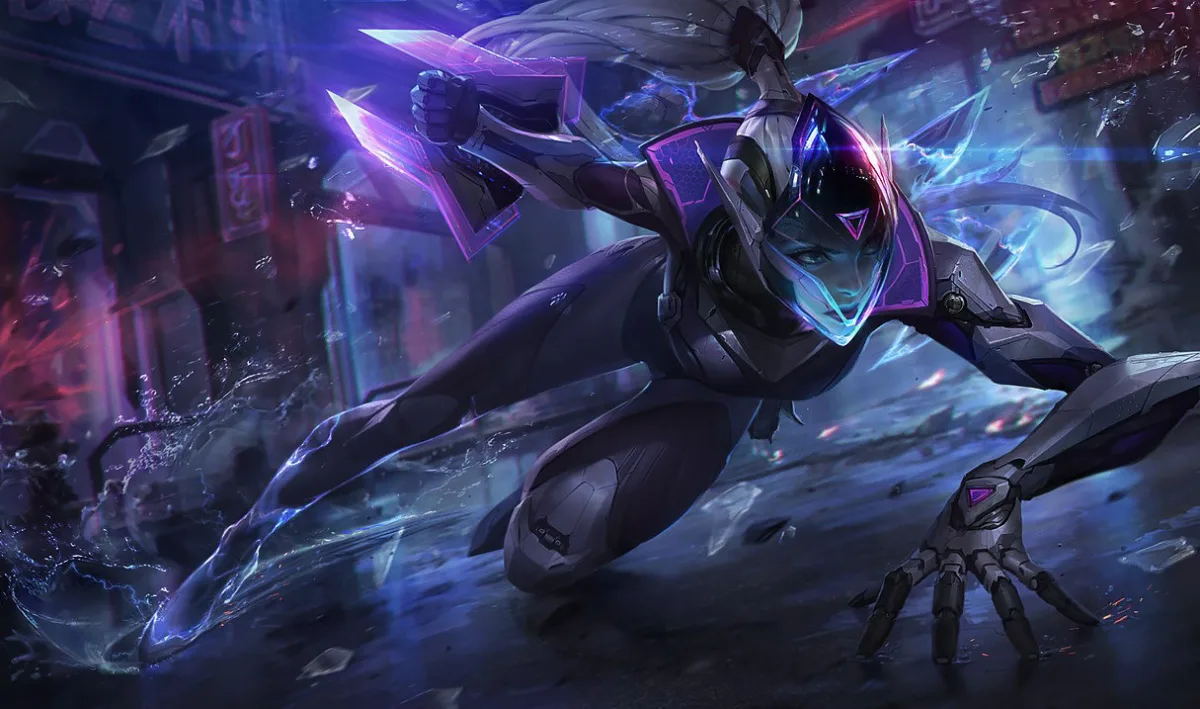
Vayne is our first pick for ADC dueling: she can reposition between attacks and threaten an opponent who has bought armor, provided she can keep hitting them. Nilah is worth considering against attack-heavy enemies she can reach. Draven’s loaded axes and Lucian’s spell-and-attack trades offer earlier opportunities. Tristana rewards knowing whether you can finish her bomb before committing the jump.
These are our five best 1v1 ADCs by fight pattern, not a measured duel-win-rate ranking. Choose around the fight you expect to take. A low-health Vayne without her ultimate may have to concede to a supposedly worse duelist, and winning the first exchange does not always justify staying for the next one.
Reviewed for modern PC Summoner’s Rift Patch 26.18 on September 10, 2026. The five dueling patterns retain their conditions. Vayne’s early mana and Silver Bolts warnings remain relevant after the previous patch.
Choose your ADC by the duel you expect
A duel means one champion fighting one champion here, without an ally arriving to heal, shield or finish the kill. Minions and terrain still count. So do any buffs already active when the fight starts.
| ADC | The fight you want | A reason to turn it down |
|---|---|---|
| Vayne | Enough room and health to attack one target repeatedly | You must cross dangerous range before landing your first hit |
| Nilah | Close contact while the opponent relies on basic attacks | They can wait out your defensive spell or punish you with other damage |
| Draven | A short approach with Spinning Axes already prepared | The next axe catch leads into a skillshot or costs your escape |
| Tristana | A bomb target you can keep attacking until detonation | You need the jump reset but cannot finish the bomb |
| Lucian | A brief exchange built around his own spell casts | You dash forward and then have no exit from a longer fight |
For the wider draft decision, including what an ADC contributes around teammates, use our ADC guide. Here, start with the damage sequence you need to complete and ask what the enemy can do to stop it.
1. Vayne: keep one opponent within reach

Silver Bolts gives Vayne a reason to stay on one target. Her third consecutive attack or ability hit against that enemy deals additional true damage based on their maximum health, subject to its minimum damage. Armor does not reduce that true-damage portion. The rest of her physical damage still interacts with armor normally.
Against another ADC, Vayne can threaten a third hit while using Tumble to move out of a spell’s path. Roll in a direction that leaves you room for the next attack. Moving straight toward the enemy may land one extra hit while giving them the range they need to kill you.
Final Hour improves the pursuit with bonus attack damage, shorter Tumble cooldowns and brief invisibility when she tumbles. Invisibility is an opportunity to change direction. It does not stop an area spell from damaging her, and it is not permission to stand still where the enemy last saw her.
Make Condemn a decision, not an automatic finisher
Condemn pushes its target away. It adds a stun when that push carries the enemy into terrain. A wall beside the opponent can therefore change the fight, but the wall must be in the knockback path. Being somewhere near river terrain is not enough.
Before firing E, decide whether you want distance or a pin. Pushing away a dangerous melee champion can be correct even without a stun. Pushing away a fleeing ADC whom you could safely keep attacking may end your chance to finish. Tumble can adjust the angle, but taking a better angle is worthwhile only if you survive the move.
Consider a bruiser approaching through a narrow path with a wall behind them. Vayne can threaten the terrain stun while preserving room to retreat. Against a ranged opponent standing in open lane, she has no equivalent guaranteed wall opportunity. She may need to dodge their key spell first or decline the duel altogether.
Vayne also needs more care early than an old guide might suggest. Riot’s modern 26.17 changes raised Tumble’s low-rank mana cost and reduced Silver Bolts’ early percentage damage. Repeatedly rolling into trades can leave you without the mana or health needed when the enemy finally commits.
2. Nilah: deny attacks when they are actually coming

Nilah’s starting attack range is only 225. Landing Formless Blade, her Q, on a unit or structure temporarily adds 125 attack range, along with attack speed and a sweeping attack effect. At 350 range she is still operating much closer than the conventional marksmen in this list. Pick her for a fight she can reach, not because her defensive spell looks unbeatable in isolation.
Jubilant Veil lasts 2.25 seconds on Nilah. It lets her dodge attacks and reduces incoming magic damage while active. This creates a sharp problem for an attack-dependent opponent who has already committed: the attacks they intended to use during that window may accomplish little while Nilah continues fighting.
An opponent with room to retreat can back away and save attacks until Veil ends. They can also use spells that it does not negate. Nilah is not invulnerable or immune to crowd control during it. Wait until the enemy is committing damage you can deny; spending W on the approach may leave you exposed when you finally reach them.
Try to line up Q’s temporary attack benefits with actual contact. Slipstream needs a target to dash through; that can help Nilah close or reposition, but it does not create the same escape options as a free-direction dash in empty space. Look at which units will remain available after you enter. An enemy walking toward their tower can turn a second attempt to close into a much worse position.
Apotheosis also needs time. It deals damage around Nilah during its windup before pulling enemies inward, with healing tied to damage dealt. If you need an immediate interruption to stop a lethal incoming spell, do not mistake the eventual pull for an instant one.
A solo fight does not include all her lane benefits
Nilah’s passive is famous partly because of what happens around allies. A genuinely isolated duel does not provide a support’s healing, shielding or shared lane experience on demand. You can arrive with a level advantage earned earlier, but that is a property of this particular fight, not a free assumption in every comparison.
Against an attack-heavy enemy, hold Veil until you can reasonably keep them close during its duration. Against someone who can deal dangerous damage without relying on those attacks, inspect that spell threat first. The correct response may be to wait for a missed cooldown rather than trying to force your preferred sequence through it.
3. Draven: arrive with the axes, then protect the catches

Prepare Draven’s axes before walking into the duel. Spinning Axe adds physical damage to an attack; catching the axe prepares another. He can maintain two at once. Starting with ordinary attacks gives away damage that could have decided the first trade.
Blood Rush supplies movement speed and attack speed. Catching a Spinning Axe refreshes its cooldown, giving Draven repeated opportunities to reposition as long as he keeps up the catches and can pay for casts. It is easy to focus on the increased attack rate and overlook why he needs the movement: the next catch and the next safe firing position are not always the same place.
Your movement after the attack helps direct where the axe will land, so move toward a useful catch instead of waiting for the marker to make the decision. The enemy can see that landing spot too. If they put a dangerous skillshot across it, choose between preserving the axe and avoiding the spell. Letting one fall can be the right choice when catching it would cost your health or escape.
Stand Aside gives Draven another way to affect the approach. Its axes push enemies sideways and slow them. Use the displacement to interrupt their path or create room to keep attacking; do not treat it as a long stun that guarantees the rest of your attacks. When fighting in a lane, its value also depends on where the enemy can move afterward.
Draven is an attractive early-duel pick because loaded axes make even a brief exchange expensive. That does not mean you should chase every retreat. Suppose you win two attacks near your own wave, then the opponent runs back into theirs. Following can add minion damage, remove your room to dodge and make the next catch predictable. Keeping the health advantage and the wave may be worth more than forcing the final attack.
Adoration is not a permanent damage buff
Draven’s passive pays out bonus gold when he gets a champion kill. That reward does not buy combat stats until he spends it. A large stack count alone is therefore not a reason to assume his ordinary attacks are stronger.
Whirling Death does use the stack count. Its damage can execute a target if it would leave them with less health than Draven’s current Adoration total. The enemy does not have to begin below that total. This is not a fixed execute percentage, either: cashing out changes the stack count, so the next fight can have a different threshold.
For the basic duel decision, check the simpler things first: axes ready, health to take the return damage, and a catch route that does not walk you into the enemy’s answer.
4. Tristana: know how the bomb ends before you jump

Tristana’s Explosive Charge puts the commitment in plain sight. Once attached, the bomb can build up through her attacks and abilities. It explodes after four seconds or immediately on reaching four stacks. Rapid Fire helps her fit attacks into that window, while Rocket Jump adds damage and a slow when she lands.
The reset matters as much as the explosion. A champion takedown refreshes Rocket Jump, and fully stacking Explosive Charge on an enemy champion can refresh it too. The fully stacked bomb can therefore restore her jump without a kill. Merely attaching the bomb, adding some of its stacks, or detonating it on a turret does not trigger that reset.
Count what you can land after arrival. If the opponent still has a displacement, a stun or a way to leave attack range, an early jump may strand you before you complete the charge. A longer attack range as Tristana gains levels helps her maintain contact from farther away; it does not remove those defensive tools.
The safer opening is sometimes to attach the charge while already in range and start attacking without jumping. You can then use W to follow a retreat, avoid a spell, or leave when the enemy commits back. There is no obligation to use every damage source in the first second if doing so gives away your only movement option.
Buster Shot can save you or stop your follow-up
R knocks its target away. That makes it valuable when a melee opponent gets too close, even if you are not trying to kill them. Against a low-health ranged enemy, the same displacement can send them beyond your remaining attacks.
There is a precise bomb interaction worth knowing: if Buster Shot supplies the final Explosive Charge stack, the bomb detonates after the knockback. Plan for where the enemy will end up. Do not count on the explosion occurring at their original position, and do not assume you can keep attacking after sending them away.
Before jumping, check the opponent’s ready defensive spell. If it prevents the fourth stack, you may need to walk out of a fight you planned to jump away from.
5. Lucian: win the short exchange without buying a long one
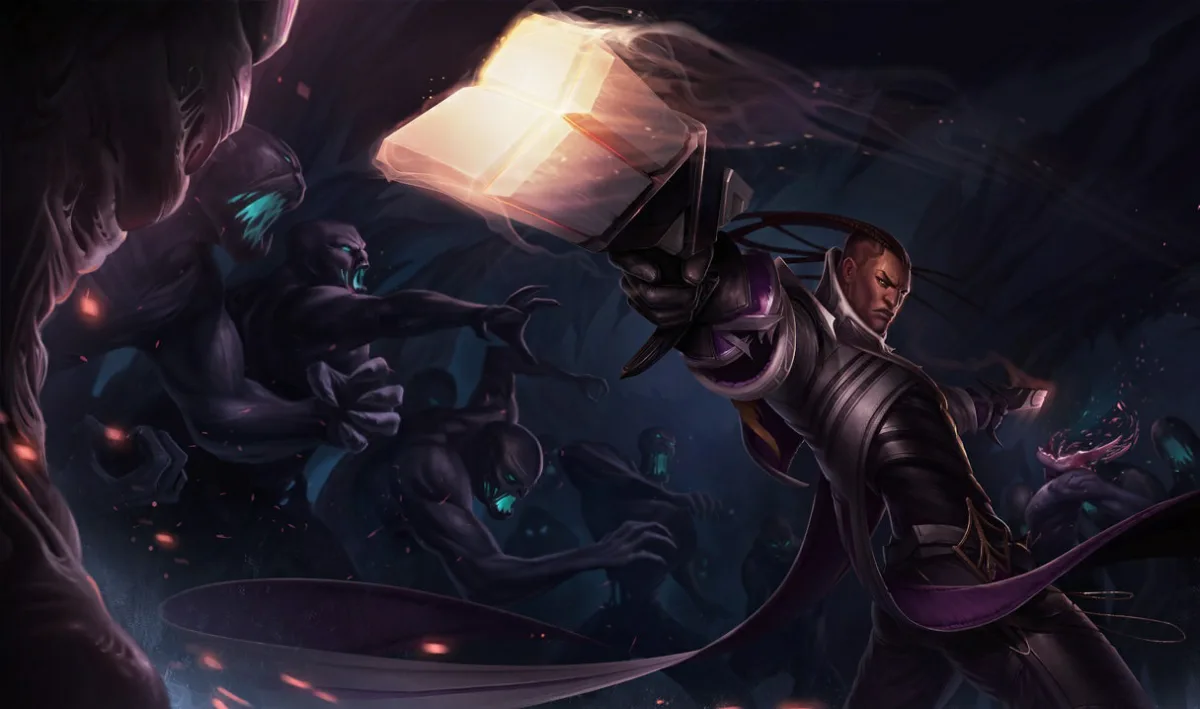
Lucian’s own spell casts prepare Lightslinger, a double attack. The core duel pattern is to fit those prepared attacks between spells instead of spending the whole kit at once and wasting opportunities to fire. Start with a cast you can land, take its attack when safe, then decide whether another spell keeps the exchange favorable.
His 500 attack range makes positioning especially important. A dash forward can put him in range to use his prepared attack, but it can also put him within the enemy’s preferred fight. Relentless Pursuit gains cooldown reductions when Lightslinger hits; that does not mean a fresh escape is available immediately after every aggressive dash.
Against an opponent about to spend a key skillshot, a lateral E can be more valuable than a forward one. It can avoid the spell while leaving Lucian close enough to return fire. Against an enemy who is simply backing away, dashing straight after them may trade a small amount of damage for the loss of your exit.
The Culling provides another kind of reach. Lucian can move while firing and can use E during it, but each bullet can hit the first enemy in its path. A minion wave between you and the target changes how much of the channel reaches that champion. Check the firing lane before treating the ultimate as a clean finishing sequence.
Do not bring an imaginary support into the damage comparison
Lightslinger and Vigilance are related parts of Lucian’s passive, but they do not have the same trigger. His own casts prepare the double attack. Allied healing, shielding and qualifying nearby immobilization can supply Vigilance’s additional magic damage. His W has an allied-damage interaction as well.
A fresh isolated duel with no previously supplied allied buff does not hand him those support-triggered bonuses. Lucian can deal more damage in a supported lane because another champion contributes both directly and through his kit. Be more cautious when you meet that same enemy alone in river.
Pick Lucian when you want control over a short exchange and are comfortable weaving attacks between casts. Once your useful sequence ends, leave if the enemy’s remaining cooldowns favor a longer fight. Winning the opening does not require staying until someone dies.
Before accepting the 1v1, check what is actually equal
Equal gold earned does not mean equal items. One player may have finished an item while the other is carrying the money for a recall. Check bought items, levels and available spells before relying on the champion matchup.
Use this quick check before committing:
- Bought items and level: compare what the enemy is carrying now. Check whether they have an ultimate or an extra skill point that you do not.
- Health, mana and ready spells: include summoner spells and defensive abilities. A duel that requires your unavailable escape is not the same fight.
- Contact: decide how you land the first meaningful hit and what keeps the target in range for the rest.
- The surroundings: inspect the minion wave, turret distance, walls and missing enemies. A likely jungler arrival means you are no longer evaluating a 1v1.
- Your exit: name the event that makes you back off. It might be a missed spell, an unsafe axe catch, the end of Veil or a bomb you cannot finish.
Choose one retreat condition before you attack. If Tristana’s target denies the attacks needed for her reset, stop counting on the jump to get you out. If Lucian’s dash fails to avoid the enemy’s key spell, reconsider the next trade. Backing off early can preserve enough health to catch the next wave instead of losing both the duel and the farm.