
Miss Fortune is the easiest ADC for learning the whole bot-lane job. Her attacks, Double Up bounce, movement-speed window, and Bullet Time each have a visible purpose, so the player has attention left for minions, support movement, and the next threat. Ashe is the best beginner choice for contributing from behind. Sivir teaches wave control and one-spell defense. Jinx teaches conventional front-to-back teamfighting, Tristana adds a forgiving escape with dangerous reset decisions, and Smolder turns scaling into a clear practice schedule.
That order is not a mechanical-difficulty contest. An ADC can have four simple buttons and still be a terrible teacher if the champion survives mistakes without showing that no damage was dealt. The easiest ADCs reduce one part of the mental load while keeping the role’s important lessons visible.

Miss Fortune wins the beginner verdict because her kit returns attention to the lane without removing the need to position.
Reviewed for modern PC Summoner’s Rift Patch 26.18 on September 10, 2026. The six recommendations are ranked by farming, spacing and fallback demands. Their relevant kit functions are unchanged; this is not a current power table.
Here, ADC means the farming bot-lane marksman in modern Summoner’s Rift. Mage carries, support Ashe, off-role experiments, and League Classic ask different questions and are outside this learning order.
Easy should mean spare attention, not free survival
Bot lane asks a new player to perform several jobs at once. Last-hit without standing inside the opposing support’s engage. Track two lane opponents instead of one. Read the allied support’s intent. Keep the wave in a useful place. Move for dragon. Attack the nearest safe target in a fight without following them into five people.
A useful beginner champion should lower the cost of one or two jobs and expose the rest. We used five questions.
- Is the next action obvious? The kit should give the player a readable lane trade and a clear teamfight assignment.
- Does a mistake explain itself? A missed spell, broken channel, wasted shield, or bad jump should be visible enough to correct next game.
- Can the champion contribute while behind? Utility, wave clear, range, or safe damage should preserve a role without pretending the lane was won.
- Does the safety tool teach respect? A dash that erases every poor position can hide weak spacing. A defensive tool with a clear cost teaches more.
- Will the habits transfer? Farming, target selection, attack movement, wave timing, and threat tracking should still matter on the next marksman.
No pick solves all five. Miss Fortune leaves positioning exposed. Ashe has no dash. Sivir stands close. Jinx waits for a reset. Tristana can jump into her own death. Smolder can reach a stack threshold after learning almost nothing about trading. Those limitations are part of why they teach.
The attention ledger
| Pick | Attention it gives back | Lesson it keeps visible | First recurring mistake to fix |
|---|---|---|---|
| 1. Miss Fortune | Simple trade and obvious fight ultimate | Positioning before a channel | Casting Bullet Time with no one pinned |
| 2. Ashe | Every attack slows; utility survives lane | Spacing and nearest-safe-target discipline | Walking forward because the target is slow |
| 3. Sivir | Fast wave reset and one-spell shield | Threat identification and wave intent | Using Ricochet without choosing to push |
| 4. Jinx | Clear front-to-back damage pattern | Range choice and reset patience | Chasing Get Excited! beyond allied vision |
| 5. Tristana | A long reposition and point-click peel | Commitment and cooldown accounting | Treating Rocket Jump as free aggression |
| 6. Smolder | Point-target Q and visible scaling goals | Farming schedule and safe spell range | Collecting stacks while conceding the map |
The table is an order for learning, not a permanent power ranking. Patch strength moves. The attention each kit consumes changes much more slowly.
1. Miss Fortune lets the player watch the other nine champions
Miss Fortune’s basic pattern is readable at lane speed. Love Tap rewards changing targets with a burst of physical damage. Double Up strikes the chosen unit, then ricochets into something behind it; if the first shot kills, the bounce always critically strikes. Strut builds movement speed while she avoids damage; activating it immediately restores the full movement bonus and adds a burst of firing speed. Make It Rain blankets an area with a slow. Bullet Time channels repeated waves into a cone.
The beginner value is not raw damage. It is spare vision. Last-hitting one minion, switching to another for Love Tap, and watching the opponent’s position for a Double Up bounce can happen without a separate ammo system or multi-spell combo. The player can look at the allied support, the river entrance, and the next low-health minion instead of staring only at cooldowns.
Her lane also provides honest feedback. A strong Double Up bounce rewards seeing two units on one line. A poor bounce strikes a harmless minion and says exactly what went wrong. Make It Rain can slow opponents for an allied catch, but burning it for light poke leaves no area tool when they walk forward. Strut helps return to lane or change an angle, yet incoming damage removes the passive movement advantage and exposes late reactions.
Bullet Time is the best beginner teamfight lesson in the class. The ability can deal enormous area damage, but Miss Fortune must channel in place. Pressing R does not solve positioning. The player has to wait for allied crowd control, a narrow corridor, or an enemy commitment, then stand where the cone reaches the fight without putting Miss Fortune inside it.
That produces a clean review question after every fight: what stopped the channel? If the answer is a stun, track that spell next time. If an opponent simply walked out, wait for control. If nobody entered the cone, fix the angle. The ultimate turns a vague bad fight into one correctable decision.
Miss Fortune’s limitation is equally healthy. She has no dash. Strut can help her move before contact, not escape every assassin after contact. A new player learns that good ADC positioning happens before the enemy reaches attack range.
2. Ashe teaches value without a gold lead

Ashe remains useful through slows, scouting, and a stun, so a lost lane does not erase the player’s next decision.
Ashe is the best second pick because every part of her kit explains range. Her attacks slow through Frost Shot. Critical strikes strengthen the slow rather than dealing ordinary bonus critical damage. Volley sends arrows through a cone and applies Frost Shot. Hawkshot can scout anywhere on the map. Enchanted Crystal Arrow stuns the first champion hit, with a longer stun after more travel.
The slow creates time to practice attack movement. Hit once, step while the attack timer recovers, then decide whether another attack is safe. The target’s reduced speed makes that rhythm easier to see, but it does not make Ashe mobile. If she walks past her support or the friendly minion line, no dash repairs the position.
That distinction matters. A beginner can mistake slowing an opponent for permission to chase. Ashe teaches the opposite: range is a boundary that has to move with the fight. The nearest safe target may be a tank. Attacking that tank while staying alive is often better than walking through two threats to reach a carry.
Hawkshot gives the player useful work outside combat. Send it through the opposing jungle before an objective, across likely gank paths when the lane is extended, or toward camps whose presence changes what the team can attempt. It does not replace a ward, but it turns the vague instruction to watch the map into a button with a purpose.
Enchanted Crystal Arrow also keeps Ashe relevant after a difficult lane. The first goal should not be a cross-map montage. Fire at a visible target whose movement is constrained by a corridor, allied pressure, or a nearby fight. Shorter arrows trade stun duration for reliability. Learning when a target cannot sidestep is more valuable than learning to gamble from base.
Ashe is harder than Miss Fortune because her damage comes from sustained exposure. She must keep attacking without a self-peel button. That is precisely why she transfers so well to other marksmen.
3. Sivir turns the wave into a deliberate decision
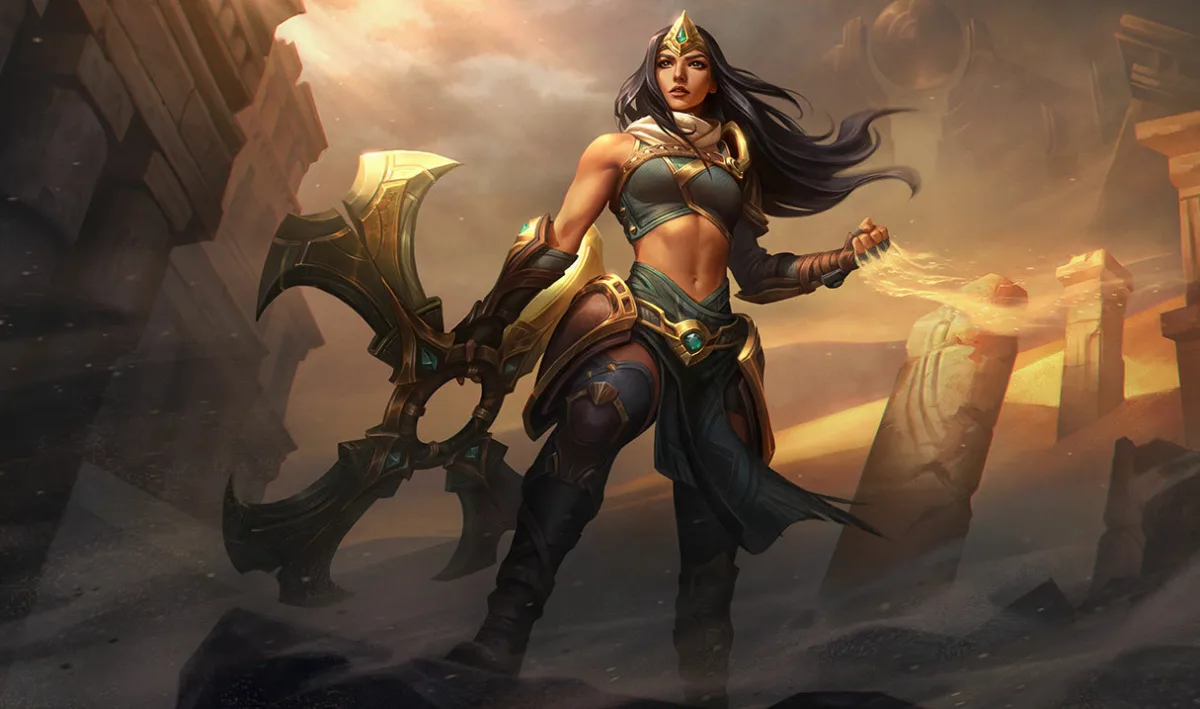
Sivir gives a beginner control over the wave, then makes them live with the decision to use it.
Sivir is the easiest ADC for learning wave recovery. Boomerang Blade damages on the way out and back. Ricochet gives attack speed and sends empowered attacks through nearby enemies. Together they can remove a damaged wave quickly when the lane needs a recall, a turret defense, or priority for an objective.
The important word is needs. Ricochet is not a neutral farming toggle. Its bounces touch units the player did not directly target and can move a wave that might otherwise stay safe. A beginner who presses W on cooldown may spend the entire lane pushing without knowing why, then blame Sivir’s short 500 attack range when the opposing jungler arrives.
That makes each activation a small macro exercise. Before using Ricochet, ask what happens after the wave dies. Can the duo recall? Can they hit the turret safely? Is dragon live? Does the next enemy wave arrive soon enough to trap Sivir far from her tower? The mechanical input remains simple while the consequence teaches lane intent.
Spell Shield adds a second lesson. It blocks one incoming enemy ability, then restores health and triggers Fleet of Foot if successful. The beginner should not spam it when danger feels possible. Name one spell before the exchange. Against a hook support, protect the hook. Against a mage lane, decide whether the root or the larger damage spell matters. A successful shield becomes proof that the threat was identified early.
On The Hunt gives nearby allies movement speed. It can start a chase, accelerate a disengage, or help the team cross a dangerous gap. Sivir’s attacks against champions during the ultimate reduce basic-ability cooldowns, and takedowns on recently damaged enemies refresh the hunt. She therefore stays connected to the fight without needing an elaborate personal combo.
Sivir’s low range prevents the shield from becoming false confidence. Blocking one spell does not stop the next attack, displacement, or flanking champion. She teaches preparation rather than invulnerability.
4. Jinx is the cleanest conventional teamfight carry
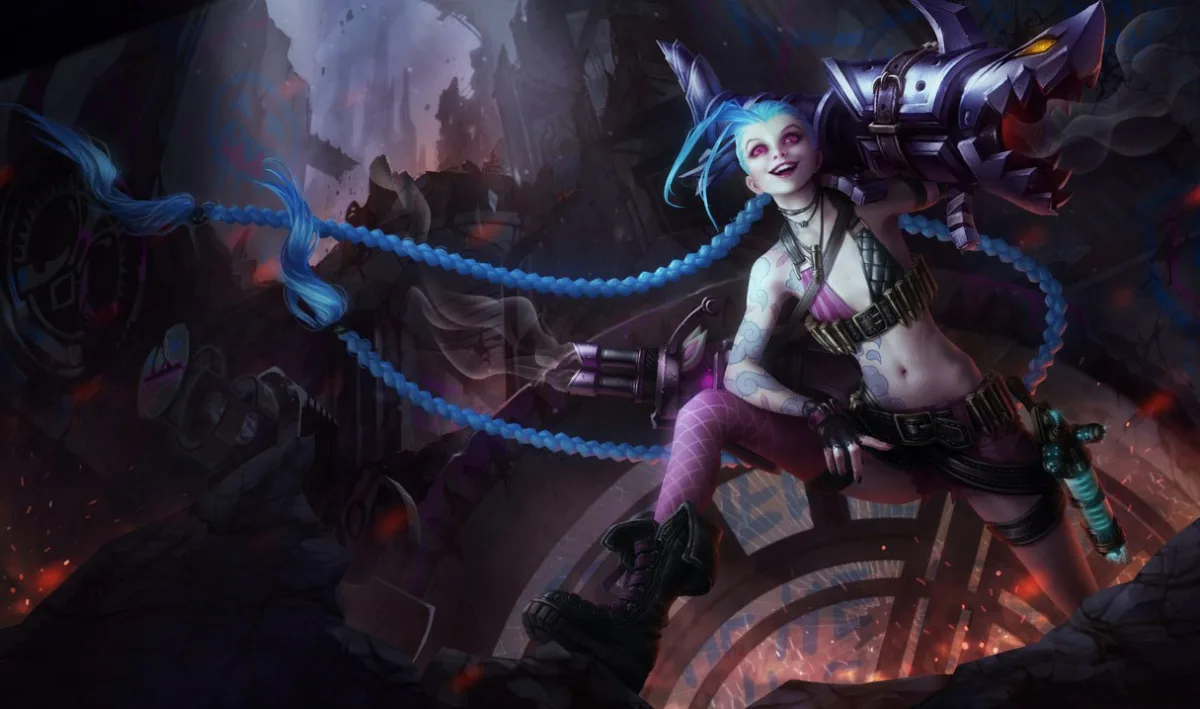
Jinx is simple when the fight comes toward her and difficult when a reset tempts her to leave the team.
Jinx is the best bridge from beginner champion to traditional late-fight carry. Switcheroo moves between Pow-Pow, a minigun that builds attack speed, and Fishbones, a slower rocket launcher with extra range, area damage, and a mana cost. Zap slows and reveals the first enemy hit. Flame Chompers can root enemy champions who cross them. Her global rocket rewards missing-health targets. Get Excited grants a large burst of movement and attack speed after she helps take down an enemy champion, epic monster, or structure.
The two-gun decision sounds more complicated than it usually is. Rockets are for reaching safely, touching grouped units, or taking one attack without entering minigun distance. Pow-Pow is for sustained damage when the nearest target can be hit without crossing a threat. The player is not solving a combo. They are choosing the range at which the next attack happens.
Flame Chompers are more reliable as a boundary than a prediction. Put them across a path an enemy must use, behind a champion already controlled by an ally, or between Jinx and a diver. Throwing them directly at a moving target often spends the only self-peel before danger has committed.
Get Excited creates the defining lesson. The speed burst feels like permission to chase, but its best use may be repositioning to continue attacking from a new safe angle. A reset does not remove enemy cooldowns or reveal an unwarded jungle. The player should identify the next safe target again instead of following the lowest health bar off the screen.
Jinx ranks fourth because she has no ordinary dash and needs time to deal damage. That makes a rough lane feel rough. With a protecting support and a front line, however, her job becomes exceptionally clear: start with the closest target, use the correct gun, and let the first takedown change the fight.
Ashe gives a learner a visible control job through slows, scouting and her arrow. Those tools do not make spacing easier than Miss Fortune; they give the player something useful to do while learning it.
5. Tristana gives one escape and several ways to misuse it
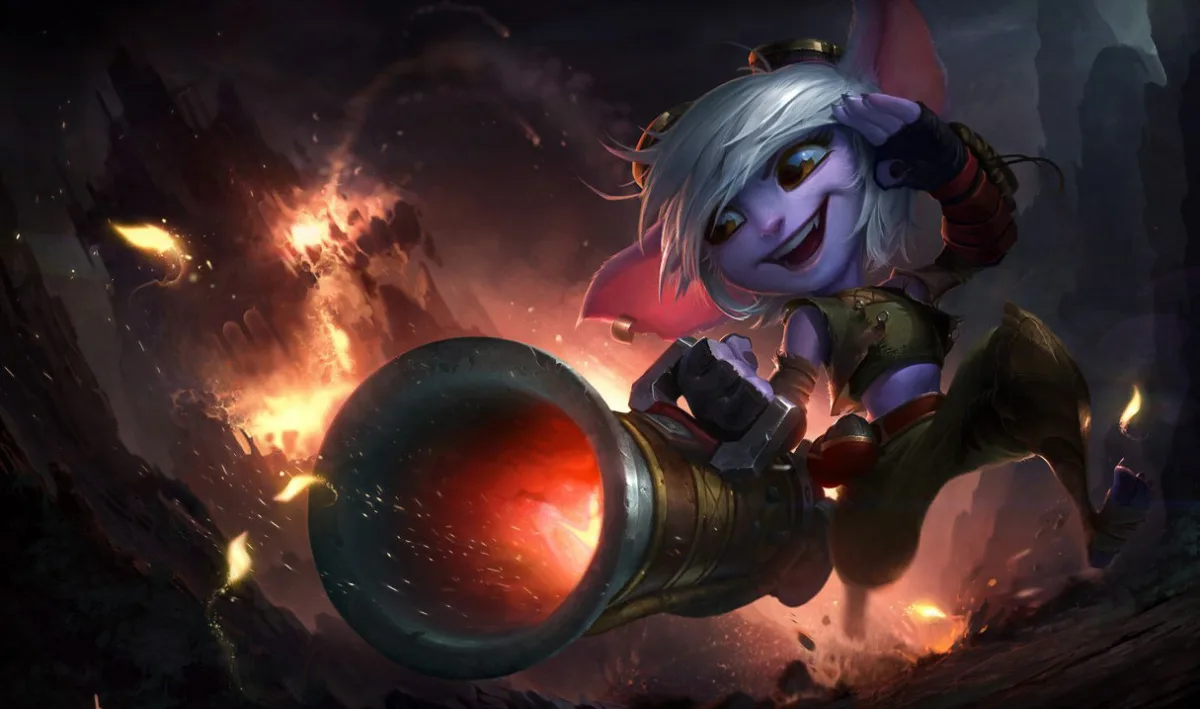
Rocket Jump lowers the punishment for one mistake, but its resets ask the player to decide whether the fight is actually continuing.
Tristana is the easiest mobile ADC in this group. Draw a Bead increases her attack range as she levels. Rapid Fire grants attack speed. Explosive Charge attaches a bomb to an enemy or turret and gains damage as Tristana hits it, detonating immediately at maximum stacks. Rocket Jump crosses terrain, deals landing damage, and refreshes after champion takedowns or a fully stacked charge detonates on a champion. Buster Shot deals damage and knocks its target back.
For a new player, the lane has one obvious trade: place Explosive Charge, activate attack speed, and decide whether four stacks are possible without walking through retaliation. The bomb makes progress visible. One attack is not four. If the opposing support still has a stun, the correct play may be two attacks and a retreat rather than forcing the satisfying explosion.
Rocket Jump is forgiving when held. It clears walls, escapes ganks, and can follow a fight after the dangerous control spell has been used. It becomes one of the role’s most punishing buttons when treated as free damage. The cast travels through space and commits Tristana to a landing. Resetting the cooldown after a takedown does not refund health or restore vision.
Her Explosive Charge passive also damages nearby enemies when Tristana kills a unit. That splash makes precise wave management less neutral than it is on a marksman whose last hits touch only one minion. Like Sivir, she teaches that the champion’s farming tool can decide the wave without an explicit order from the player.
Buster Shot offers point-click self-peel and a visible correction. Knock away the diver, not the nearly dead opponent whom the team was about to finish. Its interaction with an attached Explosive Charge can widen the detonation, but a beginner should first use the ultimate to preserve attack space.
Tristana sits fifth because mobility reduces immediate punishment while increasing decision risk. She is excellent once the player can say why they are jumping before the cast begins.
6. Smolder turns improvement into a schedule
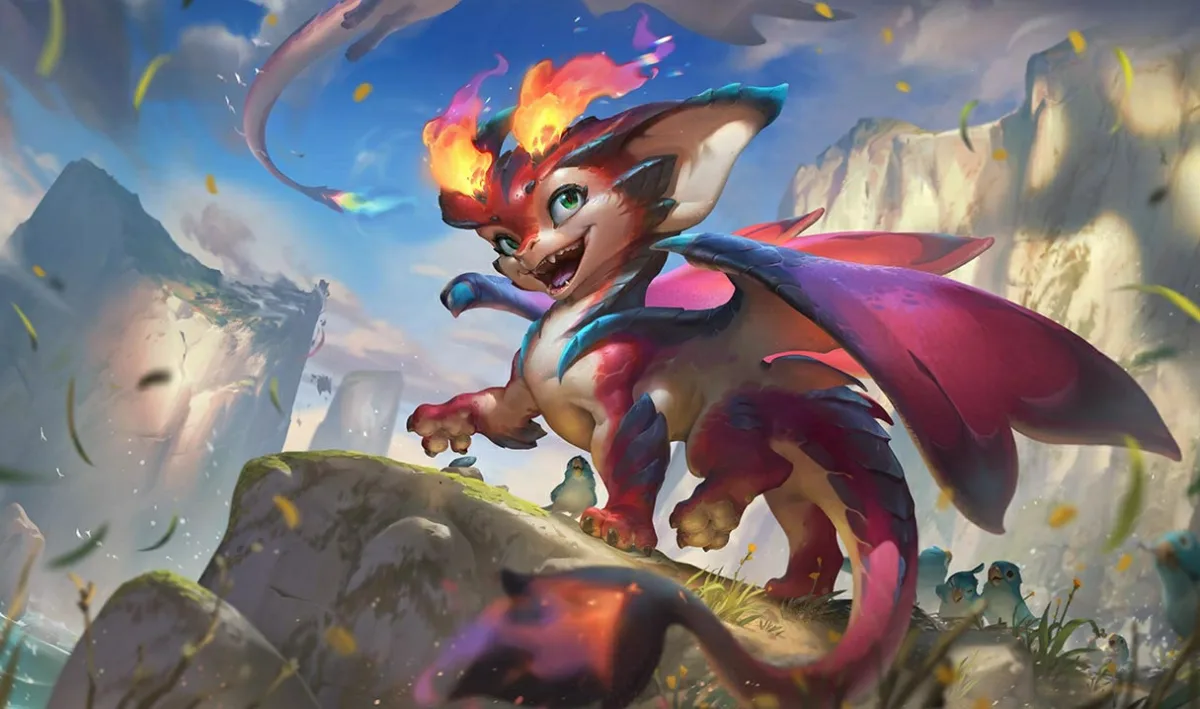
Smolder makes scaling visible, which helps a deliberate learner and distracts a player who treats stacks as the entire game.
Smolder has the clearest practice counter. Hitting champions with abilities and killing enemies with Super Scorcher Breath grants Dragon Practice. Those stacks increase his basic-ability damage and evolve Q at defined thresholds. The Q itself targets an enemy rather than asking the player to land a narrow skillshot. If the target dies, it refunds mana once per cast.
That creates an approachable lane loop: prepare a minion, secure it with Q, and look for a safe ability hit on a champion when the wave permits. Achooo travels as a projectile, slows, and creates an explosion after hitting a champion. Flap, Flap, Flap grants movement speed, ignores terrain, and attacks the lowest-health enemy during the flight. MMOOOMMMM! sends a wide line through the fight, damaging enemies and healing Smolder if it passes over him.
The stack counter is helpful because improvement becomes observable. The player can compare how many Q kills were missed, whether champion hits were forced at bad times, and when each evolution arrived. Unlike a vague sense of being behind, those moments can be reviewed.
The same counter can ruin decision-making. A stack is not worth missing a dragon fight, walking into an unwarded side lane, or spending the escape before the opposing jungler appears. Smolder’s later Q effects do not excuse a poor map state. The learner must treat the threshold as one resource among waves, objectives, recalls, and safety.
He ranks sixth because the first five champions teach a more standard basic-attack fight. Smolder is an excellent choice for a player who enjoys structured farming and wants a visible long-term goal. He is less useful as the only ADC in a beginner pool because the stack schedule can become a substitute for learning when to join the team.
Ezreal is safe to move and hard to measure
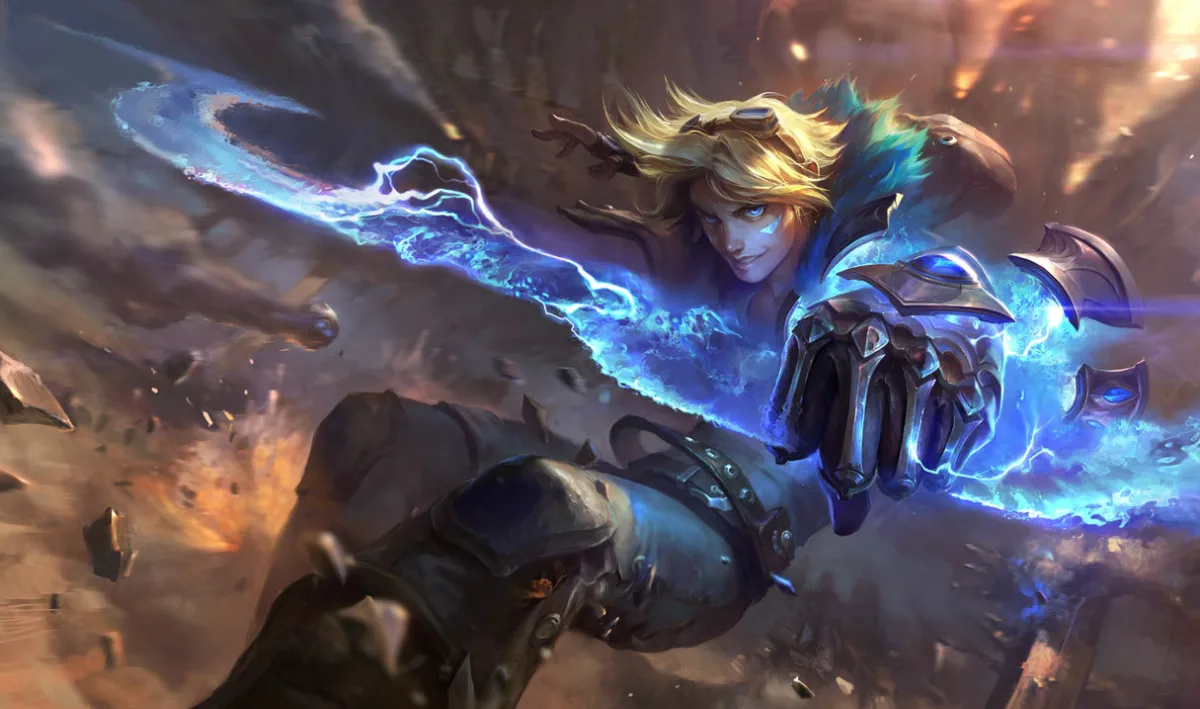
Arcane Shift can keep Ezreal alive while missed Mystic Shots quietly remove most of his pressure.
Ezreal appears in many easy-ADC conversations because Arcane Shift is a blink and Mystic Shot can farm from range. That describes survival, not role simplicity.
Mystic Shot stops on the first enemy hit and reduces Ezreal’s ability cooldowns when it connects with any enemy unit. Essence Flux attaches to the first champion or objective hit and must be detonated by an attack or another ability. Arcane Shift blinks and fires at the nearest enemy, prioritizing a target carrying Essence Flux. His passive gains attack speed for successful spell hits and stacks up to five times.
A new Ezreal can stand far away, miss Q into the minion wave, preserve Arcane Shift, and finish a fight without dying. The scoreboard may make that look competent. The missing pressure is harder to see. A missed Q is damage, a cooldown refund, and a passive stack that never arrived. Farming only with Q can also leave basic attacks underused and the wave controlled by the opponent.
Ezreal is a rewarding champion to master. He is not one of the easiest ADCs for learning standard marksman spacing because his safety lets the player postpone that lesson. Learn him after one of the six above, when staying alive and dealing too little damage no longer feel like the same outcome.
Caitlyn has easy range and a long syllabus

Caitlyn’s 650 attack range makes the first lane calmer, but her best damage asks for trap geometry and prepared Headshots.
Caitlyn is the other beginner trap. Her current 650 attack range is the longest base attack range among the champions discussed here. That makes many lanes feel safer. It does not make the champion’s value automatic.
Headshot gains special power against targets caught by Yordle Snap Trap or hit by 90 Caliber Net. Traps root the first champion who steps on them and grant an empowered Headshot. The net slows its first target and pushes Caitlyn backward. Piltover Peacemaker deals reduced damage after passing through its first target, while trapped targets take full damage. Ace in the Hole can be intercepted by another enemy champion.
The lane therefore asks more than attacking from far away. Caitlyn wants traps under allied crowd control, headshot timing, a Q line that respects the first target, turret pressure, and a recoil direction that does not move her into danger. A player can enjoy the range while leaving much of the kit unused.
She is a reasonable first champion for someone who specifically loves her design and will practice traps. For the cleanest transfer into the role, Miss Fortune or Ashe exposes the main job with fewer hidden damage conditions.
Build a two-champion syllabus, not a six-champion collection
The fastest way to learn ADC is to stop changing the interface. Pick one primary champion for at least twenty games and one secondary for bans or an obviously poor draft. Miss Fortune plus Ashe is the cleanest pair. Miss Fortune plus Sivir works for a player who wants more wave control.
Games 1 to 5: separate farming from fighting
Use the primary champion’s simplest trade only after identifying the next minion that will die. Record uncontested last hits missed in the first ten minutes. Do not hide the number behind a total CS target that includes a chaotic lane. The question is whether the player lost gold to pressure or to their own attention.
On Miss Fortune, look for one Double Up line per wave rather than forcing every bounce. On Ashe, attack once and step back into range discipline. On Sivir, say why Ricochet is being activated before pressing it.
Games 6 to 12: name the spell that can kill you
Before each lane exchange, identify the opposing support or ADC ability that changes the trade. Hold Strut positioning, Hawkshot information, Spell Shield, Chompers, Rocket Jump, or Flap, Flap, Flap with that threat in mind.
After each death, name the first preventable error rather than the final damage instance. The fatal ultimate may have landed only because the player crossed the wave twenty seconds earlier.
Games 13 to 20: carry one rule into the secondary pick
Swap champions only after the primary’s lane loop feels boring. Keep one rule unchanged: farm before optional poke, attack the nearest safe target, or preserve the escape until the key threat appears. The purpose of the secondary is to prove that the lesson belongs to the player rather than one kit.
Use the best ADCs guide when current power becomes the main question. The beginner champion guide covers other roles, while the support tier guide helps explain what the second bot-lane champion is trying to do.
The easiest ADC is the one that makes mistakes legible
Miss Fortune is the best first ADC because her trade, movement, and ultimate all produce clear feedback while positioning remains non-negotiable. Ashe is the best teacher for spacing and usefulness from behind. Sivir turns wave control and threat selection into visible buttons. Jinx introduces a conventional late-fight carry pattern. Tristana adds mobility only after the player accepts its commitment. Smolder gives a structured farmer a visible progression plan.
Start with two, not six. Leave Ezreal until missed pressure is as obvious as a death. Leave Caitlyn until extra range no longer hides unused traps. The goal is not to find a champion who removes bot lane. It is to find one who leaves enough attention to finally see it.