
Vi is the best beginner jungler for learning the whole role
The best beginner jungler is not always the champion with the fewest buttons. It is the champion who makes jungle’s invisible decisions easier to see.
Vi is our first recommendation for learning the route-to-gank-to-objective sequence. Her first clear is stable enough to let a new player look at lanes, her Q gives ganks an obvious start, her W and E help turn a won skirmish into a fast objective, and her ultimate gives every midgame fight one clear question: which target must be locked down? A missed Q also teaches a useful lesson immediately. If the angle was poor, the gank ends before it becomes a two-minute mystery.
Warwick is the safest first pick for someone still losing too much health to camps. Amumu is the cleanest introduction to tank pathing and teamfight follow-up. Nocturne is excellent for learning how farm creates a repeatable power window. Nunu & Willump teach objective control better than anyone here.
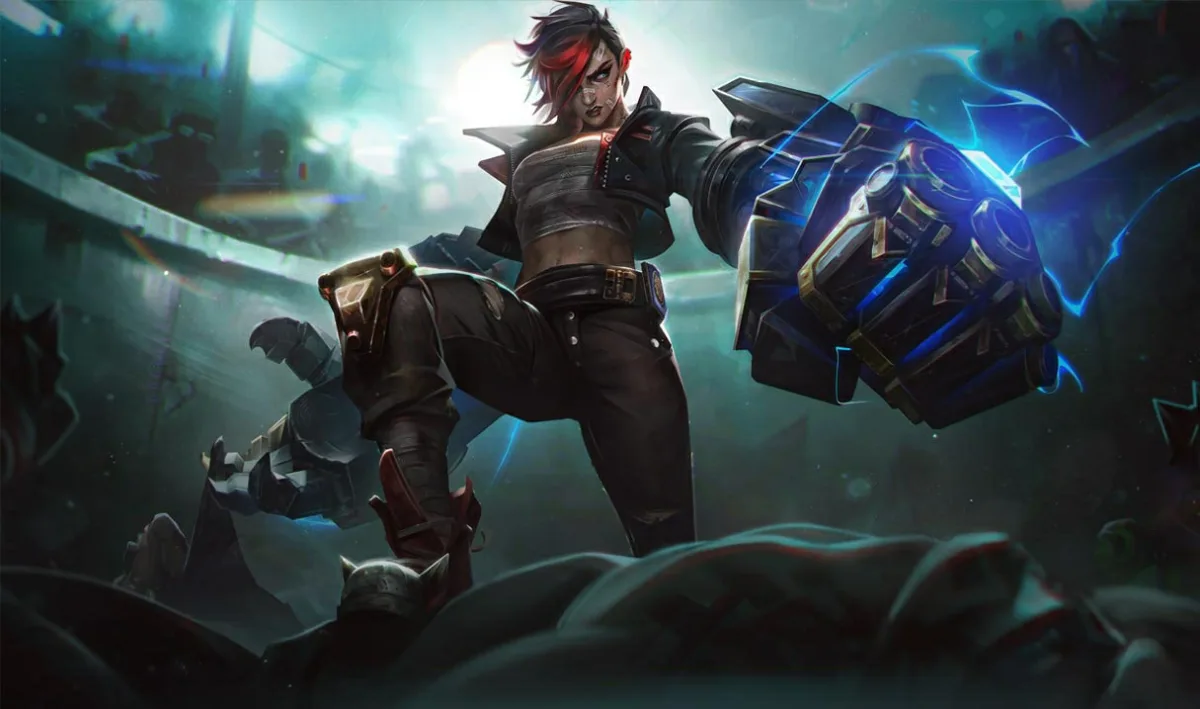
Reviewed for modern PC Summoner’s Rift Patch 26.18 on September 10, 2026. The order measures what each kit teaches. Master Yi’s 26.18 buffs are included, and Shyvana is evaluated with her modern Scalemail kit.
The nine beginner junglers, at a glance
This order measures learning value, not raw power. A champion rises when the player can survive the first clear, understand when a gank has begun, convert a successful play, recover from a flawed route, watch the map while clearing, and perform a stable job in a five-on-five fight. Current viability matters, but a high win rate cannot rescue a kit that teaches the wrong lesson.
| Rank | Champion | Best lesson | Habit to guard against |
|---|---|---|---|
| 1 | Vi | Turning a lane opening into an objective | Treating R as permission to dive anything |
| 2 | Warwick | Reading health, danger, and nearby skirmishes | Following Blood Hunt past the sensible play |
| 3 | Amumu | Engaging for teammates and layering crowd control | Throwing Q before the target is committed |
| 4 | Wukong | Entering a fight with an exit still available | Spending W early just to move faster |
| 5 | Nocturne | Farming toward a repeatable map-pressure window | Ulting the first target who appears in range |
| 6 | Xin Zhao | Contesting early space around lanes and river | Fighting without checking lane priority |
| 7 | Nunu & Willump | Preparing and securing neutral objectives | Replacing camps with endless low-value ganks |
| 8 | Diana | Converting efficient clears into planned power spikes | Entering a fight with no second destination |
| 9 | Zac | Using terrain to create nonstandard gank routes | Charging E before confirming where the fight is moving |
Warwick offers sustain and a low-health trail, Amumu offers a direct teamfight signal, and Wukong offers repeated disruption. Vi leads for the chain she teaches from route to gank to objective. Nunu, Xin Zhao and Diana teach narrower lessons, so they need a matching practice goal rather than a presumed current statistical edge.
If the only goal is climbing today’s ladder, use the current best junglers guide. If the problem is recovering when Silver games become chaotic, the best low-ELO junglers guide evaluates a different skill: reducing the cost of bad situations. Tank specialists should use the best tank junglers comparison. This page is a classroom. It asks which champion helps a new jungler understand why the next decision exists.
Easy to operate is not the same as good for learning
Jungle can hide bad reasoning behind a simple champion. A low-input kit may let the player clear camps without dropping abilities, yet teach almost nothing about lane states, objective setup, enemy tracking, or safe entry. The result feels comfortable until the first game where the familiar script stops working.
A good learning champion needs four qualities at once.
First, the champion needs execution headroom. Clearing cannot consume every ounce of attention. A beginner should be able to move the camera, check health bars, notice which lane is pushing, and count which enemy appeared late without the champion dying to Raptors.
Second, the champion needs a one-sentence job. "Charge Q from fog, displace the target, then help take something" is understandable. So is "farm toward Paranoia, scan all three lanes, and use darkness on an isolated target." A job can be simple without making every decision automatic.
Third, mistakes need readable feedback. If Vi misses Q from a poor angle, the player can identify the cause. If Xin Zhao contests Scuttle while both adjacent lanes are pushed under their towers, the collapse explains the error. Good feedback connects a result to a decision the learner can change next game.
Finally, the champion must leave a useful fallback action. A failed gank should not make the next minute meaningless. The learner needs a camp to collect, vision to place, an objective to abandon early, or a teamfight job that still works from behind. Forgiveness here does not mean escaping every punishment. It means the game continues to contain understandable decisions.
Riot’s in-client difficulty indicators can help describe mechanical load, but they are far too coarse to rank jungle education. They do not measure how clearly a champion reveals lane priority, whether a mobility spell can undo a pathing mistake, or whether a fed enemy turns the champion’s only engage into a suicide button. Current win rate has the opposite limitation: it measures results in a particular sample, not what a player learns while producing them.
A beginner route should answer questions, not imitate a stopwatch
Before the rankings, establish one rule: a clear is not good merely because all six camps died quickly.
Your first route should produce an answer at each transition. While the first camp is dying, check which lanes arrived late and might have helped the opposing jungler. Before crossing to the second quadrant, inspect the two lanes you are pathing toward. After the third camp, ask whether the nearby lane has crowd control, whether the enemy has used an escape, and whether entering now costs the rest of the quadrant. Before touching river, compare the health and position of both nearby laners. A Scuttle Crab is not worth donating a kill into two enemies who can move first.
The route can still be simple. Begin with a repeatable full clear while learning camp movement and camera checks. Break it only for information you can name: an enemy with no Flash and no safe route back, a free countergank you already saw developing, or a jungle invade supported by lanes that can move. "My teammate pinged" is information, but it is not proof.
After a successful gank, convert before celebrating. The correct reward may be Dragon, Void Grubs, a turret plate, enemy camps, a deep ward, or simply a clean reset that protects the tempo advantage. Beginner jungle improves fastest when kills stop being the end of the sentence.
That is the standard applied below. Every champion has to teach a real part of the role, not merely survive it.
1. Vi turns a successful gank into the next map action
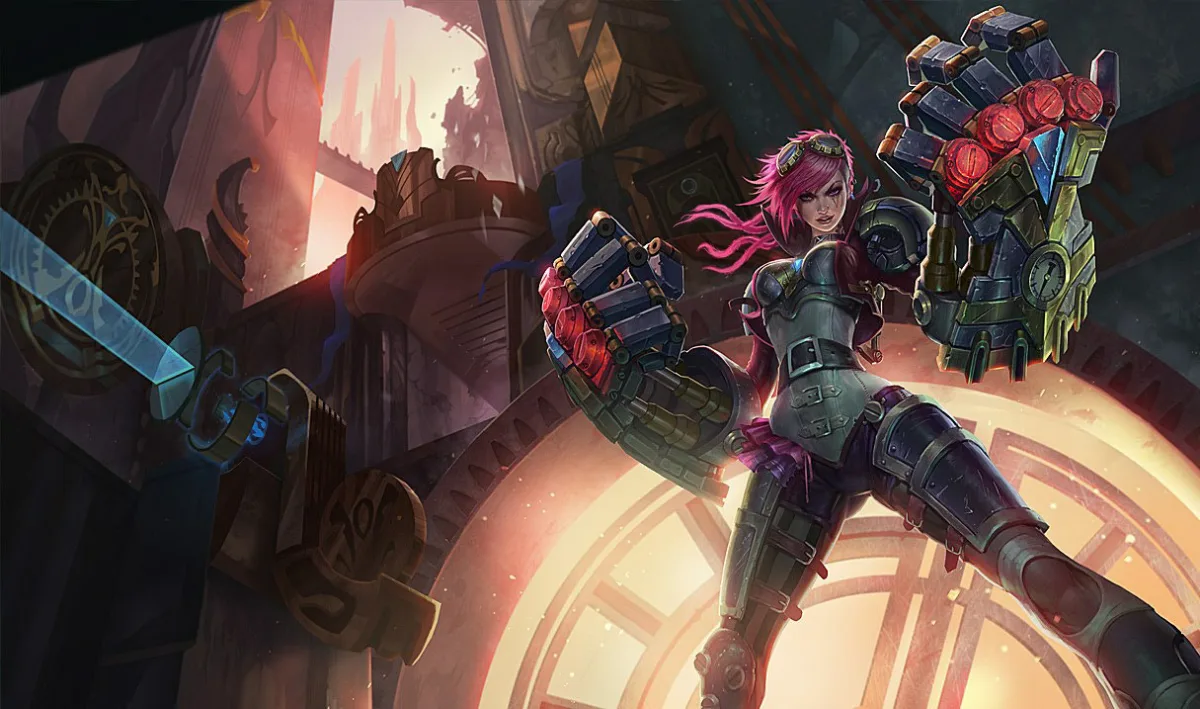
Vi is the strongest learning pick because her kit connects jungle phases instead of specializing in only one of them. Blast Shield creates a forgiving health buffer when an ability hits an enemy. Vault Breaker is mobility, damage, and displacement in one cast. Denting Blows rewards staying on a monster or champion, breaks armor, and increases her attack speed. Relentless Force improves clear flow and lets an attack reach through a front target. Cease and Desist turns target selection into a concrete midgame responsibility.
Her beginner route should be built backward from a lane with a plausible Q angle. A lane with allied crowd control can hold the target for a charged punch. A lane where the opponent has pushed past the river gives Vi room to arrive from behind. A lane where the enemy is sitting under turret with a full wave is not automatically gankable because Q exists. Clear toward the most credible setup, move the camera before the final camp, and decide whether the play still exists before walking into vision.
That last check is where Vi teaches more than an easy clear. Q has a visible charge and a committed travel path. Starting it too early announces the gank. Starting it too late allows the opponent to leave. Firing through a minion does not solve the champion collision problem. The spell forces the learner to think about fog, approach angle, allied setup, and the enemy’s likely escape in one manageable package.
Level six simplifies access without removing judgment. Cease and Desist follows one selected enemy and knocks others aside on the route, but the ability does not guarantee a winning landing zone. If Vi crosses an entire team and arrives beside a fed carry with no allies close enough to follow, the targeting was bad even if the spell worked perfectly. Beginners should ask two questions before pressing R: who can follow within the next few seconds, and where will Vi stand when the slam and knock-up sequence ends?
Her objective lesson is equally clean. Vi damages single targets reliably through repeated attacks, armor reduction, and short combat cycles. More importantly, she can move from the gank to the pit without changing her entire plan. If bot lane dies or recalls, Dragon may still be unsafe. If the opposing jungler is visible top and Vi’s bot side has priority, the conversion is much stronger. The champion helps with the monster; she does not cancel the map check.
When a path goes wrong, Q offers a wall-crossing escape or a fast route back toward a camp. When behind, R still removes one important enemy’s freedom for a moment. Those tools prevent a rough opening from erasing the learning process. Vi’s bad habit is obvious: targeted R feels authoritative, so new players treat it like a command rather than a commitment. Use it to confirm a good fight, not to demand that four teammates repair a bad one.
What Vi teaches that transfers: fog angles, crowd-control chaining, post-gank conversion, target selection, and the difference between reliable access and safe access.
2. Warwick keeps the first clear from consuming the whole lesson

Warwick is the best first-day jungler for a player who cannot yet finish a route with useful health. Eternal Hunger restores health when he is low. Jaws of the Beast bites according to the victim’s maximum health and heals Warwick from the damage. Those mechanics do more than make the clear comfortable. They free enough attention to inspect lanes while monsters are still alive.
Blood Hunt then supplies one of League’s clearest beginner signals. Enemies below half health become opportunities, and the movement trail points Warwick toward them. That is useful training data, not a navigation order. The correct lesson is to ask why the enemy is low, where the opposing jungler could be, whether the lane is moving toward or away from Warwick, and what happens after arrival. The wrong lesson is to follow the scent across three wards until a low-health mid laner reaches safety and Warwick loses an entire quadrant.
His gank is readable without being automatic. Approach with the movement advantage, use Primal Howl’s damage reduction before the enemy returns damage, then trigger the fear when it will send the target toward allies or away from safety. A fear cast at random can push the opponent out of a teammate’s skillshot. The ability teaches that crowd control has direction and timing rather than duration alone.
Infinite Duress adds a second entry tool at level six, but it is a skillshot whose leap distance scales with bonus movement speed and which suppresses the first champion hit. That creates honest feedback. A long-range cast through a frontliner is not targeted access. A close-range cast after the enemy spends mobility is much more reliable. Keep the cast for a clear path to the intended target; Warwick’s sustain does not make a blocked leap useful.
At objectives, Warwick’s sustain and single-target pressure let him remain on the map after small fights. The educational decision is whether he should. Start when enemy information and lane movement support the attempt. Leave when the opponent can collapse first. His healing often makes a monster look safer than the surrounding river actually is.
Warwick can recover from an imperfect route because he duels well, sustains through camps, and reaches distant low-health fights quickly. From behind, fear and suppression still give him a real job. The catch is that his strongest navigation aid can become a habit-forming shortcut. Players who graduate from Warwick should be able to identify the same low-health opportunities without needing a red trail to pull their camera there.
What Warwick teaches that transfers: health as map information, sustain as tempo, directional crowd control, and the discipline to reject an attractive chase.
3. Amumu teaches that a tank gank is a handoff
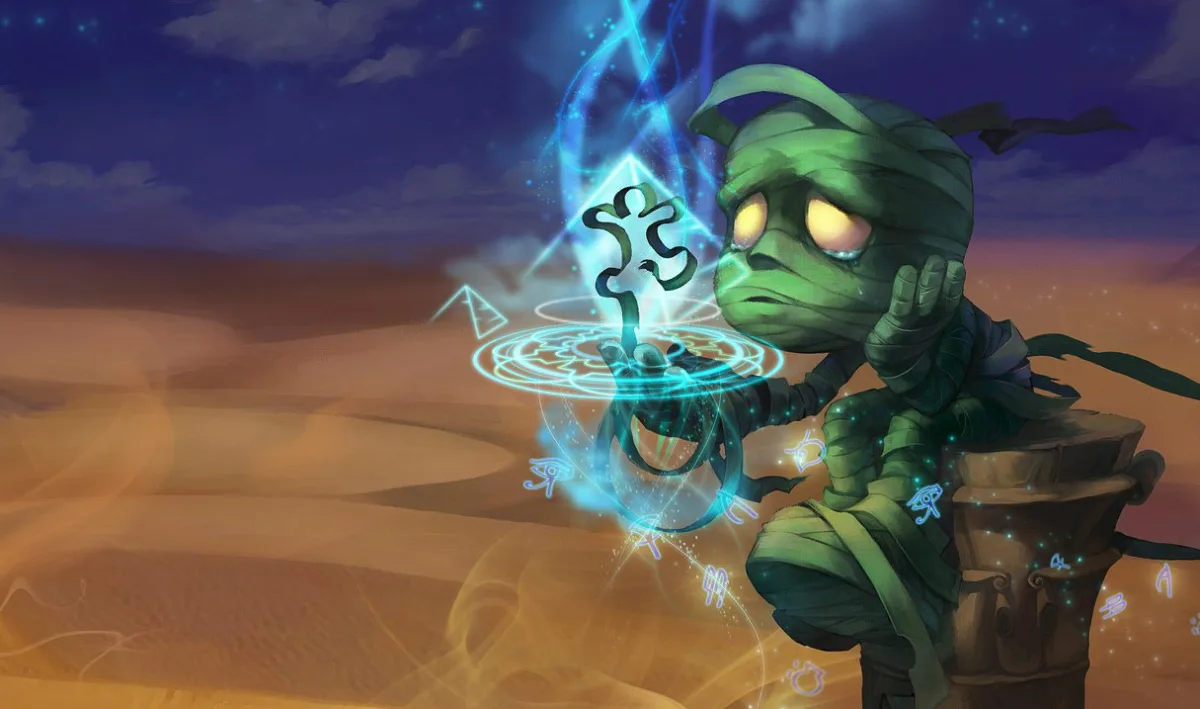
Amumu is often described as easy because Despair and Tantrum clear groups of monsters without elaborate inputs. Tantrum also permanently reduces incoming physical damage, and attacks against Amumu reduce its cooldown. That combination makes crowded camps forgiving. The more important reason he belongs third is that his kit teaches what tank jungle actually means.
Bandage Toss is not the whole gank. It is the handoff. Landing Q moves Amumu to the target and stuns it, creating time for an ally to connect. If the laner is a screen away, farming a wave under turret, or unable to pass the enemy frontline, the bandage only moves Amumu into danger. A beginner can review the mistake easily: the spell landed, but the teammate was never in position to use the contact.
This makes patience a mechanical advantage. Walk behind an overextended target before throwing Q when possible. Let allied crowd control force the enemy’s first dodge. Hold the second charge rather than firing both at maximum range into empty ground. The champion’s straightforward clear leaves enough mental room to make those decisions deliberately.
Curse of the Sad Mummy supplies the most stable teamfight job in this ranking. Amumu wants to catch valuable enemies near teammates who can damage them. That sentence stays true from ahead or behind. A five-player ultimate can still be poor if it traps only tanks while the enemy carry attacks freely from outside the circle. A two-player ultimate can win the fight if those two are the opponents who matter. Beginner tanks improve when they stop counting bodies and start naming threats.
His objective conversion is good for a similar reason. Despair damages high-health targets over time, Cursed Touch makes affected enemies take bonus true damage from incoming magic damage, and the threat of Q plus R can punish a contest. Yet Amumu cannot safely start every neutral monster just because his kit hurts it. He needs allies near enough to exploit his control if the enemy enters river.
A bad route hurts Amumu’s tempo, but it rarely deletes his purpose. Farm the nearest safe camps, protect vision around the next objective, and arrive with ultimate available. Even on low income, the engage remains relevant. The common failure is desperation: a player who feels behind fires Bandage Toss the moment anything enters range. Amumu teaches more when Q is treated as a question about team position, not a lottery ticket.
What Amumu teaches that transfers: gank handoffs, ally distance, threat-based ultimate selection, and useful tank play on a small budget.
4. Wukong makes the exit part of the engage plan
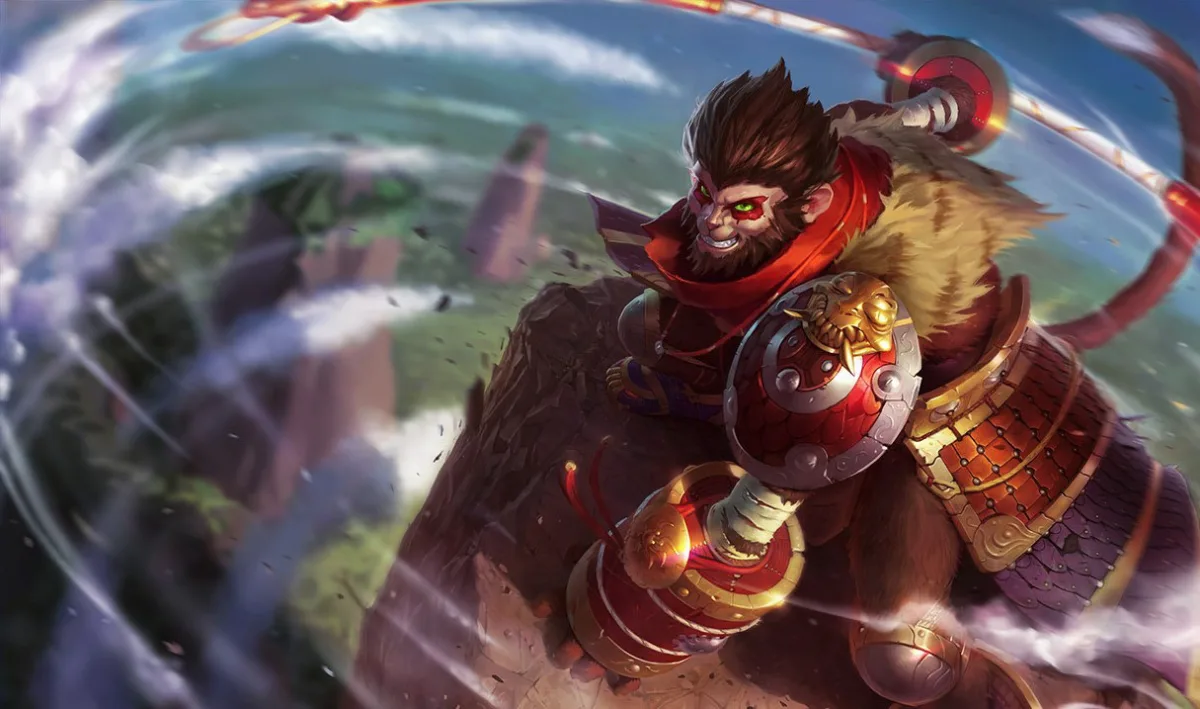
Wukong is not as mechanically empty as Warwick or Amumu, which is a benefit here. He asks for one extra layer of planning without demanding specialist execution. Stone Skin grants stacking armor and health regeneration while he fights champions and monsters. Crushing Blow adds range and reduces armor. Nimbus Strike provides targeted access. Cyclone supplies reliable area disruption. Warrior Trickster is the decision that makes him such a good classroom.
W can start a clever approach, but spending it before contact removes Wukong’s best way to break vision, create uncertainty, or step out after the first rotation. A beginner who reaches every fight by pressing W forward will feel powerful until the enemy turns. A learner who approaches through ordinary fog, uses E to contact, and keeps W for the response begins thinking about the second half of an engage.
His first clear is stable without becoming invisible. Passive durability rewards staying in combat, Q helps on larger monsters, and E supplies attack speed after the dash. The player still has to group monsters, move between attacks, and watch resource use. That is enough activity to build clear habits while leaving room for camera checks.
Ganks are most readable when the target has already walked into E range or an ally can start the play. Wukong can then reach the target, reduce armor for physical teammates, and decide whether Cyclone is needed. Using R on first contact can be correct, but holding it for the enemy’s escape or for multiple arrivals may create more value. The champion teaches that an ultimate is part of a sequence, not proof that the sequence has begun.
Around objectives, Wukong is good at controlling the fight near the pit rather than merely racing the monster. He can threaten a multi-target knock-up, disappear briefly with W, and re-enter with another angle. This helps a beginner see an important distinction: sometimes the jungler’s best objective contribution is delaying or disrupting the opposing jungler while the team finishes, not standing motionless beside the monster and hoping Smite wins a coin flip.
Wukong’s educational value comes from combining skirmish movement with a teamfight fallback. Cyclone can interrupt a fight even when his damage is unimpressive, provided he reaches useful targets with allies nearby.
What Wukong teaches that transfers: planning the exit before entry, holding mobility for a second purpose, disrupting objective contests, and separating engage value from damage dealt.
5. Nocturne teaches the difference between a timer and a target
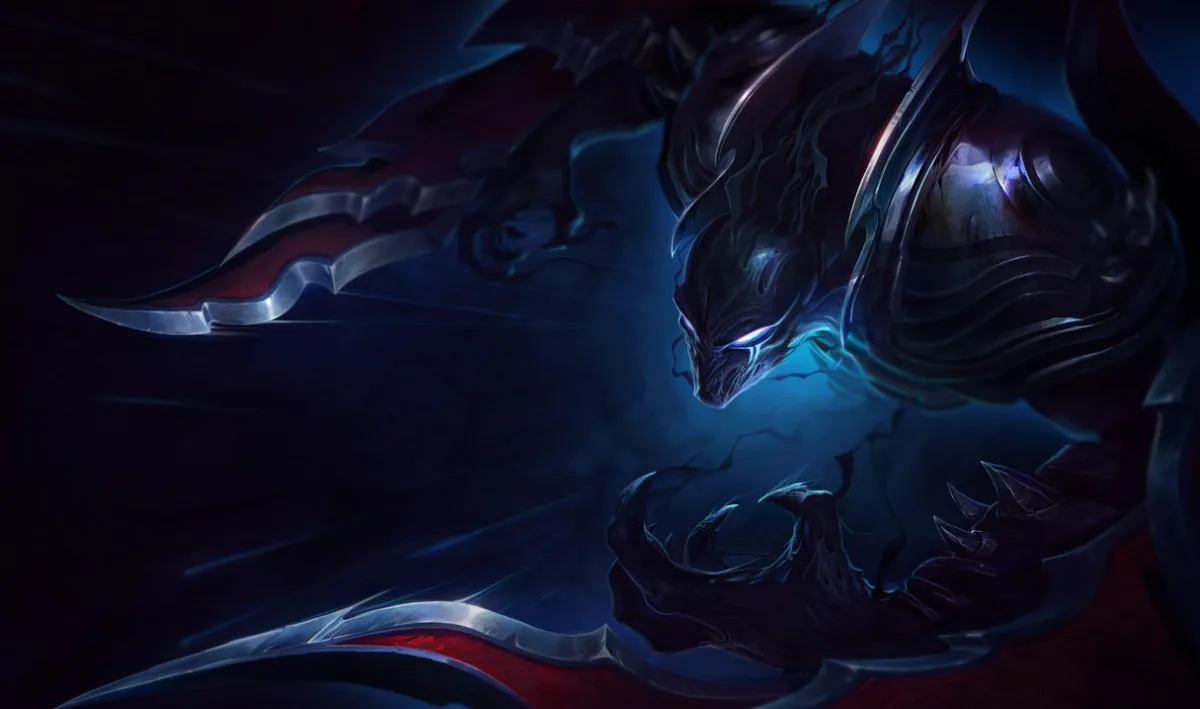
Nocturne is the cleanest champion for learning a farm-to-action rhythm. Umbra Blades damages nearby enemies and heals Nocturne. Duskbringer improves his movement and attack damage on its trail. Shroud of Darkness passively grants attack speed and can block one enemy ability when activated. Those tools create a manageable clear. Paranoia then gives the route a clear strategic destination.
The beginner version of the plan is simple: clear efficiently toward level six, keep checking lanes, reset with purpose, and use the first good Paranoia window rather than forcing a weak pre-six gank. "Good" is the word doing the work. The ultimate reduces enemy vision and allows Nocturne to launch at a nearby champion, but range does not turn a defended target into an isolated one.
Before casting, inspect the target’s health, escape, nearby allies, wave position, and the location of Nocturne’s own teammates. Also check what happens after the kill attempt. If Dragon is alive and the play is bottom side, a successful gank may convert immediately. If every camp is up on the opposite side and the target can retreat under turret, the same cast may destroy Nocturne’s next minute.
Shroud of Darkness adds a compact lesson in ability priority. Blocking a harmless spell to gain attack speed can lose the fight if the enemy’s decisive crowd control is still available. Waiting forever for the perfect spell can waste the shield entirely. A beginner should name the one ability that prevents Nocturne from maintaining Unspeakable Horror’s tether, then enter with a plan for that cast.
Nocturne’s 26.17 base-durability nerf remains relevant to careless early fights. It did not remove the educational value of farming toward an ultimate window. Enter with health, a reachable target and teammates able to use the darkness; a simple button does not guarantee a safe fight.
From behind, darkness itself can disrupt enemy coordination, and fear still controls a reachable target. Nocturne’s weakness as a teacher is target fixation. His screen tells the player that an ultimate is available; the player must learn that availability is a timer, not a target.
What Nocturne teaches that transfers: farming toward a power window, scanning every lane before committing, identifying the enemy spell that stops a gank, and converting long-range pressure into a local objective.
6. Xin Zhao teaches that river fights begin in the lanes
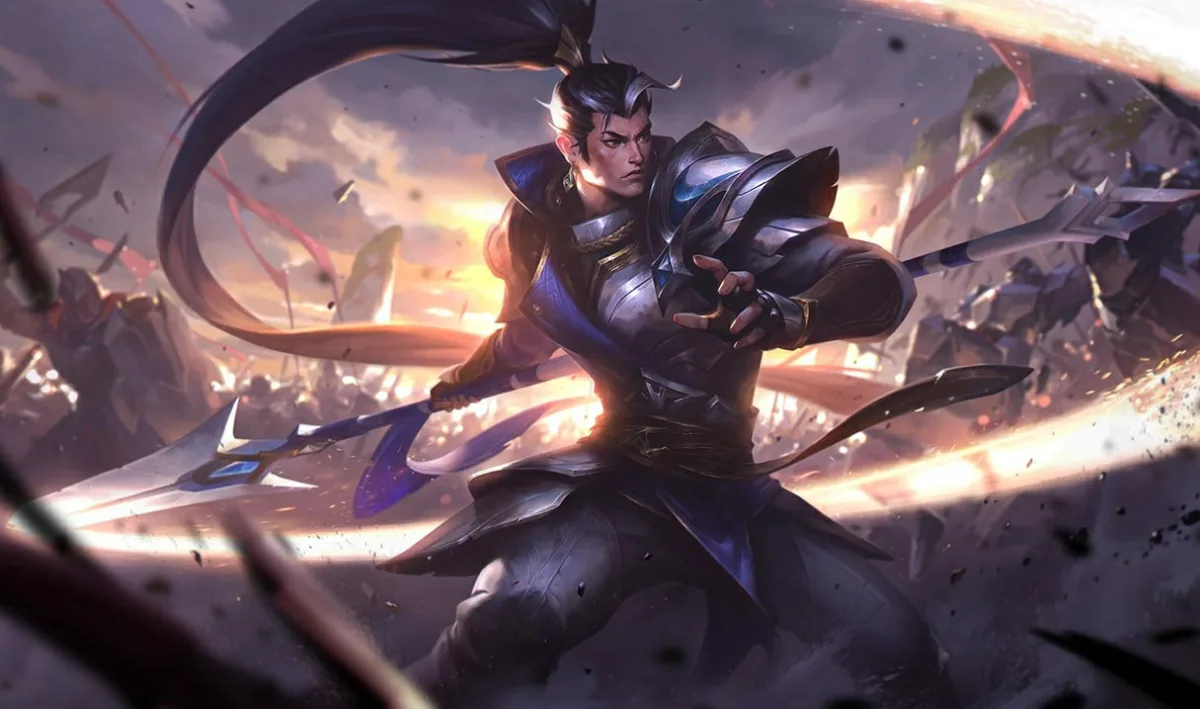
Xin Zhao’s kit is direct enough to understand in one read. Determination makes every third attack deal bonus damage and heal him. Three Talon Strike empowers three attacks and knocks up on the third. Wind Becomes Lightning slashes, thrusts, slows, and marks targets as Challenged. Audacious Charge closes distance and gains extra range against a Challenged target. Crescent Guard knocks away non-Challenged enemies and protects Xin from champion damage originating outside its circle.
That clarity makes him an excellent introduction to early contesting. It also exposes the first great jungle trap: being strong in a duel does not make a two-versus-three fight good.
When Xin considers Scuttle, an invade, or a river skirmish, check both adjacent lanes first. Which wave is pushing? Which laner can leave without losing a large stack under turret? Which enemy has crowd control ready? If Xin’s mid and top are pinned, walking into river because his champion is "strong early" is not confidence. It is a map-reading error with a spear attached.
His gank pattern has enough structure to teach sequencing. W can slow and Challenge a distant target, extending E’s reach. Q creates a delayed knock-up through the third attack. The enemy therefore has a visible response window. A laner who can help keep the target close makes the third hit reliable. A target with a dash can break the sequence. Xin teaches the player to think about how long contact must last rather than assuming that arriving equals succeeding.
At neutral objectives, his sustained attacks and healing are useful, but Crescent Guard is the richer lesson. The ultimate can separate the opposing team from Xin’s chosen target and block damage from champions outside the circle. Used well, it buys space around the monster or isolates the enemy jungler. Used poorly, it knocks enemies out of allied damage and leaves Xin alone with the one opponent he Challenged. Again, the failure is visible enough to review.
Xin belongs sixth because he makes lane priority, contact duration and early objective space hard to ignore. Choose him to practice those decisions, not because a past or current tier label promises a forgiving result.
What Xin Zhao teaches that transfers: lane priority, early contest evaluation, delayed crowd-control sequencing, and using a defensive ultimate to shape space rather than chase damage.
7. Nunu & Willump make objective control a preparation skill

Nunu & Willump are famous beginner recommendations because Consume damages monsters and heals, while Biggest Snowball Ever! creates a visually obvious gank. That summary is accurate and incomplete. They rank seventh because their best lesson is not pressing two burst buttons together. It is arranging the river so that the secure sequence is not a desperate fifty-fifty.
Before starting Dragon or Baron, Nunu should know where the opposing jungler was last seen, which nearby lanes can move, where enemy vision is likely placed, and which route a contest must use. Clear or deny vision, keep a control tool for the entrance, and decide who zones before the monster becomes low. Consume plus Smite is a strong finish, but no combination fixes four enemies arriving uncontested while Nunu’s team is trapped in the pit.
The first clear is exceptionally forgiving. Consume restores health, Call of the Freljord improves combat flow, and Snowball Barrage handles groups. That freedom should be spent on map attention. Look at the lane before beginning the snowball. A large W started from far away is dramatic, but it also has steering constraints and gives a moving opponent time to react. Shorter paths from fog are often more reliable when the lane geometry allows them.
Successful ganks can tempt a beginner into repeating the same lane indefinitely. Nunu is fast enough to make that feel reasonable, and sometimes repeat pressure is exactly correct. The test is what each visit costs. If camps remain untouched, the enemy jungler takes the opposite side, and the targeted laner can no longer be killed under turret, another snowball is activity without progress. Farm is not a punishment for failing to find a gank. It funds the next useful one.
Nunu belongs here for objective preparation, route creativity and gank-to-neutral conversion. A failed snowball can waste the time needed to establish that plan. A learner who mainly needs a durable clear and obvious follow-up may prefer Warwick or Amumu.
When behind, Snowball knock-up, Snowball Barrage root, and Absolute Zero’s large slow field still affect fights. Nunu’s failure mode is strategic, not mechanical: the kit can make constant movement feel like constant value. Review the map after each play and ask what permanent resource changed.
What Nunu & Willump teach that transfers: objective setup before secure range, vision around entrances, choosing gank runway, and measuring pressure by what it converts rather than how often it happens.
8. Diana teaches a clean power-spike route and an honest exit problem
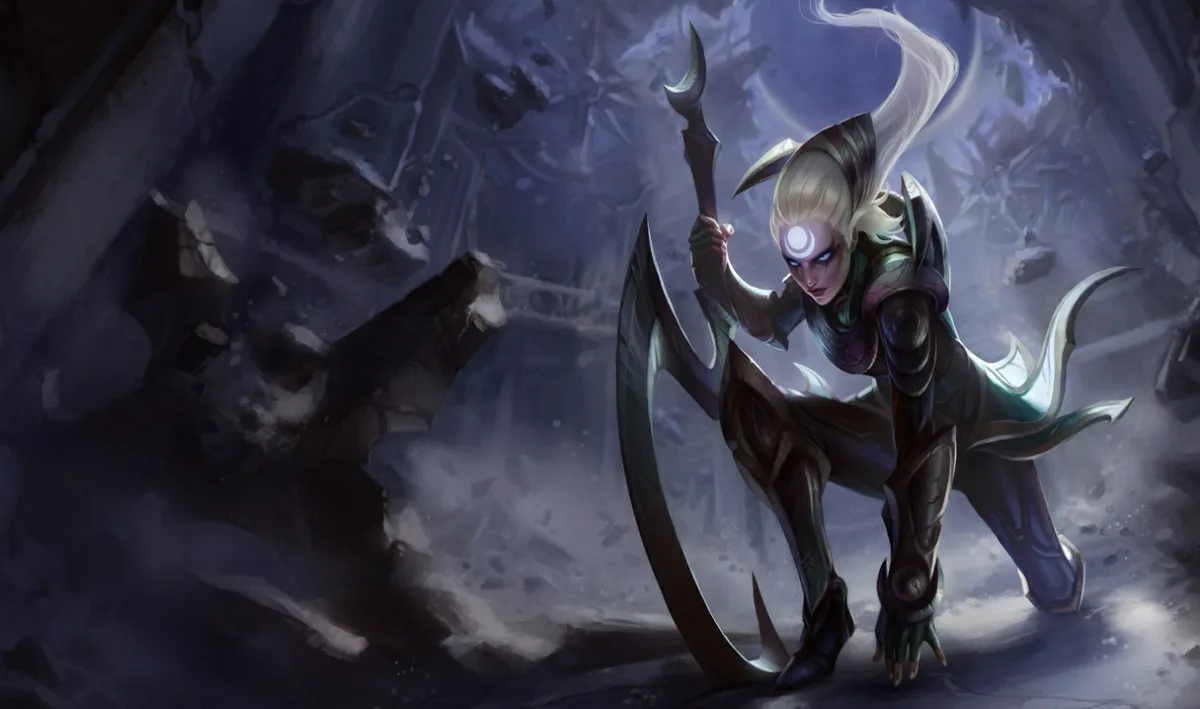
Diana is the simplest AP carry in this ranking to operate through a standard clear. Moonsilver Blade makes every third strike cleave nearby enemies and grants attack speed after she casts a spell. Pale Cascade adds a shield and area damage. The rhythm rewards grouping a camp, spacing abilities rather than dumping them thoughtlessly, and keeping attacks moving between casts.
Her route teaches power-spike planning. Diana generally wants enough farm to make her first committed fight meaningful, but she cannot disappear into camps until the game decides itself. Check lanes during the clear, note which enemy has already spent mobility, and decide which side offers either a gank or an objective conversion. Efficient farming is useful only when it creates an earlier or stronger action.
The gank pattern is direct. Crescent Strike marks targets with Moonlight. Lunar Rush can then dash to a marked enemy without going on cooldown, while dashing to an unmarked target spends the access. Moonfall pulls nearby enemies and delivers more damage when it catches additional champions. The inputs are not exotic. The positional consequence is severe.
Diana has no general-purpose escape once she dashes into a target unless another unit and a remaining Lunar Rush route provide one. That makes her a good teacher of destination planning. Before E, identify the second unit, allied follow-up, or survival window. If none exists, the dash must win the fight quickly. Moonfall can create a spectacular multi-target moment, but grouping more enemies around Diana also groups more enemy damage around Diana.
At objectives, her passive and area spells produce strong sustained damage. The beginner still needs to stop staring at the monster. If Diana uses every ability on Dragon as opponents enter river, she has damage but no control. Holding Q and E for the contest may matter more than finishing a slightly faster cycle.
Diana’s eighth-place case is educational: she introduces AP composition balance, efficient clear rhythm and the cost of committing without an exit. Choosing an AP jungler helps the draft only if her player can reach the fights with the resources to contribute.
What Diana teaches that transfers: planned farming, ability rhythm on camps, damage-type awareness, holding tools for the contest, and checking the landing zone before using a one-way dash.
9. Zac teaches terrain, patience, and crowd-control layering

Zac closes the list because he is a superb teacher after the absolute basics have stopped feeling overwhelming. He is not the best first game. Collecting Cell Division blobs during the clear, pairing two targets with Stretching Strikes, choosing an Elastic Slingshot landing point, and controlling Let’s Bounce! ask for more attention than Warwick’s opening route. The reward is a deeper understanding of jungle geometry.
Cell Division drops health-restoring chunks when Zac hits enemies with abilities, giving him strong sustain if the player collects them. His passive can also split him into four bloblets after fatal damage, offering a conditional revival if any survive. These mechanics make clear mistakes recoverable, but they do not remove positioning. Walking for a blob at the wrong moment can drag the camp awkwardly or expose Zac in a fight.
Elastic Slingshot changes the map. Instead of asking only which river entrance reaches a lane, Zac can ask which wall hides the charge and which landing zone cuts off the retreat. The best beginner habit is to move the camera first, then charge. A fight changes quickly. If an ally has backed away or the target has moved, releasing E toward the old location converts a good idea into isolation.
His Q adds a small puzzle with a useful teamfight lesson. Stretching Strikes grabs the first enemy, then an attack on another target yanks both together. The anchor can be a minion, monster, or second champion. This teaches the player to see neutral units as part of the combat space rather than background decoration.
At objectives, Zac’s damage is not the main argument. His value lies in controlling entrances, threatening a long-range engage, and interrupting the enemy’s route to the pit. When behind, that job remains intact. E, Q, and R can buy time or separate a fight even with little gold. The passive may also force opponents to spend attention finishing bloblets while Zac’s allies reposition.
Zac ranks ninth because his extra mechanics increase the initial burden. Pick him once camp movement, camera checks and ordinary river ganks feel routine. At that point, terrain entry expands the learner’s map instead of overloading it.
What Zac teaches that transfers: terrain-based approach planning, confirming a fight before charging mobility, using secondary units in crowd control, and contributing through disruption when gold is low.
Four easy-looking junglers that can teach the wrong first lesson
Leaving a champion out does not mean the champion is weak, illegitimate, or impossible for a new player. It means the kit either hides a core jungle responsibility or punishes the exact judgment a learner is still trying to build.
Master Yi is simple to describe and hard to use as a classroom
Master Yi’s visible job sounds beginner-friendly: farm, activate Highlander and attack until Alpha Strike is available again. Patch 26.18 improves his armor growth and ultimate movement speed. The difficult lesson remains when to enter, because no buff turns unused enemy control into a safe opening.
The educational problem is not that Yi secretly has many buttons. It is that his success often arrives after other players expose the correct entry. Alpha Strike makes him untargetable during the sequence, Meditate restores health and reduces damage, and takedowns extend Highlander while reducing other cooldowns. Those mechanics reward exact timing around dangerous enemy spells. A new player who treats Q as the way into every fight learns to enter before the spell that kills Yi has been used.
Yi also offers no ordinary crowd control to repair a weak game. When behind, he must still judge an attack window precisely. He can teach reset timing and threat tracking later, but he is a poor first teacher of gank setup, frontline duty, or playing usefully on low income.
Shyvana can turn the role into a camp collection game
Shyvana offers a productive farm-and-form plan, but an efficient route does not automatically teach the wider jungle role. She fits a learner ready to connect that resource collection to a specific map timing.
Her fast farming and transformation cycle can encourage a beginner to read jungle as a race against neutral camps. The player may emerge with good gold and still have learned little about creating a pre-objective numbers advantage, covering a vulnerable lane, or recognizing a countergank. Current Shyvana also has empowered Dragon Form abilities and a newer kit that deserves proper practice rather than the old claim that she simply presses E from range.
Use Shyvana to learn farm efficiency after you can explain why you are conceding a lane or river window. Do not use her clear speed as permission to ignore those windows.
Briar lowers input burden by giving up target control
Briar’s Blood Frenzy makes her pursue a nearby enemy with champion priority, while Chilling Scream can end the frenzy. Certain Death commits her to the champion hit and continues the pursuit until death. Those restrictions make choosing and ending contact part of every lesson.
That self-directed movement can look easier than controlling every attack. For a beginner jungler, it magnifies bad selection. Starting a frenzy near the wrong unit, losing access to the cancel, or sending the ultimate toward a target whose team is waiting turns one uncertain choice into several seconds of forced commitment. Briar can absolutely be learned. She should not be sold as a shortcut around target selection, because target selection is the part she punishes most.
Rammus is easy in the right draft and misleading in the wrong one
Rammus’s Powerball gives him a readable arrival, Frenzying Taunt makes one target attack him, and Defensive Ball Curl raises defenses while returning damage. Into attack-heavy physical teams the job is clear; a hidden or magic-heavy draft makes him a less useful first classroom.
That matchup strength is also why he is not in the all-purpose nine. A beginner can mistake a counterpick’s success for a general rule about pathing or fights. The same engage that crushes an immobile marksman may achieve little against mobile magic damage and multiple ways to stop Powerball. Rammus is an excellent second champion once the player can identify the draft conditions that make him excellent.
For a cross-role list based on pure operating burden, see the easiest LoL champions guide. For champions chosen to teach each of League’s five positions, see the best LoL champions for beginners. Neither page ranks this jungle-specific learning sequence.
A 12-game practice block for a new jungler
Champion hopping makes jungle errors difficult to diagnose. If clear speed, gank reach, damage thresholds, and teamfight duty all change after every loss, the player cannot tell whether the route failed or the unfamiliar kit did. Choose one of the top three champions and play a short block with one learning target at a time.
Games 1 to 3: finish the route with spare attention
Use a repeatable default clear and resist the urge to prove creativity. The target is not a record time. The target is to finish camps at useful health while completing three camera checks before the first river decision.
On the loading screen, choose the lane you expect to path toward and state why. It might have allied crowd control, an immobile opponent, or a wave that is likely to return toward your side. During the clear, test the prediction. If the lane state changes, update the plan. A changed plan is not a failed plan.
After each game, review the first clear only. Note one camp where attacks or movement stopped unnecessarily, one camera check that revealed useful information, and the first moment the route should have changed. Do not bury that lesson beneath a twenty-minute teamfight review.
Games 4 to 6: make every gank pass an entry test
Before leaving a camp for a lane, name four facts: the enemy’s distance from safety, the allied laner’s ability to follow, the important escape or crowd-control spell, and the likely location of the opposing jungler. The facts do not need to be perfect. The habit of asking is the lesson.
Vi and Amumu make the outcome especially readable. If the approach is visible and the target walks away before Q matters, improve the path. If Q lands but the ally is too far away, improve the timing. If both players connect and the target dies, move immediately to the conversion question.
Do not grade a gank only by kills. Forcing Flash before a nearby objective, fixing a dangerous wave, protecting an ally’s recall, or denying the enemy jungler a dive can all be successful. Taking half a jungle quadrant to force a potion is usually not.
Games 7 to 9: attach a map reward to the play
After every champion interaction, choose among objective, turret pressure, invade, vision, reset, or return to camps. Make the choice before wandering into river.
If the enemy jungler appears across the map, count what can be taken safely on the opposite side. If your laners cannot move, do not start a neutral monster simply because the enemy is distant. If a successful gank leaves everyone low, a fast reset may preserve more tempo than a slow objective attempt that invites a collapse.
Nunu is useful during this block because Consume makes the finishing action comfortable, forcing attention onto the setup. Nocturne is useful because his ultimate naturally links a lane play to one side of the map. Vi remains the most complete option because her single-target damage and crowd control contribute to both the monster and the contest.
Games 10 to 12: track one opponent, not the entire universe
Enemy jungle tracking feels impossible when described as constant knowledge of all camps. Begin with evidence.
Which opposing lane arrived late and may have leashed? Where did the enemy jungler first appear? How many camps would a normal route allow before that appearance? Which of their buffs is visible? Which objective or quadrant becomes vulnerable when they show? Record one predicted next location, then check whether the prediction was right.
Warwick’s Blood Hunt and Nocturne’s repeatable ultimate schedule can free attention for this exercise, but do not let those aids replace it. The goal is to graduate from "the enemy could be anywhere" to "their last action makes this side more likely." Exact camp timers and advanced route inference can come later.
At the end of twelve games, keep the champion if mistakes have become easier to name. Change champions if the kit itself is still consuming every camera check. Learning jungle is not a loyalty test.
How to choose among the nine
Pick Vi if you want one champion who covers every phase and exposes your decisions clearly. Pick Warwick if camp damage is preventing you from looking at the map. Pick Amumu if you prefer being the team’s engager and want a useful job even on low gold.
Choose Wukong when you are ready to learn entry and exit planning together. Choose Nocturne if a clear level-six schedule helps you organize the early game. Choose Xin Zhao if you want to study lane priority and early river contests instead of avoiding them.
Choose Nunu & Willump to make objective preparation the center of practice. Choose Diana when the team needs AP damage and you want to learn farm-to-spike conversion. Choose Zac after ordinary gank routes feel familiar and you are ready to use terrain as part of the champion’s kit.
Keep the pool small. One primary and one contrasting backup are enough. Vi plus Amumu separates bruiser target access from tank handoff. Warwick plus Diana separates sustain-driven skirmishing from planned AP commitment. Nocturne plus Zac separates a level-six map timer from terrain-based gank creativity.
Beginner jungle questions that matter
Should a beginner always full clear?
No. A repeatable full clear is a useful baseline because it teaches camp order, resource management, and the cost of leaving the jungle. It is not a vow. Break the route when the map offers a high-confidence play you can explain, such as a vulnerable enemy with no escape, a visible countergank, or an invade supported by lanes that can move. Return to the baseline when the supposed opportunity depends on hope.
Should a new jungler contest the first Scuttle Crab?
Only when health, champion strength, information, and nearby lane priority support the contest. The crab never warrants walking into two enemy laners. Ping the danger, take another camp, cross to the other side, place vision, or reset. Giving up one river resource is cheaper than donating a kill and losing the camps behind it.
What should a beginner do after a failed gank?
Leave before the failure becomes a second failure. Check whether a nearby camp is safe, whether the enemy used a valuable summoner spell, and whether the opposing jungler can now enter the abandoned quadrant. Do not remain in lane taxing a large wave without a reason, and do not repeat the same approach immediately through known vision. A failed gank becomes expensive when pride decides the next route.
Is the highest-win-rate jungler the best one to learn?
No. Win rate mixes patch strength, player population, matchups, builds and draft choices. Vi takes first here because her kit teaches a transferable chain from pathing to gank to objective to teamfight. A learner can care about viability without confusing an observed result with the lesson a champion teaches.
The best beginner jungler leaves you enough room to think
Vi wins this ranking because she reduces mechanical noise without erasing jungle’s real questions. Warwick provides more clear forgiveness. Amumu offers a simpler low-income teamfight job. Nocturne supplies a louder power window. None connects route choice, gank entry, objective conversion, recovery, and target selection as evenly as Vi.
Start with one champion, one repeatable route, and one review question. Look at lanes before deciding where to walk. Treat a gank as setup for the next map action. Let an objective begin with vision and lane movement, not with the monster’s health bar. Most importantly, choose a champion whose mistakes you can understand.
An easy jungler makes the camps less frightening. A good beginner jungler makes the role less mysterious.