

Bel’Veth can now earn a True Form that lasts until she dies. That recent change makes her a much more convincing answer to "which jungler should I pick for a long game?" than an old list built around her early invades.
Our best late-game junglers are Bel’Veth, Kindred, Karthus, Master Yi, Lillia, Viego, and Graves. Bel’Veth leads for sustained carry potential after her scaling-focused update. Kindred is the ranged alternative, while Karthus supplies an AP threat that can affect a fight without first reaching an enemy carry.
Reviewed for modern PC Summoner’s Rift Patch 26.18 on September 10, 2026. Master Yi gains durability and pursuit, and Viego gains AD growth and possession-heal scaling. Those improvements still require a playable first entry or takedown.
The best late-game junglers, by the fight they want
More items and levels can make a champion dangerous without making every fight favorable. A melee carry who cannot reach an opponent has a different problem from a mage who needs the enemy to stay inside an area.
The table also explains why "just farm until late" is incomplete advice. Your later strength still needs a fight that lets you use it. If your team already has several fragile damage dealers and nobody can start or hold a fight, adding another carry may make that problem worse.
1. Bel’Veth: the recent rework matters more than her old reputation
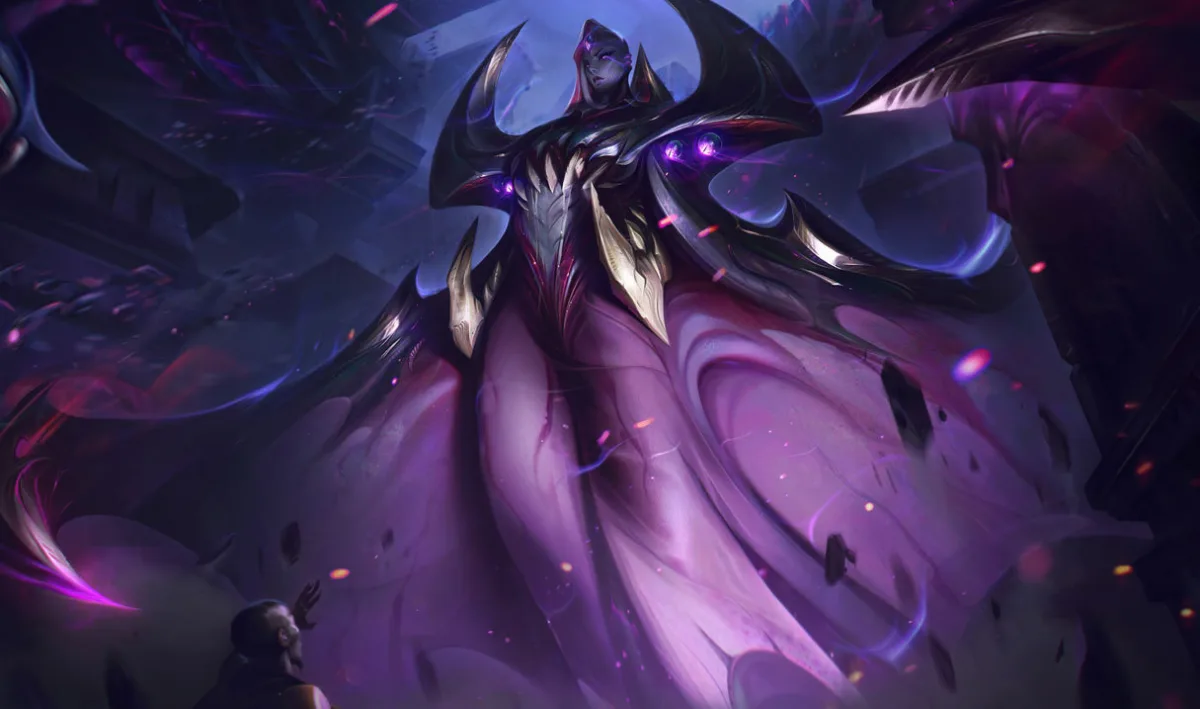
Riot explicitly moved Bel’Veth away from her oppressive early pattern and toward later growth in patch 26.15. The most striking reward is True Form duration: 45 seconds at the first threshold, 90 at 40 Lavender stacks, and until death at 80. You still need to obtain and consume coral to transform. Reaching 80 stacks does not turn death into a free reset of that form.
Her ultimate’s stacking true-damage passive also applies on every attack now, and changing targets no longer removes those stacks. Advice built around the old every-other-attack version is describing a different Bel’Veth. These changes improve the payoff for staying in a fight and continuing to attack, rather than making one early burst her entire identity.
She did receive follow-up nerfs in 26.16, including lower health growth and less top-rank True Form attack speed. Those adjustments belong in a current recommendation. They did not remove the stack thresholds or the until-death transformation reward.
The practical plan starts before the first kill. Approach with usable Q directions and an exit, then attack a target your team can help you reach. W can interrupt that target and refresh Q in its direction when it hits a champion. More dashes do not mean every dash should move deeper into the enemy formation.
Royal Maelstrom gives damage reduction and repeated attacks while Bel’Veth remains in place. Use it when its protection and repeated strikes serve the exchange you are already in. Pressing it while the enemy carry walks away can leave you stationary without solving the distance problem. Crowd control can stop her slashes while the damage reduction remains active. That protection does not make her immune to being controlled or moved; the detailed ability rules distinguish the attacks from the defensive effect.
Coral turns a won exchange into another decision. If reaching it means crossing a waiting enemy’s control spell, the visible reward is not automatically safe to take. When the route is secure, True Form gives you stronger follow-up tools, including wall-crossing Q movement. Coral from a Void epic monster can enable Remora for pushing; ordinary champion coral should not be treated as the same wave-pressure reward. Riot’s current Bel’Veth data distinguishes those forms.
Bel’Veth is our first pick for a player who wants a scaling melee carry and will learn how to stay alive after gaining the advantage. She is a worse fit when you habitually spend every dash entering and expect the transformation to supply an escape afterward.
2. Kindred: ranged scaling with an ultimate that needs judgment
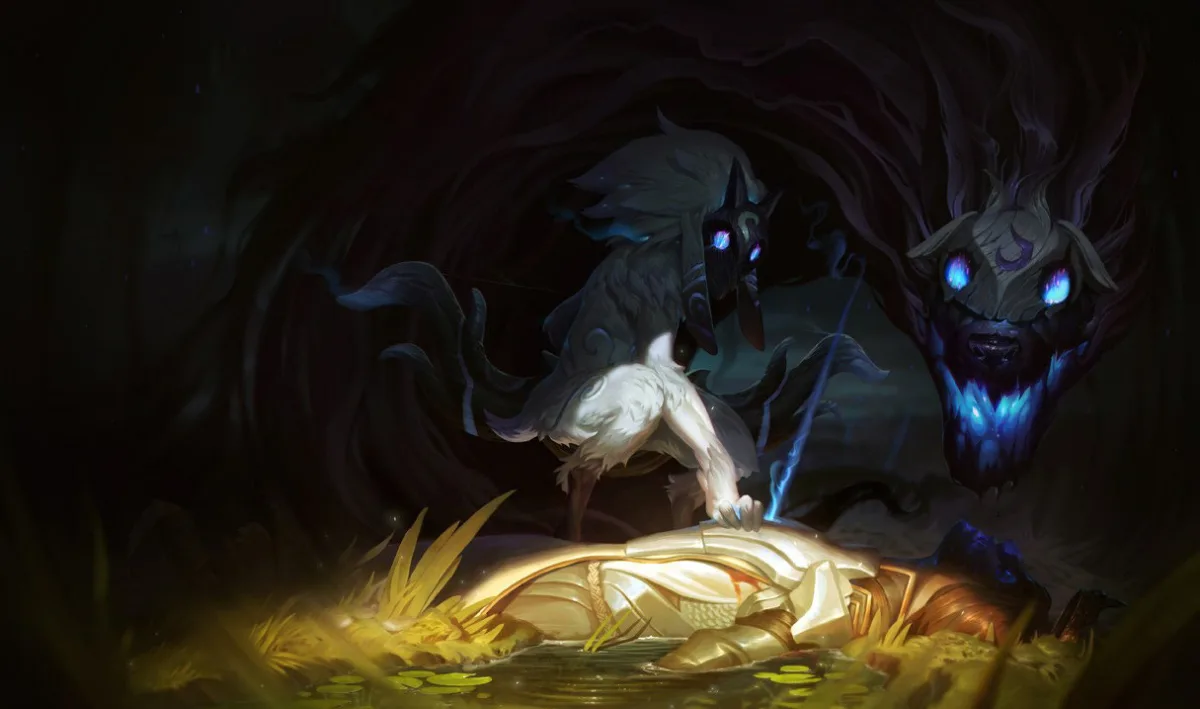
Kindred offers something the melee carries cannot: repeated ranged attacks without having to stand beside the target. Successful hunts permanently improve the kit, including attack range at milestones. Items then support the attack damage and frequency needed to make that access hurt.
Hunts are incentives to find a good opportunity, not orders to enter the enemy jungle. A marked camp on the wrong side of the map can cost more in deaths and lost objectives than the mark provides. Check nearby lanes and enemy positions first. A safe farm route plus an available fight can leave you better equipped than a failed chase after an attractive icon.
In a later fight, set Wolf’s Frenzy where you can use its shorter Q cooldown while attacking and repositioning. Do not chase an enemy into a dangerous position just to keep using that shorter cooldown inside W. Mounting Dread rewards finishing a target that you can repeatedly hit; do not abandon a good position solely because another enemy has a smaller health bar.
Lamb’s Respite is the difficult part. It protects champions, minions, and monsters inside its area from lethal damage, including enemies. That can defeat the purpose of an ally’s winning burst just as easily as it can deny the opponent’s. The protective zone can also affect a neutral monster, so placing it over a contested objective requires a plan for what happens when the effect ends. These are part of the ability’s current rules, not exceptions you can ignore because your team needs saving.
Before pressing R, ask who is about to die and whether you can change the follow-up. If your carry would die while your team still has damage and control ready, the extra time may win the fight. If the enemy carry is trapped and your allies are healthy, the same cast can hand that opponent a rescue.
Kindred ranks second because range and a defensive ultimate provide useful ways to influence a late fight, but neither removes the need to position carefully. They are an especially relevant choice when your team needs another ranged physical damage source rather than another champion diving the backline.
3. Karthus: the AP choice that changes how enemies enter a fight
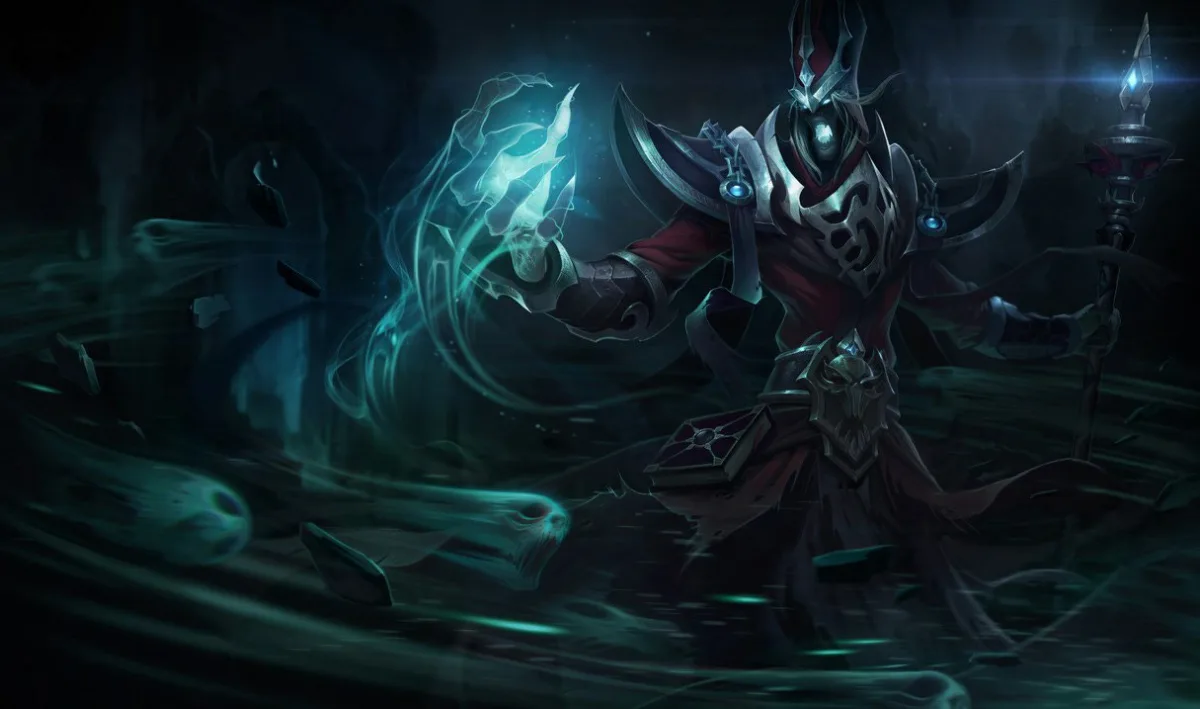
Karthus solves a different draft problem. If your lanes already lean heavily toward physical damage, a farming AP jungler makes it harder for enemies to answer everyone with armor. His damage also comes through several routes: repeated Lay Waste casts, Defile around him, and Requiem against enemy champions across the map.
Isolated Q hits deal more damage than casts that catch multiple targets. Aim with that distinction in mind during a duel, but do not avoid hitting a cluster when area pressure is what the fight needs. Wall of Pain slows enemies and reduces their magic resistance, which can help both your own damage and allied magic damage into those targets. Riot’s Karthus descriptions explain the damage types and isolation mechanic.
Requiem does not have to be saved for a low-health portrait. Damage before or during a committed engage can make the whole fight easier for your team. The timing depends on what the opponent can still do: disengage, shield, use stasis, or otherwise answer the cast. A global target list is not a guarantee that every champion loses the same useful amount of health.
When casting while alive, account for the channel. Starting it where an enemy can interrupt you may surrender the spell and your position. Coordinate the timing with the fight already happening rather than treating the minimap as background while you clear another camp.
His passive allows a short period of spellcasting after death. That makes where he dies important, but it does not make dying early a goal. A corpse beside enemies who must keep fighting can continue dealing damage. A corpse in an empty entrance after the opposing team walks away cannot follow them. Stay alive when you can keep casting safely; use the passive well when death becomes unavoidable.
Karthus belongs high on this list because he can threaten a team through range-independent R pressure and local repeated damage. Choose him when your team needs that AP contribution and you are willing to manage spell placement. If you mainly want a champion who can personally chase a fleeing carry, the melee and mobile options below better match that preference.
Yi or Lillia? The way enemies stop you decides
4. Master Yi rewards the second wave of the fight
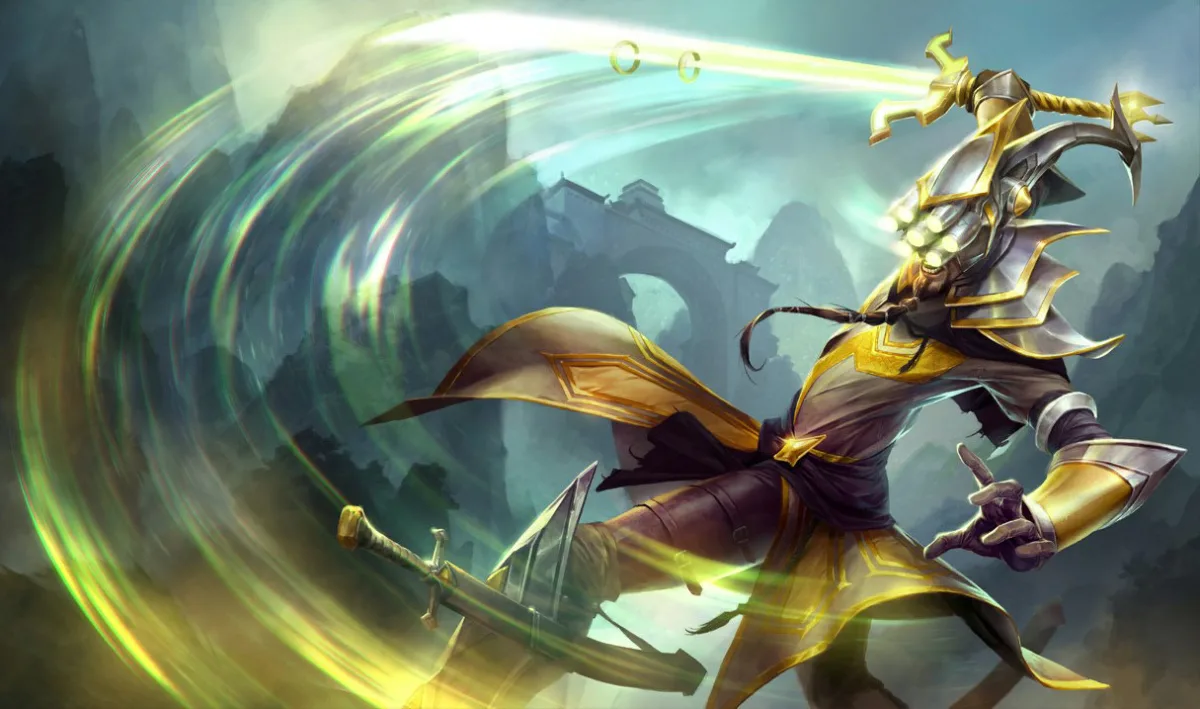
Master Yi has the familiar late-game carry ingredients: repeated attacks, additional true damage from Wuju Style, and Highlander’s attack speed and movement. Takedowns can help him continue through cooldown refunds and an extended ultimate. A first kill can therefore change how quickly he reaches the second target. Patch 26.18 raises his armor growth from 4.5 to 5 and Highlander’s movement speed to 40/50/60%. The buffs help him stay in contact after the opening; they do not grant immunity to hard crowd control.
The missing ingredient is a reliable way to force that first kill through a team holding crowd control for him. Highlander protects him from slows, not every form of control. A stun or suppression is not another slow for his ultimate to shrug off. Alpha Strike’s untargetability is valuable because its timing can avoid a dangerous moment; using it immediately just to close distance spends that option.
Let an ally’s engage or an enemy commitment expose the opening. Track the ability that would stop your attacks, then enter when it has been used or when you have a credible way to avoid it. You can also hit a closer target first if reaching the backline would cross several unused spells. Yi’s current ability data supports this distinction between damage tools, slow immunity, and temporary untargetability.
He is attractive against a composition that struggles to stop continued melee attacks. He is much less forgiving when the opponent can save reliable lockdown specifically for him. A long match does not erase that draft condition.
5. Lillia makes approaching melee champions part of her setup
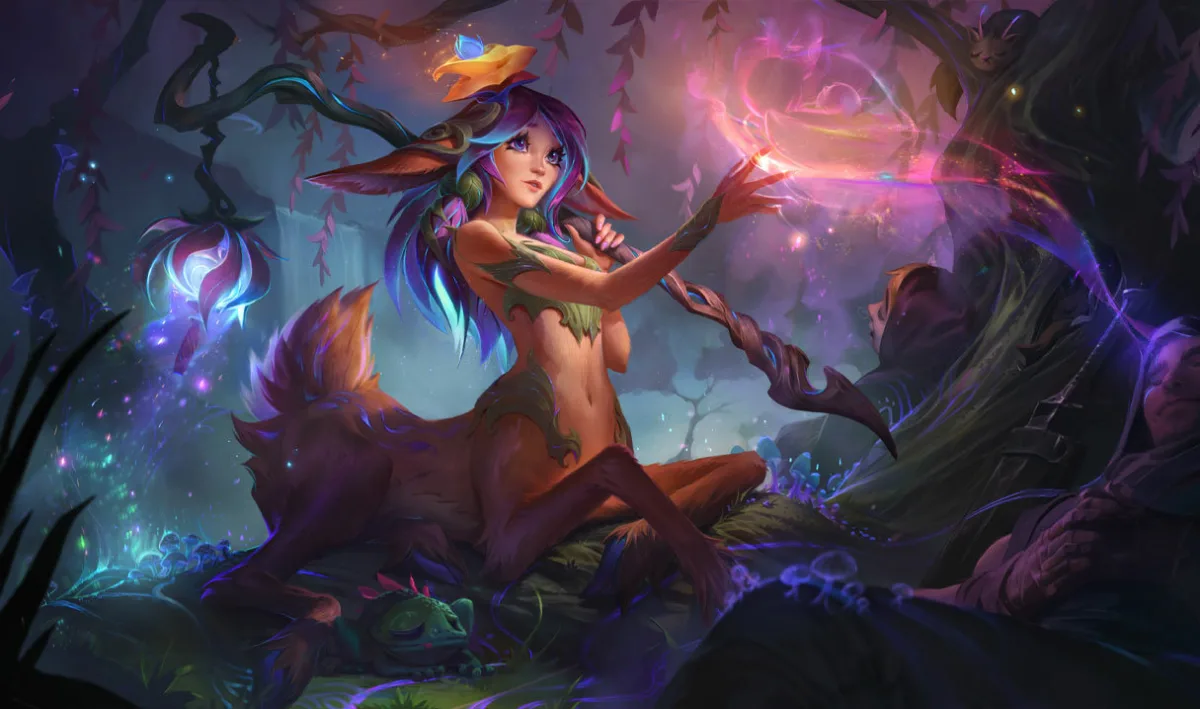
Lillia prefers to move through the edge of the fight, apply her damage, and make the opponent respond again. Dream-Laden Bough adds maximum-health damage over time, while the outer edge of Blooming Blows adds true damage. Ability hits also build the movement that helps her repeat the pattern.
Against several melee champions, one approach can put multiple opponents within reach of Q and Dream Dust. Lilting Lullaby can then make dusted champions drowsy and put them to sleep. R does not independently select every enemy on the map: they need the relevant Dream Dust effect first. The current Lillia kit states that condition.
That creates useful restraint. A sleep on the two champions preventing your team from advancing can be enough. Fishing for a spectacular five-person Q may require crossing exactly the control spell that stops your movement. Likewise, W’s central impact rewards accurate placement, but stepping into several enemies solely to land it can undo the spacing that made the fight favorable.
Choose Lillia when your team needs magic damage and the enemy must move through areas she can revisit. Prefer another option if repeated targeted lockdown denies those passes. Her movement is a major strength only while she is allowed to use it.
Viego and Graves: strong later, for different reasons
6. Viego needs the first takedown more than a perfect montage

Viego can turn one defeated opponent into healing, another set of basic abilities, and another Heartbreaker cast. The possession mechanic makes a messy late fight especially valuable: the first takedown may give him the tool that produces the next one. In 26.18 his attack-damage growth increases to 4, and possession healing gains scaling from his bonus AD, AP, bonus attack speed and bonus health. The stronger payoff still needs that first takedown.
He borrows the defeated champion’s basic abilities, not their ultimate. Knowing what those abilities do is part of Viego’s later power. A defensive spell or useful crowd control can matter more than pressing all three buttons as quickly as possible. Riot’s Viego data explains the possession and free ultimate interaction.
Before any of that happens, he still needs his team to finish someone. Help attack the controlled, reachable target instead of moving past it toward a carry you cannot hold in place. Spectral Maw stuns the first enemy it hits, so a frontliner can block the intended target. Harrowed Path helps him approach around terrain, but camouflage is not permission to assume nobody can reveal or detect him nearby.
Viego is sixth because his fight-winning sequence depends heavily on that first death and the bodies available afterward. He fits teams that can create a target for him to finish. He is a less dependable answer when the draft expects him to initiate alone, survive the response, and produce his own reset.
7. Graves scales through gold, positioning, and sustained resistance

Graves is an excellent example of why scaling cannot mean only an uncapped passive. Gold can make his attacks and abilities threatening, while repeated Quickdraw use supports a longer exchange. His E currently grants both armor and magic resistance; the often-repeated armor-only description is outdated. Riot restored the magic resistance component in patch 25.21.
He must maintain those defenses through the fight rather than assume they are permanent base stats. Quickdraw also reloads a shell, connecting his movement to the shotgun’s firing pattern. Enemies and terrain affect how that damage arrives: units can block access to the intended target, and a wall can bring End of the Line’s return explosion back sooner. Smoke Screen can disrupt an opponent’s vision in the space where Graves wants to trade. Current Graves data documents those interactions.
There is a current-patch qualification. 26.17 reduced the bonus-AD ratios on both parts of Q. A high-AD build should not be evaluated using the old Q damage. The nerf does not remove his later usefulness, but it is a reason to avoid recycling a previous patch’s burst expectations.
Pick Graves when you can manage shorter-range firing angles and repeated dashes. He is lower here because a very long game can still leave him facing carries who damage him from farther away. More gold does not automatically give him their attack range.
Choose for the draft you have, then play for the fight you can win
Suppose your top and mid lanes are physical damage dealers, your bot lane is a marksman, and nobody has locked jungle. Another physical carry may allow the opposing team to get more value from armor. Karthus or Lillia deserves consideration before comparing the theoretical full-build damage of Yi and Graves. Karthus suits local damage plus global pressure; Lillia asks for movement and repeated ability contact.
Now imagine your team has an engage tank and a support who will remain near its damage dealers. You can start with Kindred for ranged attacks, or Bel’Veth if the engage creates room for sustained melee damage. Yi becomes more appealing if that engage forces the opponent to spend the control they would otherwise hold for him. These are reasons for a pick, not guarantees attached to an allied champion’s name.
The game state matters after champion select, too. Being behind on a scaling jungler does not make every objective a fight you must delay until six items. Look for a numbers advantage, an enemy shopping, or a reachable target without a key cooldown. Those can make a fight favorable before you reach the build you imagined.
If no such opening exists, take the resources you can collect safely and defend a route your team can hold. Trading your life for a camp in enemy-controlled territory delays the very recovery you are trying to achieve. Scaling works through resources and useful participation, not through the clock alone.
Before the next Baron or dragon
Use this short check before leaving your farm route:
- Spend the gold. An item completed after the fight cannot help with the fight. Recall early enough to arrive with the team.
- Check your required state. Bel’Veth’s form, Kindred’s R, Lillia’s sleep, and Viego’s first-takedown opportunity are different needs. Do not assume an item count substitutes for them.
- Name the spell that stops you. Decide whether you will wait for it, avoid it, or rely on an ally to answer it. Keep that answer available.
- Keep the objective in the decision. A chase that leaves your team unable to contest the pit can turn a promising kill into a lost objective. Your job still includes securing the map outcome.
When your team wins an exchange, look at the nearest meaningful conversion before hunting another highlight. A safe objective, a defended wave, or removing the enemy’s access to the next area can matter more than one extra kill. The late-game carry pick has done its job when the damage creates a win your team can finish.