

Your support has started recalling, but your wave is still on the enemy’s half of bot lane. You stay for the last few minions. Then the opposing support walks past them. This is where a champion’s safety tool needs to do something specific: buy enough room to finish, block the approaching threat, or get you out.
Ashe is our starting recommendation for players who want scouting and a way to create a nearby catch. Pick Sivir when exposed waves keep delaying your recalls, Xayah when you can manage feathers and need a response to committed attackers, or Tristana when you want a repositioning tool you can keep in reserve. These four best low-elo ADCs cover different recurring problems; this is an editorial selection, not a rank-filtered win-rate table.
This page is for lower-ranked solo queue players dealing with uncertain setup and fights that begin before everyone is ready. It does not draw a universal line between good and bad players at a particular division. Knowing a champion’s buttons, surviving pressure and dealing useful damage are different skills. Xayah can belong in this selection without being one of the easiest ADCs to learn.
Reviewed for modern PC Summoner’s Rift Patch 26.18 on September 10, 2026. Nautilus’s damage changes do not remove the control threat in the Xayah scenario. The four ADC tools and the resource calculations used here are unchanged.
Choose the tool your games keep asking for
The comparison is about what remains available when a play goes wrong. A scouting spell can prevent a bad approach; a defensive spell can preserve your next few attacks after contact. Decide which part of that sequence keeps breaking down for you.
Your support still matters on every one of these champions. The difference is what you can contribute when you do not know whether that teammate will move forward, recall, or protect you.
Ashe: make the next fight easier to understand
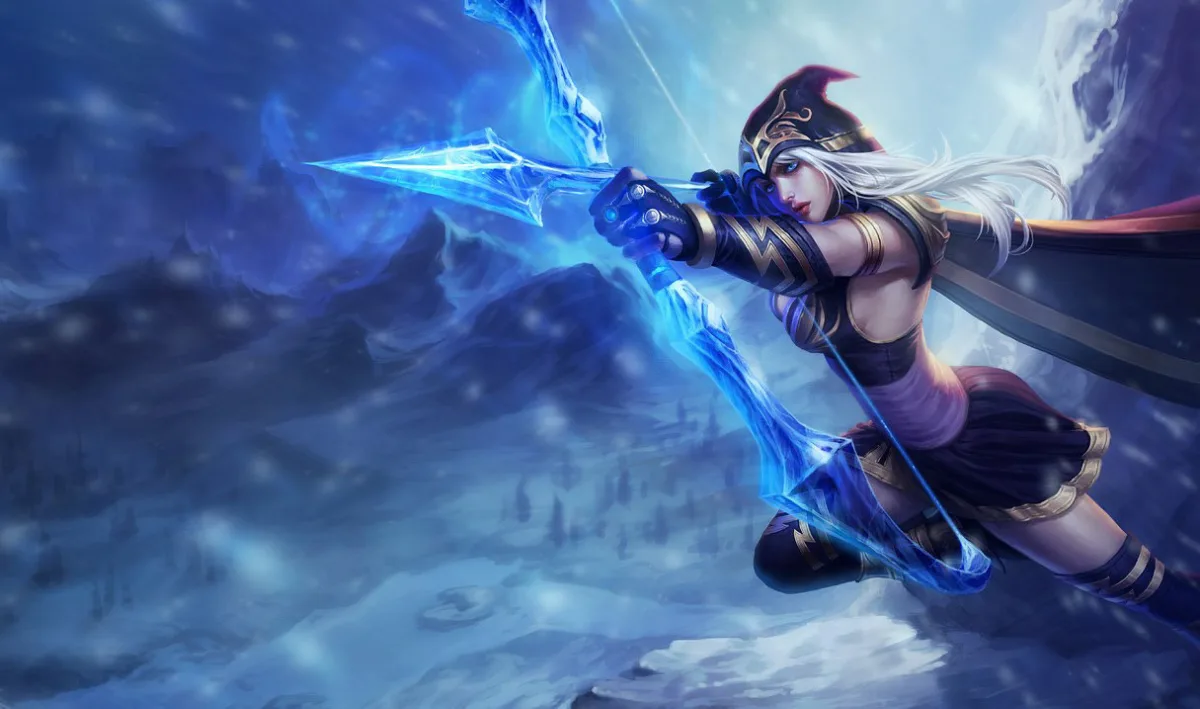
Before following your support into river, send Hawkshot along the route they are about to take. It reveals its flight path and destination, so Ashe can check for an approaching opponent without being the first body through the entrance. A hawk sent toward a distant camp is less useful if the immediate question is whether you can cross the river in front of you.
If the hawk finds the jungler, stop and reassess before you follow. If the route is empty, keep watching it as you move; an opponent can arrive after the reveal. You spent a charge to answer a current question, not to make the area safe for the rest of the play.
Her attacks slow their target, and her normal attack range is 600. Against an opponent walking toward the team, attack and step back between shots while keeping them outside melee reach. Ranger’s Focus needs stacks built by attacking before it can be activated. Ashe does not enter every sudden fight with her attack-speed button already available.
Enchanted Crystal Arrow stuns the first champion it hits. Longer travel increases the stun duration, but a cross-map cast is not automatically a better contribution than a nearby arrow your team can follow. Look for a target in an allied threat’s reach. If an enemy front liner is between you and the carry, your arrow cannot be instructed to ignore that champion.
Ashe fits when an ally could follow a brief catch or when you need information before taking a route. Her slow is less reassuring once a gap closer brings the attacker within reach: she has no ordinary dash to undo a late reaction. Her support options depend on whether the lane needs help starting fights or surviving them.
Your first teamfight: hit Renekton, not the distant Caitlyn
Picture a river fight where the enemy Caitlyn is behind Renekton and too far away to attack safely. Renekton has used Slice through one of your allies and is moving toward you. Your first job is to damage the opponent you can reach while staying out of his next attack, not to walk past him for the opposing ADC.
Do not count a single dash as all of Renekton’s mobility. Hitting an enemy with Slice enables Dice, and Ruthless Predator can stun with his next attack. Track whether he still has that second dash as you move toward the side your teammates can cover. The attack slow does not remove either spell.
An arrow on Renekton can be worthwhile if it gives you and a nearby ally time to keep attacking. You do not have to save R for Caitlyn while he forces you out of the fight. If you can move away safely without it, hold the arrow. Look for Caitlyn again only after the space between you has become usable.
Sivir: get the wave done without believing you are safe everywhere

Sivir is the choice for a player who keeps getting stuck on one more wave. Boomerang Blade damages on the way out and back. Ricochet adds attack speed and bouncing attacks, letting her work on several minions while aiming at one. When she can stand close enough to attack, those tools help finish the wave before the chance to leave disappears.
That plan needs both resources and space. Her basic attack range is 500, shorter than Ashe’s 600. Caitlyn can attack from 650, so Sivir may have to enter the opponent’s reach before beginning her own attack. Ricochet is simple to activate; getting close enough to use it can be the difficult part. Caitlyn’s range
The recall that should have happened together
Return to the opening wave. Sivir is level 3 with one rank in Q, W and E, and has 100 mana. Her support has recalled. Several enemy minions remain outside the enemy turret, where Caitlyn and Lux can contest them. Rank-one Q costs 55 mana and W costs 60, a total of 115. Before enough mana regenerates, she cannot pay for both casts. Q alone spends 55 of those 100 mana; plan around the one spell she can currently afford.
Spell Shield does not fix that resource shortage. It blocks the next incoming enemy ability; a successful block restores health and triggers Fleet of Foot. It does not restore mana. You may block Lux’s binding and still lack the resources or safe attack position to finish the wave. If another spell consumes the shield first, the binding remains a threat.
Count what the available spell can finish. A Q that collects one minion from a safe position is still useful; it does not oblige you to walk up for the others. If the rest requires entering Caitlyn’s attack range and Lux’s binding line alone, leave and recall. You may lose those minions. Staying until you die can cost the next wave too.
Before the next recall, look at your mana and tell the support whether you can finish the push together. If the two of you have the damage and space, get the wave into the turret before leaving. If you do not, back out together. The earlier decision prevents the situation where Sivir is left paying for a push neither player finished.
On The Hunt helps nearby teammates move together, including away from a threat. Use it while there is still a route out; a movement-speed boost does not remove a stun. Sivir offers a way to shorten an exposed wave and help a retreat, but her one-spell shield cannot replace the support who has already left.
Xayah: the harder pick can be the right defensive pick

Xayah belongs here because she can prepare damage against the opponent coming toward her. Double Daggers leaves two feathers. Her ability-enhanced attacks also leave feathers after passing through their targets. Bladecaller pulls those feathers back, and three or more hitting the same enemy root them. The useful pattern is to leave a return path through the attacker, not merely place feathers somewhere behind the fight.
Watch the gap between Xayah and her feathers as the fight moves. Chasing a low-health champion can pull that line away from the attacker approaching on your other side. Clearing a wave with E also spends the feather return you might need against that attacker. Before recalling them, check whether someone is already moving into engage range.
Featherstorm makes Xayah untargetable for 1.5 seconds and leaves more feathers. She can move while airborne. Use that movement to put a teammate within reach when she lands and to line up the return through an attacker.
Untargetable is not invulnerable: effects that already affected her are not automatically erased. Press R before incoming control stops her from casting; the ability does not cleanse an existing stun.
Rank-one Featherstorm has a 140-second base cooldown before haste or other cooldown effects. Spending it on an avoidable trade can leave it unavailable for the next fight. You can still attack and place feathers then, but you need more space before the enemy reaches you. The three-feather root threshold and ultimate cooldown are in Xayah’s current client data.
When Xayah should replace the default Ashe pick
Your team has Malphite top and Leona support planning to go forward. The opposing Renekton and Nautilus want to reach the back line. If you play both carries comfortably, Xayah’s defensive timing and feather return can be more useful than another opening arrow. Malphite and Leona already have ways to start contact; the ADC needs a plan for the opponent who gets past them.
Nautilus can still threaten Xayah after she comes down if his spells remain available. The pick gives you an answer to the first commitment, not every attacker in sequence. Against opponents who stay far away, you may struggle to make them cross a feather return at all. That is a reason to keep Ashe’s range and catch attempt, especially if your Xayah mechanics are not yet comfortable.
Tristana: keep the jump until you know where to land

Tristana offers a different answer to uncertain protection: save Rocket Jump for a position you can already identify. Her attack range grows with levels, Rapid Fire adds attack speed, and Explosive Charge rewards continued hits on its target. She can contribute through attacks without opening every trade by jumping onto someone.
Choose the landing place before pressing W. Jumping away from a visible opponent into a dark jungle entrance may put you beside their teammate. If your support is holding the route toward your turret, that is a more useful destination than unexplored space. Move while the route is open; a long jump cannot make every late escape attempt work.
Rank-one Rocket Jump has a 22-second base cooldown before haste or other cooldown effects. Champion takedowns refresh it, as do maximum-stack Explosive Charge detonations on champions. Fully stacking the bomb on a turret or minion does not provide that second reset condition. If the champion retreats before you finish the stacks and no takedown happens, the forward jump remains spent.
Buster Shot can push away an attacker who is already close. If their presence stops you attacking at all, use the separation rather than waiting for a better damage combination. You may give up the chance to finish Explosive Charge on that target. You also get to choose the next attack from a less dangerous position.
Her lane has a less obvious cost. Once E is learned, an attack that kills a unit deals splash damage around it. Last-hitting can therefore damage other minions you intended to leave alone. Check the neighboring health bars when trying to hold a wave near your side. Tristana’s mobility does not give her complete control over which minions take damage.
Tristana suits a player who wants a way to relocate and can keep it available. If you routinely jump in because a reset looks possible, more mobility may only make your next overcommitment longer. For the first fight, start on foot and find the landing place before you need it.
Review the moment before the damage disappeared
After a game, look at one fight where you stopped contributing. Pause before the death, not only at the final hit. Did you spend the defensive spell on a wave? Did you move toward an enemy your team could not reach? Was a safer target available while you chased a low-health one?
For the next game, keep one correction specific. If you died after using Bladecaller on the wave, watch the enemy’s approach before pressing E. If your support left while you still needed two spells to push, check the mana before the recall starts. That gives you something to change even when the next team’s decisions are just as unpredictable.