
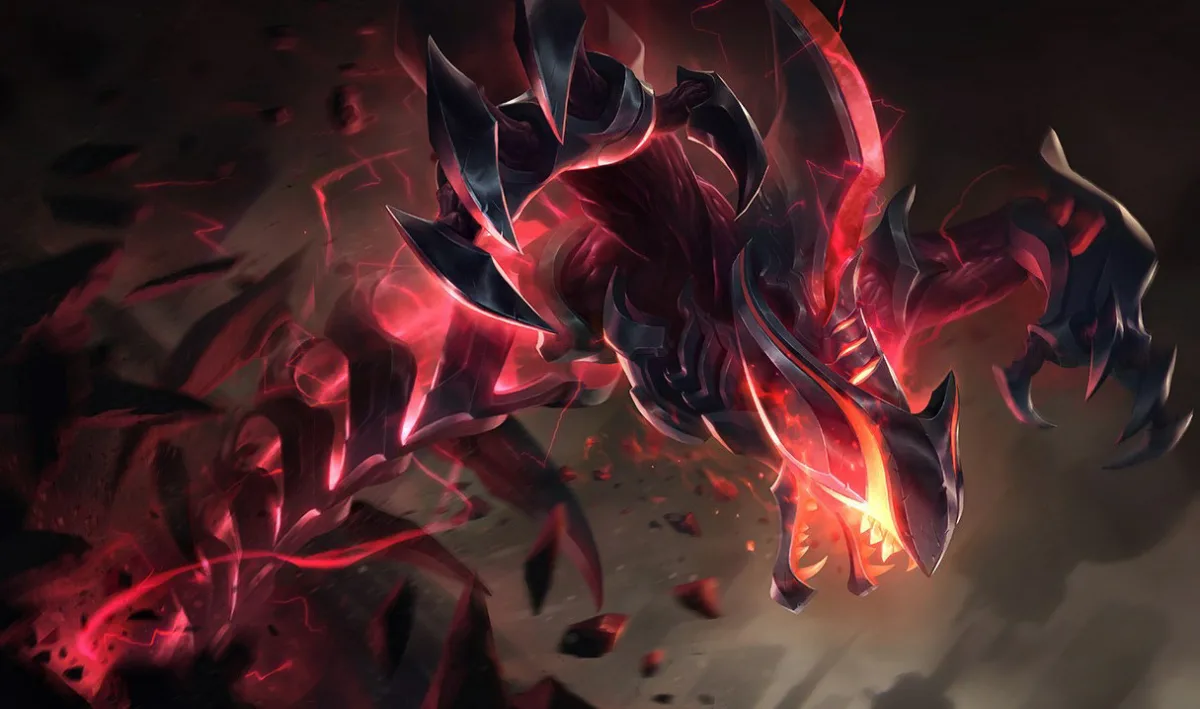
Ivern is the least-played champion in this early Patch 26.18 sample, followed by Taric, Rek’Sai, Nilah and Renata Glasc. We combined all five roles in LoLalytics’ Global, All Ranks, Ranked Solo/Duo data, collected on September 10, 2026. The provider labels this patch 16.18.
Taliyah shows why the all-role check matters. Counting only her mid games would miss the players taking her into the jungle. The same problem affects Ivern: his jungle count leaves out support. Neither champion should move down a popularity list simply because their games are split between roles.
Snapshot and current-kit review: September 10, 2026, for modern PC Summoner’s Rift on Patch 26.18. This is a small early-patch snapshot; close ranks can move as more games arrive.
The five least-played champions, across every role
The five role tables sum to 2,648,430 champion appearances. Dividing by ten gives 264,843 ten-player match equivalents, which we use for the per-match pick rates below. Each table includes all 173 champions. We added each champion’s exact Games count across top, jungle, mid, bot and support, then sorted the totals from lowest to highest.
Source: LoLalytics’ top, jungle, mid, bot and support tables. These are our combined-role calculations from that provider’s counts, not its tier grades. Percentages are rounded to two decimals; exact counts determine the order.
Ivern’s 2,251 appearances divided by 264,843 match equivalents, multiplied by 100, gives about 0.85%. Repeat games by one player add repeat appearances; neither figure counts unique players or accounts that own Ivern. Taric and Rek’Sai are only 44 appearances apart, so their neighboring positions should not be read as a large popularity gap.
Global is the provider’s regional filter, not a claim to cover every match worldwide. The data identifies queue 420, which Riot lists as 5v5 Ranked Solo games on Summoner’s Rift. This sample covers modern PC ranked Solo/Duo with all ranks combined. Normals, professional games, ARAM, ARAM Mayhem, Arena and Classic are outside it. The provider’s live counts can change after this snapshot.
1. Ivern: spend time on camps differently
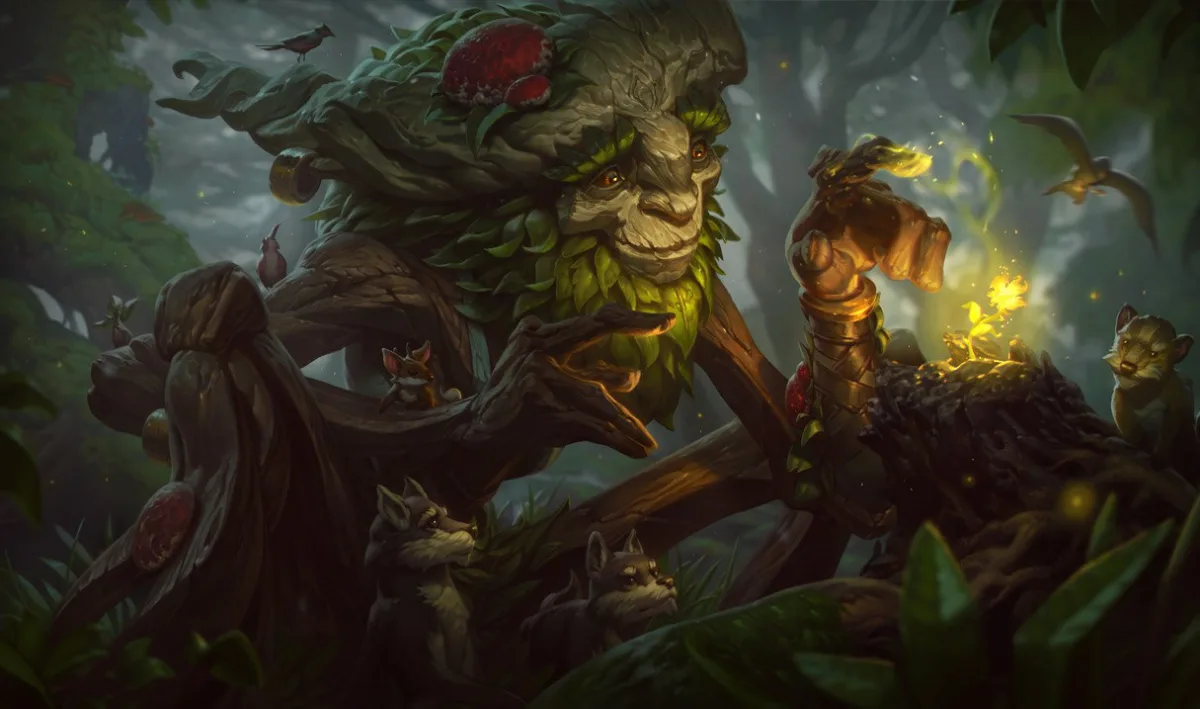
Ivern leans over a stump surrounded by small forest animals. Artwork: Riot Games.
Ivern is worth trying when you like jungle movement but are more interested in helping a teammate fight than in being the main damage source yourself. His passive does not let him attack ordinary, non-epic camps. Instead, he spends health and mana creating groves, then frees the camps for gold and experience when they mature. Smite can complete that process immediately. These rules come from his current passive and spells, mirrored from Riot’s client data by CommunityDragon.
Mark a camp and decide where to go while the grove grows. Another camp may fit; so might a short move toward a nearby lane. Remember what you paid for the grove. Creating several in a row can leave you low on health and mana just as the enemy jungler enters your route. More marked camps do not help if you cannot safely return to collect them.
In a fight, Rootcaller gives a rooted target that allies can attack to dash into their attack range. Triggerseed shields an ally or Daisy, then explodes around that recipient to damage and slow nearby enemies. If an enemy has reached your carry, shielding that carry can absorb damage and put the later explosion beside the attacker. Daisy does not have to receive every shield because she is your pet.
Daisy needs instructions after you summon her. Recast R to move her or choose her target. If you send her after someone far away, look back at your carry: you may have removed her from the fight that needs her. Keeping Daisy with the relevant fight is a better first-session goal than trying to memorize a clear route and a pet combo at once.
The jungle still needs gold, experience and objective decisions. Ivern changes how non-epic camps work; he does not let you release a dragon through the same passive. If you wanted a conventional damage jungler, use the broader jungle shortlist instead of choosing Ivern only because you rarely see him.
2. Taric: protect an ally before the damage arrives
Bastion lets Taric’s spells also originate from a linked ally while they stay nearby. That gives Dazzle another starting point, but the stun still has a delay. If your partner retreats in one direction while you aim in another, the second beam may miss the target you wanted.
If an enemy melee support moves onto your carry, you have a target to attack without chasing the opposing ADC. Casting a spell empowers Taric’s next two attacks through Bravado. Those hits shorten his basic spell cooldowns and add charges to Starlight’s Touch, so reaching the attacker helps him keep healing. A ranged opponent who stays out of reach denies that part of the sequence.
Cosmic Radiance also needs time before its invulnerability begins. Start it before the incoming burst, while your teammate can still survive the delay. Taric is worth trying if you enjoy anticipating a fight and protecting someone through it. He is less comfortable when his job is to rescue a distant ally immediately.
3. Rek’Sai: investigate a route before committing to it
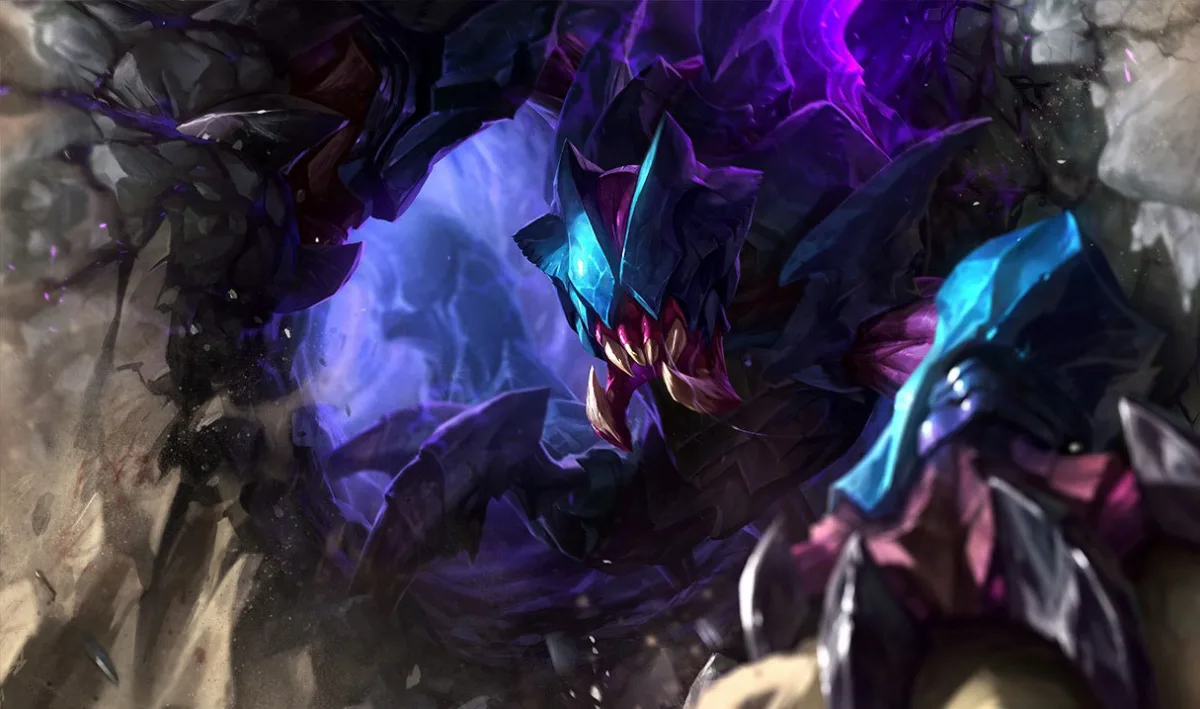
Rek’Sai emerges through broken rock amid purple light. Artwork: Riot Games.
Rek’Sai gives you something to do before the gank starts. Burrowing changes her basic abilities and cuts her vision, but lets her detect movement from nearby unseen enemies. Tunnels let her cross between connected entrances again later; Unburrow supplies the knockup once she gets close enough.
Suppose the enemy side laner has pushed forward and you approach through the jungle. At the dark camp entrance beside the lane, you detect movement. The gank has changed: someone you had not accounted for is close enough to matter. Check where that movement goes before tunneling into a fight your laner cannot help you finish. If the uncertainty remains and your teammate cannot move first, leave the attempt and take a safe camp instead.
No movement signal does not mean an empty corridor. Burrow detects movement from nearby unseen enemies, and Rek’Sai’s ordinary vision is reduced while burrowed. A stationary opponent can still be a danger.
That extra information comes with extra work. You switch between two versions of the basic spells and sometimes navigate with less ordinary vision. For a first session, pick a tunnel exit your nearby teammate can reach. The wall you cross may still separate them from you. Check your escape connection, too: enemies can destroy tunnels by standing on the entrances.
4. Nilah: choose the fight you can stay inside
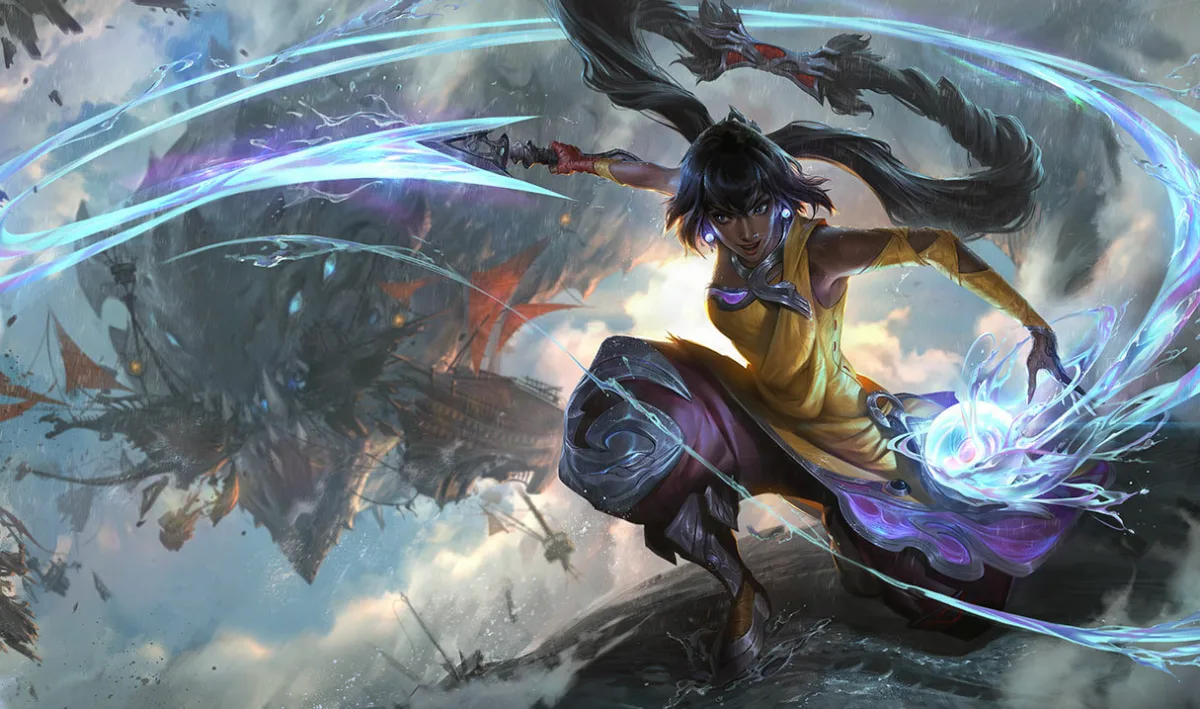
Nilah’s water whip loops through the air above ships and waves. Artwork: Riot Games.
Nilah makes the bot-lane farming job feel different from a long-range marksman. Hitting a unit or structure with Q temporarily extends her attack range, adds attack speed and makes her attacks hit in a cone. W lets her dodge attacks and reduces incoming magic damage. Her R damages nearby enemies and then pulls them toward her. Riot’s current Nilah data describes the tools; whether your lane can use them depends on access.
Getting into range is only the first problem. Your support needs to be close enough to help, and you need to keep attacking after arrival. W can deny an enemy’s attack-heavy damage window, but it does not block every spell or crowd control effect. An opponent who saves their control for your dash can stop the fight before you get much from that protection.
Nilah also has a reason to take the available farm. When she kills a minion while sharing experience, she and her nearest ally recover part of the experience normally lost through sharing. Chasing an enemy who keeps backing away can cost last hits without producing a trade. If you cannot contest the wave safely, let it come closer and take what you can. You need access to farm as well as access to the enemy.
Nilah fits a player who wants a close-range bot-lane carry and is prepared to manage the approach. A lane that asks her to farm alone against opponents with much longer reach is a harder assignment. If your plan depends on dealing damage from far away, look beyond this shortlist.
5. Renata Glasc: a rescue needs an opponent to finish

Renata Glasc stands beside her floating apparatus in a cloud of pink vapor. Artwork: Riot Games.
Bailout is the spell to understand before choosing Renata. She gives an ally attack speed and movement speed toward enemies. If that ally would die during the buff, their health instead refills and then decays. A takedown during that decaying state stops the decay and leaves them with a portion of their maximum health. Without that takedown, the delayed death still arrives. This is a conditional rescue in Renata’s current spell text, not a normal heal or an unconditional resurrection.
Your ADC is losing a close fight, but the opposing carry is also low and within reach. W before the fatal hit can buy time to finish that takedown. Now change one detail: the enemy has escaped, and your ADC cannot reach anyone. Bailout may keep their health bar on screen a little longer, but the missing target makes a lasting rescue much less plausible.
Spend the rest of the kit trying to keep the fight from reaching that emergency. E can shield your ally while damaging and slowing enemies. Q roots its first target and lets you throw that target in a chosen direction. A minion in the way can take the root, so check the line before counting on Q to stop the champion behind it.
Hostile Takeover gives you another reason to try her: enemies caught by its wave attack nearby units, prioritizing their own allies, with increased attack speed. A clustered team with a dangerous attacker gives that effect more to work with than one isolated target. You still need to land the wave. The opponent can spread out rather than supply the cluster you wanted.
Renata is worth considering if you enjoy judging whether a messy fight is salvageable. She does not have a normal repeatable heal to refill your ADC after every trade. If that is the job you want, her unusual W is a poor substitute.
Just outside the five: Skarner is sixth
Skarner follows Renata with 3,306 appearances, or 1.25% by the same calculation. He sits outside the five-row ranking, but remains close to its cutoff.

Skarner’s stone-gray body fills the sky above a forest. Artwork: Riot Games.
Skarner gives you a different kind of catch from Rek’Sai’s knockup. His E charges through terrain. Once he catches an enemy champion or large monster, a collision with a wall damages and stuns that victim. Impale can suppress and drag the first three champions hit by his tails. If your memory of Skarner is a purple scorpion guarding crystal spires, learn these spells before returning to him.
Look past the first wall. It gets you into the fight, but where is the surface you will pin the victim against? Catching someone in open ground does not supply one. Trace the charge direction before starting E, including where your teammates will be when you finish. A clean catch can still leave you taking damage alone while your carry walks around the wall you crossed.
You can make a shorter play when an enemy approaches your carry. Stay near the teammate who needs help, catch the attacker, and move them toward allied damage rather than deeper into enemy territory. Landing one useful suppression is enough to justify R; you do not need to wait for three people to line up while the carry dies.
Before starting E, find the wall you intend to use and the teammate who can damage the target afterward. Skarner is a satisfying pick if you enjoy lining up that route. If everyone else is still walking over, wait for them instead of turning a possible catch into a solo dive.
Low pick rate does not explain itself
The table measures appearances. It cannot tell us that players dislike a champion’s appearance, find the kit too difficult, or think the champion is weak. Those could be questions for a separate study, but they are not answers contained in these counts. A low pick rate also does not prove that opponents will misunderstand your abilities.
Before you choose one, picture the ordinary work between highlights. Would you enjoy returning to Ivern’s groves, watching Renata’s possible takedown targets, or finding Nilah a wave she can farm? Use a practice session or unranked game to learn the unfamiliar controls before bringing the champion into ranked. If none of that work appeals to you, there is no reward for forcing the rarest pick into your pool.