
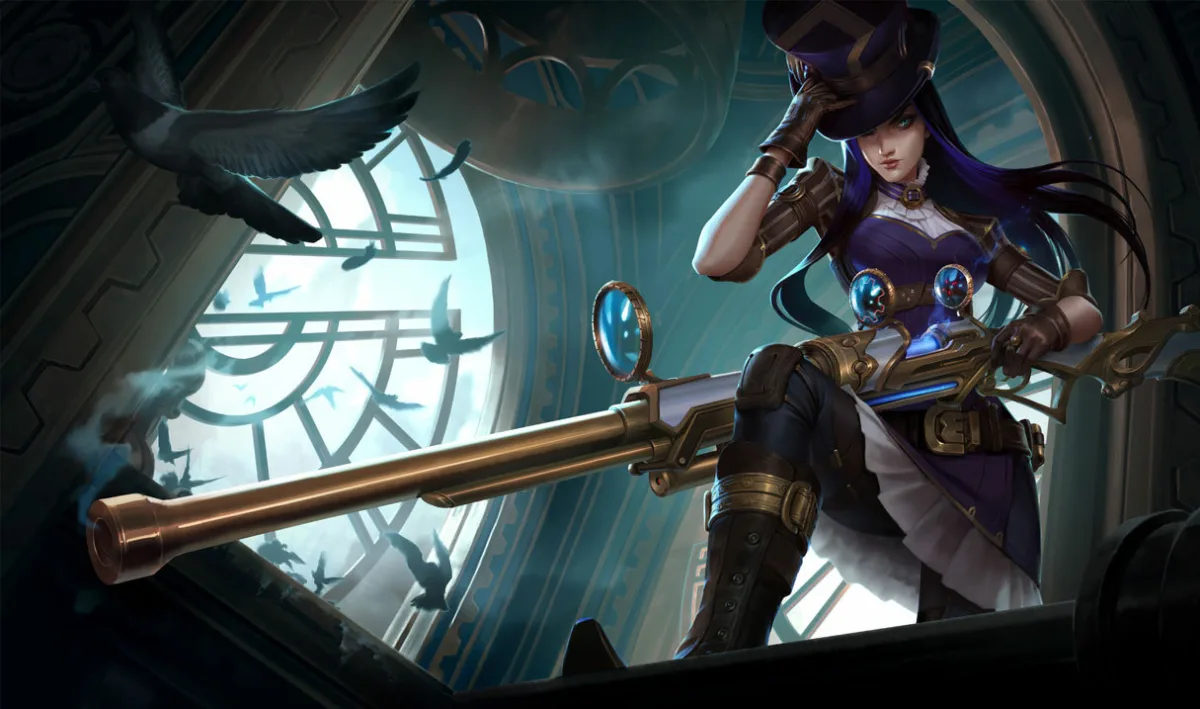
The clean Caitlyn lane is a cannon wave under the enemy turret, a trap cutting off the shortest exit, and a support standing far enough toward river that one defender cannot threaten both carries. That picture matters more than landing one flashy combo. Caitlyn’s pressure works when the wave, trap line, and support position all ask the opponent a different question.
Lux is the best all-around support for Caitlyn on Patch 26.17. She can help establish the push, Light Binding gives Yordle Snap Trap time to arm, and both champions can siege from comparable range. Karma is better when the first three waves must be won on tempo. Morgana offers the safest root-to-trap conversion, Zyra owns more ground around a turret, Milio preserves Caitlyn’s range after lane, and Thresh gives an aggressive siege a route back out.
This article was reviewed for League of Legends Patch 26.17. Caitlyn was unchanged on the current Summoner’s Rift. Thresh did lose damage on Flay’s active, but the patch did not remove the displacement, hook, or lantern that matter to this pairing. Current filtered synergy data was used to challenge the recommendations, not to assign their order. No moving duo percentage is published here because the editorial verdict depends on lane function as well as results.
Caitlyn’s lane is geometry before damage
Caitlyn’s basic attack range lets her hit a champion who walks up for a last hit without immediately entering that champion’s range. Piltover Peacemaker can thin the wave or punish a straight retreat. Yordle Snap Trap immobilizes a champion who steps on it and grants Caitlyn an empowered Headshot. The trap must arm, so it works far more reliably after another spell has already fixed the target in place.
The support’s position determines whether those tools produce pressure. If Caitlyn and Lux stand directly behind the same caster minions, the opponent can use the wave as one shield. Lux should often hold the lane’s river side while Caitlyn plays closer to the lower wall or the safer outside edge. The enemy ADC then has to respect an attack from one line and Light Binding from another.
That split creates jungle exposure. Before the crash, the support must decide whether the river-side pocket is protected by vision or recent jungle information. If both the enemy mid laner and jungler are missing, leave the turret and protect the exit.
The Caitlyn pressure board
| Support | Wave ownership | Trap starter | Siege position | If pressure stalls |
|---|---|---|---|---|
| Lux | High and controllable | Light Binding | Parallel to Caitlyn, outside the minion line | Ranged catch and burst |
| Karma | Very high early | Focused Resolve after the tether holds | River-side pocket with shield ready | Speed, shields, and lane-to-river tempo |
| Morgana | Moderate unless Tormented Shadow hits the wave | Dark Binding | Behind or beside Caitlyn with Black Shield available | Pick protection and anti-crowd control |
| Zyra | High but difficult to freeze | Grasping Roots | Brush edge with plants screening an entrance | Choke and objective control |
| Milio | Low without Caitlyn spending Q on the wave | No dependable starter, so traps zone exits | Behind Caitlyn inside Cozy Campfire range | Front-to-back range and crowd-control removal |
| Thresh | Moderate and matchup-dependent | Death Sentence or Flay | In fog or at a lantern angle | Catch, peel, and extraction |
The board compares lane functions rather than ranking the six supports. Wave ownership describes how naturally the pair can decide where the minions meet. It does not mean the duo should shove every wave. A support with high wave influence must know when to stop touching the minions, especially after the enemy recalls or when Caitlyn wants to hold a wave outside her own turret.
The third wave decides Lux versus Karma
Lux gives pressure a conversion spell

Lux is the clean verdict because her abilities solve consecutive parts of the same lane. Lucent Singularity helps contest the wave and slows the area where the enemy ADC wants to last-hit. Light Binding fixes a target long enough for Caitlyn to place a trap underneath. Prismatic Barrier reduces the return damage when both players step forward to collect the empowered Headshot and another attack.
The order around a crash matters. Caitlyn should not spend every trap before Lux has threatened Q. One visible trap can block the short path between turret and wall. Keep another charge for the champion Lux binds. When Q lands, Caitlyn places the trap under the immobilized target, moves into the Headshot line, and leaves enough space that the enemy support cannot engage both players with one spell.
Lux E can help finish a low wave, but automatic detonation is often the wrong choice. Leaving the zone active can deny a path or slow the defender while Caitlyn takes one turret attack window. Detonate when the damage changes the trade, when the zone is about to expire, or when the next wave must die immediately for a recall.
The lane breaks when both players spend their long-range spells and continue standing at the turret. A missed binding gives an engage support a clear cooldown window. If the river is dark, back away while Q returns. Caitlyn and Lux do not need to turn every crash into a plate to keep the opponent under pressure.
Karma wins the wave without guaranteeing the trap
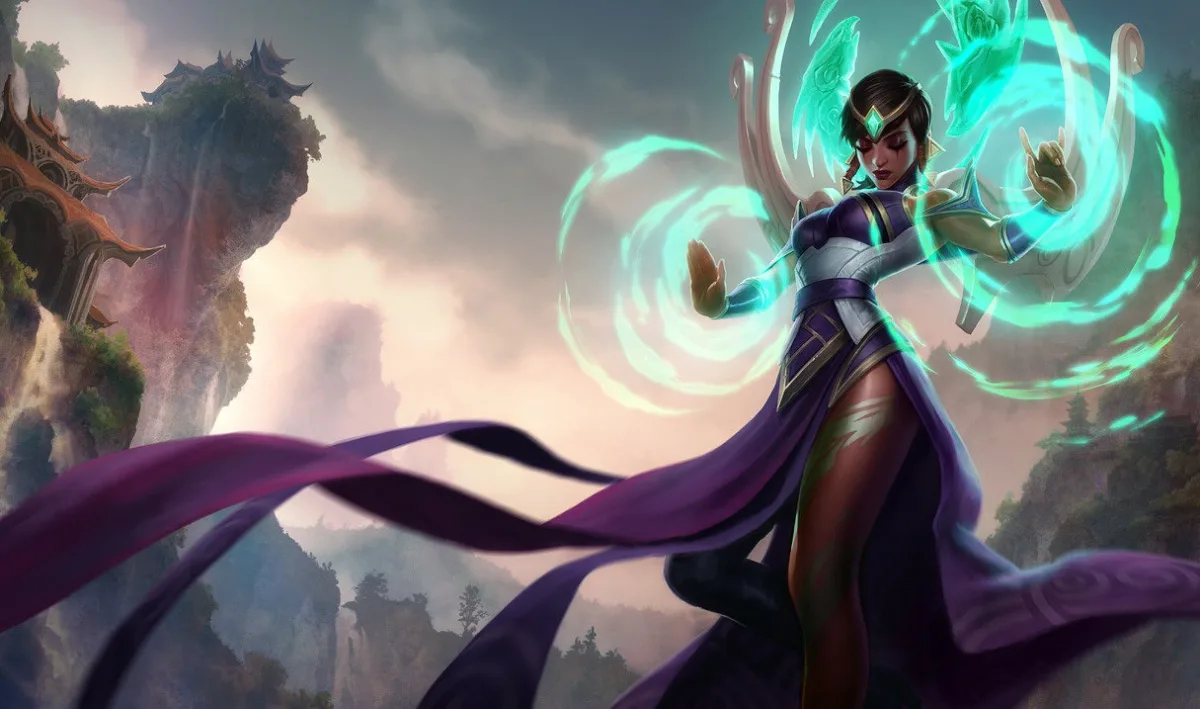
Karma is the sharper choice when level one and level two decide who may touch the lane. Inner Flame threatens a champion standing beside the minions, and Mantra gives Karma immediate power before other supports have their full spell pattern. Inspire lets Caitlyn walk into attack range, take the Headshot or basic attack she wants, then leave before the opponent can answer cleanly.
The pairing creates a fast first crash, but it has less immediate trap conversion. Focused Resolve roots only if Karma keeps the tether connected. Caitlyn can prepare a trap where the target must run, or place it as the tether nears completion, but the sequence gives the enemy time to break range. That makes Karma a space partner first and a trap partner second.
Karma should stand on the side Caitlyn is not already controlling. Her Q angle discourages the enemy support from walking through the minions, while the shield lets Caitlyn cover the other edge. If both champions stack on one side, the opposing duo can give up that pocket and farm from the other.
Choose Karma when an early bottom-river contest, a fast recall, or turret pressure will affect the next play. If your team cannot use bot priority and the enemy clears waves safely, Lux gives the lane a more reliable catch while preserving similar range.
Place the trap after crowd control lands
Morgana offers the longest clean placement window
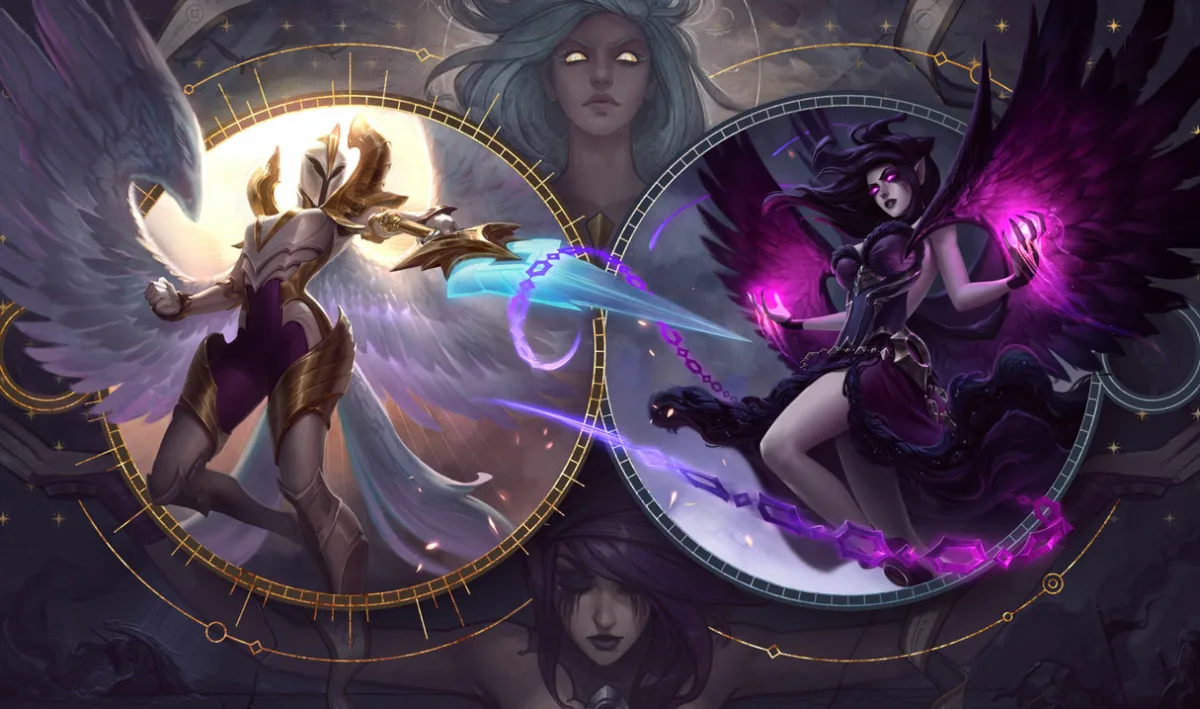
Dark Binding is a simple trap starter because it holds one target in place rather than pulling or knocking that target away from the cursor. Once it connects, Caitlyn has time to place Yordle Snap Trap beneath the target and prepare the Headshot. Morgana can add Tormented Shadow after the trap if the duo wants damage without changing the target’s position.
Black Shield is just as important around the turret. Caitlyn often has to stand farther forward than her support to attack the structure or punish a last hit. The shield can stop a magic-damage crowd-control spell from ending that step. It should be held for the spell that prevents Caitlyn from leaving, not spent automatically to absorb minor poke.
Morgana’s wave behavior needs discipline. Tormented Shadow damages minions inside it, so a spell aimed at a champion can break a planned freeze or push the next wave before the river is ready. If the goal is to hold the lane near your turret, use Q pressure and save the pool. If the goal is an immediate crash, place the pool where it finishes the minions Caitlyn cannot safely reach.
The pairing struggles when the enemy keeps minions between Morgana and every target. Unlike Lux, Morgana does not have a separate area slow that creates a second angle. She needs brush access, a lateral step, or a wave thin enough to expose the binding line.
Zyra builds a wider siege and a messier wave
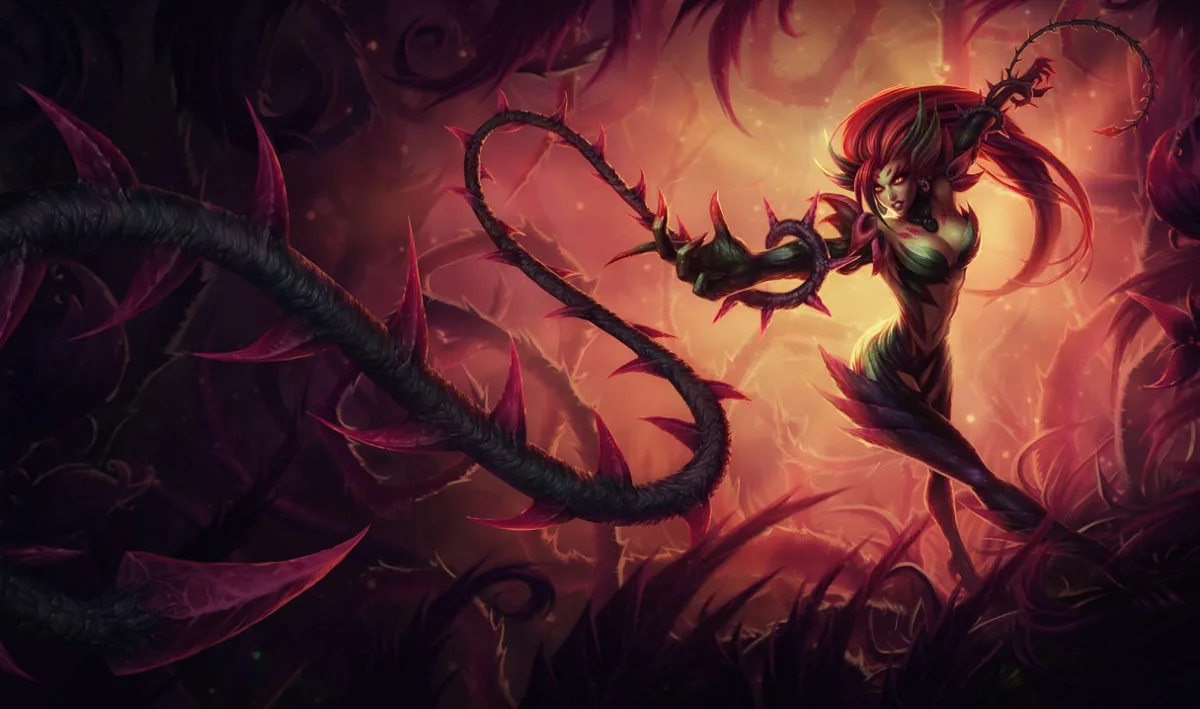
Zyra is the territorial choice. Grasping Roots can pass through the wave and hold a champion for Caitlyn’s trap. Plants occupy the lane edge and punish anyone who walks through a brush entrance. An approaching jungler has less room to reach Caitlyn untouched.
That extra body count changes turret pressure. A plant can threaten the defender while Caitlyn attacks from range, and Stranglethorns can close the ground in front of the turret if the enemy jungler arrives through a narrow entrance. Later, the same tools control objective chokes while Caitlyn places traps across the remaining safe route.
The wave is less precise than Lux or Karma. Plants attack nearby targets, which can accelerate a push Caitlyn wanted to pause. Zyra should avoid creating plants merely because seeds are available. Before the wave arrives, decide whether the pair wants a crash, a hold, or a neutral wave. Grow the plant only if its pressure serves that choice.
Zyra also gives Caitlyn less direct protection once a diver reaches melee range. Root and ultimate can peel if available, but both champions are fragile and their control has travel time. Pick the duo to own the area before the fight begins. Do not expect it to repair a flank after vision has already failed.
When the siege needs an exit plan
Milio keeps Caitlyn useful after the turret stands
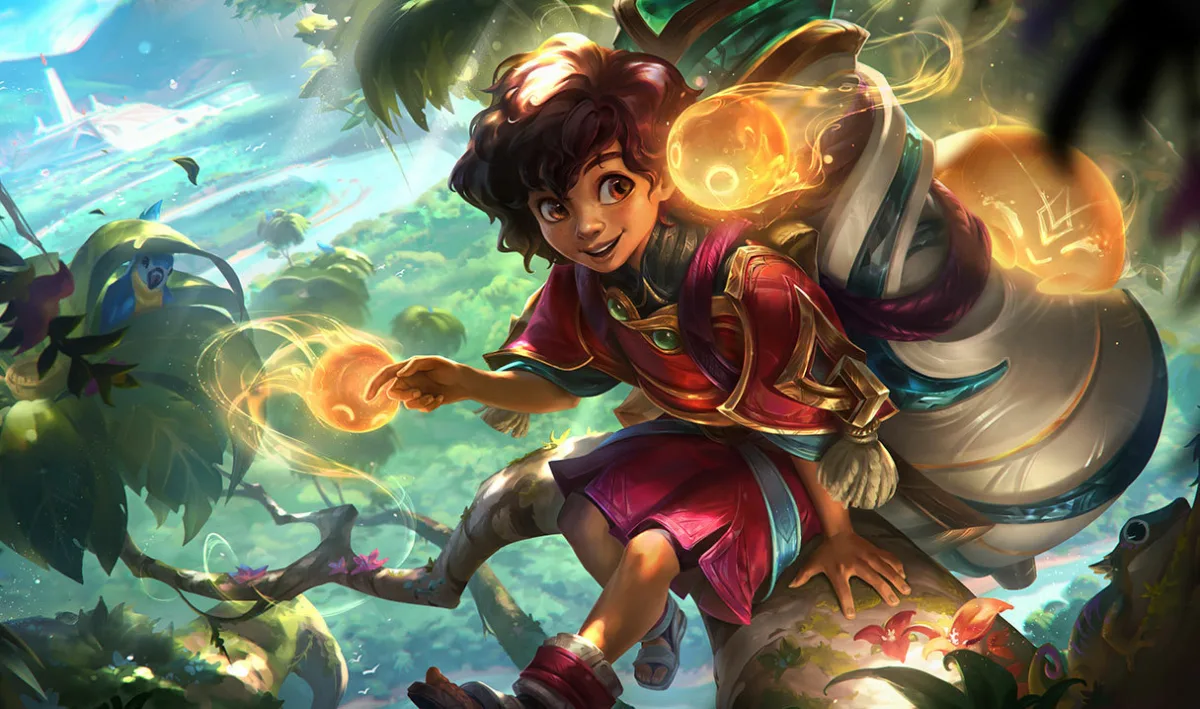
Milio does not manufacture the classic Caitlyn trap combo. He gives her a better firing position. Cozy Campfire increases allied attack range and follows the nearest ally to its cast point, while Warm Hugs adds a shield and movement speed. Caitlyn can attack the turret or front line from farther back and use the speed to leave before the enemy finds a clean engage.
The setup works when the draft already has crowd control elsewhere. A jungler or mid laner can immobilize the first target, Caitlyn places the trap, and Milio preserves the range from which she takes the empowered Headshot. Breath of Life can remove crowd control from allies in range, giving the team a second chance after a catch.
The lane itself can feel empty. If Caitlyn uses Piltover Peacemaker only to poke, the enemy may keep the larger wave and walk into the brushes. If she uses Q on every wave, the pair may push without enough threat to protect the river side. Milio belongs in a draft that accepts a quieter lane because Caitlyn’s safe range will matter in later sieges.
Thresh lets Caitlyn stand where she should not survive
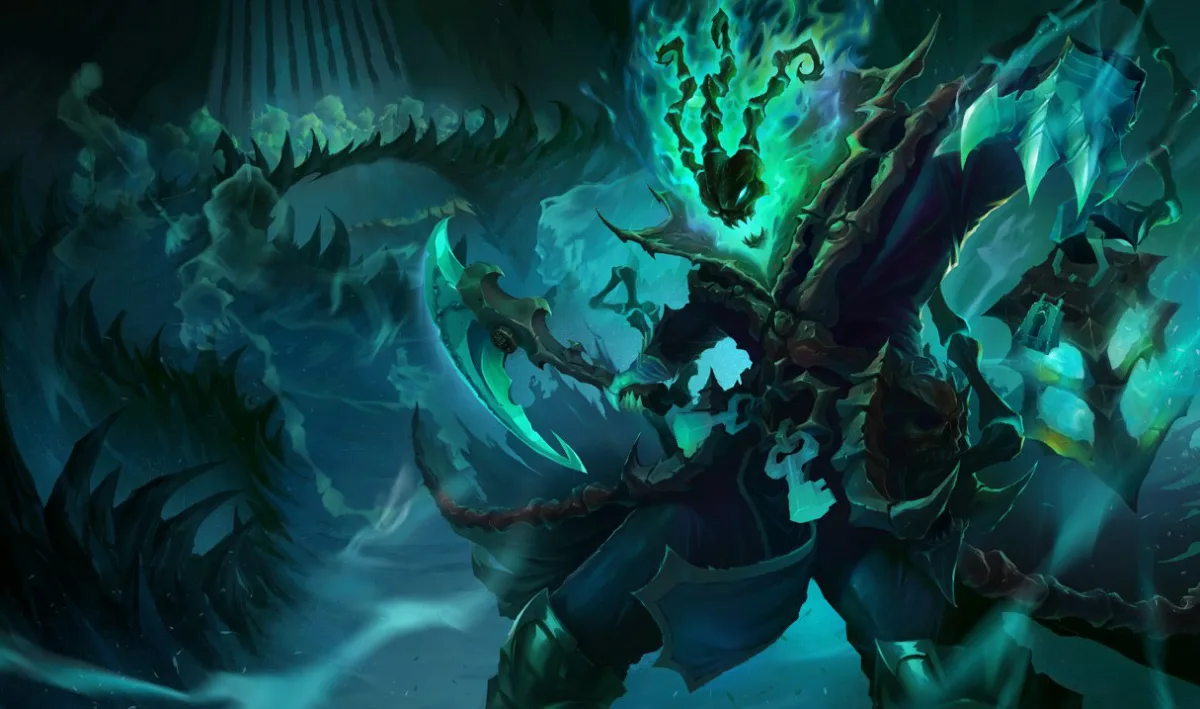
Thresh changes how far Caitlyn may lean into pressure. He can remain behind or in fog with Dark Passage ready while Caitlyn uses her range near the turret. If the enemy jungler appears, the lantern can pull her out of a position that would be fatal with a support standing beside her.
Death Sentence and Flay both create trap opportunities, but the displacement matters. A trap placed before Flay may miss if Thresh moves the target away from it. The reliable order is crowd control first, trap second, then the next Thresh spell holds the target on or near the trap. Communicate which direction Flay will send the target instead of guessing.
Patch 26.17 reduced Flay’s active damage. It did not change the reasons Caitlyn wants Thresh: catch, displacement, lantern, and a support who can threaten from fog after the lane leaves bot turret. The tradeoff is wave control. Thresh contributes less to an early shove than Lux, Karma, or Zyra, so Caitlyn may have to spend Q on minions before the duo can pressure.
The common failure is a roam on the rebound. Caitlyn and Thresh crash the wave, Thresh leaves, and the enemy duo holds the returning wave outside its turret. Caitlyn cannot walk up alone even with her range. Thresh should leave when the next lane state is safe, not simply when the current wave disappears.
What happens when Caitlyn does not cash in
The wave will not reach turret
Against another high-clear lane, stop treating champion poke as the only use of Piltover Peacemaker. Caitlyn and her support may need to hit the wave together, accept a neutral health trade, and secure a recall instead of chasing damage that regenerates. Lux and Karma are best at changing this state. Milio may have to concede control and keep Caitlyn healthy enough to collect the next wave.
The crash has no vision
A wave under turret feels like success, but it is also the farthest Caitlyn can stand from safety. Before attacking the structure, account for the enemy jungler and mid laner. If neither is visible, use the crash to ward, take river control, or recall. One plate attempt is not worth donating the lane’s accumulated advantage.
The support’s body is not vision. Lux or Zyra standing in the river-side pocket without a ward merely gives the gank a closer first target. Thresh can offer a lantern and Morgana can hold Black Shield, but those tools reduce risk rather than erase it.
The lane won plates but lost the map
Early structure damage matters only if the duo moves the pressure somewhere useful. After the bottom turret falls, Caitlyn usually wants a shorter central lane where her traps can guard both sides of a siege. The support should arrive first, clear the approach, and make the enemy choose between defending the wave and walking through a controlled choke.
Staying in a long side lane wastes the partnership. Lux and Zyra lose the narrow terrain that makes their control threatening if Caitlyn farms alone across the map. Thresh’s lantern and Milio’s protection help, but neither makes repeated solo side-lane pushes a sensible default.
The lane lost early
Caitlyn still has range, traps, and Ace in the Hole, but she cannot play as if the turret is already hers. Stop placing decorative traps around an area the team cannot enter. Put them at the edge of allied vision, beside the carry who needs peel, or across the route an objective fight must use.
The support’s fallback now decides the pairing. Lux and Morgana look for a pick before the wave arrives. Zyra controls the choke the team can actually defend. Milio protects a front-to-back fight. Thresh creates a catch or extracts Caitlyn after she takes one safe attack. Karma moves the group between lanes before the opponent can set the siege.
Two questions the lane board cannot answer
Does Caitlyn need a mage support?
No. She needs a wave plan and a reliable use for her range. Mage supports often supply both pressure and a root for traps, which is why Lux, Morgana, and Zyra feel natural. Karma wins space without being a conventional damage mage. Milio works when the team already has setup and wants Caitlyn to keep firing from farther away. Thresh works when extraction and catch matter more than raw shove.
When should Caitlyn’s support roam?
Roam after the wave is crashed and the returning state will not trap Caitlyn near the enemy turret. A support can also move when Caitlyn has recalled or when the next wave will meet safely near her side. Do not leave merely because the current wave died. Track the bounce, the enemy freeze threat, and whether Caitlyn can approach the next minions without walking through two champions.
The lock-in rule
Pick Lux when you want the most complete pressure cycle: wave influence, a clean trap starter, matching siege range, and useful catch after lane. Choose Karma to win the early geometry, Morgana for the safest bind-and-trap window, or Zyra to own more ground around the turret and later objectives. Milio is the scaling range answer. Thresh is the escape route for pressure that would otherwise overextend.
The support is not there to make Caitlyn push. Caitlyn can do that herself. The support is there to make the pushed wave safe, turn one cooldown into a trap Headshot, and give the lane a job when the first turret refuses to fall.
Related RiftBrain pages planned for this cluster: best ADCs, best support champions, best supports for Ashe, and best supports for Jhin.
Freshness trigger: Verified August 30, 2026 on Patch 26.17. Revisit the order if Riot changes Caitlyn’s trap timing, bot-lane waves, early turret pressure, or a featured support.