
Ezreal can stand behind the same melee minions and be playing two different lanes. In one, Mystic Shot threads through a gap, Essence Flux marks an exposed champion, and the support steps forward before the opening closes. In the other, Mystic Shot secures the last hit, Arcane Shift stays available, and the support uses Ezreal’s range to buy time somewhere else on the map. The champion has not changed. The lane agreement has.
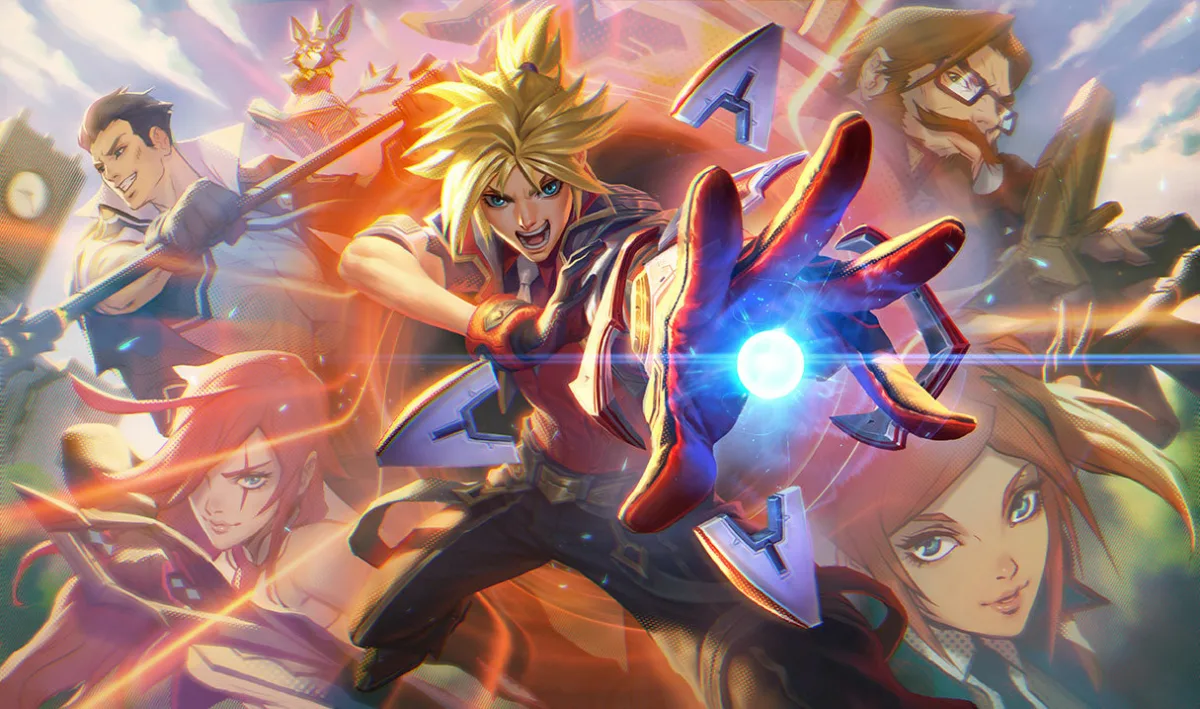
Lux is the best support for Ezreal on Patch 26.17 when the draft wants bot-lane pressure. Her damage and zone control help open the minion line, Light Binding turns a brief angle into a longer firing window, and both champions can keep working when the enemy refuses a close fight. She gives Ezreal’s active lane identity the clearest plan without asking him to spend Arcane Shift as the first move.
Nami is the better partner for connected short trades. Seraphine can repair a difficult wave and hand the game into a stronger grouped phase. Leona supplies a real start when the team cannot live on poke alone. Braum protects the firing lane against projectiles and divers. These are not five versions of the same synergy. Each one changes when Ezreal should contest, when he should absorb, and when the support is actually free to leave.
Patch 26.17 did not directly change Ezreal in modern Summoner’s Rift. The patch notes do include Mystic Shot and Trueshot Barrage changes for an older version of Ezreal, but they appear below the separate Classic heading. They do not apply here. This analysis uses the current kit in Data Dragon 16.17.1 and treats the standard and Classic sections as different games.
The support is choosing a lane identity
Ezreal’s safety is conditional. Mystic Shot can last-hit from range, but it stops on the first enemy unit. A support who leaves while a large hostile wave is arriving has not given Ezreal a free lane. They have left him to choose between conceding minions and stepping into the same crowd control that Arcane Shift is supposed to escape. If he spends the blink forward to detonate Essence Flux, the lane’s safety budget disappears until that cooldown returns.
His pressure is conditional too. Successful spell hits build Rising Spell Force up to five stacks, giving Ezreal attack speed that matters only if he can enter basic-attack range. Mystic Shot also reduces all of his ability cooldowns when it strikes an enemy unit. A support who controls the wave and denies the enemy’s first step lets those hits accumulate into another spell cycle and a few useful attacks. A support who clears without regard for Ezreal’s line can leave every remaining minion between Mystic Shot and the champions.
The first identity is a connected pressure lane. Support and ADC hold the same side of the wave, attack the same target, and use the same short cooldown window. It is not necessarily an all-in. Two clean spell contacts can force a potion, deny a cannon, or make the enemy jungler’s river entrance visible because the opposing bot lane can no longer move first.
The second identity is an elastic lane. Ezreal preserves health and Arcane Shift, accepts that some pressure belongs to the opponent, and keeps the wave recoverable while the support takes a ward, river, or mid-lane timing. Elastic does not mean abandoned. The support’s departure must begin after the wave is handled and end before the enemy can stack another one at the turret.
The best partner is the one who can declare the correct identity before the wave forces it. Lux and Nami make pressure coherent. Seraphine can move between pressure and recovery. Leona turns one opening into commitment. Braum makes absorption safer without pretending that distance alone solves the lane.
Lux turns the minion line into a pressure tool
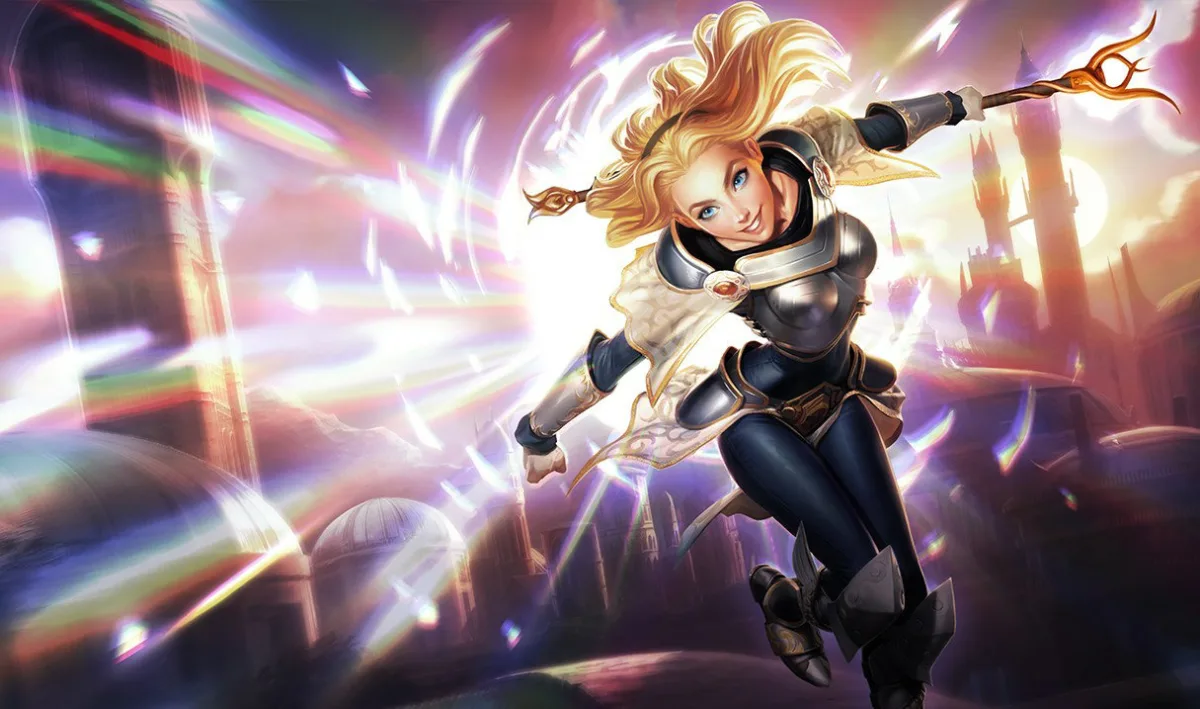
Lux is the default because she gives Ezreal useful work at every stage of a pressure sequence. Lucent Singularity threatens the space around the enemy ranged minions and can slow a champion without forcing Lux into engage range. Light Binding can strike up to two units, so one minion does not always erase her angle. Prismatic Barrier covers the return trade, while Final Spark gives the duo a way to finish pressure without walking under the turret.
The lane should not begin with both players throwing spells at whatever is closest. On the first two waves, Ezreal wants a clear Mystic Shot channel and Lux wants the enemy to stand near the minions they must last-hit. If Lux detonates Lucent Singularity through the whole wave while Ezreal fires into the same health bars, the lane pushes quickly but may arrive at the enemy turret before there is river vision. The opponents lose little health, the allied spells are down, and the long lane now belongs to the jungler.
A better sequence starts from a side. Lux occupies the lane-brush edge or the outer side of the wave. Ezreal mirrors far enough away that one hostile spell cannot hit both players. When the enemy ADC steps toward a weakened minion, Lux places Lucent Singularity behind the retreat path. The slow creates time for Light Binding or forces the target to walk into Ezreal’s Mystic Shot line. If the binding hits through one minion, Ezreal should not fire his Q into that blocker and call the combo failed. He can trigger Essence Flux with an attack or another available spell, then use Mystic Shot once the line clears.
This pairing also controls the crash well. Lux can hold Lucent Singularity as a zone while Ezreal attacks the turret or aims Essence Flux at the structure. The support’s job is to guard the river-side exit, not stand beside Ezreal and duplicate his angle. If the enemy jungler appears, Prismatic Barrier should cross the retreat path and Arcane Shift should remain the final separation tool. Spending Arcane Shift for one turret hit or one Essence Flux detonation turns a good crash into a trap.
The failure case is damage without authority. Lux and Ezreal can fill the lane with bright projectiles while surrendering the brush, missing the cannon, and never building a ward timing. They can also leave the allied draft without a champion willing to enter first. Lux is the best default when another teammate can front the later fight or when range itself can control the objective entrance. If the whole composition needs bot lane to supply hard engagement, the prettier poke lane creates a team with no first move.
Current filtered evidence supports the pairing without making it universal. Lux has the largest featured-support sample in METAsrc’s Patch 26.17 table, and RiftMind places the duo above role-adjusted expectation in its displayed lower-rank group. Those results fit the lane logic: the pairing has repeated, visible actions. They do not show whether the wave was crashed before the support warded, which is why tempo remains part of the verdict.
Nami links each hit to the next one
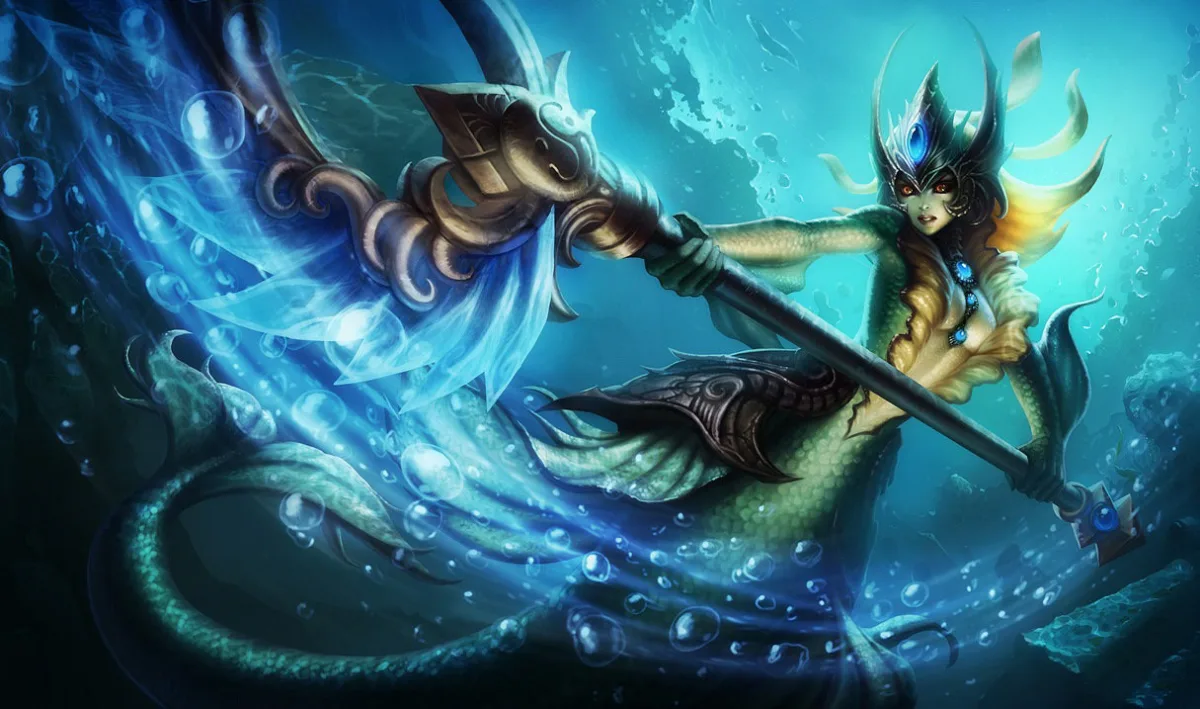
Nami is the choice when Ezreal needs help staying connected after the first spell. Tidecaller’s Blessing empowers an ally’s attacks and spells with bonus magic damage and a slow. Ezreal can apply it from Mystic Shot range, and the slow makes the following line easier for both champions. Ebb and Flow can damage an opponent and return healing through the exchange. Nami’s passive also grants movement speed when her abilities touch an ally, turning a landed poke into a brief approach or exit window.
The order matters. Casting Tidecaller’s Blessing while Ezreal is farming the back line often spends charges on minions or lets the buff expire without a champion hit. Nami should wait until the enemy begins a last-hit animation or Ezreal has a genuine side channel. Mystic Shot applies the first slow, Nami walks into a better Ebb and Flow angle, and Aqua Prison threatens the slowed retreat. The bubble is usually a conversion tool here, not a blind opener thrown at full movement speed.
This lane can contest without racing to the enemy turret. If the wave is even near the middle, Nami can trade through an enemy champion and let Ebb and Flow return to Ezreal. The health swing makes the next contest cheaper. Ezreal keeps Arcane Shift because the support’s movement speed and slow have already created distance. When the opponents answer with their key spell, the duo can stop rather than forcing a second cycle through a thick wave.
At level six, Tidal Wave gives Nami a longer start and a strong way to cut off pursuit. Its knockup and slow can set Aqua Prison, but the wave should still determine whether Ezreal follows. A wave moving toward the allied turret is not a reason to Arcane Shift over it for one marked target. Nami can use the ultimate to win space, collect the wave, and preserve the next tempo instead of treating every crowd-control hit as a kill order.
Nami’s weakness is that she needs contact to extract full value. A pure artillery lane can outrange her bounce and punish every step toward Ebb and Flow. A hard engage lane can force her to use Tidecaller’s Blessing and Aqua Prison defensively before Ezreal has a pressure line. She is the strongest short-trade partner in this group, but she is not the same as a bodyguard. When the draft requires someone to stand between Ezreal and a projectile chain, Braum owns that job.
Seraphine keeps a bad wave from becoming a bad game
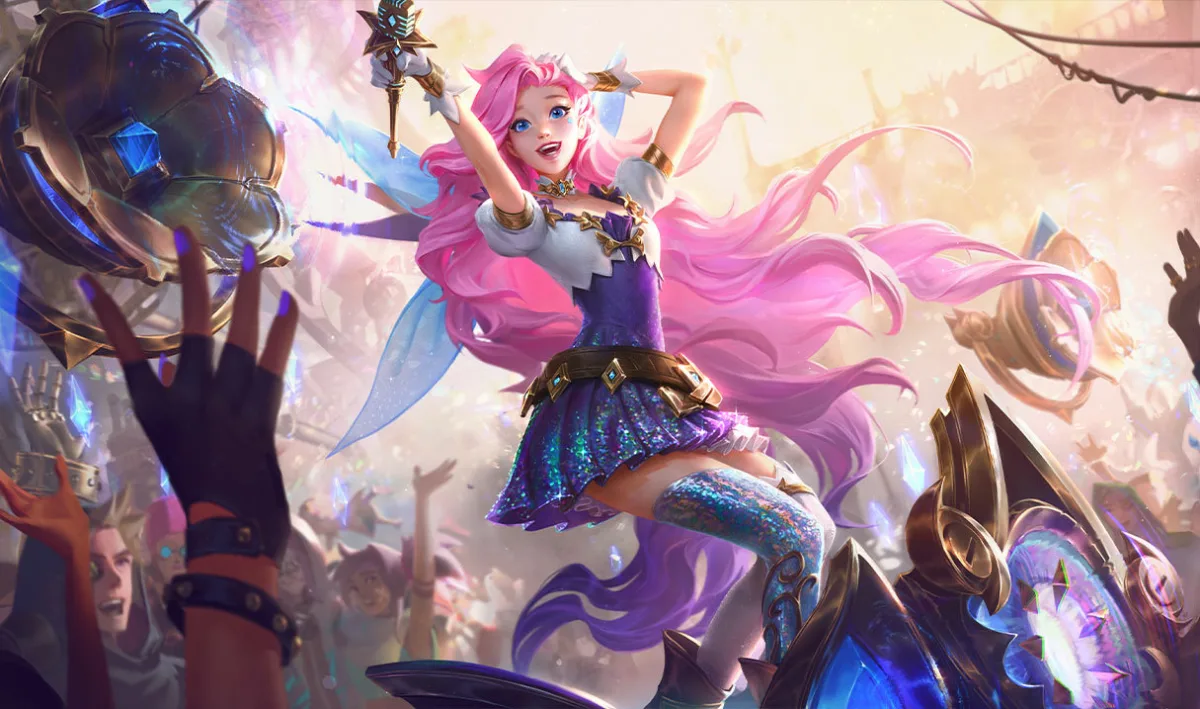
Seraphine is the bridge between Ezreal’s two identities. High Note and Beat Drop can contest space when the lane has priority. An echo-cast Beat Drop can slow and then root through its two applications. Surround Sound shields and hastens both bot laners, with healing available when Seraphine is already shielded. If the opponents win the first push, her area spells can help reduce the wave before the turret has to absorb every minion.
That flexibility makes her the best recovery partner, not permission to erase each wave on arrival. Seraphine’s area damage can take farm, scramble Ezreal’s planned last hits, and push a wave that should have remained near the allied side. Before casting High Note into several damaged minions, she needs to know whether the lane is trying to crash, hold, or thin. The difference is one spell, but it decides whether Ezreal has a safe Mystic Shot lane thirty seconds later.
Her pressure sequence is wider than Lux’s. Seraphine can send Beat Drop through the minion line, so she does not need the same narrow Q channel. If the echo roots a champion, Ezreal receives time to step sideways and find that channel rather than spending Arcane Shift forward. Essence Flux can mark the held target, and Mystic Shot can begin shortening the next cooldown cycle once the minions move or die. Surround Sound then covers the exit before the opposing support reaches them.
The pairing becomes more valuable when lane pressure does not cash out. Encore can reach through champions and extend its range through each one it hits, giving the team a grouped start that Ezreal can follow from outside the first collision. Seraphine can shield a clustered team while Ezreal uses Trueshot Barrage through the fight and works the nearest safe target. The lane may have produced no turret plates, but it has not left the draft without a late objective plan.
RiftMind’s current higher-rank group places Seraphine among Ezreal’s strongest displayed support deltas over its rolling window, while METAsrc gives the pairing a large single-patch sample. The agreement is useful, but the reason to pick her is still structural. She can recover the wave, preserve a ranged formation, and create a second route to value when bot pressure fails. She is worse than Lux at threatening one exposed target and worse than Leona at forcing an immediate decision.
Leona makes Ezreal commit to the opening
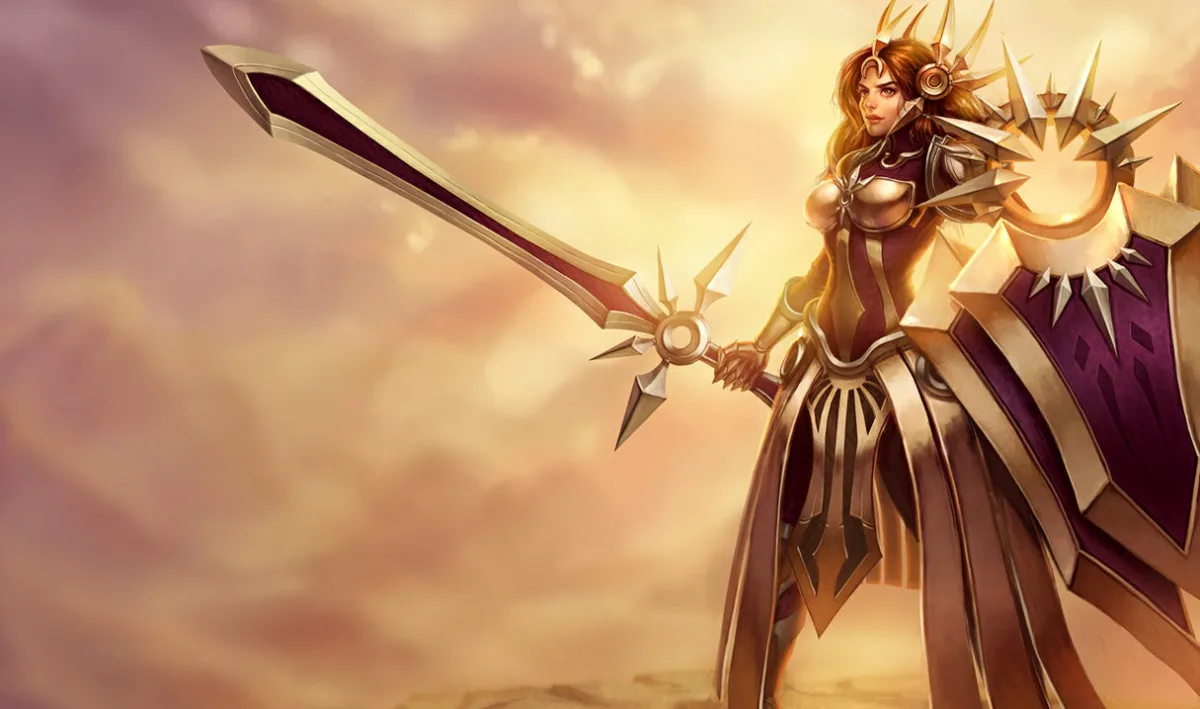
Leona is the answer when the allied draft needs a first move. Zenith Blade reaches through minions and carries Leona to the last enemy champion struck. Shield of Daybreak adds a stun, Eclipse lets her survive the return damage, and Solar Flare can begin from range. Her damaging spells also mark enemies with Sunlight, which allied champion damage consumes for extra magic damage.
The pairing only works if Ezreal agrees to play closer than maximum Mystic Shot range. Leona can pass through the wave; Mystic Shot cannot. Before she uses Zenith Blade, she should see either a side channel for Ezreal’s Q or enough space for him to walk into basic-attack range. Otherwise she arrives alone, applies Sunlight that no one consumes promptly, and watches Ezreal’s projectile disappear into a melee minion.
A clean level-two attempt begins while the allied second wave still has enough minions to absorb the return trade. Leona moves to the side of the melee line as the level arrives. If the enemy ADC steps for a last hit, Zenith Blade and Shield of Daybreak hold the target. Ezreal walks forward, uses the open Mystic Shot line, and adds attacks while Rising Spell Force makes those attacks faster. Arcane Shift stays unused unless it secures a kill after the enemy’s main control spell has already missed or been spent.
Leona also changes the support’s roam tempo. Her spells create more threat in river than an enchanter’s, but leaving a neutral wave still exposes Ezreal to a stacked crash. The right departure follows a completed push or a recall, not a failed engage that has already cost Ezreal health. If Leona misses Zenith Blade and walks straight into river, the opponents can freeze or stack while Ezreal farms without the health to contest.
The current broad data is favorable to Leona with Ezreal, but that does not erase the execution tax. She is wrong into lanes that can deny her entry and punish the retreat, or when Ezreal intends to use every Q on minions from maximum range. Pick her when the player and draft want the pressure identity to end in a real commitment. If the agreement is only that Leona will engage and Ezreal will decide afterward, choose a different support.
Braum protects the firing angle
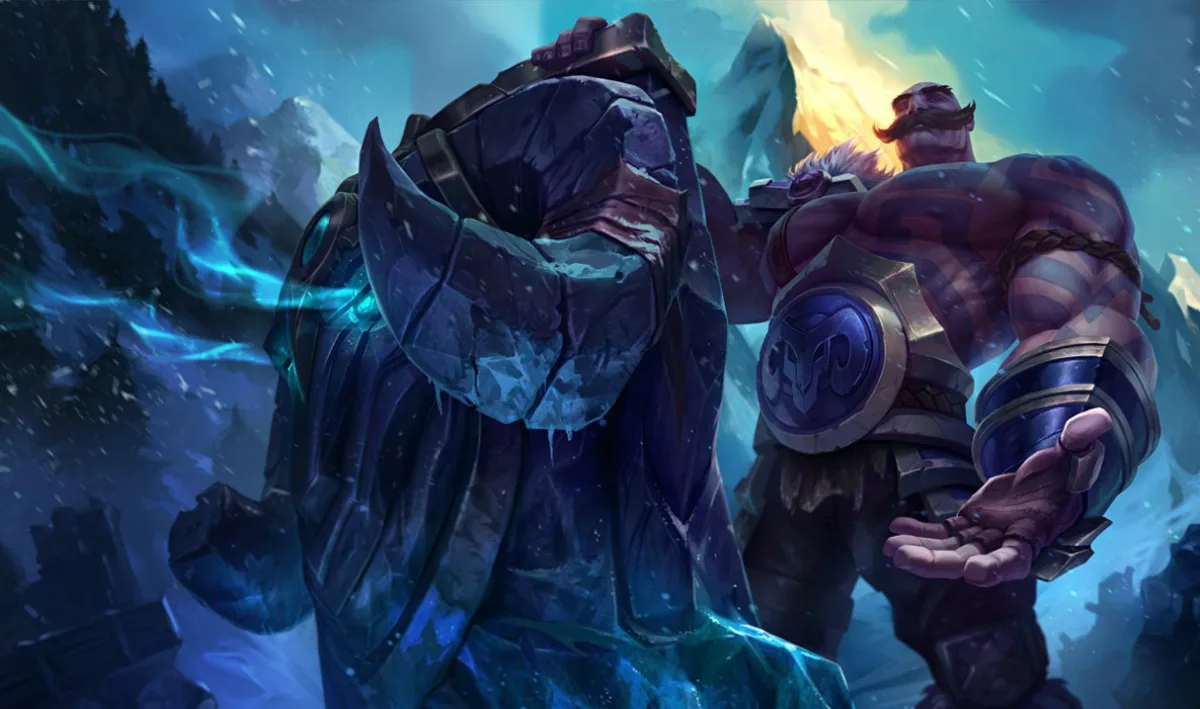
Braum is the defensive partner for a lane that expects projectiles, dive, or a front-to-back fight. Unbreakable catches incoming projectiles along Braum’s chosen facing. The first missile he blocks deals no damage, and later projectiles from that direction deal less while the shield stays raised. Stand Behind Me lets Braum jump to an allied champion or minion and grants defenses. Winter’s Bite slows and applies the first Concussive Blows stack, while Glacial Fissure knocks up enemies and leaves a slowing line.
This is not a lane where Ezreal should assume his spells will complete Braum’s passive by themselves. After Braum applies the first stack, allied basic attacks add the remaining stacks. Ezreal must step into attack range if the stun is the plan. That commitment is safest after Winter’s Bite hits a champion on the allied side of the wave, where Arcane Shift still points toward the turret and Braum can occupy the return path.
Against a hook or long projectile lane, Braum can stand on a different line from Ezreal and rotate the shield toward the incoming threat. He should not sit directly on Ezreal and surrender both brush control and a second angle. When the enemy support advances, Winter’s Bite slows the approach, Ezreal attacks the nearest legal target, and Unbreakable covers the retreat. The objective is to preserve the firing lane until the enemy’s first cooldown expires, then let Ezreal’s shorter cycles take over.
Braum’s weakness is wave authority. He cannot match Lux or Seraphine when the opponents rapidly clear and move first. If he uses Winter’s Bite into minions or holds behind Ezreal, the duo may be safe from a direct projectile while losing every river entrance. His roam also costs more because the lane has little ranged wave repair after he leaves. The departure should usually follow a crash, a synchronized recall, or a clear jungle read.
Pick Braum when the enemy has to cross a known line to reach Ezreal and the allied team already has enough initiation. He is not the answer to a passive lane that simply outranges both champions and never enters Concussive Blows range. In that draft, safety without wave pressure becomes a slow surrender.
Support tempo is a handoff, not an abandonment
Ezreal’s reputation as a safe ADC often produces the wrong map play. The support sees Arcane Shift, assumes bot lane no longer needs supervision, and leaves while the wave is still undecided. Ezreal may survive, but survival alone does not make the roam profitable. If he loses a full wave, the turret takes damage, and the support reaches mid after the play has ended, the team has traded guaranteed resources for a late appearance.
Before the crash
The support should first decide whether the current wave can actually reach the enemy turret. Lux and Seraphine can help clear, Nami can pressure the champions away from the minions, and Leona can threaten anyone who tries to hold the wave. Braum often needs Ezreal to do more of the pushing. If the enemy jungler is missing and Arcane Shift has been spent, even a nearly completed crash may need the support to stay.
On the crash
This is the handoff point. Ezreal can place Essence Flux on the turret and attack while the support controls the route that can interrupt him. The support then gets a short window to ward, enter river, or recall. Leaving before the wave touches the structure allows the enemy bot lane to hold it outside turret range. Leaving long after the crash wastes the window because the next wave is already traveling back toward Ezreal.
During the roam
Ezreal should switch identities openly. Mystic Shot becomes a farming tool unless the opponent gives a free champion line. Arcane Shift remains an exit, not a way to collect one ranged minion sooner. The support needs a destination with a live play: a river contest, a mid wave that can move, or a jungler already approaching an objective. Walking through fog without one of those reasons is absence, not tempo.
On re-entry
The support should return before the stacked enemy wave reaches the turret or before the opponents can dive behind it. Coming through lane may be safer than approaching from an unwarded river. A support who arrives behind the enemy after Ezreal has already spent Arcane Shift can create a fight with no shared direction. Re-entry should restore the same side of the wave first, then reopen pressure.
Famous pairings can choose the wrong identity
Karma is the classic example. Inner Flame, Inspire, and Focused Resolve appear to give Ezreal poke, movement, and a root in one package. The lane can be excellent when both players contest the wave and use the shield speed to take the same short trade. It becomes hollow when Karma pushes automatically, Ezreal farms from maximum range, and neither champion supplies the hard start the later composition needs. METAsrc’s current broad snapshot puts this popular pair slightly below Ezreal’s baseline, a useful warning against selecting a remembered reputation without reading the draft.
Bard creates genuine map tempo, but only after bot lane creates the departure. Caretaker’s Shrine can leave Ezreal some sustain and Magical Journey can turn a river move into a fast collapse. Neither spell prevents an enemy duo from freezing a neutral wave or stacking a dive. Current broad evidence is also unkind to the pair. Bard is correct when the player can identify a crash, a recall, and a reachable play. Picking him because Ezreal is supposedly impossible to kill confuses escape potential with lane control.
Yuumi seems to preserve the elastic identity because she remains attached and gives Ezreal movement, healing, and ranged pressure. The problem is shared authority. The lane puts almost every positioning decision, wave correction, and ward approach on Ezreal. If he uses Arcane Shift defensively, both champions move backward together. Both current datasets flag this pairing among the weak outcomes in their recorded scopes. It can still work through champion comfort and a favorable draft, but it should not be the automatic answer to the phrase "safe ADC."
When bot pressure does not pay
Ezreal’s pressure lane does not become worthless because it missed a kill. The pair should account for what it actually earned. A health lead can buy the next crash. A forced recall can buy a river ward or first move. A Flash can make the following jungle visit credible. If none of those gains exists and the wave is pushing away, continuing to fire spells under the enemy turret only increases exposure.
The recovery starts by preserving Arcane Shift and thinning the return wave. Lux or Seraphine can help before leaving the lane. Nami can restore enough health for Ezreal to contest the next cannon. Leona must resist turning a bad rebound into a second engage. Braum should hold the direction from which the enemy jungler can arrive. The support’s useful action is the one that makes the next wave playable, not the one that keeps the previous plan alive.
Outside lane, the two identities become two positions within the same fight. Ezreal can open with Mystic Shot and Trueshot Barrage from range, then move closer once important control spells are gone and Rising Spell Force is active. Lux and Seraphine extend the ranged formation. Nami links the first hit to a chase or retreat. Leona creates the moment when Ezreal can stop probing and commit damage. Braum keeps a projectile front line between Ezreal and the threat.
This is also why the support should not judge the game only by early turret plates. A failed Lux siege with a composition that controls an objective entrance can still be healthy. A quiet Seraphine lane can become a strong grouped setup. A Leona lane that never finds a side channel may leave the team with its only initiation tool behind in levels. The support pairing succeeds when its lane identity hands into a useful map job, not when it reproduces the same early scoreboard every game.
The editorial verdict
Lux is the best overall support for Ezreal because she gives his pressure identity a clear wave, target, and siege plan while letting him keep Arcane Shift for safety. Choose Nami when short trades need movement and sustain, Seraphine when the draft needs wave recovery and a grouped fallback, Leona when someone must force the decision, and Braum when the enemy has to enter through projectiles or dive.
The deciding question is not whether Ezreal can survive alone. It is what the support is buying with the lane’s next thirty seconds. A crash can fund a ward or roam. A held wave can fund another pressure cycle. An untimed departure only makes Ezreal spend range and Arcane Shift to pay for the support’s absence.
For broader role choices, use the ADC selection guide and support champion guide. If the draft calls for a lane that must convert early range into turret pressure, compare this tempo model with the best supports for Caitlyn.
Accuracy checkpoint: This page was verified on August 30, 2026 for Patch 26.17. Revisit the verdict if Riot changes Mystic Shot collision or cooldown reduction, Arcane Shift, early bot waves, support roaming, or a featured support.