

Support is the easiest role to start with if last-hitting while fighting is what overwhelms you. Top is the better starting point if you want a relatively self-contained lane where you can practice farming and trading on your own. Those are different answers because "easy to start" and "easy to understand your mistakes" are not the same thing.
For a new player with no strong preference, we would try support with a friend or top alone. Jungle usually asks you to learn the most separate systems at once. That does not make it a forbidden first role, but it is a poor escape route if you are hoping for less to think about.
Reviewed for modern PC Summoner’s Rift Patch 26.18 on September 10, 2026. The comparison still weighs farming, wave, vision and pathing responsibilities. Nautilus’s lower damage leaves his suggested learning job intact.
The easiest role depends on what you find difficult
Think about the last moment when the game felt unmanageable. Were you missing minions while trying to trade? Unsure which lane to help? Unable to attack without getting caught? Each role changes that workload.
| Role | What makes the first games approachable | What you still need to learn | A sensible practice champion |
|---|---|---|---|
| Support | Less continuous last-hitting; an ally shares the lane | Trading as a pair, vision, roam timing, and when not to engage | Nautilus for a clear engage-and-protect job |
| Top | One main lane opponent and straightforward fighter options | Punishing matchups, long retreats, and recovering a bad wave | Garen |
| Mid | A shorter lane and easy-to-understand mage kits | Threats from both sides and deciding whether to follow a roam | Annie |
| Bot carry | A familiar farming-and-attacking job with a support nearby | Spacing, two-player lane threats, and staying useful under dive | Ashe |
| Jungle | You can practice a route against camps before facing players | Pathing, gank choices, enemy movement, objectives, and lost time | Warwick |
This is not an easiest-to-hardest ladder with scientific scores. A player who likes camera movement and planning may enjoy jungle more than precise last-hitting. A player who already likes ranged combat may prefer bot lane despite its positioning demands.
Riot’s beginner overview explains the five positions. Your first choice only needs to give you a manageable way into them; you are not signing up to play one role forever.
Support removes a mechanical task, not your responsibility

Support has the strongest claim to being the easiest role in League of Legends at the very beginning. You are not trying to secure the majority of the lane’s minion kills while also reacting to two opponents. Support income and the quest system give you a different way to function.
That frees up attention. You can watch where the enemy support stands, notice when your ADC steps forward, and learn the range of an important hostile spell. In a duo, your friend can help explain why the lane is pushing or why this is a bad moment to leave.
But not farming every minion is different from ignoring the wave. If your ADC is trying to collect a large incoming wave, a hook that drags you away from them can turn into a one-player fight. If they need help completing a push before recalling, standing motionless behind them may leave the lane in a dangerous position.
Nautilus gives the learning process a visible decision. Dredge Line can bring him and a hit enemy together, his first attack against a target can root, and his ultimate supplies targeted crowd control. The job is easy to describe: catch someone your team can reach, or stop someone reaching your carry. His 26.18 attack-damage and hook-damage nerfs reduce his contribution to the trade, while the root and targeted ultimate still make the same learning job readable.
The hard part is choosing which job is needed. A support who initiates every time Q is available will discover that simple controls can still produce complicated deaths.
A useful first support exercise
Before your next engage, look at your partner rather than the target. Are they in range? Do they have health and mana? Are they about to lose several minions if they walk over? If the answer makes the play worse, hold the hook.
For vision, start with places your team can reach safely. You do not have to walk alone into a dark enemy jungle because somebody pinged dragon. A ward you survive to place is more useful than dying on the way to a perfect spot.
Our support champion guide covers different support jobs. Pick one job you enjoy first; do not assume that an enchanter, an engage tank, and a roaming specialist all ask for the same skills.
Top is simpler to organize, but harsh when you fall behind
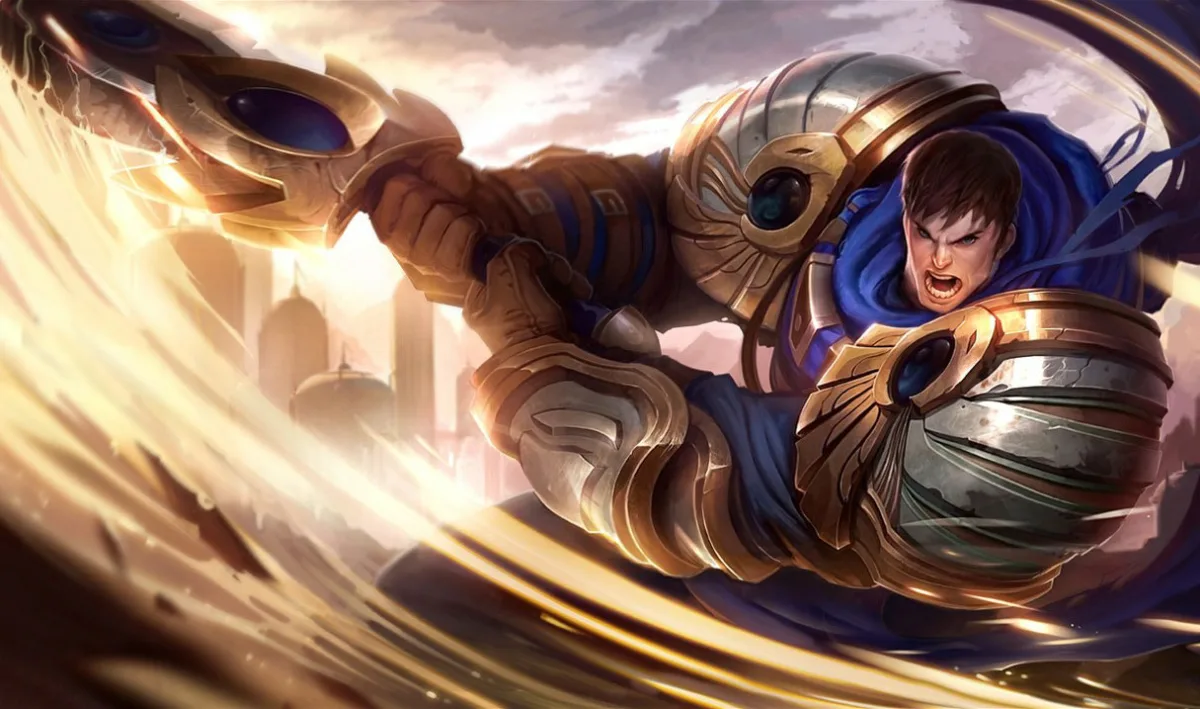
Top often feels cleaner to a new solo player. You have a lane opponent, a wave, and a nearby river entrance to think about. There is no lane partner whose timing you must constantly interpret.
Garen is a useful starting point because his ordinary damage pattern is direct and he does not use mana. Health recovery between exchanges gives you another chance to farm after a mistake. You can spend more attention noticing what the opponent did before they won the trade.
The lane itself is not forgiving. When the wave sits near the enemy turret, the walk back to your own safety is long. A stronger opponent may stand between you and the minions. Dying can then cost experience as well as gold, making the next fight harder.
This is why top can be the best classroom and still feel miserable on a bad game. The feedback is direct, but it can be severe.
Try to review the position before the death. Did you use your movement spell to chase? Did you trade while the enemy had more minions? Did a spin or area spell push the wave away from safety? Those questions are more useful than deciding you lost because top is supposed to be easy.
For a first exercise, watch the opponent’s main trading spell. After they use it, decide whether the wave and your health actually allow a response. Learning to decline the trade is part of learning the matchup.
Mid has a shorter retreat and more directions to watch
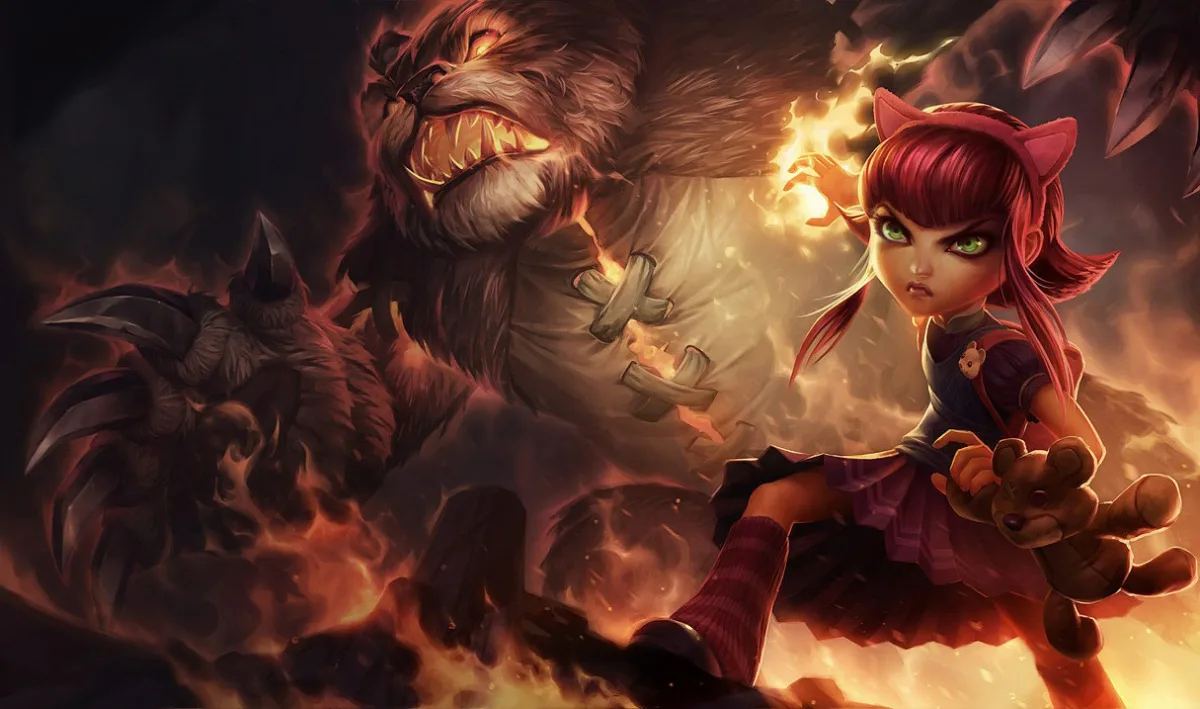
Mid offers a compromise. Your turret is often closer than it would be during an equivalent top-lane chase, and a mage can practice last-hitting from range. Annie’s Q refunds its mana cost when it kills the target, giving a beginner a useful farming tool.
The center of the map adds another job: notice who can enter your lane and who has left it.
If your opponent disappears, do not immediately run after them through an unwarded river. First check where they were last seen, what your own wave is doing, and whether an ally can move with you. Ping the disappearance. Sometimes following is reasonable; sometimes taking the safe farm or pushing while they are gone is the better response.
Annie’s prepared stun makes a good attention exercise. Before walking beyond a comfortable retreat, notice whether that control is available. If you just spent it on a minion, you have changed what the opponent can safely try against you.
Mid is a good first role if ranged spellcasting interests you and you are willing to look away from the minion you are killing. It is less comfortable if you want every threat to arrive from directly in front of you. For a small champion pool, compare the easiest mid laners rather than starting with whichever assassin made the most impressive clip.
Bot carry looks straightforward until you have to keep attacking

The basic bot-carry job is understandable: collect gold, buy damage, and keep hitting useful targets. In practice, farming shares your attention with two enemy champions and your own support’s movements.
Ashe is approachable because slows, Volley, and an initiating ultimate give her recognizable tools. She can contribute control even when her damage is not the largest on the team. But she cannot dash out of an engage, so her positioning remains important on every wave and in every fight.
A common beginner mistake is walking past the nearest enemy because the opposing carry looks more valuable. If that route takes you through a tank’s crowd control, you may deal less damage than if you had simply attacked the reachable target from safety.
Start with a smaller goal: during the next fight, identify the nearest target you can attack without stepping into an obvious hostile spell. Move when the threat changes. You are learning to alternate damage and repositioning, not to stand still until your target disappears.
Having a support helps, but it also means learning which opportunities belong to both of you. A support’s successful engage may be too far away for you to follow before it ends. An ADC stepping forward alone may make their support choose between a bad rescue and leaving them.
Pick bot if you enjoy this repeated spacing problem. Do not choose it solely because right-clicking sounds easier than landing spells. The ADC comparison can help narrow the champion once the role itself appeals to you.
Jungle gives you freedom, then asks you to account for the time
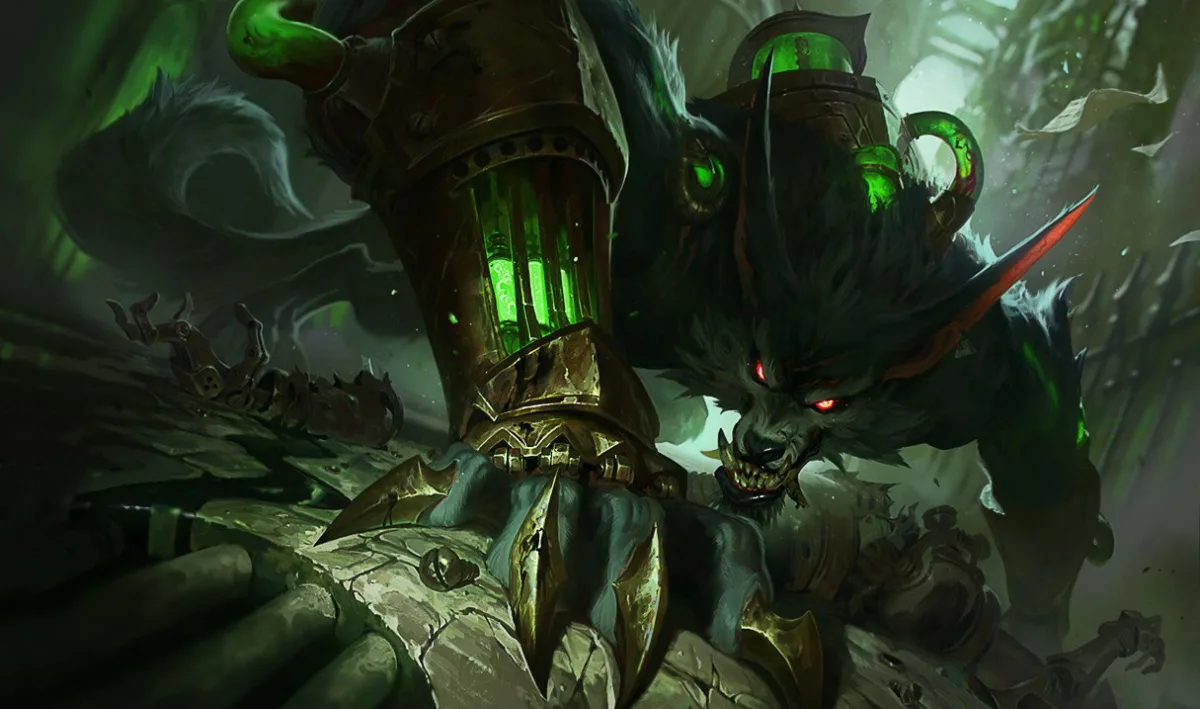
Jungle removes the opposing laner from your first camp, but it replaces that lane with decisions across the map. You choose a route, check possible ganks, react to the enemy jungler, and decide what to do when the expected play is unavailable.
Warwick can make the camp-fighting part more comfortable. His healing helps him stay healthy, while Blood Hunt draws attention to vulnerable enemies. Neither tells you whether the path to that enemy is safe or whether an ally can assist.
Suppose you leave a camp to chase a low-health opponent. They reach their turret before you arrive. You wait in the brush, the next wave comes, and the gank still does not happen. Even if you never die, you have spent time in which the other jungler could be earning resources or making a play elsewhere.
That hidden cost is why we would not call jungle the easiest first role. You can perform the mechanical part well and still struggle to explain why you are behind.
If jungle is the role you genuinely want, start there anyway. Practice a basic clear until controlling the champion leaves you enough attention to check lanes. Then add one decision at a time: is a gank actually available before I leave this side of the map?
When a lane cannot help, do not assume it should follow you into the river. A teammate trapped under their turret by a large wave may lose more by leaving than the play is worth. Understanding that constraint will make your route decisions better.
Learn the current role system in the queue you are playing
Older tutorials may describe only support and jungle quests. Riot introduced broader role quests in Patch 26.1, including new lane-role rewards and updated support and jungle systems.
Read the quest information in your current match. Do not assume an old video or a different mode has the same rules. Swiftplay and rotating modes were explicitly outside the new assigned-role quest system at its introduction. This guide compares ordinary role responsibilities rather than giving quest thresholds that may vary with mode or later balance changes.
Try three games with one question each
Instead of changing roles after every bad result, try a short practice sequence in the position that interests you:
- First game: learn your safe distance. Notice which enemy spell repeatedly catches you and where you stood before it landed.
- Second game: notice a resource mistake. A lost wave, unused camp time, wasted mana, or unnecessary recall can explain a poor position without blaming the champion.
- Third game: make one deliberate team play. Help complete a wave, arrive before an objective fight, hold control for your carry, or choose a reachable target.
This is a practice suggestion, not a claim that three games are enough to master a role. Use beginner-friendly matches while you learn the controls, and compare your decisions rather than only your win-loss record.
Stay with the role whose mistakes you want to understand. If last-hitting prevents you from seeing anything else, support removes some of that load. If coordinating with a lane partner is the frustrating part, top gives you more direct control of your own practice. If the map is what interests you, accepting a steeper start in jungle may be a better choice than forcing yourself into a role you do not enjoy.